How to Build a 1,000-Page Private Aviation AI Authority Network That Makes Your Brand Hard to Ignore
Most private aviation companies are still building websites for a search environment that no longer exists in isolation.
Typically, they have a homepage, a charter page, a fleet page, an About page, and perhaps a handful of blogs. Then, they expect Google, ChatGPT, Gemini, Perplexity, and other discovery systems to understand exactly when their company should become part of a buyer’s decision.
However, that expectation ignores how much context modern search now requires.
A private aviation buyer no longer has to search only private jet charter. Instead, the buyer can ask:
“What is the best private jet option for eight passengers flying from Teterboro to Zurich with heavy luggage, two dogs, and a need for nonstop capability?”
That question contains far more than a keyword. For example, it contains an airport, a destination, a route, a passenger count, baggage requirements, pet-travel requirements, range considerations, and an implied purchasing decision.
Therefore, the company that wants to become relevant to that recommendation cannot rely on one “Private Jet Charter” page.
Instead, it needs an authority architecture.
Why Does an Authority Architecture Matter?
More specifically, the company needs a connected network of useful pages that explains the airports, aircraft, routes, destinations, missions, services, buyer questions, operating considerations, safety factors, and expertise surrounding the transaction.
That is what IMR calls Private Aviation AI Authority Architecture.
Importantly, the goal is not to trick an AI system. Likewise, the goal is not to publish 1,000 low-value pages simply because large websites tend to have more content.
Rather, the goal is to build enough interconnected evidence that search systems, AI systems, and buyers can clearly understand where your company fits inside the private aviation market.
As a result, your competitors are no longer fighting one landing page. Instead, they are competing against an entire network of useful knowledge.
What Is Private Aviation AI Authority Architecture?
Direct Answer: Private Aviation AI Authority Architecture is a structured network of interconnected pages that establishes deep authority around the aircraft, airports, routes, destinations, buyer questions, services, safety issues, and use cases relevant to a private aviation company. Instead of relying on isolated keywords, the architecture creates multiple contextual relationships that help search engines, AI systems, and prospective buyers understand where the company is relevant.
In other words, the objective is no longer simply, “How do we rank one page?”
Instead, the better question becomes: “How do we become one of the most complete digital sources in the markets we actually want to own?”
Key Takeaways
- Keywords still matter; however, they are only one layer of modern private aviation discovery.
- AI-assisted search allows buyers to ask detailed questions containing multiple entities, requirements, and decision factors.
- Therefore, isolated service pages provide limited evidence compared with a connected authority network.
- A 1,000-page build should represent genuine market coverage rather than 1,000 variations of the same page.
- Airport pages, aircraft pages, route pairs, destinations, comparisons, buyer questions, safety resources, and local-market content should reinforce one another.
- Moreover, internal links help turn separate pages into one coherent information system.
- Structured data can clarify information; nevertheless, schema cannot compensate for thin content or guarantee AI recommendations.
- First-party expertise can make large-scale authority considerably harder for competitors to reproduce.
- Additionally, external citations, links, press mentions, and reputable third-party references can strengthen the wider entity footprint.
- Ultimately, GEO works best as an extension of strong SEO, not as a replacement for it.
Why Is the One-Keyword SEO Model No Longer Enough?
The key point: Keywords remain useful, but a keyword by itself cannot represent the full complexity of a high-value private aviation buying decision.
Traditionally, SEO often starts with a spreadsheet containing terms such as:
- private jet charter
- private jet New York
- Gulfstream charter
- private jet Miami
Next, marketers assign one phrase to one page. That approach can still produce value; however, private aviation buyers rarely make decisions using one concept at a time.
Private Aviation Searches Contain Multiple Variables
Instead, buyers combine departure airports, destinations, aircraft categories, passenger counts, range, baggage, pets, sleeping arrangements, timing, airport access, privacy, safety, Wi-Fi, and ground transportation.
Consequently, an isolated keyword page provides only one piece of the answer.
A connected authority system, by contrast, can provide the surrounding context. Moreover, that distinction becomes increasingly important as buyers use conversational search.
Therefore, keyword research should still inform the strategy. Nevertheless, it should no longer define the entire strategy.
How Does AI Search Change Private Aviation Discovery?
The key point: AI-assisted search lets buyers describe complete travel problems rather than breaking those problems into a series of short searches.
Traditionally, someone might search:
- private jet charter New York
- Teterboro Airport charter
- private jet New York Zurich
- best private jet transatlantic
- G650 baggage capacity
- private jet dogs international
Now, however, a conversational interface can combine all of those needs into one question.
For example:
“Which aircraft should I charter from Teterboro to Zurich for eight people with two dogs and enough luggage for a two-week trip?”
At that point, the system needs to interpret multiple relationships simultaneously. It must understand Teterboro, Zurich, route context, aircraft capability, pet-travel considerations, baggage requirements, and passenger needs.
Consequently, websites with deeper subject relationships have more opportunities to contribute useful information to that answer.
A brochure website, meanwhile, contains relatively little depth. An authority network can provide significantly more context.
What Does an AI System Need Before Your Brand Can Be a Credible Recommendation?
The key point: A brand becomes easier to understand when the web contains clear evidence about what it does, where it operates, what it knows, and which buyer problems it can credibly solve.
No legitimate company can promise that ChatGPT, Google, Gemini, Perplexity, or another system will always recommend one operator first.
However, marketers can improve the underlying evidence.
What Types of Evidence Matter?
For example, that evidence can include clear service information, accurate organization information, airport expertise, aircraft knowledge, route-specific content, local-market expertise, safety resources, expert-authored content, original insights, external references, reputable links, customer proof, and consistent entity information.
Therefore, GEO should not be treated as a secret technical trick.
Instead, it is partly an evidence-building discipline. As the company creates more useful, consistent, and verifiable information around strategically important subjects, discovery systems gain additional context about the business.
As a result, the company becomes easier to understand for both machines and prospective customers.
Why Would a Private Aviation Company Need 1,000 Pages?
The key point: A private aviation market contains enough meaningful airports, aircraft, routes, destinations, questions, comparisons, and use cases to justify hundreds or even thousands of distinct authority assets when those assets are strategically selected.
Private aviation is unusually well suited to large authority systems because the product is complex.
The Market Already Contains Hundreds of Content Opportunities
For instance, there are airports, cities, affluent communities, aircraft, aircraft categories, route pairs, destinations, FBOs, memberships, empty legs, safety questions, charter questions, international-travel questions, pet questions, luggage questions, aircraft comparisons, airport comparisons, and ownership comparisons.
Additionally, sales teams answer hundreds of recurring buyer concerns that may never be addressed publicly on the company website.
Therefore, 1,000 pages do not require inventing 1,000 artificial topics.
The market already contains many of them. Instead, the strategic job is to determine which topics deserve to become owned digital assets.
Page Count Is Not the Real Goal
Importantly, 1,000 should never become a vanity number.
If the market supports 700 exceptional pages, then 700 exceptional pages are better than 1,000 pages diluted with filler. Conversely, a company serving many airports, routes, aircraft, and customer types may have legitimate reasons to exceed 1,000 pages.
Ultimately, the correct target is not maximum publishing volume.
Instead, the target is maximum useful authority coverage.
What Could a 1,000-Page Private Aviation Authority Build Actually Contain?
The key point: The strongest 1,000-page build distributes content across multiple authority types so the website resembles a private aviation knowledge network rather than a giant blog archive.
| Authority Layer | Example Page Count | Primary Purpose |
|---|---|---|
| Airport Authority Pages | 100 | Establish airport and local-market relevance |
| Route-Pair Pages | 300 | Capture high-intent mission searches |
| Aircraft Authority Pages | 75 | Establish aircraft and fleet expertise |
| Aircraft Comparisons | 75 | Support buyer decisions between aircraft |
| Destination Authority | 75 | Connect aviation with high-value travel markets |
| Buyer Question Pages | 150 | Answer detailed research and purchase questions |
| Safety and Trust Resources | 50 | Reduce risk and explain verification |
| Mission / Use-Case Pages | 50 | Address specific private aviation needs |
| Local Market Pages | 75 | Connect airports with surrounding demand centers |
| Original Research / Insight | 25 | Create unique citation and authority opportunities |
| Core Services, Hubs and Conversion Assets | 25 | Organize authority and convert demand |
Together, those categories create 1,000 distinct assets. More importantly, each layer performs a different strategic job.
Therefore, the website gains depth without depending on one repetitive format.
Moreover, the categories can reinforce one another through intentional internal linking.
Why Do Airports Become Foundational Authority Nodes?
The key point: Airports provide strong geographic and operational anchors because most private aviation missions physically begin and end at them.
A serious airport page should not contain only an airport description and a contact form.
Instead, it can explain airport names and codes, markets served, nearby business districts, affluent communities, FBO context, ground-access considerations, alternative airports, common destinations, aircraft considerations, buyer questions, and seasonal factors.
Airport Pages Should Become Hubs
Once the foundation exists, the airport page can connect to route pairs.
For example, a Teterboro authority node could connect to Teterboro-to-Palm-Beach, Teterboro-to-Aspen, Teterboro-to-Los-Angeles, Teterboro-to-London, Teterboro-to-Zurich, and Teterboro-to-Miami resources.
Consequently, the airport becomes a hub rather than an isolated page.
Moreover, every useful route strengthens the surrounding airport ecosystem.
Why Are Route-Pair Pages Some of the Strongest Commercial Nodes?
The key point: Route pairs reveal specific mission intent by connecting a real origin with a real destination.
A broad query such as “private jets” may reveal very little buying intent. However, a query such as Teterboro to Zurich private jet reveals substantially more.
At that stage, the buyer may need answers about nonstop capability, aircraft category, passenger count, baggage, sleeping arrangements, departure airport, destination airport, international requirements, trip timing, and alternative aircraft.
Route Pages Connect Multiple Authority Layers
Therefore, the route node can connect several authority layers simultaneously.
For instance, it can link to Teterboro and Zurich airport content. Additionally, it can connect with the Gulfstream G650ER, Global 7500, international-charter guidance, baggage resources, pet-travel content, and safety information.
As a result, the route page becomes much more than a landing page.
Instead, it functions as a commercial bridge connecting multiple pieces of the buyer’s mission.
How Do Aircraft Pages Establish Mission Expertise?
The key point: Strong aircraft pages explain how an aircraft fits real missions rather than simply reproducing specifications that already exist elsewhere.
Specifications still matter. However, raw numbers are only the beginning.
A buyer wants to know what those numbers mean in practice.
Therefore, aircraft content should address mission fit, comfortable passenger capacity, cabin comparisons, baggage considerations, potential route suitability, alternative aircraft, real-world range variables, sleeping configurations, and connectivity.
Consequently, aircraft pages become decision resources rather than digital brochures.
Then, they can connect naturally to route pages, category pages, airport pages, and comparisons.
Why Are Comparison Pages Important to AI-Assisted Discovery?
The key point: Comparison pages answer decision-stage questions where buyers are evaluating multiple options rather than simply researching one aircraft.
For example, a buyer may ask:
“Should I charter a Gulfstream G650ER or Global 7500 for New York to London?”
That question is fundamentally comparative. Therefore, an individual G650ER page cannot fully answer it.
Likewise, an individual Global 7500 page does not provide the complete comparison.
A dedicated comparison node can examine mission fit, range considerations, cabin dimensions, sleeping capacity, baggage, passenger experience, availability, and route suitability.
Moreover, the comparison page connects two aircraft entities with a specific buyer decision.
Consequently, it can serve both human decision-making and contextual discovery.
Why Should Your Sales Team’s Questions Become Website Assets?
The key point: Repeated buyer questions represent proven information demand and can become some of the most useful authority nodes in the system.
Private aviation sales teams answer questions every day.
For example:
- Can I fly with my dog?
- How much luggage can I bring?
- Can we depart earlier than scheduled?
- What happens if the weather changes?
- How quickly can a jet be arranged?
- Can we fly internationally?
- Do I need to arrive early?
- Can I bring skis or golf clubs?
- What does Part 135 mean?
- How do I know an aircraft is safe?
- What is an empty leg?
- Should I use Teterboro or Westchester?
That expertise should not disappear after each sales call.
Instead, companies can convert repeated questions into permanent digital assets.
As a result, each answer can educate future buyers while strengthening the wider authority network.
Moreover, those question pages can naturally link into relevant airports, aircraft, services, and route resources.
How Do Destination Pages Complete the Private Aviation Mission?
The key point: Private aviation buyers are not purchasing an aircraft in isolation; they are purchasing access to a destination.
Aspen, for example, is not merely an airport code. Instead, it represents skiing, seasonal demand, mountain travel, ground transportation, baggage, weather, and aircraft considerations.
Palm Beach has a different travel profile. Likewise, Nantucket, Las Vegas, Jackson Hole, Cabo, Miami, Naples, and Manhattan each create distinct travel contexts.
Therefore, destination authority adds another layer to the network.
Airport pages explain aviation infrastructure, while route pages explain the mission. Meanwhile, destination pages explain why the traveler is going there and what happens after arrival.
Together, those layers create substantially richer context.
Why Does Hyper-Local Authority Matter in Private Aviation?
The key point: Airports draw demand from specific communities, neighborhoods, business districts, resorts, and wealth centers, so local authority should reflect the real geography surrounding the airport.
A buyer does not begin the journey at “New York.” Instead, that person begins at an office, residence, hotel, estate, or meeting.
Therefore, the strongest local architecture connects airports with the places that actually create demand.
Local Demand Around Teterboro
For instance, Teterboro can connect with Manhattan, the Upper East Side, Greenwich, Bergen County, lower Fairfield County, corporate headquarters, and family-office travel.
Local Demand Around Palm Beach
Meanwhile, Palm Beach International Airport can connect with Palm Beach Island, West Palm Beach, Boca Raton, Jupiter, seasonal residents, golf travel, and family offices.
Consequently, the website begins to represent the economic geography around each airport rather than merely targeting city names.
Moreover, those local relationships can support route, airport, and destination pages throughout the larger network.
Why Must Safety and Trust Be Part of the Architecture?
The key point: Private aviation is a high-value and safety-sensitive purchase, so a complete authority system should help buyers understand how to evaluate risk, operators, aircraft, and charter arrangements.
Serious buyers may ask what Part 135 means, who has operational control, how aircraft are vetted, how pilots are qualified, which safety ratings matter, how weather affects a trip, who maintains the aircraft, and what happens if the original aircraft becomes unavailable.
Those questions matter commercially because trust affects conversion.
Furthermore, accurate safety content strengthens the informational completeness of the site.
Therefore, trust should not be hidden inside an About page.
Instead, it deserves its own authority layer and should support relevant buyer-facing pages throughout the network.
How Do Entity Relationships Strengthen AI Understanding?
The key point: Clear relationships between companies, aircraft, airports, destinations, routes, services, people, and topics make the business easier to understand than disconnected keyword mentions do.
Consider the statement: “We provide private jet charter.”
By itself, that statement is broad.
Now, however, consider an entire website showing which company provides the service, which markets it serves, which airports matter, which aircraft it understands, which missions those aircraft fit, which destinations clients commonly visit, which experts review the content, which safety standards matter, and which external sources support factual information.
Those connections create a clearer entity footprint.
Therefore, the architecture should reinforce meaningful relationships naturally across many pages.
As a result, the company becomes easier to interpret as a coherent private aviation entity rather than simply a collection of unrelated URLs.
Why Is Internal Linking What Turns 1,000 Pages Into a Fortress?
The key point: Pages become significantly more valuable when internal links connect them according to meaningful topic and buyer relationships.
Without internal links, a 1,000-page site can become 1,000 isolated documents.
That is not an authority system.
Internal Links Should Follow the Buyer Journey
Consider a buyer reading about Teterboro. From that airport page, the user might logically continue to Teterboro-to-Zurich, Teterboro-to-Palm-Beach, Teterboro-to-Aspen, Westchester Airport comparisons, large-cabin aircraft, or international charter.
Then, a Zurich route page can lead naturally to Zurich Airport, the G650ER, the Global 7500, international pet travel, and long-range baggage planning.
Consequently, users can continue moving through the buying journey without returning to a search engine after every question.
Internal Links Also Clarify Relationships
Meanwhile, crawlers can discover how topics relate.
Therefore, internal linking becomes one of the structural foundations of the fortress.
Moreover, strong hubs can help organize hundreds of supporting pages while ensuring priority nodes remain easy to discover.
Can Structured Data Make an AI System Recommend Your Company?
The key point: Structured data can clarify information, but it cannot force rankings, citations, or recommendations.
Schema is useful because it can explicitly identify information such as the organization, website, article, service, breadcrumbs, and FAQs.
However, markup should accurately represent what is visible on the page.
Moreover, structured data cannot transform weak content into authority.
Therefore, schema should reinforce the network rather than substitute for it.
Ultimately, a beautifully marked-up thin page is still a thin page.
Why Is First-Party Expertise the Hardest Part of the Fortress to Copy?
The key point: Competitors can copy a topic list, but they cannot easily copy your operational experience, customer questions, proprietary insights, route patterns, case studies, and expert judgment.
Suppose two websites both publish a Teterboro Airport page.
The first summarizes public airport facts. By contrast, the second includes real customer questions, common trip patterns, local access insights, aircraft-selection considerations, seasonal observations, first-party photography, expert review, and customer scenarios.
The second page offers more information that cannot be reproduced merely by reading the same public sources.
Therefore, large-scale content production should not eliminate subject-matter expertise.
Instead, technology should help distribute real expertise more efficiently.
As a result, scale becomes significantly more defensible.
Why Does Your Authority Need to Exist Beyond Your Own Website?
The key point: Third-party references can provide external evidence that supports the entity information and expertise presented on your own site.
Every company can claim that it is excellent. However, external evidence is harder to manufacture credibly.
Therefore, a mature authority strategy can include industry publications, press coverage, airport references, association mentions, expert quotes, reputable directories, manufacturer references, earned backlinks, original research citations, and customer proof.
Consequently, the brand exists within a broader information ecosystem.
The website remains the owned authority base. Nevertheless, external evidence can strengthen the fortress from the outside.
How Do You Build 1,000 Pages Without Creating Thin Content?
The key point: Every page should have distinct intent, distinct information, useful relationships, and a strategic reason to exist.
The number 1,000 should never become a publishing quota.
Instead, every proposed page should pass four gates.
1. The Intent Gate
First, ask whether a real buyer, researcher, customer, or stakeholder has a reason to need the information.
2. The Information-Gain Gate
Next, determine whether the page can provide information that is meaningfully different from the nearest existing resource.
3. The Authority Gate
Additionally, ask whether the company can support the subject with reliable information, expertise, evidence, or credible sources.
4. The Economic Gate
Finally, determine whether the page supports a meaningful market, route, aircraft, service, buyer question, or authority objective.
If a proposed page fails those tests, publishing it simply to increase URL count creates the wrong kind of scale.
Therefore, the fortress should grow because the market contains more useful territory to cover.
It should not grow merely because a spreadsheet says “1,000.”
How Do You Measure Whether the AI Authority Architecture Is Working?
The key point: Measure traditional SEO performance alongside AI visibility, citations, qualified discovery, and commercial outcomes.
Traditional SEO metrics remain valuable. For example, teams should continue monitoring organic impressions, rankings, clicks, organic traffic, indexed pages, and conversions.
However, AI-assisted discovery adds another measurement layer.
Track AI Visibility by Commercial Topic
Therefore, companies can also monitor brand mentions in AI responses, citation appearances, recommendation frequency across tracked prompts, airport-specific AI visibility, aircraft-specific visibility, route-pair visibility, and the sources AI systems cite.
Additionally, branded-search growth and AI referral traffic can provide useful secondary signals where measurable.
Connect Visibility Back to Revenue
Ultimately, visibility only matters if it supports business goals.
For that reason, qualified organic leads, assisted conversions, opportunity creation, and revenue influenced by organic discovery should remain central measurements.
Importantly, AI outputs can vary by wording, timing, system, context, and available sources.
Therefore, one screenshot should never become the entire reporting system.
Instead, monitor consistent buyer-intent prompt groups over time and evaluate trends.
What Should You Build First?
The key point: Build the highest-value structural nodes first, then expand outward according to business economics, buyer intent, and authority gaps.
Phase 1: Establish the Business Entity
First, make the company, services, expertise, markets, safety information, and business details clear.
Phase 2: Build the Core Hubs
Next, create hub architecture for airports, aircraft, destinations, routes, buyer questions, safety, and other major themes.
Phase 3: Build Your Highest-Value Airports
Then, prioritize the airports that already matter to revenue and future growth.
Phase 4: Build Aircraft Authority
Meanwhile, develop pages around the aircraft and categories tied to the operator’s real missions.
Phase 5: Build High-Intent Route Pairs
Once the supporting airport and aircraft nodes exist, connect them through commercially important routes.
Phase 6: Expand Buyer Questions
Next, turn repeated sales questions into answer-ready assets.
Phase 7: Add Local Market Depth
Then, connect airports with the communities, business districts, resorts, and affluent markets generating demand.
Phase 8: Add First-Party Expertise
Afterward, use expert review, original observations, customer questions, internal data, and case studies to increase information value.
Phase 9: Strengthen External Authority
Additionally, earn citations, press mentions, links, partnerships, and relevant third-party references.
Phase 10: Measure and Expand
Finally, monitor search performance, AI visibility, qualified leads, and revenue.
Then, use those results to identify the next highest-value authority gaps.
How Does IMR Build Private Aviation AI Authority Architecture?
The key point: Infinite Media Resources treats SEO and GEO as the construction of a long-term acquisition asset rather than a monthly blogging schedule.
The process starts with business economics.
First, Map the Commercial Territory
Which airports matter? Which routes matter? Which aircraft matter? Which destinations matter?
Additionally, which customer questions repeatedly appear, which markets produce the strongest buyers, and which authority gaps allow massive brokers or other competitors to become the answer first?
Once those questions are answered, IMR can map the opportunities into interconnected page systems.
Next, Build the Authority Layers
For example, the architecture can include airport authority hubs, airport pages, route-pair networks, aircraft pages, aircraft comparisons, destination hubs, hyper-local market pages, buyer-question libraries, safety resources, service authority, first-party research, entity optimization, internal-link architecture, structured data, external citation strategy, conversion infrastructure, and CRM attribution.
As a result, content stops functioning as a pile of articles.
Instead, it becomes digital infrastructure.
Then, Let the Network Compound
Every new airport can connect with existing routes. Likewise, every new aircraft can connect with route pages, comparisons, airport resources, and mission content.
Meanwhile, each destination can connect with relevant airports and routes. Furthermore, every buyer question can strengthen multiple service, aircraft, and decision-stage pages.
Consequently, the value of the network can increase as the network becomes more complete.
That compounding relationship is what makes the architecture significantly harder to duplicate than a conventional blog strategy.
Frequently Asked Questions About Private Aviation AI Authority Architecture
What is Private Aviation AI Authority Architecture?
Direct Answer: Private Aviation AI Authority Architecture is an interconnected content and entity system designed to establish deep authority around the airports, aircraft, routes, destinations, buyer questions, services, and expertise relevant to a private aviation company.
Is this the same thing as GEO?
Direct Answer: It is a specific implementation of GEO and advanced SEO. GEO focuses broadly on visibility within generative and AI-assisted discovery, while AI authority architecture describes the structural network used to build the underlying evidence and relationships.
Are keywords still important?
Direct Answer: Yes. Keywords still reveal demand, language, and intent. However, keyword targeting alone does not represent the full set of entities, relationships, and questions involved in complex private aviation decisions.
Do I actually need 1,000 pages?
Direct Answer: Not every private aviation company needs exactly 1,000 pages. Instead, the appropriate number depends on its markets, services, airports, routes, aircraft, buyer questions, and economic opportunity. Therefore, the objective is useful authority coverage rather than an arbitrary number.
Can 1,000 pages hurt SEO?
Direct Answer: Yes, particularly if the pages are repetitive, thin, inaccurate, or created primarily to manipulate search rankings. Therefore, large-scale builds should include distinct intent, useful information, strong internal relationships, and quality controls.
Can this make ChatGPT recommend my charter company?
Direct Answer: It can strengthen the information available about your company and improve its eligibility to be understood, cited, or recommended when relevant. However, no legitimate GEO provider can guarantee that ChatGPT or another AI system will recommend a particular company first.
What is an authority node?
Direct Answer: An authority node is a useful page representing a meaningful airport, aircraft, route, destination, comparison, question, service, or subject that connects to related pages throughout the website.
Why are airport pages important?
Direct Answer: Airport pages create geographic and operational anchors. As a result, they can connect local markets, FBO information, route pairs, aircraft, destinations, and buyer questions.
Why are route pages valuable?
Direct Answer: Route pages can reveal strong commercial intent because the buyer has identified an origin and destination. Moreover, they create natural relationships between airports, aircraft, mission requirements, and destinations.
Why do aircraft comparison pages matter?
Direct Answer: Comparison pages address decision-stage questions where a buyer is choosing between multiple aircraft. Therefore, they can provide information that isolated aircraft specification pages cannot.
Does schema improve AI visibility?
Direct Answer: Structured data can clarify page information and entity relationships. Nevertheless, schema does not guarantee AI citations, recommendations, or search rankings and should accurately represent visible page content.
Why does internal linking matter?
Direct Answer: Internal links help users and crawlers discover related pages. Additionally, they communicate how airports, routes, aircraft, destinations, services, and questions relate to one another.
Why does first-party experience matter?
Direct Answer: First-party experience creates information competitors cannot easily copy, including real customer questions, operational observations, case studies, original data, route knowledge, and expert analysis. Consequently, it can make the authority system more defensible.
Does GEO replace SEO?
Direct Answer: No. Instead, strong GEO depends on many traditional SEO foundations, including crawlability, useful content, internal links, clear entities, technical accessibility, authority, and relevant external references.
How should a private aviation company measure AI visibility?
Direct Answer: Track recurring buyer-intent prompts across AI systems, citations, brand mentions, recommendation presence, supporting sources, organic visibility, qualified leads, and revenue outcomes over time. Therefore, measurement should focus on trends rather than one isolated AI response.
External Search and AI Resources
Build the Source, Not Just the Ranking
Direct Answer: A private aviation company becomes harder to ignore when it builds an interconnected body of useful information covering the airports, aircraft, routes, destinations, buyer questions, services, safety concerns, and markets that define its business. The goal is not to manipulate AI recommendations. Instead, the goal is to create enough credible digital evidence that the brand becomes easier to understand whenever it is genuinely relevant.
A five-page website can say, “We provide private jet charter.”
A serious authority network, however, can explain which aircraft fit particular missions, which airports serve specific markets, which routes create demand, which destinations matter, and which aircraft have the cabin characteristics travelers want.
The Network Can Answer the Questions Buyers Actually Ask
Additionally, the system can explain which airports provide better access, how buyers should think about safety, how pets affect the mission, how baggage affects aircraft selection, and how Teterboro compares with Westchester.
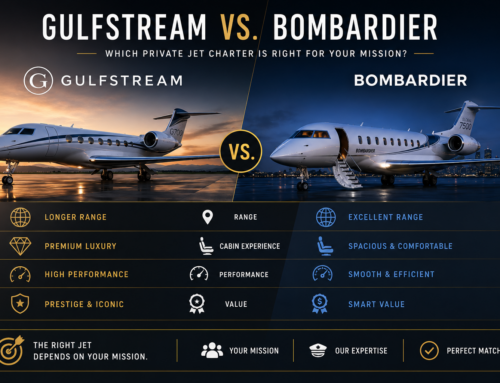
Likewise, it can explain how a Gulfstream compares with a Bombardier, how international missions differ from domestic flights, how an executive assistant should plan a trip, and how a family office can evaluate private aviation options.
More importantly, it can show exactly where the company has genuine expertise.
That difference is enormous.
Think in Evidence, Not Just Pages
Therefore, the 1,000-page model is not really about publishing 1,000 pages.
Instead, it is about creating 1,000 pieces of useful evidence.
For example, every airport can add geographic evidence, while every route adds mission evidence. Meanwhile, every aircraft page adds product knowledge, and every comparison adds decision-stage context.
Likewise, every buyer answer adds expertise. Furthermore, every legitimate external citation adds third-party evidence.
Finally, every meaningful internal link helps connect that evidence into a coherent structure.
Make Competitors Rebuild the Entire System
Eventually, competitors are no longer trying to outrank one blog.
Instead, they are trying to recreate an entire body of knowledge.
That is considerably more difficult.
Moreover, that knowledge remains valuable whether the customer begins with Google, ChatGPT, Gemini, Perplexity, another AI assistant, or a traditional search result.
Therefore, do not build 1,000 pages because somebody told you AI likes content.
Build the network because your market contains hundreds of airports, routes, aircraft, questions, comparisons, missions, and buyer decisions worth owning.
Then, connect those assets logically. Additionally, verify them, add first-party expertise, strengthen them with external evidence, and measure which ones create qualified discovery and revenue.
Finally, continue expanding the parts of the network that matter most.
That is Private Aviation AI Authority Architecture.
Ultimately, that is how you turn a private aviation website into a digital asset your competitors cannot easily duplicate.
Build a Private Aviation Authority Network Your Competitors Cannot Easily Replicate
Infinite Media Resources builds large-scale private aviation SEO and GEO systems around airport authority, aircraft expertise, route-pair intent, destination coverage, buyer questions, structured entity relationships, internal linking, external citations, first-party expertise, and measurable digital real estate.
Instead of competing for only a handful of generic keywords, the strategy systematically increases the number of commercially meaningful subjects for which your brand has credible authority.
Therefore, each new authority node can strengthen the larger acquisition system rather than operating as another disconnected blog post.
Explore Infinite Media Resources’ Private Aviation Marketing Resources.
About the author : Anthony Paulino