Description
Business Books / Offers / Pricing / Entrepreneurship
$100M Offers by Alex Hormozi: Review, Summary, Key Takeaways & Where to Buy
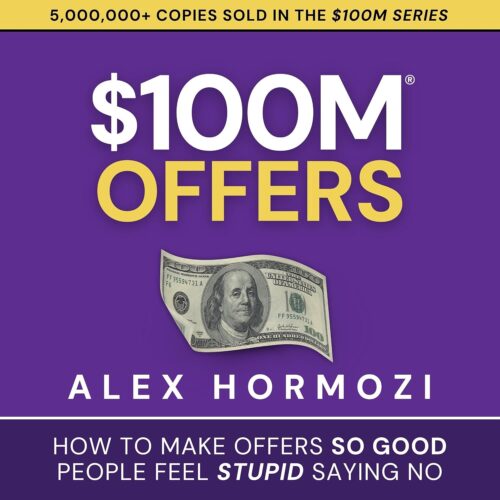
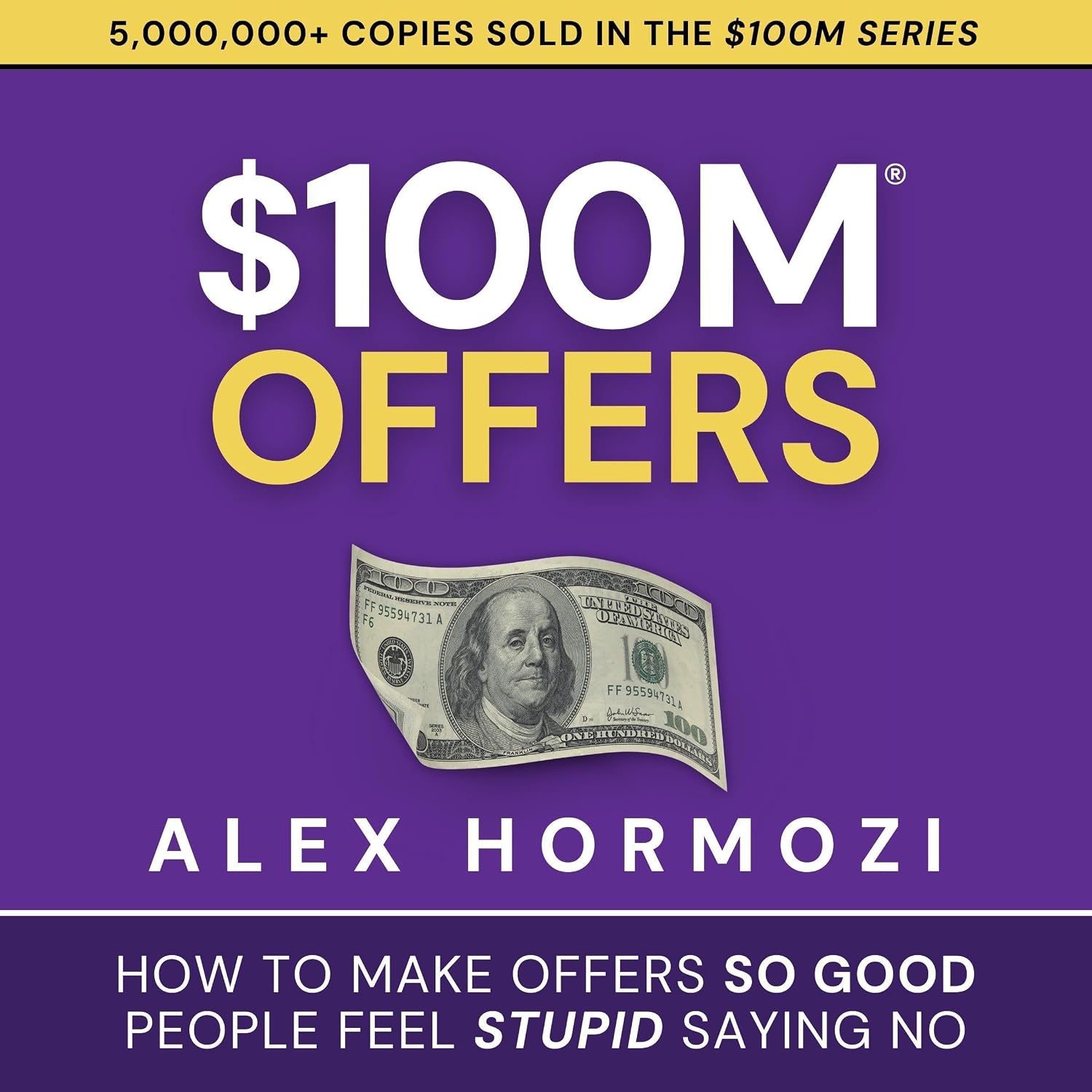
Direct Answer: $100M Offers: How To Make Offers So Good People Feel Stupid Saying No by Alex Hormozi is a practical business book about creating offers customers perceive as significantly more valuable than their price. It is especially useful for entrepreneurs, agencies, consultants, coaches, and service businesses that want to improve pricing, differentiation, conversion, and customer acquisition.
Most businesses try to increase sales by generating more leads. However, $100M Offers makes a different argument: sometimes the real constraint is not traffic at all.
Instead, the business may simply be presenting an offer that looks too similar to everything else in the market.
Therefore, the book focuses on increasing the gap between what a customer believes an outcome is worth and what the customer must exchange to receive it.
That makes $100M Offers more than a book about pricing. Instead, it is a framework for redesigning the economics, positioning, risk, speed, convenience, and perceived value of what you sell.
Author: Alex Hormozi
Primary Topic: Offer creation and pricing strategy
Best For: Entrepreneurs, service businesses, agencies, consultants, coaches, sales teams, and business owners
Experience Level: Beginner to advanced
IMR Verdict: One of the strongest practical starting points for learning how to create and price a compelling business offer.
Affiliate Disclosure: As an Amazon Associate, Infinite Media Resources earns from qualifying purchases. You do not pay an additional cost when purchasing through our affiliate links.
Is $100M Offers Worth Reading?
Direct Answer: Yes. $100M Offers is worth reading if you sell a product or service and want to improve how you package, position, differentiate, or price it. The book is particularly valuable for businesses competing on price because it provides a framework for increasing perceived value instead of continually discounting.
The book’s greatest strength is practicality. Rather than discussing marketing only in abstract terms, Hormozi organizes offer creation around concrete questions.
For example:
- What does the customer actually want?
- How valuable is that outcome?
- How strongly does the customer believe your offer will work?
- How long must the customer wait?
- How much effort must the customer contribute?
- What risks prevent the customer from buying?
- How can the solution become meaningfully different from alternatives?
Consequently, the book becomes useful even when you do not copy Hormozi’s exact tactics.
Instead, you can use the underlying questions to evaluate almost any offer.
Who Gets the Most Value From $100M Offers?
Owners of service businesses may receive the greatest immediate benefit because service pricing frequently becomes difficult to compare objectively.
For example, two SEO agencies may both call their service “SEO.” However, one may sell four generic articles each month while another builds a comprehensive search-demand capture system tied to lead attribution and revenue.
Therefore, the label alone does not explain the value.
What Is the Book’s Biggest Strength?
The book forces the reader to separate what is delivered from what the customer values.
That distinction can completely change positioning.
What Is a Potential Weakness?
Some examples and language reflect aggressive direct-response marketing. Therefore, businesses with long enterprise sales cycles, regulated industries, prestige brands, or relationship-driven markets should adapt the principles rather than copy every tactic literally.
Nevertheless, the core logic around value, differentiation, risk, speed, and customer effort applies broadly.
What Is $100M Offers About?
Direct Answer: $100M Offers teaches business owners how to create what Alex Hormozi calls a “Grand Slam Offer”: an offer designed to become difficult to compare directly with competing alternatives because it combines a desirable outcome, strong perceived probability of success, reduced delay, reduced effort, bonuses, risk reversal, and strategic pricing.
The central problem addressed by the book is commoditization.
When customers perceive every provider as equivalent, they naturally compare prices.
For example, imagine five agencies all selling:
- SEO
- Google Ads
- Facebook Ads
- Social media management
If every agency presents the same list, customers can simply ask which provider costs less.
However, a provider can change the comparison by creating a more complete and distinctive offer.
Instead of “SEO,” the agency might sell a complete system that includes:
- Search-demand mapping
- Technical SEO
- GEO optimization
- Content architecture
- Schema implementation
- Internal linking
- Publishing
- Conversion optimization
- Lead tracking
- CRM attribution
Therefore, the customer no longer compares one generic SEO package against another.
Instead, the customer evaluates an entirely different value proposition.
That is the broader strategic idea behind much of $100M Offers.
What Problem Is Hormozi Trying to Solve?
The book focuses heavily on the problem of competing primarily on price.
Hormozi’s official Acquisition.com material continues to describe $100M Offers as the foundation of the company’s book sequence, while its current materials position $100M Leads as the next problem after a business has an offer worth selling. The official store describes the first book around creating a “Grand Slam Offer” before moving into lead generation.
Who Is Alex Hormozi?
Direct Answer: Alex Hormozi is an entrepreneur, investor, author, and co-founder of Acquisition.com. His business education focuses heavily on offers, lead generation, monetization, sales, customer acquisition, and scaling businesses.
Before becoming widely known for business education, Hormozi built businesses in the fitness industry and later moved into investing and business acquisition.
Additionally, Acquisition.com’s current book ecosystem includes $100M Offers, $100M Leads, and $100M Money Models.
Therefore, $100M Offers should be viewed as the offer-design foundation inside a broader customer acquisition and monetization framework.
For additional background, read our Who Is Alex Hormozi? guide.
Who Should Read $100M Offers?
$100M Offers is particularly useful for people who already have something to sell but struggle with positioning, differentiation, pricing, or conversion.
Entrepreneurs
Entrepreneurs can use the framework to determine whether a product needs more traffic or simply a stronger offer.
Digital Marketing Agencies
Agencies can use the framework to move away from interchangeable deliverables and toward specialized business outcomes.
Contractors and Home Improvement Companies
Contractors can improve the buying experience by adding certainty, convenience, financing support, faster communication, stronger warranties, better project visibility, and other forms of value instead of automatically lowering estimates.
Consultants and Coaches
Consultants can package expertise around a defined transformation rather than selling hours or meetings.
SaaS Companies
Software companies can use the framework to improve onboarding, speed to first value, implementation support, proof, packaging, and pricing.
Sales Teams
Salespeople can use the concepts to understand why certain deals repeatedly encounter price objections.
Who May Get Less Value From the Book?
Readers looking primarily for accounting, operations, organizational leadership, investing, or technical product development will need additional books.
Additionally, enterprise sellers should adapt the frameworks to longer procurement processes and more complex buying committees.
What Are the Biggest Lessons From $100M Offers?
Direct Answer: The biggest lessons from $100M Offers involve choosing a market with strong demand, creating a differentiated Grand Slam Offer, increasing perceived value through the Value Equation, solving customer obstacles with bonuses, reducing risk through guarantees, and using pricing, scarcity, and urgency strategically.
1. Choose the Market Before Perfecting the Offer
A brilliant offer becomes much easier to sell when the market already wants the result.
Therefore, Hormozi emphasizes choosing markets with meaningful pain and purchasing ability rather than trying to manufacture desire in a market that barely cares.
For a deeper explanation, read How to Find a “Starving Crowd”: Alex Hormozi’s Niche Selection Framework.
2. Do Not Compete Only on Price
When an offer looks interchangeable, customers compare prices.
Therefore, businesses should alter the value proposition rather than automatically discount.
3. Sell the Outcome, Not the Deliverables
Customers generally care more about the result than the mechanism.
For example, a contractor does not buy a CRM because storing contact records feels exciting. Instead, the contractor wants fewer missed leads, better sales accountability, and more closed jobs.
4. Increase Certainty
A desirable promise has little value when the buyer does not believe it.
Therefore, proof, process, specialization, demonstrations, case studies, guarantees, and transparency can increase perceived likelihood.
5. Reduce Time to Value
Customers prefer meaningful results sooner.
Therefore, removing unnecessary delays can make the same fundamental outcome feel significantly more valuable.
6. Reduce Customer Effort
The easier the path becomes, the more attractive the offer can become.
Consequently, done-for-you implementation often supports premium pricing.
7. Solve Obstacles With Bonuses
A useful bonus should eliminate another reason the customer might fail.
Therefore, good bonuses complete the solution instead of merely making the offer appear larger.
8. Reverse Risk
The customer often carries substantial uncertainty before purchasing.
Therefore, appropriate guarantees can shift some risk back toward the seller.
9. Make Pricing Part of the Strategy
Price affects customer expectations, margins, delivery quality, positioning, and acquisition economics.
Consequently, pricing should not be treated as a number chosen after the offer is finished.
What Is a Grand Slam Offer in $100M Offers?
Direct Answer: A Grand Slam Offer is Hormozi’s term for an offer designed to provide unusually strong perceived value while becoming difficult to compare directly against competing products or services. The goal is to create enough differentiation that the buying decision shifts away from simple price comparison.
This is one of the most important concepts in the book.
Consider two agencies.
Agency A
“SEO Services — $2,500 per month.”
Agency B
“A complete search and AI authority system designed to map buyer intent, build topic coverage, publish optimized pages, create structured entity relationships, improve conversion paths, and connect opportunities to CRM attribution.”
Agency B may still provide SEO.
However, the offer now contains a larger strategic mechanism and a more explicit outcome.
Therefore, comparing the two providers solely on monthly price becomes more difficult.
What Makes an Offer Difficult to Compare?
- A specialized target customer
- A distinctive mechanism
- Clear deliverables tied to outcomes
- Better proof
- Faster implementation
- Reduced customer workload
- Relevant bonuses
- Risk reversal
- Better support
- A stronger buying experience
However, differentiation should represent real differences.
Simply renaming a generic service does not create meaningful value.
What Is the Value Equation in $100M Offers?
Direct Answer: The Value Equation describes value as increasing when the customer’s Dream Outcome and Perceived Likelihood of Achievement increase while Time Delay and Effort and Sacrifice decrease. Therefore, an offer becomes more attractive when the result feels bigger, more believable, faster, and easier.
The framework can be written conceptually as:
Value = (Dream Outcome × Perceived Likelihood of Achievement) ÷ (Time Delay × Effort and Sacrifice)
Dream Outcome
The Dream Outcome represents what the customer ultimately wants.
For example, a roofing customer does not simply want shingles. Instead, the homeowner wants a safe, attractive, dry home with confidence that the project was completed correctly.
Perceived Likelihood of Achievement
This measures how strongly the customer believes the offer will work.
Therefore, relevant proof can dramatically affect value.
Time Delay
This represents how long the customer must wait for meaningful benefit.
Consequently, reducing time to first value can strengthen an offer even when the final outcome still requires time.
Effort and Sacrifice
This represents what the customer must do, learn, risk, tolerate, or change.
Therefore, easier implementation can justify higher prices.
For our complete breakdown, read The Alex Hormozi Value Equation Explained.
What Does $100M Offers Teach About Choosing a Market?
Direct Answer: Hormozi’s framework emphasizes choosing markets that already contain strong demand rather than relying on exceptional persuasion to create desire. In practice, attractive markets combine meaningful pain, buyers with purchasing power, identifiable prospects, and favorable market dynamics.
Market selection matters because every downstream marketing problem becomes harder when the audience lacks urgency.
For example, compare:
- A homeowner casually considering a cosmetic improvement someday
- A homeowner discovering active water intrusion through the roof
Both customers may eventually purchase contractor services.
However, the second customer experiences substantially greater urgency.
Likewise, an agency selling optional social media posting faces a different market than an agency solving an expensive customer-acquisition constraint.
Therefore, before improving copy, funnels, bonuses, or guarantees, businesses should verify that the market actually cares about the problem.
Read our full Alex Hormozi Starving Crowd Framework for the deeper niche-selection model.
What Does $100M Offers Teach About Pricing?
Direct Answer: $100M Offers argues against competing primarily by lowering prices. Instead, the framework emphasizes increasing the customer’s perceived value and creating a stronger price-to-value discrepancy so the offer can support healthier margins and greater differentiation.
This matters because discounting has limits.
A business can eventually reach zero.
However, value can potentially increase through:
- Better outcomes
- Greater certainty
- Faster delivery
- Less effort
- Better support
- More complete implementation
- Risk reduction
- Improved convenience
- Specialization
Therefore, a business facing constant price objections should not immediately ask, “How much should we discount?”
Instead, ask:
“Why does the customer currently believe our offer is worth only this amount?”
Can You Charge More by Simply Raising the Price?
No sustainable framework can make an arbitrary price automatically justified.
Instead, the business should improve the underlying offer and communicate the added value clearly.
For a deeper explanation, read How to Increase Prices Using the Alex Hormozi Value Equation.
What Does $100M Offers Teach About Bonuses?
Direct Answer: Bonuses should increase the completeness and usefulness of an offer by solving additional customer obstacles. Therefore, the strongest bonuses are not unrelated giveaways; instead, they help the customer achieve the core result faster, more easily, or with greater confidence.
For example, imagine a company selling CRM implementation.
The core offer may install and configure the CRM.
However, customers could still fail because they lack:
- Sales pipeline definitions
- Follow-up templates
- Lead-source tracking
- Salesperson training
- Dashboard configuration
Therefore, each missing component could become a useful bonus or included implementation feature.
A Good Bonus Answers an Objection
If the customer says, “My salespeople will never use it,” a training package may solve the obstacle.
If the customer says, “We do not know how to migrate the contacts,” migration support may solve another obstacle.
Consequently, bonuses can strengthen the offer when they emerge from genuine customer friction.
What Does $100M Offers Say About Guarantees?
Direct Answer: Guarantees can increase perceived value by reducing the customer’s sense of risk. However, businesses should design guarantees around outcomes or conditions they can responsibly influence rather than promising results they cannot control.
Risk exists in almost every purchase.
A customer may fear:
- Losing money
- Wasting time
- Choosing the wrong provider
- Experiencing implementation problems
- Receiving poor quality
- Failing to achieve the promised result
Therefore, a strong guarantee can address a specific fear.
Examples of Responsible Risk Reversal
- Workmanship guarantees
- Implementation guarantees
- Delivery-date commitments
- Milestone guarantees
- Conditional performance commitments
- Satisfaction policies
However, guarantees should not become substitutes for delivery quality.
Instead, businesses should build reliable fulfillment first and then create risk reversal around what they can reasonably control.
What Does $100M Offers Teach About Scarcity and Urgency?
Direct Answer: Scarcity limits the quantity or availability of an offer, while urgency limits the time available to act. Both can increase action when the constraints are genuine. However, fabricated scarcity or constantly resetting deadlines can damage trust.
Real Scarcity Can Include:
- Limited inventory
- Limited implementation capacity
- Geographic exclusivity
- Limited seats
- Limited project slots
- Limited access to a specialist
Real Urgency Can Include:
- Seasonal deadlines
- Event dates
- Registration deadlines
- Expiring bonuses
- Contract renewal periods
- Scheduled pricing changes
Therefore, scarcity and urgency work best when they explain a legitimate constraint rather than manufacture pressure.
How Do You Apply $100M Offers to a Real Business?
Reading the framework is useful. However, the business gains value only when it translates the concepts into actual offer changes.
Step 1: Choose One Specific Customer
Do not begin with “everyone who could possibly buy.”
Instead, identify the buyer with the strongest pain and economic incentive to solve it.
Step 2: Identify the Dream Outcome
Ask what the customer actually wants after the product works.
Step 3: List Every Obstacle
Write down everything that could prevent the customer from reaching the desired outcome.
For example:
- Not enough time
- Lack of expertise
- Fear of making the wrong choice
- Technical complexity
- Slow implementation
- Internal resistance
- Budget uncertainty
Step 4: Create Solutions for Those Obstacles
Some solutions belong inside the core offer.
Meanwhile, others can become bonuses, support services, guarantees, templates, training, or implementation assistance.
Step 5: Increase Certainty
Add relevant proof, transparency, milestones, demonstrations, and a clear process.
Step 6: Reduce Time to First Value
Create an early win.
Step 7: Remove Customer Work
Determine which responsibilities your business can perform faster or better than the customer.
Step 8: Design Risk Reversal
Address the buyer’s largest reasonable fear.
Step 9: Set the Price
Price the complete offer rather than adding up the hours required to deliver each component.
Step 10: Test the Offer With Real Buyers
Ultimately, customers determine whether the value proposition works.
How Can Contractors Apply $100M Offers?
Contractors provide an excellent example because homeowners frequently compare several proposals.
Therefore, a contractor that looks identical to every competitor often becomes trapped in price competition.
Typical Roofing Offer
“Free estimate for roof replacement.”
Stronger Offer
A contractor might instead provide:
- Complete roof-condition inspection
- Photo documentation
- Repair-versus-replacement analysis
- Material recommendations
- Ventilation evaluation
- Warranty explanation
- Financing guidance
- Property protection plan
- Cleanup standards
- Dedicated project communication
- Final quality inspection
Although the contractor still installs a roof, the customer experiences a more complete offer.
Increase the Dream Outcome
Sell confidence, property protection, curb appeal, convenience, and long-term reliability rather than shingles alone.
Increase Perceived Likelihood
Use local project examples, reviews, certifications, process documentation, warranties, and detailed proposals.
Reduce Time Delay
Offer faster inspections, rapid estimate delivery, predictable scheduling, and proactive project updates.
Reduce Effort
Handle permits, scheduling, material coordination, cleanup, warranty registration, and appropriate documentation.
Therefore, the contractor can create a premium buying experience without becoming the lowest bidder.
For the systems behind contractor lead management, read Best CRM for Contractors.
How Can Digital Marketing Agencies Apply $100M Offers?
Marketing agencies frequently sell interchangeable services.
For example:
- SEO
- PPC
- Social media
- Web design
- Email marketing
However, clients rarely wake up wanting “SEO.”
Instead, they want outcomes such as:
- Qualified demand
- More booked opportunities
- Lower dependence on shared leads
- Greater market visibility
- Better customer acquisition economics
- More predictable growth
Therefore, an agency can apply Hormozi’s framework by packaging the mechanism around the outcome.
Example: Generic SEO Retainer
Four articles each month, keyword tracking, and a monthly report.
Example: Digital Authority System
- Market and competitor research
- Search-demand architecture
- SEO content production
- GEO optimization
- Entity development
- Schema
- Internal linking
- Conversion pathways
- Publishing
- CRM attribution
- Performance tracking
Consequently, the client purchases a broader business asset rather than a small quantity of monthly marketing activity.
This is also why the 1,000-Page Digital Real Estate Model can be framed differently from a traditional content retainer: the asset being built is meant to expand a company’s owned search footprint rather than merely rent temporary attention.
What Are the Pros and Cons of $100M Offers?
Pros
- Practical: The frameworks can be applied directly to real offers.
- Easy to understand: Complex pricing and positioning concepts become relatively simple.
- Useful across industries: The principles can apply to agencies, contractors, consultants, SaaS, coaching, and other businesses.
- Strong pricing perspective: The book pushes businesses away from automatic discounting.
- Customer-centered: Much of the framework focuses on improving the customer’s experience and outcome.
- Action-oriented: Readers can audit an existing offer immediately.
- Strong foundation: The concepts naturally connect to lead generation, funnels, sales, and monetization.
Cons
- Direct-response orientation: Some tactics require adaptation for enterprise, regulated, or prestige markets.
- Not a complete business system: The book does not replace finance, operations, management, product development, or fulfillment strategy.
- Easy to misuse: Readers can add unnecessary bonuses instead of improving the core offer.
- Execution still matters: A sophisticated offer cannot compensate for unreliable delivery.
Should You Buy $100M Offers?
Direct Answer: Buy $100M Offers if you own, market, or sell a business offer and want a practical framework for increasing perceived value, improving differentiation, reducing price sensitivity, and presenting the offer more effectively. It is especially worthwhile when prospects regularly compare your service against cheaper alternatives.
The book is inexpensive relative to the potential value of improving a commercially important offer.
For example, even a small improvement in conversion, average transaction value, or gross margin can matter significantly for a business with substantial customer volume.
However, the book should not become an excuse to inflate prices without improving delivery.
Instead, use the framework to make the offer genuinely better.
Therefore, the strongest use of $100M Offers is not simply learning how to describe more value.
It is learning how to build more value into the buying experience itself.
Where Can You Buy $100M Offers?
Direct Answer: You can check the current Amazon listing for $100M Offers using the link below. Because Amazon pricing, editions, formats, and availability can change, check the current product listing before purchasing.
$100M Offers: How To Make Offers So Good People Feel Stupid Saying No
Author: Alex Hormozi
Topic: Business strategy, offers, pricing, marketing, and entrepreneurship
Best For: Business owners who sell products or services and want to increase the value of their offer.
Formats: Check Amazon for currently available formats and editions.
As an Amazon Associate, Infinite Media Resources earns from qualifying purchases.
What Books Are Similar to $100M Offers?
Several business books complement $100M Offers by expanding into lead generation, funnel design, messaging, and persuasion.
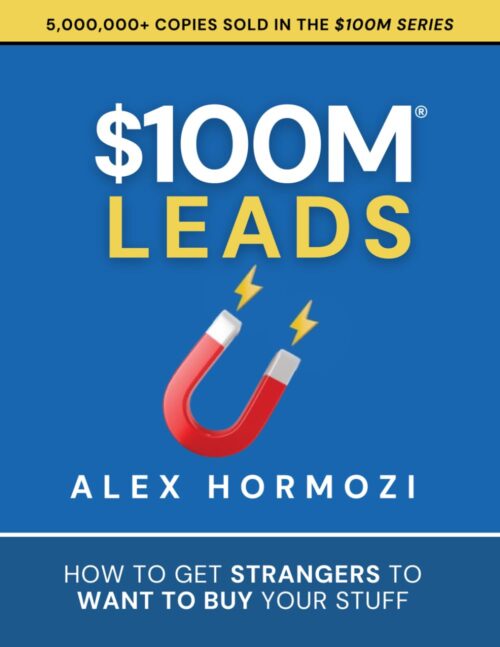
$100M Leads by Alex Hormozi
Read this after $100M Offers when your next problem becomes generating more qualified prospects for the offer.
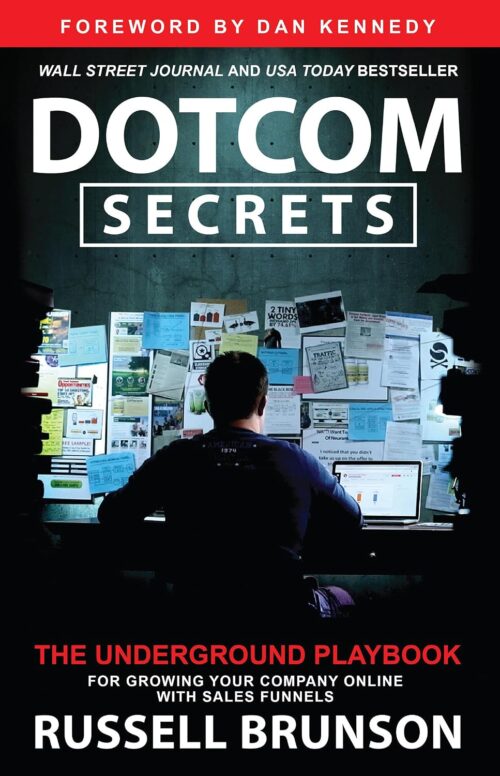
DotCom Secrets by Russell Brunson
DotCom Secrets is a useful companion when you want to understand how offers move through landing pages, value ladders, follow-up sequences, and sales funnels.
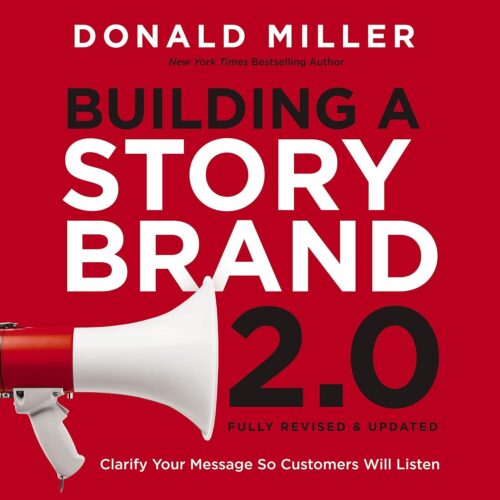
Building a StoryBrand by Donald Miller
Building a StoryBrand complements Hormozi’s offer framework by focusing on clear customer-centered messaging.
Influence: The Psychology of Persuasion by Robert Cialdini
Influence provides a deeper foundation in buyer psychology, social proof, authority, reciprocity, commitment, scarcity, and related persuasion principles.
How Does $100M Offers Compare With Other Business Books?
| Book | Best For | Main Focus | Recommended Reading Stage |
|---|---|---|---|
| $100M Offers | Entrepreneurs with something to sell | Offer creation and pricing | Start here |
| $100M Leads | Businesses that need more prospects | Lead generation | After the offer |
| DotCom Secrets | Businesses building online funnels | Funnel architecture | Before or alongside funnel construction |
| Building a StoryBrand | Businesses with confusing messaging | Brand and sales messaging | Before writing funnel copy |
| Influence | Marketers and salespeople | Buyer psychology | Any stage |
For a complete combined reading plan, read The 5 Must-Read Books Before Building Your First Sales Funnel.
$100M Offers vs. $100M Leads: Which Should You Read First?
Direct Answer: Read $100M Offers before $100M Leads if you are starting from the beginning. First, create an offer worth promoting. Then, use $100M Leads to increase the number of qualified people who encounter that offer.
This sequence also aligns with Acquisition.com’s current official positioning of the books. Its store describes $100M Leads as building on the foundation of $100M Offers, assuming the reader already has an offer to sell.
See the official $100M book series
Choose $100M Offers If Your Problem Is:
- Prospects say the price is too high.
- Your service looks like competitors’ services.
- You struggle to explain why customers should choose you.
- You discount frequently.
- Your offer lacks a clear transformation.
- Your proposal feels like a list of deliverables.
Choose $100M Leads If Your Problem Is:
- Your offer converts well but not enough people see it.
- You need more lead-generation channels.
- You need better outreach volume.
- You want more content-driven demand.
- You need to scale advertising or prospecting.
What Order Should You Read Alex Hormozi’s Books?
Direct Answer: For most business owners, the logical sequence is $100M Offers first, followed by $100M Leads, and then $100M Money Models. The sequence moves from creating something worth buying, to generating demand, to expanding how the business monetizes customers.
1. $100M Offers
Create a compelling offer.
2. $100M Leads
Generate more qualified opportunities for that offer.
3. $100M Money Models
Expand the economic model around acquiring, monetizing, and retaining customers.
Therefore, the books can be treated as a progression rather than unrelated titles.
How Should You Take Notes While Reading $100M Offers?
Do not simply highlight memorable sentences.
Instead, read with your current offer beside you.
Create Four Columns
| Question | Current State | Problem | Improvement |
|---|---|---|---|
| What is the Dream Outcome? | [Your answer] | [Weakness] | [Improvement] |
| Why should customers believe us? | [Your answer] | [Weakness] | [Improvement] |
| How long until value appears? | [Your answer] | [Weakness] | [Improvement] |
| What effort does the customer carry? | [Your answer] | [Weakness] | [Improvement] |
Additionally, keep a running list of every customer objection.
Then, ask whether each objection should be solved through:
- The core service
- A bonus
- Better proof
- Better onboarding
- A guarantee
- A faster process
- A clearer explanation
Consequently, reading becomes an active offer-development exercise.
What Should You Do After Reading $100M Offers?
The most important next step is not reading another book immediately.
Instead, rebuild one offer.
Use This $100M Offers Implementation Checklist
- Choose one customer segment.
- Write the customer’s most important desired outcome.
- List every obstacle that prevents the outcome.
- Create solutions for each important obstacle.
- Improve proof.
- Shorten time to first value.
- Remove unnecessary customer effort.
- Build responsible risk reversal.
- Package the solution clearly.
- Set pricing around the complete value proposition.
- Present the offer to qualified prospects.
- Record objections.
- Improve the offer again.
After the offer converts consistently, $100M Leads becomes a logical next step.
Frequently Asked Questions About $100M Offers
What is $100M Offers about?
Direct Answer: $100M Offers is about creating highly differentiated business offers that customers perceive as significantly more valuable than their price. The book covers market selection, value creation, pricing, bonuses, guarantees, scarcity, urgency, and Hormozi’s Grand Slam Offer framework.
Who wrote $100M Offers?
Direct Answer: Alex Hormozi wrote $100M Offers. He is an entrepreneur, investor, author, and co-founder of Acquisition.com.
What is the full title of $100M Offers?
Direct Answer: The book is titled $100M Offers: How To Make Offers So Good People Feel Stupid Saying No.
Is $100M Offers worth reading?
Direct Answer: Yes, particularly for entrepreneurs and service businesses struggling with differentiation, pricing, value communication, or price objections.
Is $100M Offers good for beginners?
Direct Answer: Yes. The frameworks are straightforward enough for beginners, although experienced entrepreneurs can also use them to audit and improve existing offers.
What is the main lesson of $100M Offers?
Direct Answer: One of the book’s central lessons is that businesses can reduce price competition by creating significantly more perceived value rather than simply lowering prices.
What is a Grand Slam Offer?
Direct Answer: A Grand Slam Offer is Hormozi’s term for a highly differentiated offer designed to provide compelling value and become difficult to compare directly with competing alternatives.
What is the $100M Offers Value Equation?
Direct Answer: The Value Equation says value increases as Dream Outcome and Perceived Likelihood of Achievement increase and as Time Delay and Effort and Sacrifice decrease.
What is the Dream Outcome?
Direct Answer: The Dream Outcome is the ultimate result or transformation the customer wants rather than the individual deliverables used to produce it.
What does Perceived Likelihood of Achievement mean?
Direct Answer: It represents how strongly the buyer believes the offer will actually produce the desired result.
What does Time Delay mean in $100M Offers?
Direct Answer: Time Delay represents how long the customer expects to wait before receiving meaningful value or the desired outcome.
What do Effort and Sacrifice mean in $100M Offers?
Direct Answer: Effort and Sacrifice include the work, inconvenience, complexity, behavior change, risk, and disruption the customer must accept to achieve the outcome.
Does $100M Offers teach pricing?
Direct Answer: Yes. Pricing is an important component of the framework, particularly the idea that businesses should increase value rather than automatically competing through discounts.
Does $100M Offers teach marketing?
Direct Answer: Yes, although the book focuses specifically on market selection, offer design, value, positioning, pricing, bonuses, guarantees, scarcity, and urgency rather than providing a complete marketing curriculum.
Does $100M Offers teach sales?
Direct Answer: The book can improve sales by strengthening what salespeople present. However, it is primarily an offer-creation book rather than a complete sales methodology.
Does $100M Offers work for service businesses?
Direct Answer: Yes. Service businesses can apply the framework to outcomes, packaging, implementation, proof, guarantees, convenience, and pricing.
Does $100M Offers work for contractors?
Direct Answer: Yes. Contractors can use the framework to differentiate through inspection quality, project certainty, communication, financing, warranties, convenience, speed, documentation, and customer experience rather than competing on price alone.
Does $100M Offers work for marketing agencies?
Direct Answer: Yes. Agencies can use the framework to move from generic deliverables toward specialized offers built around measurable business outcomes.
Should I read $100M Offers or $100M Leads first?
Direct Answer: Read $100M Offers first if you are following the series from the beginning. Create an offer worth promoting before focusing on generating significantly more leads.
What comes after $100M Offers?
Direct Answer: $100M Leads is the natural next book because it focuses on generating more prospects after the business has a compelling offer.
Is there a $100M Offers audiobook?
Direct Answer: Audio versions of $100M Offers exist through official distribution channels. However, current availability can change, so check the current Amazon or official Acquisition.com listing for available formats.
Is $100M Offers available on Kindle?
Direct Answer: Format availability can change by marketplace and edition. Therefore, check the current Amazon listing to confirm whether a Kindle edition is presently available.
Is there a physical version of $100M Offers?
Direct Answer: Yes, physical copies are available through book retailers and Acquisition.com’s current book ecosystem. Check the current Amazon listing for the exact edition and availability.
Can I learn $100M Offers for free?
Direct Answer: Acquisition.com currently provides free training and educational material related to the $100M book frameworks. However, the physical or commercial book remains a convenient structured version of the material.
Where can I buy $100M Offers?
Direct Answer: You can check the current Amazon listing through the link below for available formats, editions, pricing, and delivery options.
Our Final Verdict on $100M Offers
$100M Offers earns its place as one of the first books we would recommend to entrepreneurs who already have something to sell but struggle with differentiation or pricing.
The reason is simple.
Many business books tell readers to work harder, advertise more, or sell more aggressively.
However, $100M Offers forces the reader to improve the thing being sold first.
Therefore, the book changes the question from:
“How do we convince more people to buy this?”
to:
“How do we make this substantially more valuable to the right customer?”
That distinction matters.
A better offer can improve advertising.
Additionally, it can improve sales conversations, pricing power, customer satisfaction, referrals, retention, and profit margins.
Nevertheless, the frameworks work only when the business fulfills what it promises.
Therefore, do not use the book merely to increase perceived value.
Use it to increase actual value as well.
If you own a business, run an agency, sell consulting, operate a contracting company, build SaaS, or create almost any product where customers compare alternatives, $100M Offers deserves serious consideration.
As an Amazon Associate, Infinite Media Resources earns from qualifying purchases.
Continue Learning the $100M Offers Framework
-
The Alex Hormozi Value Equation Explained
-
How to Find a “Starving Crowd”: Alex Hormozi’s Niche Selection Framework
-
The Alex Hormozi Playbook
-
Who Is Alex Hormozi?
-
The 3 Alex Hormozi Books You Must Read
-
The Alex Hormozi $100M Leads Checklist for B2B Agencies
-
The 5 Must-Read Books Before Building Your First Sales Funnel