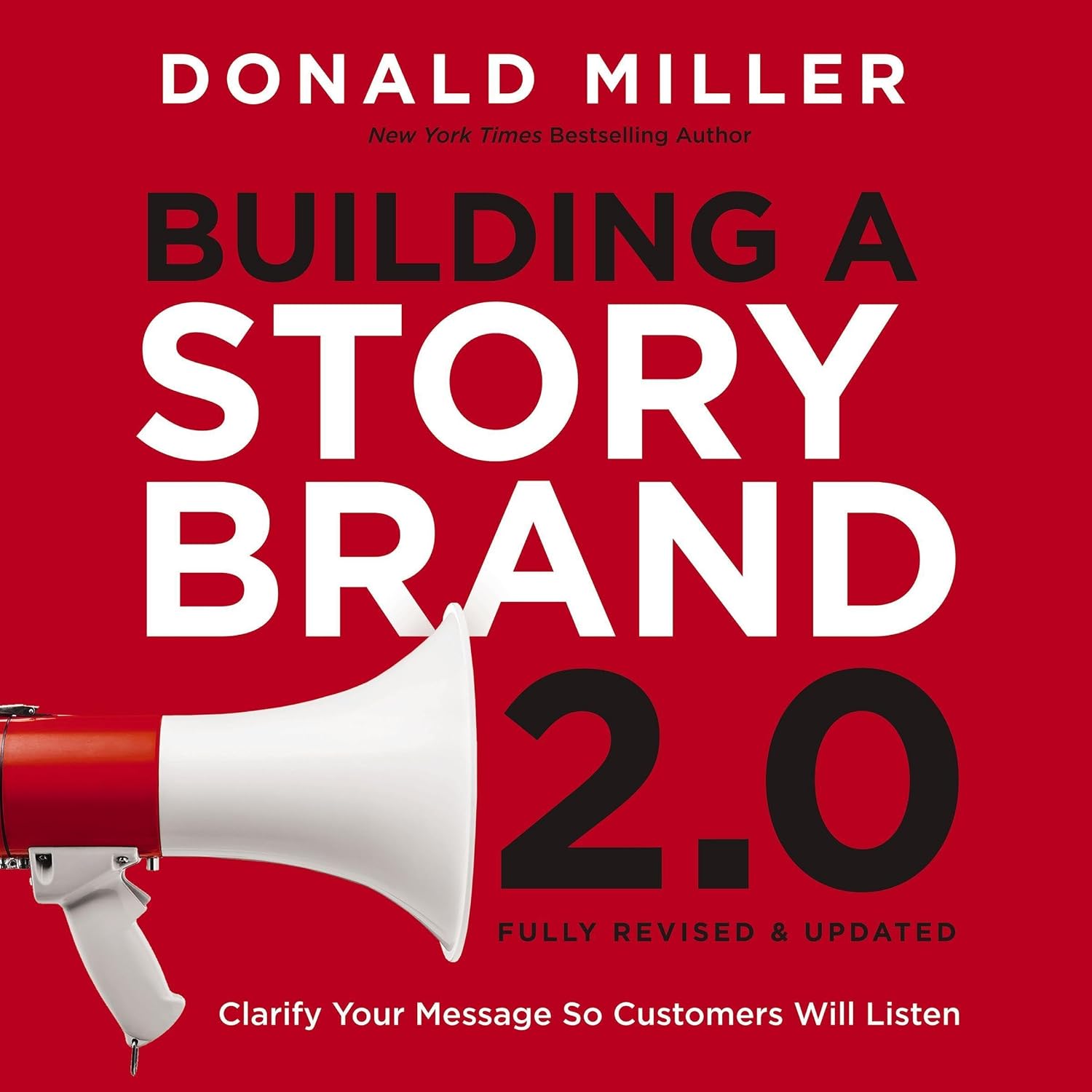
Building a StoryBrand by Donald Miller: Review, Summary, Key Takeaways & Where to Buy
$14.99
Learn Donald Miller’s 7-part StoryBrand Framework for clarifying your message, positioning the customer as the hero, and making your offer easier to understand. Best for business owners and marketers who want clearer websites, stronger sales copy, and messaging customers quickly understand.
Description
Business Books / Marketing / Branding / Copywriting / Customer Messaging
Building a StoryBrand by Donald Miller: Review, Summary, Key Takeaways & Where to Buy
Direct Answer: Building a StoryBrand by Donald Miller teaches businesses to clarify their marketing by positioning the customer as the hero and the company as the guide. Its seven-part StoryBrand Framework helps businesses explain the customer’s problem, present a plan, create clear calls to action, show the stakes, and communicate the successful transformation their product or service can help create.
Your company is probably not as easy to understand as you think it is.
You know the product.
You understand the industry.
Additionally, you know what separates your company from competitors.
However, your customer may give your website only a few seconds before deciding whether any of that matters.
That gap between what a company knows and what a customer understands is where Building a StoryBrand becomes valuable.
Donald Miller’s central idea is deceptively simple:
Your customer should be the hero of the story. Your company should be the guide helping that hero succeed.
Consequently, marketing becomes less about telling customers how impressive the company is and more about helping customers quickly understand what the company can do for them.
Instead of:
“We’ve been an industry-leading company since 1987.”
the message moves toward:
“Here is the problem we help you solve, here is how we solve it, and here is what your life looks like afterward.”
That change sounds small.
However, it can completely alter how a website, advertisement, landing page, email campaign, presentation, or sales conversation communicates value.
Author: Donald Miller
Primary Topic: Marketing messaging and brand communication
Core Framework: The 7-Part StoryBrand Framework
Best For: Business owners, entrepreneurs, marketers, agencies, consultants, contractors, sales teams, and anyone responsible for explaining what a company sells
Experience Level: Beginner to advanced
Best Read Alongside: DotCom Secrets, $100M Offers, Influence, and Marketing Made Simple
IMR Verdict: One of the most practical business books for fixing confusing marketing. Its greatest strength is forcing companies to stop talking about themselves and start explaining how they help customers succeed.
Short Description
Learn Donald Miller’s 7-part StoryBrand Framework for clarifying your message, positioning the customer as the hero, and making your offer easier to understand. Best for business owners and marketers who want clearer websites, stronger sales copy, and messaging customers quickly understand.
View Building a StoryBrand on Amazon
Affiliate Disclosure: As an Amazon Associate, Infinite Media Resources earns from qualifying purchases. You do not pay an additional cost when purchasing through our affiliate links.
Is Building a StoryBrand Worth Reading?
Direct Answer: Yes. Building a StoryBrand is worth reading for almost anyone responsible for marketing, selling, or explaining a product or service. Its strongest lesson is that customers are usually more interested in their own problems and desired outcomes than in the company’s history, credentials, features, or internal story.
Many business books require a specific situation before they become useful.
Building a StoryBrand is broader.
If you have a website, the framework applies.
If you run advertisements, it applies.
Additionally, if you write emails, sales pages, proposals, social posts, brochures, presentations, or sales scripts, the framework can apply there too.
Why?
Because every one of those assets has the same fundamental job:
Help another person quickly understand why they should care.
The Book Solves a Common Business Problem
Companies tend to communicate from the inside out.
They know their business, so they naturally talk about:
- Their history
- Their technology
- Their awards
- Their certifications
- Their capabilities
- Their process
- Their team
- Their mission
Those things can matter.
However, customers first want to know:
- Can you solve my problem?
- Do you understand what I want?
- How will this make my life better?
- What do I need to do?
- Why should I trust you?
Therefore, StoryBrand changes the order of communication.
The customer comes first.
What Is the Biggest Strength of Building a StoryBrand?
Its greatest strength is simplicity.
Instead of providing hundreds of disconnected copywriting tricks, Miller gives readers a repeatable framework for organizing a message.
What Is Its Biggest Limitation?
The framework can become overly formulaic when applied mechanically.
Not every brand should sound identical.
Additionally, sophisticated buyers may require technical depth, evidence, specifications, comparisons, and detailed supporting information beyond a simple narrative structure.
Therefore, StoryBrand works best as a messaging foundation rather than a replacement for comprehensive content strategy.
What Is Building a StoryBrand About?
Direct Answer: Building a StoryBrand teaches businesses to clarify their marketing using a seven-part storytelling framework. The customer becomes the character, encounters a problem, meets the company as a guide, receives a plan, is called to action, avoids failure, and ultimately reaches a successful outcome.
The book takes principles commonly found in storytelling and applies them to business communication.
However, the goal is not to make your marketing sound like a movie script.
Instead, the goal is to understand why stories are easy for people to follow.
A good story establishes:
- Who wants something
- What stands in the way
- Who helps
- What plan should be followed
- What action needs to happen
- What could be lost
- What success looks like
Consequently, Miller uses those elements to create a marketing framework.
StoryBrand’s official materials describe the framework as a seven-part process designed to help businesses create clarity in their messaging. The company continues to teach the framework through books, workshops, software, and certified guides.
What Is Building a StoryBrand 2.0?
Direct Answer: Building a StoryBrand 2.0 is Donald Miller’s updated and expanded version of the StoryBrand book. StoryBrand says the newer edition retains the core seven-part framework while adding updated examples, new stories, a step-by-step marketing campaign guide, and access to StoryBrand AI tools designed to help readers implement the framework.
This distinction matters for shoppers because the original Building a StoryBrand became a major business-marketing book, while the StoryBrand organization now promotes Building a StoryBrand 2.0 as the current updated version.
According to StoryBrand, the newer edition adds:
- Updated stories and examples
- A step-by-step guide for executing a marketing campaign
- Additional implementation guidance
- StoryBrand AI tools
However, the foundational principle remains the same:
Clarify your message by placing the customer inside a story they can quickly understand.
Therefore, someone who already owns the original edition still understands the core StoryBrand framework.
Meanwhile, a new reader may prefer to compare the current editions and formats before buying.
Who Is Donald Miller?
Direct Answer: Donald Miller is an author, business speaker, and the CEO of StoryBrand, Business Made Simple, and Coach Builder. He is best known in business marketing for developing the StoryBrand Framework and writing books including Building a StoryBrand, Marketing Made Simple, and How to Grow Your Small Business.
Miller’s background as a writer heavily influenced StoryBrand.
According to StoryBrand’s own explanation of the framework, Miller had studied story for years and wanted a simpler way to communicate his company’s marketing message.
Therefore, he adapted storytelling structure into a seven-part business framework.
The result became StoryBrand.
Today, the framework extends beyond the original book through workshops, marketing resources, software, consultants, and other business-education programs.
Who Should Read Building a StoryBrand?
Direct Answer: Building a StoryBrand is best for anyone who needs customers to quickly understand what a business sells, why it matters, and what they should do next. That includes founders, marketers, agencies, consultants, sales teams, contractors, ecommerce brands, SaaS companies, nonprofits, and local service businesses.
Business Owners
Business owners frequently know too much about their companies.
Consequently, they often communicate at a level of complexity customers do not need.
StoryBrand helps simplify that message.
Marketing Teams
Marketing teams can use the framework to align websites, advertisements, emails, presentations, lead magnets, and campaigns around one central message.
Copywriters
Copywriters can use StoryBrand as a structural tool before writing individual headlines or paragraphs.
Marketing Agencies
Agencies can use the framework to clarify client messaging before spending money driving traffic toward it.
Contractors and Local Businesses
Local businesses often benefit enormously from simple messaging because customers may be comparing several companies quickly.
Consultants and Coaches
Experts frequently struggle to explain intangible services.
Therefore, positioning the customer’s transformation clearly can make the offer easier to understand.
Who Might Need More Than StoryBrand?
Technical B2B companies, industrial buyers, sophisticated investors, and enterprise decision-makers may require far more detailed evidence than StoryBrand alone provides.
However, even complex companies still benefit from having a clear high-level message before presenting technical depth.
What Is the Main Idea of Building a StoryBrand?
Direct Answer: The central idea of Building a StoryBrand is that the customer should be positioned as the hero of your marketing story while your business acts as the guide. Customers are primarily interested in solving their own problems and achieving their own goals, so marketing becomes clearer when the message centers on their transformation.
This is the lesson most businesses should remember even if they forget everything else.
Your brand is not the hero.
The customer is.
That means your marketing should not primarily communicate:
“Look how amazing we are.”
Instead, it should communicate:
“We understand where you are trying to go, and we can help you get there.”
Why Should the Customer Be the Hero?
Because customers wake up thinking about their own lives.
They think about:
- Their problems
- Their goals
- Their money
- Their time
- Their risks
- Their families
- Their businesses
- Their desired future
Your company matters when it intersects with those concerns.
Therefore, effective marketing connects the company’s capabilities to the customer’s desired outcome.
What Role Does the Company Play?
The company becomes the guide.
Think Yoda rather than Luke Skywalker.
Think Mr. Miyagi rather than Daniel.
The guide has experience.
Additionally, the guide understands the hero’s problem.
Then, the guide provides a plan.
Consequently, the hero becomes confident enough to act.
What Is the 7-Part StoryBrand Framework?
Direct Answer: The StoryBrand Framework follows seven major elements: a character wants something, encounters a problem, meets a guide, receives a plan, is called to action, avoids failure, and ends in success. Businesses can use those elements to create a clear customer-centered marketing message.
- A Character — the customer wants something.
- Has a Problem — something prevents the customer from getting it.
- And Meets a Guide — the business demonstrates empathy and authority.
- Who Gives Them a Plan — the business makes the path forward simple.
- And Calls Them to Action — the customer receives a clear next step.
- That Helps Them Avoid Failure — the stakes become clear.
- And Ends in Success — the desired transformation becomes visible.
Individually, none of these ideas is especially complicated.
However, their power comes from using them together.
1. Who Is the Character in StoryBrand?
Direct Answer: The character is your customer, not your company. StoryBrand begins by identifying what the customer wants because that desire establishes the direction of the marketing story.
This sounds obvious.
Nevertheless, many websites make the company the main character.
For example:
“We are a full-service award-winning digital agency leveraging innovative solutions.”
That sentence is entirely about the company.
Instead, consider:
“Build a search presence customers can find in Google, ChatGPT, and the AI platforms shaping how people choose businesses.”
Now, the customer’s desired outcome appears first.
Therefore, the message immediately becomes more relevant.
What Does Your Customer Want?
The answer should usually be simple.
A roofing customer may want:
A safe home with a roof they do not have to worry about.
An SEO customer may want:
More qualified customers finding their business online.
A private aviation company may want:
More qualified charter clients and aircraft buyers discovering them during high-value research.
Consequently, the customer’s desire becomes the foundation of the message.
2. What Is the Problem in the StoryBrand Framework?
Direct Answer: The problem is what prevents the customer from getting what they want. StoryBrand encourages businesses to communicate not only the obvious external problem but also the internal frustration and, where relevant, the broader philosophical reason the problem feels wrong.
This is one of the most useful parts of the framework because customers rarely purchase only because of an external problem.
They also purchase because of how that problem makes them feel.
For example:
External problem: The roof is damaged.
Internal problem: The homeowner is anxious about leaks, insurance, and unexpected expenses.
Philosophical problem: A homeowner should be able to trust that the roof protecting their family is secure.
Those are three layers of the same buying situation.
Therefore, stronger marketing often addresses more than the surface-level need.
3. Why Should Your Brand Be the Guide?
Direct Answer: Your brand should act as the guide because customers need confidence that someone understands their problem and knows how to help solve it. StoryBrand emphasizes two qualities that strengthen this role: empathy, which demonstrates understanding, and authority, which demonstrates competence.
Empathy
Empathy says:
“We understand why this is frustrating.”
Authority
Authority says:
“We have helped solve this before.”
The combination matters.
Authority without empathy can sound arrogant.
Meanwhile, empathy without authority may feel comforting but unconvincing.
Therefore, effective messaging combines both.
How Do Businesses Demonstrate Authority?
Authority can come from:
- Customer testimonials
- Case studies
- Years of experience
- Certifications
- Relevant statistics
- Recognizable clients
- Documented outcomes
- Expertise
However, the authority exists to reassure the customer.
It should not steal the story from them.
4. Why Does the Customer Need a Plan?
Direct Answer: A plan reduces uncertainty. When customers understand the simple steps required to work with a company, the purchase feels easier and less risky. Therefore, StoryBrand encourages businesses to turn complicated processes into a short, understandable path forward.
For example, a roofing company could say:
- Schedule your inspection.
- Review your options.
- Get your roof restored.
A marketing agency might say:
- Request an opportunity analysis.
- Review the growth plan.
- Build your digital authority.
Notice what is missing.
The company does not explain every internal operational step.
Instead, it explains what the customer needs to do.
Consequently, the process feels manageable.
5. Why Does StoryBrand Emphasize a Clear Call to Action?
Direct Answer: StoryBrand emphasizes calls to action because customers often do not act unless a business clearly asks them to. A strong message should therefore identify the primary action the customer should take instead of forcing visitors to determine the next step themselves.
Many websites hide their call to action.
For example, the main button may say:
“Learn More.”
Learn what?
Instead, a direct call to action might say:
- Schedule Your Inspection
- Get Your Quote
- Book a Strategy Call
- Start Your Free Trial
- Buy Now
- Request Your Audit
The visitor understands exactly what happens next.
Therefore, clarity reduces friction.
6. Why Does StoryBrand Talk About Failure?
Direct Answer: StoryBrand includes failure because customers need to understand what is at stake if they do nothing. However, effective marketing should use negative stakes responsibly rather than relying on exaggerated fear.
If nothing bad happens when the customer ignores the problem, there is little reason to act.
For example, a company ignoring weak search visibility may continue losing high-intent searches to competitors.
A homeowner ignoring roof damage may eventually face leaks or larger repair costs.
A business with confusing messaging may continue paying for traffic that fails to convert.
Therefore, marketing should explain the cost of maintaining the status quo.
However, the goal is not panic.
The goal is relevance.
7. What Does Success Look Like in StoryBrand?
Direct Answer: Success is the customer’s desired transformation after the problem is solved. StoryBrand encourages businesses to show customers what their life or business can look like after using the product or service rather than focusing exclusively on product features.
A customer does not necessarily want SEO.
They want customers finding their business.
A homeowner does not necessarily want shingles.
They want a protected home.
A business owner does not necessarily want CRM software.
They want leads organized, followed up with, and converted.
Therefore, features should connect to outcomes.
Feature → Benefit → Transformation.
That final transformation is where the story ends.
What Is a StoryBrand BrandScript?
Direct Answer: A StoryBrand BrandScript is a messaging framework that organizes the seven StoryBrand elements around a specific customer and offer. It helps a business define what the customer wants, the problems they face, how the brand acts as a guide, the plan, calls to action, negative stakes, and successful outcome.
The BrandScript turns the book from an interesting concept into an implementation tool.
A simplified version looks like this:
| StoryBrand Element | Question to Answer |
|---|---|
| Character | What does the customer want? |
| Problem | What is preventing them from getting it? |
| Guide | How do we demonstrate empathy and authority? |
| Plan | What simple steps should they take? |
| Call to Action | What should they do next? |
| Failure | What happens if they do nothing? |
| Success | What does life look like after solving the problem? |
Once those answers are clear, they can influence:
- Website copy
- Landing pages
- Advertising
- Emails
- Sales scripts
- Presentations
- Proposals
- Social content
- Lead magnets
Therefore, the BrandScript can become a messaging foundation across the organization.
What Are the External, Internal and Philosophical Problems in StoryBrand?
Direct Answer: StoryBrand separates customer problems into external, internal, and philosophical layers. The external problem is the visible issue, the internal problem is how that issue makes the customer feel, and the philosophical problem explains why the situation should not be happening in the first place.
| Problem Type | Roofing Example | Marketing Example |
|---|---|---|
| External | Storm-damaged roof | Website is not generating leads |
| Internal | Worry about leaks and repair costs | Frustration about wasted marketing money |
| Philosophical | Your family deserves a secure home | A good business deserves to be found by the right customers |
The internal problem is particularly important.
Businesses naturally sell solutions to external problems.
However, customers often make decisions because they want relief from an internal frustration.
Therefore, understanding both layers can dramatically improve copy.
How Do You Apply StoryBrand to a Website?
Direct Answer: Apply StoryBrand to a website by making the customer’s desired outcome immediately clear, identifying the problem, positioning the company as a credible guide, presenting a simple plan, showing proof, using obvious calls to action, and demonstrating the successful transformation the customer can expect.
A StoryBrand-inspired homepage might follow this progression:
1. Clear Hero Message
Immediately communicate:
- What you offer
- How it helps the customer
- What they should do next
2. Problem Section
Show that you understand what the customer is experiencing.
3. Solution Section
Explain how your product or service solves the problem.
4. Authority Section
Use relevant proof such as reviews, results, case studies, certifications, or experience.
5. Plan
Make the buying process simple.
6. Transformation
Show the customer what success looks like.
7. Strong Call to Action
Give the visitor a clear next step.
Should You Remove Detailed Content?
No.
This is an important distinction for SEO and GEO.
Clarity does not mean deleting useful information.
Instead, create hierarchy.
The top of the page should communicate quickly.
Then, deeper sections can answer technical questions, objections, comparisons, specifications, pricing considerations, use cases, and FAQs.
Therefore, StoryBrand and comprehensive authority content can coexist.
How Does StoryBrand Work With SEO and GEO?
Direct Answer: StoryBrand improves how a page communicates after someone arrives, while SEO and GEO improve whether that page is discovered through search engines and AI platforms. The strongest strategy combines deep search-focused information architecture with clear customer-centered messaging and obvious conversion paths.
This combination is particularly powerful.
SEO asks:
What is the customer searching for?
StoryBrand asks:
Once they arrive, how do we make the answer and next step clear?
GEO adds another layer:
Can AI systems understand, extract, trust, and cite the information?
Therefore, a strong modern page needs both depth and clarity.
The Wrong Approach
A company creates a 3,000-word SEO page full of keywords but never clearly explains why the customer should choose them.
A Better Approach
The page immediately answers the visitor’s question.
Then, it explains the problem.
Next, it demonstrates expertise and evidence.
Afterward, it provides detailed supporting information.
Finally, it gives the visitor an obvious next step.
That combination creates both an information asset and a conversion asset.
Learn more about SEO services for businesses and Generative Engine Optimization.
How Does Building a StoryBrand Fit Into a Sales Funnel?
Direct Answer: StoryBrand provides the messaging that helps a funnel communicate clearly, while funnel strategy determines the sequence of pages, offers, follow-up, and conversions. Therefore, StoryBrand and books such as DotCom Secrets solve complementary problems.
Consider the difference.
DotCom Secrets helps answer:
What pages and offers should the customer move through?
StoryBrand helps answer:
What should we say when the customer reaches those pages?
Consequently, the two frameworks work extremely well together.
A funnel might contain:
- Advertisement
- Landing page
- Lead magnet
- Email sequence
- Consultation
- Core offer
However, every stage still requires clear messaging.
Therefore:
The funnel creates the journey.
StoryBrand clarifies the conversation happening during the journey.
Read our complete DotCom Secrets review and guide for the funnel side of this equation.
Does StoryBrand Work for Service Businesses?
Direct Answer: Yes. StoryBrand is particularly useful for service businesses because services can be difficult to visualize before purchase. By focusing on the customer’s problem, desired outcome, simple plan, proof, and next step, a service company can make an intangible offer easier to understand.
Consider an accountant.
The customer may not want:
“Comprehensive financial advisory solutions.”
They may want:
“Know where your money is going, reduce costly surprises, and make financial decisions with confidence.”
That second message translates the service into a customer outcome.
The same logic applies to:
- Attorneys
- Marketing agencies
- Financial advisors
- Consultants
- Contractors
- Real estate professionals
- Healthcare practices
- Private aviation companies
- Software providers
Therefore, StoryBrand can be especially valuable when the service itself is complex.
How Can Contractors Use the StoryBrand Framework?
Direct Answer: Contractors can use StoryBrand by making the homeowner’s desired outcome the center of their marketing, acknowledging the stress caused by the problem, demonstrating trustworthy expertise, explaining a simple process, and giving the homeowner an obvious next step such as scheduling an inspection or requesting an estimate.
Roofing Example
Character: Homeowner who wants a safe, protected home.
Problem: Storm damage may have compromised the roof.
Guide: Experienced local roofing company.
Plan: Schedule inspection → Review findings → Complete necessary repairs.
Call to Action: Schedule Your Free Inspection.
Failure: Hidden damage can become a larger problem.
Success: Confidence that the home is protected again.
Notice how little of that message is about the roofing company itself.
However, the company can still use testimonials, certifications, warranties, and experience to establish authority.
Therefore, customer-centered messaging does not eliminate credibility.
It gives credibility a purpose.
How Can Marketing Agencies Use Building a StoryBrand?
Direct Answer: Marketing agencies can use StoryBrand to clarify their own positioning and to improve client messaging before building websites, advertisements, landing pages, funnels, or content campaigns. This prevents agencies from driving expensive traffic toward messages customers do not immediately understand.
This is especially important because agencies often focus heavily on channels.
SEO.
Meta Ads.
Google Ads.
Email.
Social media.
However, every channel eventually delivers a message.
If the message is weak, more traffic simply exposes more people to the weakness.
Therefore, agencies should ask:
- Who is the customer?
- What do they want?
- What is frustrating them?
- Why should they trust this company?
- What is the plan?
- What should they do next?
- What happens if they wait?
- What does success look like?
Once those answers are clear, channel execution becomes easier.
What Does StoryBrand Messaging Look Like in Practice?
The easiest way to understand StoryBrand is to compare company-centered messaging with customer-centered messaging.
Marketing Agency
Company-centered:
“Infinite Media Resources is a full-service digital marketing agency specializing in innovative SEO, GEO, content, and lead-generation solutions.”
Customer-centered:
“Build a digital presence customers can find, trust, and choose across Google and AI search.”
Roofing Company
Company-centered:
“We are an award-winning locally owned roofing company with decades of combined experience.”
Customer-centered:
“Get your roof inspected, understand exactly what it needs, and protect your home before minor storm damage becomes a major repair.”
CRM Software
Company-centered:
“Our innovative cloud-based platform delivers comprehensive customer relationship management functionality.”
Customer-centered:
“Keep every lead organized, follow up at the right time, and stop losing sales because someone forgot to call back.”
Private Aviation Company
Company-centered:
“We provide premium private aviation solutions with access to an extensive network of aircraft.”
Customer-centered:
“Get the right aircraft for your mission without wasting hours comparing operators, airports, cabins, and charter options yourself.”
The second version in each example creates a clearer customer outcome.
How Do You Apply Building a StoryBrand to Your Business?
Direct Answer: Start by identifying one important customer and one primary offer. Then define what that customer wants, the external and internal problems preventing them from getting it, how your company acts as the guide, the simplest plan, the primary call to action, the cost of inaction, and the customer’s successful transformation.
Step 1: Choose One Customer
Do not begin with everyone your company could possibly serve.
Instead, choose one important customer segment.
Step 2: Define What They Want
Make the desire specific and easy to understand.
Step 3: Define the External Problem
What tangible issue is preventing the customer from getting the desired outcome?
Step 4: Define the Internal Problem
How does that situation make the customer feel?
Step 5: Establish Empathy
Show that you understand the customer’s frustration.
Step 6: Establish Authority
Use the minimum proof necessary to demonstrate that you can help.
Step 7: Create a Three-Step Plan
Simplify the buying journey.
Step 8: Choose the Primary Call to Action
Decide exactly what you want the customer to do.
Step 9: Explain the Stakes
Show what the customer risks by ignoring the problem.
Step 10: Describe Success
Make the transformation visible.
Step 11: Rewrite the Website
Use the completed message to improve the homepage and important landing pages.
Step 12: Apply the Message Everywhere
Update advertisements, emails, sales decks, proposals, social profiles, lead magnets, and sales scripts.
Consequently, the company begins communicating one coherent story across the entire customer journey.
What Are the Pros and Cons of Building a StoryBrand?
Pros
- Extremely practical: The framework can be applied immediately.
- Easy to remember: Seven story elements provide a repeatable structure.
- Customer-centered: It forces businesses to focus on customer outcomes.
- Useful across industries: The framework can work for products, services, nonprofits, local businesses, and B2B companies.
- Excellent for websites: It helps businesses create clearer page hierarchy and calls to action.
- Useful for agencies: The framework can improve client messaging before campaign execution.
- Works with funnels: StoryBrand messaging complements sales-funnel architecture.
- Works with SEO: Clear messaging can sit above deeper search-focused content.
Cons
- Can become formulaic: Poor implementation may make unrelated companies sound similar.
- Not a complete copywriting system: Readers may still need deeper headline, persuasion, and conversion-copy skills.
- Not a complete SEO strategy: Clear messaging alone does not create search visibility.
- Not a complete funnel strategy: It does not replace detailed customer-acquisition architecture.
- Complex purchases require more depth: Technical buyers may need substantial supporting information.
The Biggest Mistake to Avoid
Do not interpret “clarity” as “remove all information.”
A modern authority page can be both clear and comprehensive.
Instead, organize information so the visitor understands the central message first and can explore deeper evidence afterward.
Should You Buy Building a StoryBrand?
Direct Answer: Buy Building a StoryBrand if customers regularly visit your website, see your advertisements, read your emails, or hear your sales pitch but still struggle to understand exactly what you do and why it matters. The framework is especially valuable when a strong product or service is being undermined by confusing communication.
There is a simple test.
Open your homepage.
Give yourself five seconds.
Then, answer:
- What does this company offer?
- How will it improve the customer’s life?
- What should the customer do next?
If those answers are unclear, Building a StoryBrand is probably worth your time.
Additionally, the book is valuable even when your current messaging is decent because it provides a framework your entire team can use.
That shared language can improve consistency between marketing, sales, leadership, and outside agencies.
Short Product Description
Learn Donald Miller’s 7-part StoryBrand Framework for clarifying your message, positioning the customer as the hero, and making your offer easier to understand. Best for business owners and marketers who want clearer websites, stronger sales copy, and messaging customers quickly understand.
Where Can You Buy Building a StoryBrand?
Direct Answer: You can check the current Amazon listing for Building a StoryBrand using the link below. Because Amazon pricing, editions, formats, inventory, and delivery estimates can change, confirm the current product information directly on Amazon before purchasing.
Building a StoryBrand by Donald Miller
Author: Donald Miller
Primary Topic: Brand messaging and marketing communication
Core Framework: Seven-part StoryBrand Framework
Best For: Entrepreneurs, marketers, agencies, consultants, sales teams, contractors, and business owners who need customers to understand their offer more quickly.
Short Description: Learn Donald Miller’s 7-part StoryBrand Framework for clarifying your message, positioning the customer as the hero, and making your offer easier to understand. Best for business owners and marketers who want clearer websites, stronger sales copy, and messaging customers quickly understand.
As an Amazon Associate, Infinite Media Resources earns from qualifying purchases.
What Books Are Similar to Building a StoryBrand?
Building a StoryBrand becomes even more useful when combined with books that address funnel architecture, offer creation, persuasion, and lead generation.
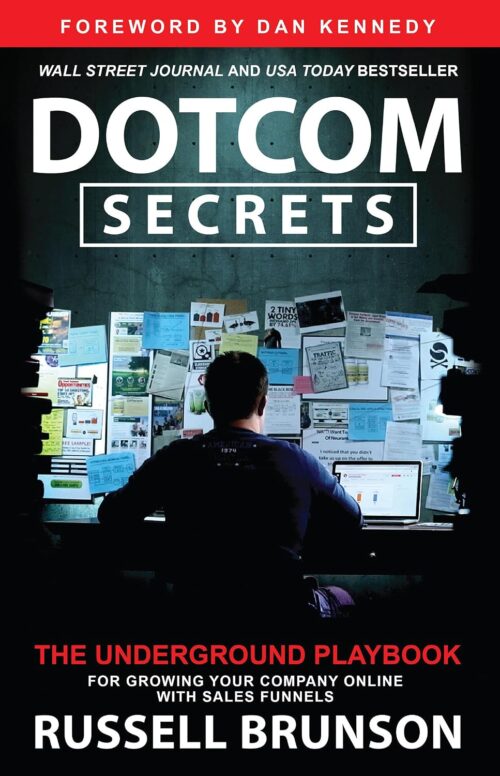
DotCom Secrets by Russell Brunson
Learn Russell Brunson’s foundational framework for building online sales funnels that turn strangers into leads and leads into customers. Best for entrepreneurs who want to understand value ladders, funnel structure, messaging, follow-up, and how different offers work together.
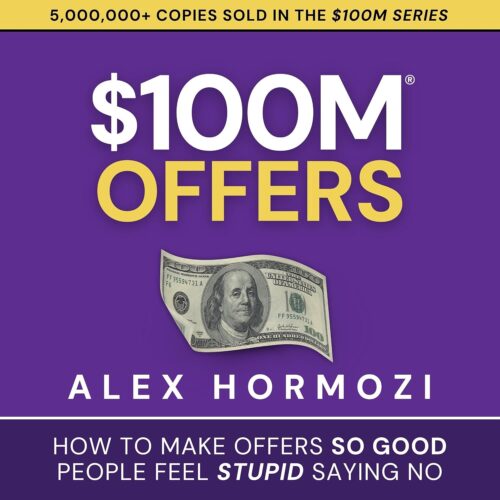
$100M Offers by Alex Hormozi
Learn how to create highly differentiated offers, increase perceived value, improve pricing, and make your product or service harder to compare with cheaper competitors.
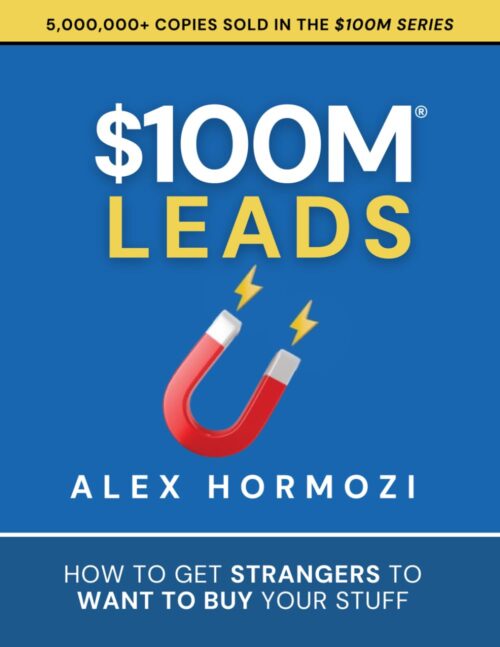
$100M Leads by Alex Hormozi
Learn Alex Hormozi’s practical framework for generating more qualified leads through outreach, content, advertising, lead magnets, referrals, affiliates, and scalable acquisition systems.
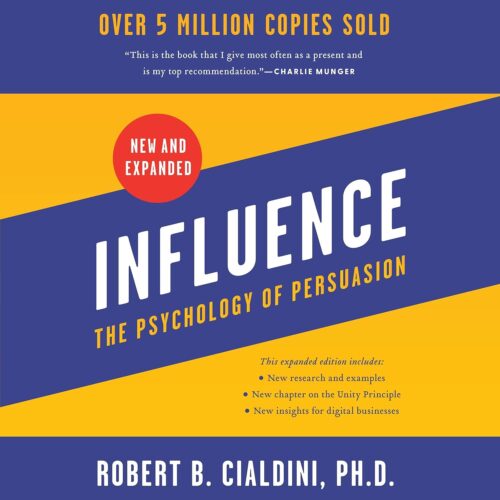
Influence: The Psychology of Persuasion by Robert Cialdini
Understand the behavioral principles behind why people say yes, including social proof, authority, reciprocity, scarcity, commitment, liking, and unity.
Building a StoryBrand vs. DotCom Secrets: Which Should You Read First?
Direct Answer: Read Building a StoryBrand first if customers do not clearly understand your offer. Read DotCom Secrets first if your message is already strong but you lack a structured online customer journey. Ideally, use StoryBrand for the message and DotCom Secrets for the funnel carrying that message.
| Category | Building a StoryBrand | DotCom Secrets |
|---|---|---|
| Primary Focus | Messaging clarity | Sales funnel architecture |
| Main Question | What should we say? | What should happen next? |
| Core Framework | 7-Part StoryBrand Framework | Value Ladder and funnel strategy |
| Best For | Confusing marketing messages | Unstructured customer journeys |
| Website Application | Messaging and hierarchy | Conversion path |
| Use Together? | Absolutely | Absolutely |
Think of it this way:
DotCom Secrets builds the road.
StoryBrand determines what the road signs say.
A perfect road with confusing signs creates lost customers.
Meanwhile, perfect signs do little if there is no road.
Therefore, the frameworks complement each other extremely well.
Building a StoryBrand vs. $100M Offers: What’s the Difference?
Direct Answer: $100M Offers focuses on constructing an offer customers strongly desire, while Building a StoryBrand focuses on communicating that offer clearly. Therefore, $100M Offers can strengthen what you sell, while StoryBrand strengthens how customers understand why it matters.
| Category | Building a StoryBrand | $100M Offers |
|---|---|---|
| Primary Focus | Messaging | Offer creation |
| Main Question | How do we explain this? | How do we make this more valuable? |
| Key Framework | StoryBrand Framework | Value Equation / Grand Slam Offer |
| Best For | Communication problems | Value and pricing problems |
| Use Together? | Yes | Yes |
A strong offer communicated poorly may underperform.
Likewise, brilliant copy cannot permanently rescue a weak offer.
Therefore:
$100M Offers helps create something worth buying.
Building a StoryBrand helps explain why someone should buy it.
What Order Should You Read Building a StoryBrand, DotCom Secrets, $100M Offers and $100M Leads?
Direct Answer: A practical sequence is $100M Offers for creating the offer, Building a StoryBrand for clarifying the message, DotCom Secrets for structuring the funnel, Influence for understanding persuasion, and $100M Leads for scaling acquisition. However, you should begin with whichever book addresses your current bottleneck.
| Step | Book | Primary Problem Solved |
|---|---|---|
| 1 | $100M Offers | Create a stronger offer |
| 2 | Building a StoryBrand | Explain the offer clearly |
| 3 | DotCom Secrets | Build the customer journey |
| 4 | Influence | Understand persuasion |
| 5 | $100M Leads | Scale lead generation |
That sequence creates a logical progression:
Offer → Message → Funnel → Persuasion → Traffic.
However, implementation should happen while you read.
Do not wait until all five books are finished.
Read our complete guide: The 5 Must-Read Books Before Building Your First Sales Funnel.
How Should You Take Notes While Reading Building a StoryBrand?
Keep your own company open beside the book.
Then, answer each StoryBrand question for one important product or service.
| Question | Your Answer |
|---|---|
| Who is the customer? | [Your answer] |
| What do they want? | [Your answer] |
| What external problem do they face? | [Your answer] |
| How does that problem make them feel? | [Your answer] |
| Why is that situation wrong? | [Your answer] |
| How do we demonstrate empathy? | [Your answer] |
| How do we demonstrate authority? | [Your answer] |
| What is our three-step plan? | [Your answer] |
| What is the primary call to action? | [Your answer] |
| What happens if the customer does nothing? | [Your answer] |
| What does success look like? | [Your answer] |
Afterward, compare those answers with your homepage.
If your website tells a different story, you have found the first implementation opportunity.
What Should You Do After Reading Building a StoryBrand?
Do not merely say, “That was a good book.”
Rewrite something.
StoryBrand Implementation Checklist
- Complete a BrandScript for your primary offer.
- Rewrite your homepage hero.
- Clarify your primary call to action.
- Add the customer’s main problem.
- Reduce unnecessary company-centered language.
- Add empathy.
- Add relevant authority and proof.
- Create a simple three-step plan.
- Explain what the customer risks by waiting.
- Describe the successful outcome.
- Rewrite your lead-generation landing page.
- Update your sales presentation.
- Update your email messaging.
- Update your advertising.
- Test whether new visitors understand the offer within seconds.
Then, measure what happens.
Ultimately, clearer messaging should improve business outcomes, not simply make the copy sound nicer.
Frequently Asked Questions About Building a StoryBrand
What is Building a StoryBrand about?
Direct Answer: Building a StoryBrand teaches businesses how to clarify their marketing using a seven-part storytelling framework that positions the customer as the hero and the company as the guide.
Who wrote Building a StoryBrand?
Direct Answer: Donald Miller wrote Building a StoryBrand. He is the CEO of StoryBrand, Business Made Simple, and Coach Builder and is known for developing the StoryBrand Framework.
What is the main idea of Building a StoryBrand?
Direct Answer: The central idea is that your customer should be the hero of your marketing story while your business acts as the guide helping that customer solve a problem and reach a desired outcome.
What are the seven parts of the StoryBrand Framework?
Direct Answer: The framework follows a character who wants something, has a problem, meets a guide, receives a plan, is called to action, avoids failure, and ends in success.
What is a StoryBrand BrandScript?
Direct Answer: A BrandScript organizes the seven StoryBrand elements around a specific customer and offer so the business can create a clear, consistent marketing message.
What does StoryBrand mean by the customer is the hero?
Direct Answer: It means marketing should focus primarily on the customer’s goals, problems, and transformation rather than making the company’s history, accomplishments, or products the center of the story.
What role does the business play in StoryBrand?
Direct Answer: The business plays the guide. It demonstrates empathy for the customer’s problem and authority to help solve it, then provides a clear plan and call to action.
What are external, internal and philosophical problems in StoryBrand?
Direct Answer: The external problem is the visible issue the customer faces, the internal problem is how that issue makes the customer feel, and the philosophical problem explains why the situation should not be happening.
Why does StoryBrand use a three-step plan?
Direct Answer: A short plan reduces uncertainty by making the customer’s next steps easier to understand. Three steps are often enough to create clarity without overwhelming the buyer.
Why are calls to action important in StoryBrand?
Direct Answer: Customers need to know exactly what to do next. Therefore, StoryBrand encourages businesses to use clear calls to action rather than relying on vague buttons or expecting visitors to determine the next step themselves.
Is Building a StoryBrand worth reading?
Direct Answer: Yes. It is especially valuable for businesses with strong products or services but unclear websites, advertisements, sales copy, presentations, or marketing messages.
Is Building a StoryBrand good for beginners?
Direct Answer: Yes. The framework is easy for beginners to understand while remaining useful for experienced marketers, copywriters, business owners, and agencies.
What is Building a StoryBrand 2.0?
Direct Answer: Building a StoryBrand 2.0 is the updated and expanded StoryBrand edition. StoryBrand says it adds new examples, stories, implementation guidance, a marketing campaign process, and StoryBrand AI tools while retaining the foundational seven-part framework.
Should I buy Building a StoryBrand or Building a StoryBrand 2.0?
Direct Answer: New readers should compare the current available editions before buying. The original teaches the foundational StoryBrand framework, while StoryBrand positions 2.0 as the expanded and updated version with newer examples and implementation tools.
Does StoryBrand work for B2B companies?
Direct Answer: Yes. B2B companies can use StoryBrand to clarify the buyer’s desired outcome, problem, plan, proof, and next step, although complex B2B purchases may require additional technical and financial detail.
Does StoryBrand work for service businesses?
Direct Answer: Yes. It is particularly useful for services because customer-centered messaging can make an intangible or complicated service easier to understand.
Does StoryBrand work for contractors?
Direct Answer: Yes. Contractors can use the framework to center marketing around the homeowner’s problem, establish trust, explain a simple process, and create a clear next step such as an inspection or estimate.
Does StoryBrand work for marketing agencies?
Direct Answer: Yes. Agencies can use StoryBrand for their own positioning and to clarify client messaging before building websites, advertising campaigns, sales funnels, or content strategies.
Can StoryBrand be used for a website?
Direct Answer: Yes. Websites are one of the clearest applications because the framework helps businesses structure the hero message, problem, solution, authority, plan, transformation, and calls to action.
Does StoryBrand work with SEO?
Direct Answer: Yes. SEO can generate search visibility while StoryBrand improves message clarity and conversion after the visitor arrives. Comprehensive SEO content can remain on the page beneath a clear customer-centered hierarchy.
Does StoryBrand work with AI search and GEO?
Direct Answer: StoryBrand can complement GEO by making customer problems, solutions, outcomes, and next steps easier to understand. However, AI visibility also depends on content depth, entity clarity, evidence, technical accessibility, and broader authority signals.
Is Building a StoryBrand a copywriting book?
Direct Answer: It is primarily a messaging and positioning book rather than a complete copywriting manual. However, its framework can substantially improve the structure of website copy, advertisements, emails, and sales materials.
Is Building a StoryBrand a branding book?
Direct Answer: Yes, although its definition of branding focuses heavily on clear customer-centered communication rather than primarily on visual identity, logos, typography, or graphic design.
Building a StoryBrand or DotCom Secrets: which is better?
Direct Answer: Neither is universally better. StoryBrand is stronger for clarifying what your marketing should say, while DotCom Secrets is stronger for structuring the sales funnel through which the message and offers move.
Building a StoryBrand or $100M Offers: which should I read first?
Direct Answer: Read $100M Offers first if your biggest weakness is the offer itself. Read Building a StoryBrand first if you already have a valuable offer but customers struggle to understand it.
What book should I read after Building a StoryBrand?
Direct Answer: Strong companion books include DotCom Secrets for funnel architecture, $100M Offers for offer creation, Influence for persuasion, $100M Leads for lead generation, and Marketing Made Simple for further StoryBrand-based marketing implementation.
Where can I buy Building a StoryBrand?
Direct Answer: You can check the current Amazon listing through the link below for available editions, formats, pricing, and delivery options.
Our Final Verdict on Building a StoryBrand
Building a StoryBrand deserves its place among the first marketing books many business owners should read.
Not because storytelling is trendy.
Instead, the book attacks a problem that quietly destroys marketing performance every day:
Confusion.
A company can have the better product.
Additionally, it can have better service, better employees, better technology, and better intentions.
However, if the competitor explains its value more clearly, the competitor may still win the customer.
That is the uncomfortable lesson behind StoryBrand.
Customers cannot value what they do not understand.
Therefore, the business must make the story easy to follow.
The customer wants something.
A problem stands in the way.
The company understands that problem.
Additionally, the company has the experience to help.
There is a simple plan.
The customer has a clear next step.
Ignoring the problem has consequences.
Solving it creates a better future.
That is StoryBrand in its simplest form.
However, the framework becomes considerably more powerful when combined with other disciplines.
$100M Offers can strengthen the offer.
Building a StoryBrand can clarify the message.
DotCom Secrets can structure the funnel.
Influence can deepen the understanding of persuasion.
Meanwhile, $100M Leads can help scale the number of prospects entering the system.
Consequently, we do not view StoryBrand as an isolated branding exercise.
Instead, it becomes one layer of a larger customer-acquisition system.
First, create something worth buying.
Then, explain it clearly.
Next, build a logical path toward purchasing it.
Finally, put enough qualified prospects into that path.
If your business already has a good product but customers still seem confused about what makes it valuable, Building a StoryBrand may be the book that exposes why.
Short Product Description
Learn Donald Miller’s 7-part StoryBrand Framework for clarifying your message, positioning the customer as the hero, and making your offer easier to understand. Best for business owners and marketers who want clearer websites, stronger sales copy, and messaging customers quickly understand.
View Building a StoryBrand on Amazon
As an Amazon Associate, Infinite Media Resources earns from qualifying purchases.
Continue Building Your Marketing Library
-
$100M Offers by Alex Hormozi: Review, Summary & Key Takeaways
-
$100M Leads by Alex Hormozi: Review, Summary & Key Takeaways
-
DotCom Secrets by Russell Brunson: Review, Summary & Key Takeaways
-
The 5 Must-Read Books Before Building Your First Sales Funnel
-
The Alex Hormozi Value Equation Explained
-
The Straight-Line Funnel: Moving a Lead From Click to Contract in 48 Hours