The Alex Hormozi Value Equation Explained: How to Increase Prices Without Losing Customers
Most businesses assume that raising prices requires better persuasion. However, Alex Hormozi’s Value Equation suggests a different path: increase the perceived value of the offer before asking customers to pay more.
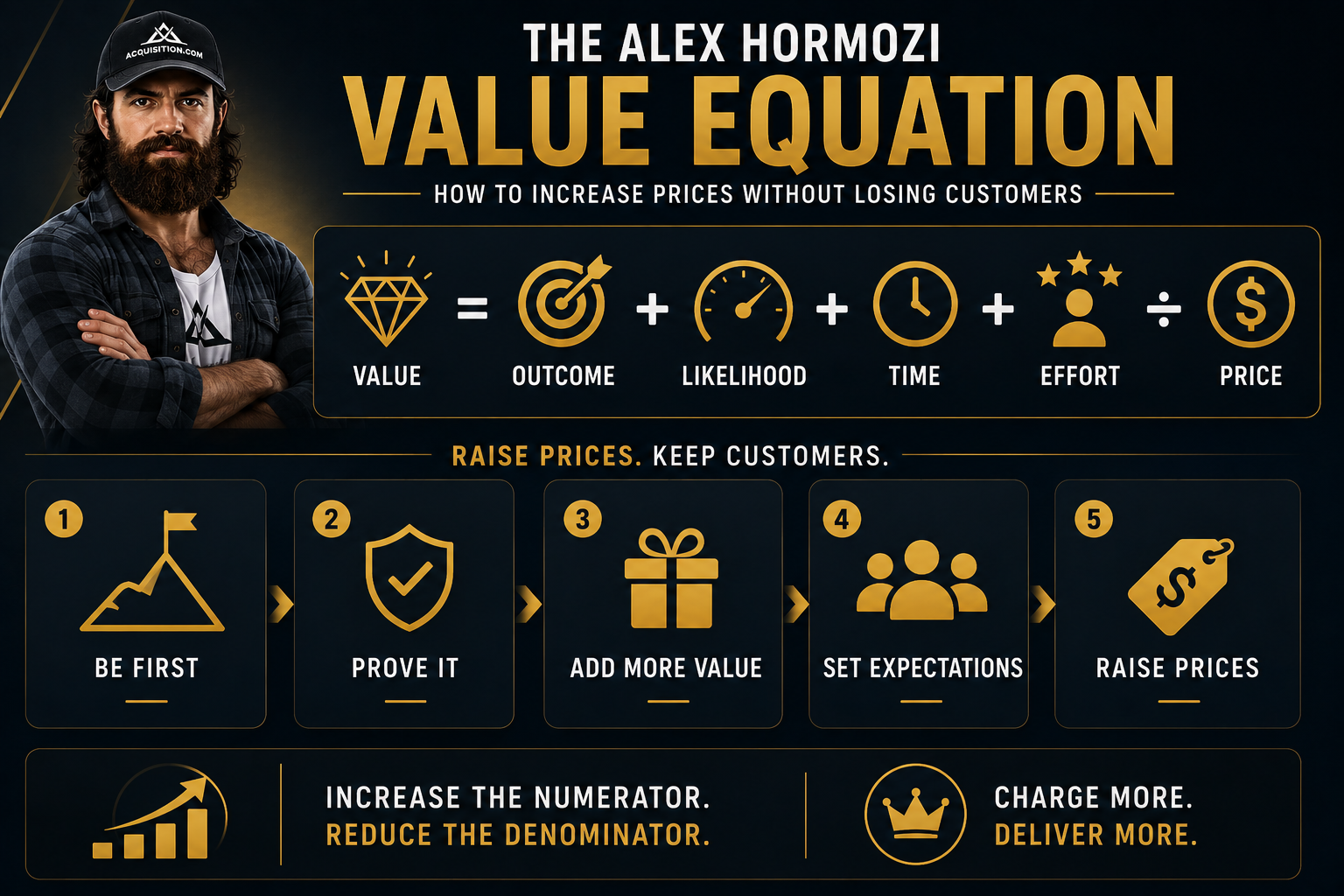
Direct Answer: Alex Hormozi’s Value Equation states that value rises when an offer increases the customer’s dream outcome and perceived likelihood of success while reducing time delay, effort, and sacrifice. Therefore, businesses can often raise prices without losing customers by making the result more desirable, more believable, faster, and easier to achieve.
In other words, buyers do not evaluate price in isolation. Instead, they compare the price against what they believe they will receive, how certain they feel about receiving it, how long they must wait, and how much work the process demands.
Consequently, the cheapest offer does not always win.
A more expensive offer can become the obvious choice when it delivers a better result, provides stronger proof, produces faster progress, and removes more customer friction.
Acquisition.com includes “The Value Equation” as a dedicated module within its official offer-creation course. Additionally, the course places the framework after market selection and pricing but before offer construction, bonuses, guarantees, scarcity, and urgency. Therefore, the sequence positions value design as the foundation of a compelling offer rather than a finishing sales tactic.
This guide breaks down every part of the equation. Furthermore, it explains how agencies, contractors, consultants, SaaS companies, and service businesses can use the framework to increase prices while improving the customer experience.
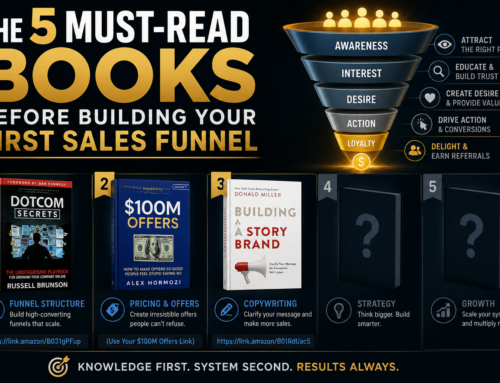
For Hormozi’s complete offer-building framework, read $100M Offers by Alex Hormozi.
Key Takeaways
- Customers compare price against perceived value rather than cost alone.
- Therefore, raising value can make a higher price feel more reasonable.
- Dream Outcome describes the result and transformation the buyer wants.
- Perceived Likelihood describes how strongly the buyer believes the offer will work.
- Meanwhile, Time Delay measures how long the buyer expects to wait for the result.
- Effort and Sacrifice measure how much work, discomfort, complexity, or change the buyer must accept.
- Consequently, businesses should increase the first two factors while reducing the last two.
- Ultimately, premium pricing becomes more sustainable when the offer creates genuine customer value rather than artificial pressure.
What Is the Alex Hormozi Value Equation?
The Alex Hormozi Value Equation is a framework for understanding why customers perceive one offer as more valuable than another.
The equation is commonly expressed as:
Value = (Dream Outcome × Perceived Likelihood of Achievement) ÷ (Time Delay × Effort and Sacrifice)
Therefore, value rises when you increase the numerator:
- Dream Outcome
- Perceived Likelihood of Achievement
Meanwhile, value also rises when you decrease the denominator:
- Time Delay
- Effort and Sacrifice
Although the equation resembles a mathematical formula, it functions primarily as a decision-making model. In other words, it helps business owners diagnose why an offer feels exciting, risky, slow, difficult, or overpriced.
For example, two agencies may promise more leads. However, one agency offers a vague six-month marketing package with no clear proof or reporting. Meanwhile, the second agency presents a defined lead-generation system, shows relevant case studies, launches the first campaigns within fourteen days, and handles the technical implementation.
Although the second agency may charge more, the buyer may perceive it as the safer purchase.
Consequently, price resistance often signals a value-design problem rather than a pricing problem alone.
Hormozi’s official Acquisition.com training organizes The Value Equation as one of the core modules in its offer-creation course, while its books page identifies him as an entrepreneur and investor who scaled companies across software, service, ecommerce, and brick-and-mortar businesses.
Why Does the Value Equation Work?
Customers buy expected outcomes. However, they discount those outcomes when they feel uncertain, delayed, or burdened.
Therefore, an offer can sound impressive while still feeling unattractive.
Consider a business owner evaluating two SEO proposals.
Offer A
- “We provide monthly SEO services.”
- No specific outcome
- No defined implementation timeline
- No relevant proof
- The customer must coordinate writers and developers
- Reporting focuses mainly on rankings
Offer B
- A defined search-authority roadmap
- Pages mapped to buyer intent
- Research, writing, schema, internal links, and publishing included
- A clear launch schedule
- Relevant examples and proof
- Reporting tied to qualified leads and revenue opportunities
Offer B improves all four value drivers. First, it presents a clearer dream outcome. Second, it increases confidence through proof and process. Third, it reduces delay with a defined launch schedule. Finally, it reduces effort by handling implementation.
Therefore, the buyer may accept a substantially higher price.
This explains why premium buyers do not always choose the lowest bid. Instead, they often choose the option that appears most likely to create the desired result with the least uncertainty and friction.
1. Dream Outcome: What Does the Customer Truly Want?
Dream Outcome describes the transformation the customer wants, including the practical result and the emotional or social meaning attached to it.
However, businesses frequently confuse deliverables with outcomes.
Deliverables Are Not Dream Outcomes
Deliverable |
Dream Outcome |
|---|---|
| Twenty SEO pages | More qualified buyers finding the company before competitors |
| A new CRM | No valuable lead forgotten or left without follow-up |
| A kitchen remodel | A beautiful, functional home the owner feels proud to share |
| Weekly coaching calls | A faster path to profitable decisions with fewer mistakes |
| A private jet membership | Reliable, flexible travel without commercial aviation friction |
Therefore, marketers should describe what changes in the customer’s life or business after the offer works.
Dream Outcomes Often Include Several Layers
- Functional outcome: What practical result occurs?
- Financial outcome: What money does the buyer gain, save, or protect?
- Emotional outcome: How does the buyer want to feel?
- Social outcome: How does the buyer want others to perceive them?
- Identity outcome: Who does the buyer want to become?
For example, a contractor does not merely want more CRM contacts. Instead, the contractor may want predictable revenue, a more accountable sales team, fewer wasted advertising dollars, and confidence that the company can scale.
Likewise, an affluent aviation customer does not merely want a seat on an aircraft. Instead, the buyer may want privacy, control, safety, time savings, discretion, and certainty.
How to Increase the Dream Outcome
- Connect the service to a larger economic result.
- Clarify the before-and-after transformation.
- Package several related outcomes together.
- Improve personalization.
- Increase convenience or status.
- Remove important secondary problems.
- Show how the result supports a larger goal.
However, increasing the dream outcome does not mean making unrealistic promises.
Instead, it means understanding the complete result the buyer values and designing the offer around it.
Dream Outcome Questions
- What result would make this purchase feel unquestionably worthwhile?
- What does the buyer hope becomes easier afterward?
- What financial impact matters most?
- What fear does the outcome remove?
- What status, identity, or confidence does the buyer gain?
- What secondary problem appears after the primary problem is solved?
Consequently, better customer research usually creates a stronger dream outcome than clever copywriting alone.
2. Perceived Likelihood: How Certain Is the Customer?
A desirable outcome creates attention. However, buyers still hesitate when they doubt whether the offer will work for them.
Therefore, Perceived Likelihood of Achievement measures the customer’s confidence in reaching the promised outcome.
The word “perceived” matters.
Your company may possess excellent capabilities. Nevertheless, customers cannot value strengths they do not understand or believe.
What Increases Perceived Likelihood?
- Relevant case studies
- Testimonials from similar buyers
- Clear explanations of the process
- Demonstrations
- Before-and-after examples
- Transparent milestones
- Experienced specialists
- Certifications or trusted standards
- Realistic guarantees
- Progress reporting
- Specific qualification criteria
- Evidence of repeated success
For example, a roofing company can increase certainty by showing local projects, explaining material options, documenting workmanship standards, presenting warranty terms, and introducing the project manager.
Meanwhile, an agency can increase certainty by showing relevant traffic growth, lead improvements, published assets, tracking systems, and a detailed implementation roadmap.
Proof Should Match the Buyer
Generic proof creates limited confidence. However, specific proof helps the buyer see themselves inside the result.
For instance, a contractor case study may not persuade a private aviation company. Likewise, a five-person company may struggle to relate to a case study involving an enterprise brand.
Therefore, organize proof by:
- Industry
- Company size
- Starting problem
- Desired outcome
- Service purchased
- Timeline
- Geographic market
Process Creates Confidence
Customers often distrust vague promises. Therefore, explain how the result will occur.
A strong process may include:
- Discovery and qualification
- Baseline audit
- Strategy development
- Implementation milestones
- Quality-control reviews
- Progress reporting
- Optimization cycles
Consequently, the buyer no longer sees only an ambitious promise. Instead, the buyer sees a credible path.
Guarantees and Risk Reversal
A guarantee can increase perceived likelihood when it transfers appropriate risk away from the buyer. However, the guarantee must remain honest, specific, enforceable, and financially responsible.
Examples include:
- Implementation guarantees
- Response-time guarantees
- Workmanship guarantees
- Satisfaction guarantees
- Milestone guarantees
- Conditional performance guarantees
Nevertheless, a guarantee cannot compensate for poor delivery. Therefore, improve the actual service before strengthening the promise.
3. Time Delay: How Long Must the Customer Wait?
Customers usually value faster results more than distant results.
Therefore, Time Delay measures the period between purchase and meaningful benefit.
However, businesses often focus only on the final outcome. As a result, customers experience long periods without visible progress.
For example, SEO can take time to compound. Nevertheless, the customer does not need to wait months before receiving any value.
An agency can create immediate progress through:
- A complete search audit
- A competitive gap report
- A prioritized roadmap
- Technical fixes
- Conversion improvements
- Published initial pages
- Tracking dashboards
- Early indexing and visibility reports
Therefore, the business can shorten perceived time delay even when the final result requires patience.
Two Types of Time Delay
- Time to first value: How quickly does the customer experience an initial benefit?
- Time to full outcome: How long does the complete transformation require?
Strong offers improve both whenever possible.
How to Reduce Time Delay
- Begin onboarding immediately.
- Collect required information before kickoff.
- Create standardized templates.
- Automate administrative steps.
- Prebuild common components.
- Offer clear scheduling availability.
- Assign a dedicated implementation owner.
- Deliver a quick win early.
- Break the outcome into visible milestones.
- Remove internal approval bottlenecks.
Fast Does Not Mean Reckless
Speed increases value only when quality and safety remain intact.
Therefore, do not promise unrealistic timelines simply to close the sale.
Instead, identify unnecessary waiting, duplicate approvals, slow communication, missing templates, manual tasks, and preventable customer delays.
The Quick-Win Principle
An early win builds trust. Consequently, the customer becomes more confident in the long-term process.
For example, a CRM implementation may require several weeks. However, the provider can launch immediate lead notifications in the first few days.
Similarly, a remodeling project may take months. Nevertheless, the contractor can quickly provide a finalized schedule, selections checklist, communication portal, and project roadmap.
Therefore, perceived progress can reduce the emotional burden of waiting.
4. Effort and Sacrifice: How Hard Is the Process for the Customer?
Customers do not evaluate only the result. Instead, they also evaluate what they must do, change, risk, learn, or tolerate to achieve it.
Therefore, Effort and Sacrifice include every burden placed on the buyer.
Common Forms of Customer Effort
- Completing long forms
- Learning complicated software
- Attending unnecessary meetings
- Coordinating multiple vendors
- Creating content independently
- Providing repetitive information
- Changing established habits
- Waiting for responses
- Managing technical implementation
- Making difficult internal decisions
Common Forms of Customer Sacrifice
- Financial risk
- Time away from core responsibilities
- Temporary disruption
- Loss of convenience
- Reputational risk
- Giving up familiar tools
- Changing staff responsibilities
- Accepting uncertainty
For example, a marketing agency may offer excellent strategy. However, if the customer must hire writers, manage developers, approve every heading, configure analytics, and upload every page, the offer creates substantial effort.
Meanwhile, a complete implementation service may cost more but feel more valuable because it removes those burdens.
How to Reduce Customer Effort
- Provide done-for-you implementation.
- Use guided onboarding.
- Prepopulate forms and templates.
- Assign one point of contact.
- Integrate with existing software.
- Reduce meeting frequency.
- Give clear approval deadlines.
- Offer migration support.
- Provide checklists and decision frameworks.
- Handle technical setup.
- Create automated progress updates.
Effort Cannot Always Reach Zero
Some results require customer participation. For instance, a fitness program still requires consistent behavior. Likewise, a business transformation still requires leadership decisions.
Therefore, the goal is not to pretend that effort disappears.
Instead, remove unnecessary effort and clearly support the effort that remains.
Reduce Decision Fatigue
Customers often delay because the offer requires too many decisions.
Consequently, businesses can increase value through:
- Recommended defaults
- Preselected packages
- Clear comparisons
- Decision deadlines
- Curated options
- Professional recommendations
For example, a remodeler can present three curated design directions instead of overwhelming the homeowner with hundreds of disconnected choices.
Likewise, an agency can recommend the correct content roadmap rather than asking the client to select every keyword.
How Can You Increase Prices Without Losing Customers?
Raising prices without improving the offer creates resistance. However, raising prices after increasing value can improve both margins and customer commitment.
Step 1: Identify the Current Price Objection
First, determine why buyers hesitate.
Common reasons include:
- The outcome feels vague.
- The proof feels weak.
- The timeline feels too long.
- The process feels complicated.
- The buyer does not understand the economic return.
- The offer looks similar to cheaper alternatives.
Therefore, record actual objections rather than guessing.
Step 2: Increase the Economic Outcome
Connect the offer to revenue, savings, risk reduction, time savings, asset value, or customer lifetime value.
For example, do not position a CRM only as contact storage. Instead, position it as a system that prevents expensive leads from disappearing and helps the company improve close rates.
Step 3: Add Relevant Proof
Use case studies, examples, demonstrations, and milestones that resemble the buyer’s situation.
Additionally, explain what conditions contributed to the result. Consequently, the proof feels credible rather than promotional.
Step 4: Shorten Time to First Value
Deliver something useful immediately after purchase.
Examples include:
- An audit
- A benchmark report
- A setup checklist
- An initial campaign
- A quick technical fix
- A project schedule
- A dashboard
Step 5: Remove Customer Work
Convert do-it-yourself elements into guided, assisted, or done-for-you services.
However, only remove work your company can perform reliably and profitably.
Step 6: Improve Risk Reversal
Add a responsible guarantee, milestone commitment, cancellation policy, or implementation assurance.
Therefore, buyers feel less exposed.
Step 7: Package the Value Clearly
Customers cannot value what they cannot see.
Consequently, show each component, purpose, and outcome. However, avoid adding meaningless bonuses simply to inflate the list.
Step 8: Raise Prices for New Customers First
Testing new pricing with new customers limits disruption. Meanwhile, existing customers can receive advance notice, grandfathered terms, additional value, or a phased adjustment.
Step 9: Measure Conversion and Margin
A price increase may reduce close rate while improving profit. Therefore, monitor:
- Qualified close rate
- Gross margin
- Acquisition cost
- Customer quality
- Refunds
- Retention
- Delivery capacity
- Lifetime value
Ultimately, the goal is not the highest possible price. Instead, the goal is sustainable value for both customer and provider.
A Complete Value Equation Pricing Example
Consider a digital marketing agency charging $3,000 per month for generic SEO.
The Original Offer
- Four monthly articles
- Basic keyword research
- Monthly ranking report
- No clear industry specialization
- No implementation timeline
- The client uploads the content
- No CRM or revenue attribution
The agency wants to raise the price to $7,500 per month. However, simply changing the invoice will likely create resistance.
Improving the Dream Outcome
Instead of selling articles, the agency positions the service as a complete search-demand capture system designed to generate qualified opportunities.
Improving Perceived Likelihood
- Industry-specific case studies
- A documented keyword and content roadmap
- Technical SEO audit
- Clear quality-control process
- Defined milestones
- CRM-based lead tracking
Reducing Time Delay
- Audit delivered during the first week
- Tracking installed immediately
- Initial priority pages published within fourteen days
- Technical fixes implemented early
- Monthly waiting replaced with weekly production
Reducing Effort and Sacrifice
- Research included
- Writing included
- Schema included
- Internal linking included
- Publishing included
- Reporting included
- One point of contact
The agency has not merely raised the price.
Instead, it has created a substantially different offer.
Therefore, the $7,500 price may feel more reasonable than the original $3,000 service because the new offer delivers a larger outcome with greater certainty, faster implementation, and less customer work.
How Can Digital Marketing Agencies Apply the Value Equation?
Agencies frequently compete on deliverables. However, buyers care more about business outcomes.
Therefore, agencies should rewrite their offers around the Value Equation.
Dream Outcome for an Agency Client
- More qualified opportunities
- Lower dependence on purchased leads
- Greater search and AI visibility
- Stronger authority
- Better sales attribution
- A compounding digital asset
Perceived Likelihood for an Agency Client
- Industry specialization
- Relevant case studies
- Verified examples
- A transparent strategy
- Clear tracking
- Defined production standards
- Regular reporting
Reduced Time Delay for an Agency Client
- Fast onboarding
- Immediate audits
- Early campaign launches
- Quick technical wins
- Visible production milestones
- Rapid lead-routing improvements
Reduced Effort for an Agency Client
- Done-for-you research
- Content creation
- Ad management
- CRM configuration
- Schema and technical implementation
- Publishing and optimization
Consequently, the agency stops selling isolated tasks and begins selling a complete growth mechanism.
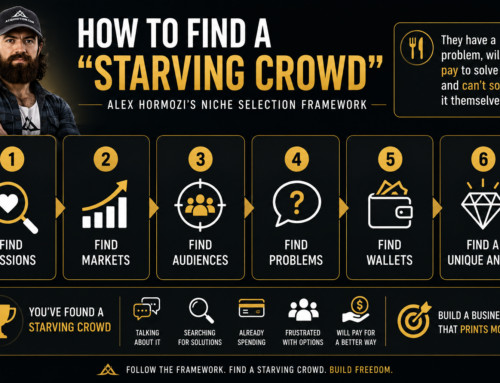
For a broader offer framework, review The Alex Hormozi Playbook and Alex Hormozi’s Starving Crowd Framework.
How Can Contractors Apply the Value Equation?
Contractors often assume customers choose only by price. However, homeowners also evaluate certainty, convenience, disruption, timeline, communication, and risk.
Dream Outcome for a Homeowner
A homeowner purchasing a roof does not merely want shingles. Instead, the homeowner wants a dry, safe, attractive property without hidden problems.
Perceived Likelihood for a Homeowner
- Local reviews
- Project photos
- Workmanship warranties
- Manufacturer credentials
- Clear inspection results
- Professional proposals
- Dedicated project managers
Reduced Time Delay for a Homeowner
- Fast inspection scheduling
- Rapid estimate delivery
- Clear installation dates
- Proactive weather updates
- Fast warranty documentation
Reduced Effort for a Homeowner
- Permit handling
- Material recommendations
- Financing support
- Insurance documentation assistance
- Property protection
- Cleanup and disposal
- One point of contact
Therefore, a premium contractor can justify a higher price by making the project safer, easier, faster, and more predictable.
The same logic applies to remodeling, HVAC replacement, windows, siding, plumbing, electrical work, landscaping, and other home services.
For contractor sales infrastructure, review Best CRM for Contractors and HubSpot vs. GoHighLevel for Contractors.
How Does the Value Equation Apply to IMR’s Digital Fortress?
A 1,000-page SEO and GEO build can appear expensive when the buyer views it as “content.” However, the same investment looks different when positioned as long-term digital infrastructure.
Dream Outcome
The company owns a broad library of search assets that captures buyer questions, comparisons, services, locations, use cases, and AI-search citations.
Therefore, the outcome is not 1,000 documents. Instead, the outcome is greater authority, demand capture, market coverage, and long-term digital equity.
Perceived Likelihood
Confidence increases through:
- A documented architecture
- Keyword and intent mapping
- Internal-link planning
- Schema implementation
- Publishing standards
- Examples from existing builds
- Reporting and indexation tracking
- CRM-based lead attribution
Reduced Time Delay
Although authority compounds over time, the system can create immediate assets through technical audits, initial priority pages, conversion improvements, tracking, and a visible production pipeline.
Reduced Effort
IMR can handle research, strategy, writing, schema, internal linking, publishing, optimization, and reporting.
Consequently, the client does not need to assemble and coordinate several separate vendors.
Therefore, the Value Equation explains why a premium Digital Fortress can justify a higher investment than a traditional monthly content package.
For related implementation, review Generative Engine Optimization and SEO Services for Businesses.
The Value Equation Offer Audit
Use the following audit before changing your price.
Value Driver |
Audit Question |
Improvement Opportunity |
|---|---|---|
| Dream Outcome | Does the offer describe the complete transformation? | Connect deliverables to financial, emotional, social, and functional outcomes. |
| Perceived Likelihood | Why should the buyer believe this will work? | Add relevant proof, process, milestones, expertise, transparency, and risk reversal. |
| Time Delay | How soon does the buyer receive meaningful value? | Create faster onboarding, quick wins, milestones, templates, and early implementation. |
| Effort and Sacrifice | What work or disruption does the customer face? | Provide implementation, guidance, integrations, decision support, and one point of contact. |
Score Each Driver From 1 to 10
- Dream Outcome: Is the result meaningful and specific?
- Perceived Likelihood: Does the buyer believe the result is realistic?
- Time Delay: How quickly does value begin?
- Effort and Sacrifice: How easy is the process for the buyer?
However, remember that lower scores are better for Time Delay and Effort when measuring the customer burden.
Therefore, after scoring the offer, choose the weakest driver and improve it first.
Customer Interview Questions
- What result mattered most when you purchased?
- What almost stopped you from buying?
- What made you believe the offer could work?
- Which part of the process felt slow?
- Which part required too much effort?
- What additional support would have helped?
- What would make the offer worth substantially more?
Consequently, customers can reveal value gaps that internal teams overlook.
A 30-Day Plan to Increase Offer Value
Days 1–5: Interview Customers and Lost Prospects
First, identify desired outcomes, fears, objections, delays, and customer burdens.
Days 6–10: Rewrite the Dream Outcome
Connect the offer to a measurable transformation rather than a list of deliverables.
Days 11–15: Strengthen Proof
Organize case studies, testimonials, examples, certifications, processes, and milestones.
Days 16–20: Reduce Time to First Value
Design faster onboarding, early wins, priority implementation, and progress communication.
Days 21–25: Remove Customer Effort
Automate administrative work, provide templates, improve integrations, and convert unnecessary do-it-yourself tasks into implementation support.
Days 26–28: Repackage the Offer
Present the outcome, proof, process, timeline, support, bonuses, risk reversal, and price clearly.
Days 29–30: Test the New Price
Offer the redesigned package to qualified new prospects. Then, measure close rate, objections, customer quality, margin, and fulfillment capacity.
As a result, the price increase becomes a controlled business test rather than an emotional guess.
Common Value Equation Mistakes
Mistake 1: Raising the Dream Outcome Beyond Credibility
A larger promise does not increase value when buyers stop believing it.
Therefore, Dream Outcome and Perceived Likelihood must rise together.
Mistake 2: Adding More Deliverables Instead of More Value
More components can create complexity. Consequently, an overloaded offer may reduce value by increasing customer effort.
Mistake 3: Using Weak or Irrelevant Proof
Generic testimonials rarely answer the buyer’s specific uncertainty.
Therefore, match proof to the customer’s industry, problem, and desired outcome.
Mistake 4: Promising Unrealistic Speed
Fast results create value. However, broken timelines destroy trust.
Instead, provide honest timelines and faster early milestones.
Mistake 5: Hiding Customer Responsibilities
Unexpected work creates frustration. Therefore, explain exactly what the customer must provide, approve, or complete.
Mistake 6: Using Guarantees to Cover Poor Delivery
Risk reversal supports a strong service. However, it cannot rescue an unreliable process.
Mistake 7: Increasing Price Without Improving Positioning
Even a valuable offer can appear expensive when the messaging remains vague.
Consequently, explain the transformation, process, proof, timeline, and support clearly.
Mistake 8: Ignoring Market Selection
The Value Equation works best inside a market with pain and purchasing power.
Therefore, use it with Hormozi’s Starving Crowd Framework.
Recommended Reading and Authority Resources
Acquisition.com provides a free offer-creation course that includes modules covering market selection, pricing, the Value Equation, offer creation, bonuses, guarantees, scarcity, urgency, and product naming. Therefore, it provides a useful official companion to the book.
Additionally, Acquisition.com’s dedicated Value Equation module identifies the framework as a central part of its offer-creation training.
However, the most complete starting point remains $100M Offers, which focuses on increasing actual and perceived value through stronger offer design.
After improving the offer, continue with $100M Leads to build the distribution needed to place that offer in front of more qualified buyers.
Frequently Asked Questions
What is Alex Hormozi’s Value Equation?
Alex Hormozi’s Value Equation explains that value increases when the Dream Outcome and Perceived Likelihood of Achievement rise while Time Delay and Effort and Sacrifice fall.
What are the four components of the Value Equation?
The four components are Dream Outcome, Perceived Likelihood of Achievement, Time Delay, and Effort and Sacrifice.
What is the Dream Outcome?
The Dream Outcome is the result or transformation the buyer ultimately wants. Additionally, it can include functional, financial, emotional, social, and identity-related benefits.
What is Perceived Likelihood of Achievement?
Perceived Likelihood is the buyer’s belief that the offer will produce the promised result. Therefore, proof, expertise, process, guarantees, and transparent milestones can increase it.
What does Time Delay mean?
Time Delay is the period between purchasing and receiving meaningful value. Consequently, faster onboarding, early wins, and visible milestones can increase perceived value.
What do Effort and Sacrifice mean?
Effort and Sacrifice include the work, complexity, discomfort, risk, behavior change, and disruption the buyer must accept to achieve the outcome.
How does the Value Equation help increase prices?
The framework helps businesses increase prices by improving the customer’s expected outcome, confidence, speed, and convenience before changing the price.
Can a business raise prices without losing customers?
Yes, although some price-sensitive customers may leave. However, a stronger offer can attract better-qualified buyers and improve margin even when total close rate declines slightly.
Should I add more bonuses to increase value?
Only when the bonuses solve real customer problems, remove obstacles, or improve the outcome. Otherwise, unnecessary bonuses can add confusion and delivery complexity.
How can I increase perceived likelihood?
Use relevant case studies, demonstrations, testimonials, transparent processes, milestones, guarantees, experienced specialists, and clear qualification criteria.
How can I reduce Time Delay?
Improve onboarding, standardize delivery, automate administration, provide early wins, prebuild common elements, and communicate progress through clear milestones.
How can I reduce customer effort?
Provide implementation support, templates, migration, integrations, a single point of contact, clear recommendations, and done-for-you components.
Does the Value Equation work for service businesses?
Yes. Agencies, contractors, consultants, coaches, healthcare providers, software companies, and professional services can all apply the framework.
Does a higher price increase perceived value?
Sometimes price can signal quality. However, price alone does not create durable value. Therefore, the offer must support the price through outcomes, proof, speed, and convenience.
Which Alex Hormozi book explains the Value Equation?
$100M Offers is the primary book associated with the Value Equation and Hormozi’s offer-creation framework.
Final Verdict
The Alex Hormozi Value Equation explains why premium pricing does not begin with the price.
Instead, it begins with the customer’s perception of the outcome, certainty, speed, and effort.
Therefore, businesses should increase the Dream Outcome, strengthen the Perceived Likelihood of Achievement, shorten Time Delay, and reduce Effort and Sacrifice.
However, the goal is not to manipulate perception while delivering the same weak service.
Instead, the goal is to redesign the offer so it genuinely creates more value.
When the result becomes larger, the process becomes more believable, progress begins sooner, and the customer carries less burden, a higher price can feel easier to accept.
Ultimately, customers do not resent premium prices when the value substantially exceeds the investment.
About the author : Anthony Paulino