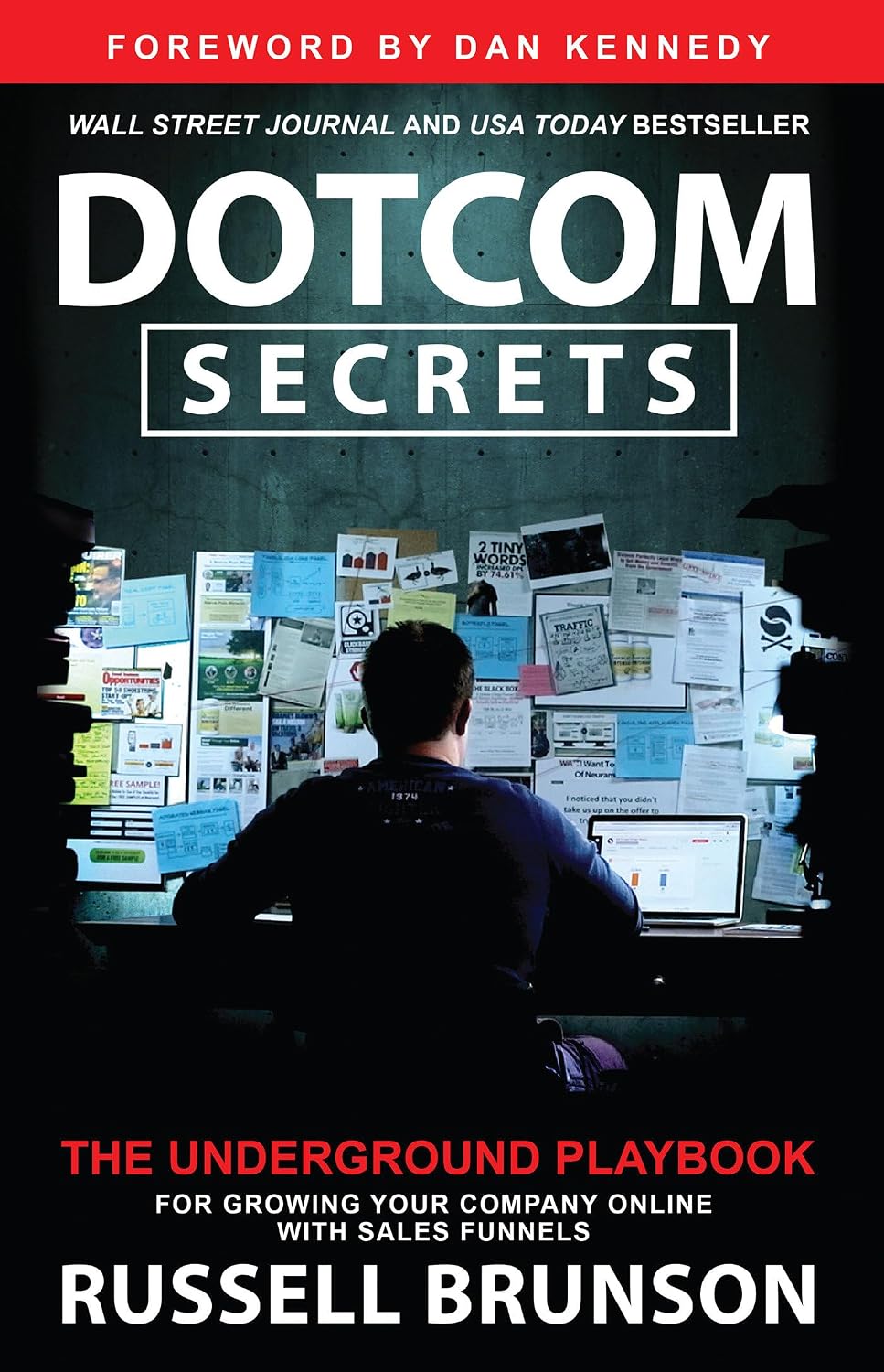
DotCom Secrets by Russell Brunson: Review, Summary, Key Takeaways & Where to Buy
$10.99
Learn Russell Brunson’s foundational framework for building online sales funnels that turn strangers into leads and leads into customers. Best for entrepreneurs who want to understand value ladders, funnel structure, messaging, follow-up, and how different offers work together.
Description
Business Books / Sales Funnels / Digital Marketing / Entrepreneurship
DotCom Secrets by Russell Brunson: Review, Summary, Key Takeaways & Where to Buy
Direct Answer: DotCom Secrets: The Underground Playbook for Growing Your Company Online with Sales Funnels by Russell Brunson is a practical guide to building online sales funnels that move prospects from initial attention toward increasingly valuable offers. It is especially useful for entrepreneurs who want to understand value ladders, funnel architecture, messaging, lead generation, follow-up, and online conversion.
A website gives someone somewhere to go.
However, a funnel gives that visitor somewhere to go next.
That difference is the central reason DotCom Secrets remains useful.
Many businesses build websites around themselves. They add an About page, a Services page, a Contact page, and perhaps several blog posts. Then, they wait for visitors to decide what to do.
Instead, Russell Brunson’s funnel philosophy asks the business to intentionally design the customer’s journey.
First, attract the right person.
Next, make a relevant offer.
Then, create the next logical step.
Afterward, continue the relationship through follow-up.
Finally, present more valuable solutions as the customer’s needs and trust increase.
Consequently, DotCom Secrets is not merely a book about landing-page software. Instead, it is a book about structuring online customer acquisition.
Author: Russell Brunson
Primary Topic: Online sales funnels and customer journeys
Best For: Entrepreneurs, marketers, agencies, consultants, coaches, ecommerce businesses, course creators, and companies selling online
Experience Level: Beginner to intermediate, with concepts experienced marketers can also apply
Best Read Alongside: $100M Offers, $100M Leads, Building a StoryBrand, and Influence
IMR Verdict: One of the strongest foundational books for understanding how online offers, landing pages, follow-up, and sales funnels fit together as a complete system.
Short Description
Learn Russell Brunson’s foundational framework for building online sales funnels that turn strangers into leads and leads into customers. Best for entrepreneurs who want to understand value ladders, funnel structure, messaging, follow-up, and how different offers work together.
Affiliate Disclosure: As an Amazon Associate, Infinite Media Resources earns from qualifying purchases. You do not pay an additional cost when purchasing through our affiliate links.
Is DotCom Secrets Worth Reading?
Direct Answer: Yes. DotCom Secrets is worth reading if you sell products, services, information, consulting, software, or expertise online and want to understand how prospects should move from first contact to purchase. Its biggest strength is showing how individual pages and offers fit together inside a deliberate customer journey.
The book solves a problem that still hurts many businesses.
They have marketing pieces, but they do not have a marketing system.
For example, a company may have:
- A website
- Facebook Ads
- Google Ads
- Email marketing
- A CRM
- A lead magnet
- Salespeople
However, those assets may operate independently.
An advertisement sends someone to the homepage.
Then, the visitor wanders around.
Meanwhile, the business hopes the prospect eventually completes a contact form.
By contrast, funnel thinking asks:
- What brought this person here?
- What problem are they trying to solve?
- What should we show them first?
- What is the smallest reasonable commitment?
- What should happen after that?
- What should happen if they do not buy?
- What should happen if they do buy?
Therefore, the book changes the focus from individual pages to customer progression.
What Is DotCom Secrets Best At?
The book is particularly strong at helping readers understand the architecture behind online selling.
Instead of treating a landing page, email sequence, upsell, lead magnet, and premium offer as separate marketing tactics, Brunson connects them.
What Is Its Biggest Limitation?
Some tactics and examples come from direct-response internet marketing. Consequently, brands with long enterprise sales cycles, high-regulation environments, or highly relationship-driven sales processes should adapt the principles rather than copy every implementation literally.
Nevertheless, the underlying ideas of sequencing, segmentation, relevance, customer progression, and follow-up remain broadly useful.
Does the Book Still Matter When Funnel Software Changes?
Yes, because the strongest concepts are not dependent on one piece of software.
Platforms will change.
However, businesses will still need to attract prospects, capture interest, make offers, follow up, and provide logical next steps.
What Is DotCom Secrets About?
Direct Answer: DotCom Secrets teaches entrepreneurs how to structure sales funnels that guide prospects through a series of increasingly valuable offers. Major concepts include the Value Ladder, funnel architecture, audience targeting, messaging, traffic temperature, funnel hacking, customer communication, follow-up, and choosing appropriate funnels for different products and sales situations.
The official ClickFunnels description calls the current book an underground playbook for growing a company online with sales funnels.
That description is accurate because the book is primarily about the mechanism connecting marketing attention to revenue.
Consider a visitor who finds a business through an article.
Without a funnel, the article may end.
However, with a funnel, the visitor might next see:
- A useful free resource
- An email follow-up sequence
- An entry-level product
- A core service
- A premium implementation offer
The visitor does not need to buy everything.
Instead, each step creates another opportunity to deepen the relationship.
Consequently, the funnel becomes a structured path between attention and customer value.
ClickFunnels currently describes DotCom Secrets as training around the processes, funnels, frameworks, and scripts used to grow online businesses. Russell Brunson’s official book page likewise positions the updated edition around generating leads, selling products and services, fixing funnels, and growing companies online.
Who Is Russell Brunson?
Direct Answer: Russell Brunson is an entrepreneur, author, marketer, and co-founder of ClickFunnels. He is known for teaching sales-funnel strategy and has written several marketing books, including DotCom Secrets, Expert Secrets, and Traffic Secrets.
Brunson built much of his public business education around one core idea:
Businesses need a structured path that turns attention into customers.
That idea ultimately became closely connected with ClickFunnels, the software company he co-founded.
Additionally, Brunson’s books divide several major online-marketing problems into separate topics.
DotCom Secrets focuses heavily on funnels.
Expert Secrets moves more deeply into expertise, messaging, and audience leadership.
Meanwhile, Traffic Secrets focuses more directly on attracting the right people.
Therefore, DotCom Secrets is generally the strongest starting point for someone whose primary question is:
“How should the online sales process actually be structured?”
Who Should Read DotCom Secrets?
DotCom Secrets is especially useful for people whose business depends on turning online attention into revenue.
Entrepreneurs
Founders can use the book to understand how lead generation, landing pages, offers, email follow-up, and higher-value products connect.
Marketing Agencies
Agencies can use funnel thinking to improve client campaigns because generating clicks is only one part of acquisition.
Additionally, the agency can apply the same logic to its own client acquisition.
Consultants and Coaches
Consultants can use funnels to turn educational content or lead magnets into calls, assessments, workshops, and higher-value engagements.
Course Creators
Digital education businesses can use the Value Ladder to organize free content, entry-level products, core programs, and premium coaching.
Ecommerce Businesses
Ecommerce companies can apply funnel principles through product offers, bundles, upsells, cross-sells, email follow-up, and customer segmentation.
SaaS Companies
Software businesses can use similar thinking for lead magnets, demos, trials, onboarding, upgrades, and retention.
Local Service Businesses
Even contractors, dentists, attorneys, real estate professionals, and other local companies can apply funnel principles to quote requests, consultations, assessments, follow-up, and appointment booking.
Who Might Get Less Immediate Value?
If your primary constraint is that your product itself is weak, then funnel architecture may not be the first problem to solve.
Likewise, if nobody knows your business exists, lead generation may require equal attention.
Therefore, DotCom Secrets works particularly well when combined with books that address offers and traffic.
What Are the Biggest Lessons From DotCom Secrets?
Direct Answer: The biggest lessons from DotCom Secrets involve designing a Value Ladder, intentionally structuring the customer journey, matching messages to different audiences, studying proven funnels, using storytelling and offers strategically, following up after initial contact, and creating different funnels for different products and buying situations.
1. Do Not Send Every Prospect to the Same Place
A homepage attempts to serve many visitors simultaneously.
However, someone searching for emergency roof repair has different intent from someone researching roofing materials.
Therefore, those prospects should not necessarily receive the same first experience.
2. Give the Customer a Logical Next Step
Every stage should answer the question:
“What should this person do next?”
If the next step is unclear, many prospects simply leave.
3. Build a Value Ladder
Not every customer is ready to purchase the most expensive offer immediately.
Therefore, businesses can create different levels of value and commitment.
4. Match the Message to the Prospect
A person who already knows and trusts your brand requires a different message than a completely cold prospect.
Consequently, context changes conversion.
5. Study What Already Works
Instead of building every funnel from pure imagination, study successful customer journeys in your market and adjacent markets.
Then, identify the underlying principles.
6. Follow-Up Is Part of the Funnel
Many customers do not purchase during their first interaction.
Therefore, email, remarketing, sales follow-up, and continued education can become critical.
7. Offers Matter More Than Pages
A beautifully designed landing page cannot rescue an irrelevant offer.
Consequently, funnel optimization must include the offer itself.
8. One Funnel Does Not Need to Solve Every Problem
Different products and levels of buyer intent can require different funnel structures.
9. Customer Acquisition Does Not End at the First Sale
A customer may eventually need more advanced solutions.
Therefore, the business can continue providing value beyond the initial transaction.
What Is a Sales Funnel?
Direct Answer: A sales funnel is a structured sequence that guides a prospect from an initial point of attention toward a specific conversion and, potentially, additional purchases. Unlike a general website, a funnel is intentionally designed around a narrower audience, offer, action, and next step.
For example, imagine a contractor advertising roof inspections after a hailstorm.
A simple funnel might look like this:
- Homeowner sees an advertisement.
- Homeowner lands on a storm-damage page.
- The page explains signs of hail damage.
- The homeowner requests an inspection.
- The CRM immediately records the lead.
- An automated confirmation is sent.
- A representative calls the homeowner.
- The inspection occurs.
- The company presents the appropriate solution.
That sequence is fundamentally different from sending the same homeowner to a generic homepage.
Why?
Because each stage continues the conversation that brought the prospect there.
A Funnel Is Really a Series of Decisions
The technology matters. However, the strategy underneath the technology matters more.
At each stage, the business asks the prospect for a decision.
For example:
- Read this.
- Watch this.
- Download this.
- Answer these questions.
- Schedule this.
- Buy this.
- Upgrade to this.
Therefore, funnel design is partly the art of making each next decision feel logical.
For a practical funnel example, read The Straight-Line Funnel: Moving a Lead From Click to Contract in 48 Hours.
What Is the Value Ladder in DotCom Secrets?
Direct Answer: The Value Ladder is a framework for organizing products and services so customers can progressively receive greater value while making larger commitments. Instead of asking every new prospect to purchase the company’s most expensive solution immediately, the business creates logical steps that deepen trust and solve increasingly valuable problems.
This is one of the most important concepts associated with Brunson’s funnel strategy.
Imagine a marketing agency.
Step 1: Free Educational Content
The prospect reads an article explaining why the company’s website is not ranking.
Step 2: Free Audit
The prospect requests a personalized SEO and GEO analysis.
Step 3: Strategy Engagement
The company develops an implementation roadmap.
Step 4: Core Service
The prospect hires the agency to implement SEO, GEO, content, or advertising.
Step 5: Higher-Value Growth System
The client expands into a larger authority build, CRM integration, lead-generation system, or broader growth engagement.
Each stage can create more value.
Additionally, each stage can require greater trust and commitment.
Therefore, customers are not forced to make the largest possible buying decision at the beginning of the relationship.
Why Does a Value Ladder Work?
Because trust is rarely binary.
A prospect may not trust a company enough to spend $50,000.
However, the same person may be comfortable downloading a guide.
Then, a valuable guide may create enough confidence to schedule a call.
Next, a useful consultation may create enough confidence for the first purchase.
Consequently, the business earns trust progressively.
What Is Funnel Hacking?
Direct Answer: Funnel hacking is the practice of studying successful funnels to understand their customer journey, offers, pages, messaging, follow-up, pricing structure, upsells, and conversion mechanisms. The objective is not to copy another company word for word, but to identify patterns and principles that can inform your own strategy.
This principle is essentially competitive intelligence for customer acquisition.
For example, suppose three major competitors all use:
- A free assessment
- A qualification form
- A consultation
- A core service
- An ongoing support plan
That pattern tells you something about how the market purchases.
However, copying their headline would teach you very little.
Instead, analyze:
- Where does traffic originate?
- What promise gets the click?
- What happens on the landing page?
- What information is requested?
- What objections are addressed?
- What proof appears?
- What is the first transaction?
- What happens after purchase?
- How does follow-up work?
Then, use those insights to improve your own customer journey.
Therefore, funnel hacking should produce understanding, not imitation.
What Is the Attractive Character in DotCom Secrets?
Direct Answer: The Attractive Character is Brunson’s framework for giving a business or message a recognizable human identity that audiences can understand, relate to, and follow. Instead of communicating only through anonymous corporate language, the brand develops a clearer voice, story, perspective, and relationship with its audience.
People often connect more easily with people than institutions.
Therefore, founder-led companies frequently benefit when the founder communicates directly.
However, this does not mean every business owner needs to become an internet celebrity.
Instead, the deeper principle is consistency.
The audience should understand:
- Who is speaking?
- What does this person believe?
- Why should the audience listen?
- What experiences shaped the message?
- What makes the perspective different?
Consequently, the company’s marketing begins to feel like a relationship rather than a sequence of corporate announcements.
What Does DotCom Secrets Mean by Traffic Temperature?
Direct Answer: Traffic temperature describes how familiar and receptive a prospect is before encountering an offer. A cold prospect may know almost nothing about the company, while a warm or hot prospect may already understand the brand, problem, product, or desired solution. Therefore, different levels of awareness usually require different messages.
Cold Traffic
Cold prospects may not know:
- Your company
- Your product
- Your mechanism
- Why the problem matters
Therefore, they often require more education.
Warm Traffic
Warm prospects may already consume your content, know your category, or understand their problem.
Consequently, the conversation can move faster.
Hot Traffic
Hot prospects may already know the product and simply need the right reason or opportunity to act.
Why Does This Matter?
Because marketers often send the same message to everyone.
However, saying “Buy now” to someone who does not understand the problem can fail.
Likewise, giving a long beginner explanation to a customer ready to purchase can introduce unnecessary friction.
Therefore, strong funnels match the message to awareness.
How Do Hook, Story and Offer Work in Russell Brunson’s Marketing?
Direct Answer: Hook, Story, Offer is a communication structure widely used by Brunson. The hook earns attention, the story creates context and emotional engagement, and the offer gives the prospect a specific way to act. Together, they help move someone from noticing a message to understanding why the solution matters.
The Hook
The hook gives someone a reason to stop.
For example:
“Your website may be ranking for hundreds of keywords and still failing to capture the searches that actually produce customers.”
That statement creates curiosity.
The Story
The story explains the problem, discovery, transformation, mechanism, or insight.
For example, the agency may explain how a company increased website traffic for years but remained invisible for bottom-of-funnel searches.
The Offer
Finally, the business gives the reader a relevant next step.
For example:
Request a search-demand gap analysis.
Therefore, the message becomes more than information.
It becomes a structured path toward action.
Why Is Follow-Up So Important in DotCom Secrets?
Direct Answer: Follow-up matters because many prospects do not buy during their first interaction. Therefore, a complete funnel continues communicating through email, sales outreach, remarketing, content, or other relevant channels so interested prospects can continue learning until they are ready to make a decision.
This sounds obvious.
Nevertheless, many companies spend heavily to generate leads and then follow up poorly.
Consider a contractor paying $100 for a lead.
The company calls once.
The homeowner does not answer.
Then, the lead disappears.
That is not merely a sales problem.
It is a funnel problem.
Instead, the system might include:
- Immediate text confirmation
- Email confirmation
- Phone call
- Second call
- Useful educational information
- Reminder
- Appointment scheduling link
- Longer-term nurture if the timing is not right
Therefore, follow-up increases the amount of value extracted from attention the company already paid to acquire.
What Types of Sales Funnels Does DotCom Secrets Help You Understand?
The exact funnel should depend on the customer, traffic source, product, price, and level of commitment.
However, several broad funnel patterns are useful.
Lead Magnet Funnel
A prospect exchanges contact information for something useful.
For example:
Free Roofing Storm-Damage Checklist → Contact Information → Inspection Offer
Application Funnel
A prospect completes a qualification process before scheduling a call.
This structure can work particularly well for high-value services.
Webinar Funnel
A presentation educates prospects, demonstrates a mechanism, addresses objections, and transitions into an offer.
Product Funnel
A customer purchases an initial product and then receives complementary offers.
Consultation Funnel
Educational content or advertising leads into an assessment or strategy call.
Book Funnel
A book or educational resource becomes the first transaction or lead-generation mechanism before introducing higher-value solutions.
Interestingly, DotCom Secrets itself has historically been marketed through a funnel.
Therefore, the product can function as an example of the strategy it teaches.
How Do You Apply DotCom Secrets to a Real Business?
Do not begin by drawing thirty boxes.
Instead, start with the customer.
Step 1: Define the Dream Customer
Identify exactly who the funnel should attract.
Step 2: Identify the Customer’s Immediate Problem
Do not start with what you want to sell.
Instead, identify what the customer wants solved.
Step 3: Map the Value Ladder
List your offers from lowest commitment to highest value.
Step 4: Choose the Entry Point
Determine what would make the right prospect begin the relationship.
Step 5: Create the First Funnel
Build the shortest useful sequence between traffic and the desired action.
Step 6: Match the Message to Traffic
Cold traffic may require more education.
Meanwhile, high-intent traffic may require a faster route to conversion.
Step 7: Build Follow-Up
Determine what happens when the prospect:
- Opts in
- Does not schedule
- Schedules
- Does not show
- Buys
- Does not buy
- Becomes a customer
Step 8: Create the Next Offer
After solving the first problem, identify the next logical problem.
Step 9: Measure Conversion
Track each stage instead of looking only at total revenue.
Step 10: Improve the Bottleneck
If people click but do not opt in, fix the first conversion.
If they opt in but do not book, fix that transition.
If they book but do not buy, examine qualification, sales, or the offer.
Consequently, funnel optimization becomes a process of finding and improving constraints.
Does DotCom Secrets Work for Service Businesses?
Direct Answer: Yes. Service businesses can use the same funnel principles even when the final sale happens through a consultation, estimate, inspection, or sales representative. The funnel’s job is to move the right prospect toward that conversation with enough trust, information, and intent to make the sales process more effective.
For example, a law firm may use:
Educational Search Page → Case Evaluation → Consultation → Engagement
A roofing company may use:
Storm-Damage Ad → Inspection Page → Appointment → Estimate → Project
An agency may use:
SEO Guide → Audit → Strategy Call → Proposal → Engagement
Therefore, funnels do not require an ecommerce checkout.
The conversion can simply be the next important step in a service sale.
How Can Marketing Agencies Apply DotCom Secrets?
Agencies can apply the book in two ways.
First, they can improve their own customer acquisition.
Second, they can improve client campaigns.
Agency Acquisition Example
A prospect searches:
“Why isn’t my website showing in ChatGPT?”
The prospect finds an educational IMR article.
Then, the article offers a relevant GEO visibility assessment.
Next, the prospect submits information about the website.
Afterward, IMR reviews the opportunity and presents an appropriate strategy.
That sequence is a funnel.
Why Funnels Improve Agency Advertising
Agencies often optimize the advertisement while ignoring everything that happens afterward.
However, a campaign’s economics depend on the entire path:
Impression → Click → Lead → Qualified Lead → Appointment → Sale → Customer Value
Therefore, improving the funnel can allow the company to spend more aggressively on acquisition without destroying profitability.
Can Contractors Use DotCom Secrets and Sales Funnels?
Direct Answer: Yes. Contractors can use funnel principles to turn local search traffic, advertisements, referrals, storm campaigns, and social media attention into inspections, estimates, consultations, and booked projects. The funnel simply replaces a generic customer journey with one designed around the homeowner’s specific problem.
Consider hail damage.
Generic Approach
Facebook Ad → Homepage → Customer searches around → Leaves.
Funnel Approach
Hail Ad → Local Storm-Damage Page → Signs of Damage → Insurance/Inspection Explanation → Inspection Form → Confirmation → Immediate Follow-Up → Inspection → Estimate.
The second path continues the exact conversation started by the advertisement.
Therefore, the homeowner experiences less friction.
Other Contractor Funnels
- Roof replacement estimate funnel
- Window quote funnel
- Bathroom remodeling consultation funnel
- Kitchen design funnel
- HVAC replacement funnel
- Emergency plumbing funnel
- Financing qualification funnel
Consequently, funnel thinking can be highly practical for local service businesses.
How Does DotCom Secrets Fit With SEO and GEO?
Direct Answer: SEO and GEO can create discovery, while funnels determine what happens after discovery. Therefore, search visibility and funnel architecture work together: one creates entry points throughout the buyer’s research journey, while the other converts that attention into identifiable prospects, opportunities, and customers.
This relationship matters because ranking alone is not the business objective.
Revenue is closer to the objective.
For example, a company might build hundreds of pages that answer high-value customer questions.
That digital real estate can create enormous discovery.
However, every page should also connect to the next appropriate action.
A comparison page may link to a buyer guide.
A buyer guide may offer an assessment.
An assessment may lead to consultation.
The consultation may lead to implementation.
Therefore, SEO architecture and funnel architecture should reinforce each other.
Learn more about SEO services for businesses and Generative Engine Optimization.
What Are the Pros and Cons of DotCom Secrets?
Pros
- Strong funnel foundation: It teaches how individual marketing assets fit together.
- Practical: Readers can map their own funnel while reading.
- Useful Value Ladder framework: It helps businesses organize multiple products and services.
- Customer-journey focus: The book moves attention beyond isolated landing pages.
- Useful for service businesses: Funnels can end in consultations or appointments, not only ecommerce transactions.
- Useful for agencies: Agencies can apply the principles internally and for clients.
- Emphasizes follow-up: The customer journey continues beyond the first click.
- Platform-independent principles: Many core ideas remain useful even when software changes.
Cons
- Direct-response style: Some examples may feel aggressive for conservative or prestige brands.
- Can encourage overbuilding: Beginners may create unnecessarily complicated funnels.
- Not a complete traffic book: Businesses still need a reliable acquisition strategy.
- Not a complete offer book: A funnel cannot permanently rescue a weak product.
- Execution matters: Knowing the framework does not automatically create persuasive copy or strong economics.
The Biggest Mistake to Avoid
Do not finish DotCom Secrets believing every company needs a complicated funnel.
Instead, build the shortest path that helps the customer take the next logical step.
Then, add complexity only when the economics justify it.
Should You Buy DotCom Secrets?
Direct Answer: Buy DotCom Secrets if you want to understand how online sales funnels actually fit together. It is particularly worthwhile for entrepreneurs who generate traffic but lack a deliberate customer journey connecting content, landing pages, lead magnets, follow-up, core offers, and higher-value products or services.
The book is especially useful if your current marketing looks like this:
Run advertisement → Send visitor to website → Hope something happens.
Instead, funnel strategy turns the process into:
Generate attention → Continue the conversation → Capture interest → Create trust → Make the appropriate offer → Follow up → Provide the next solution.
That is a much stronger model for thinking about digital customer acquisition.
However, the book should not be interpreted as permission to create unnecessary pages, upsells, pop-ups, or automation.
Instead, every stage should exist because it helps either the customer or the business make a better decision.
Short Product Description
Learn Russell Brunson’s foundational framework for building online sales funnels that turn strangers into leads and leads into customers. Best for entrepreneurs who want to understand value ladders, funnel structure, messaging, follow-up, and how different offers work together.
Where Can You Buy DotCom Secrets?
Direct Answer: You can check the current Amazon listing for DotCom Secrets using the link below. Because Amazon pricing, editions, formats, delivery estimates, and availability can change, confirm the current product information directly on Amazon before purchasing.
DotCom Secrets: The Underground Playbook for Growing Your Company Online with Sales Funnels
Author: Russell Brunson
Primary Topic: Sales funnels and online customer acquisition
Best For: Entrepreneurs, marketers, agencies, consultants, coaches, and businesses that want a structured online sales process.
Short Description: Learn Russell Brunson’s foundational framework for building online sales funnels that turn strangers into leads and leads into customers. Best for entrepreneurs who want to understand value ladders, funnel structure, messaging, follow-up, and how different offers work together.
As an Amazon Associate, Infinite Media Resources earns from qualifying purchases.
What Books Are Similar to DotCom Secrets?
DotCom Secrets becomes more useful when combined with books that address offers, lead generation, messaging, and persuasion.
$100M Offers by Alex Hormozi
Learn how to create highly differentiated offers, increase perceived value, improve pricing, and make your product or service harder to compare with cheaper competitors.
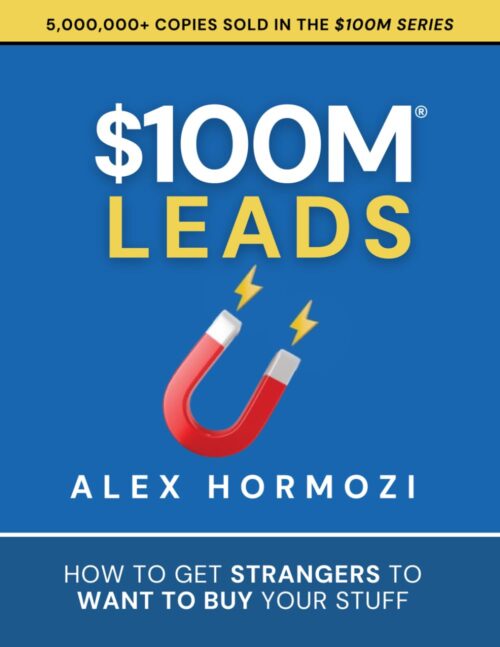
$100M Leads by Alex Hormozi
Learn Alex Hormozi’s practical framework for generating more qualified leads through outreach, content, advertising, lead magnets, referrals, affiliates, and scalable acquisition systems.
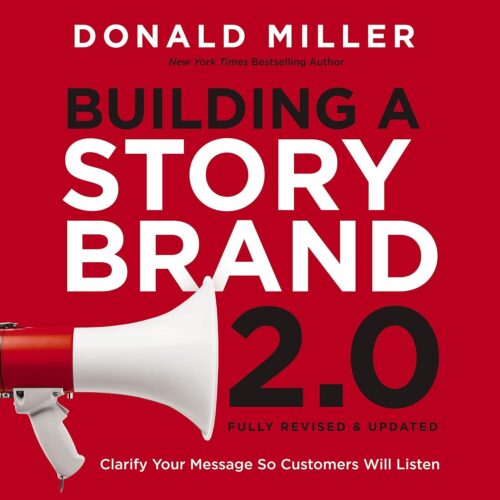
Building a StoryBrand by Donald Miller
Learn how to simplify your marketing message, make the customer the hero, and create clearer website and sales copy that helps buyers understand why they should choose you.
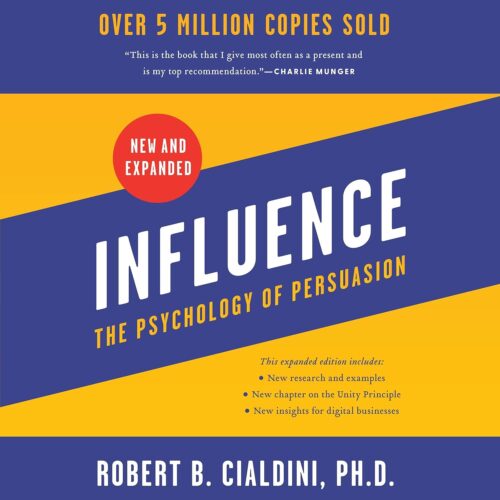
Influence: The Psychology of Persuasion by Robert Cialdini
Understand the behavioral principles behind why people say yes, including social proof, authority, reciprocity, scarcity, commitment, liking, and unity.
DotCom Secrets vs. $100M Offers: Which Should You Read First?
Direct Answer: Read $100M Offers first if your biggest problem is creating something customers strongly want. Read DotCom Secrets when your primary challenge is structuring the online journey that moves prospects toward that offer. Ideally, read both because the offer and funnel solve different parts of customer acquisition.
| Category | DotCom Secrets | $100M Offers |
|---|---|---|
| Primary Focus | Sales funnel architecture | Offer creation |
| Main Question | How should prospects move toward the sale? | What should we sell and how do we make it valuable? |
| Core Strength | Value Ladder and funnel structure | Value Equation and Grand Slam Offer |
| Best For | Online customer journey problems | Pricing and differentiation problems |
| Use Together? | Yes | Yes |
In practical terms:
$100M Offers builds the engine.
DotCom Secrets designs the road.
A great road cannot fix a broken engine.
However, an exceptional engine cannot reach the destination without a useful path.
DotCom Secrets vs. $100M Leads: What’s the Difference?
Direct Answer: $100M Leads focuses primarily on generating more prospects, while DotCom Secrets focuses on what happens after those prospects enter your marketing system. Therefore, $100M Leads can increase the flow of opportunities, while DotCom Secrets helps structure the journey that converts that attention.
| Category | DotCom Secrets | $100M Leads |
|---|---|---|
| Primary Focus | Sales funnels | Lead generation |
| Main Question | What happens after someone arrives? | How do we get more people? |
| Key Concepts | Value Ladder, funnel structure, follow-up | Core Four, lead magnets, lead getters |
| Best For | Conversion architecture | Acquisition volume |
| Use Together? | Yes | Yes |
Think of the relationship this way:
$100M Leads fills the top of the system.
DotCom Secrets organizes what happens inside the system.
Therefore, businesses often need both disciplines.
What Order Should You Read These Business Books?
Direct Answer: For an entrepreneur building a customer-acquisition system from the ground up, a practical sequence is $100M Offers for the offer, DotCom Secrets for the funnel, Building a StoryBrand for messaging, Influence for persuasion, and $100M Leads for scaling acquisition. However, the ideal order can change depending on your current bottleneck.
| Step | Book | Primary Question |
|---|---|---|
| 1 | $100M Offers | What should we sell? |
| 2 | DotCom Secrets | How should the customer journey work? |
| 3 | Building a StoryBrand | How should we explain it clearly? |
| 4 | Influence | Why do people say yes? |
| 5 | $100M Leads | How do we put more qualified people into the system? |
However, this does not mean you must finish five books before taking action.
Instead, implement as you read.
For our complete explanation, read The 5 Must-Read Books Before Building Your First Sales Funnel.
How Should You Take Notes While Reading DotCom Secrets?
Do not read the book only as marketing theory.
Instead, map your current customer journey beside it.
| Question | Current Business | Problem | Next Improvement |
|---|---|---|---|
| Who is the dream customer? | [Your answer] | [Weakness] | [Improvement] |
| What is the first offer? | [Your answer] | [Weakness] | [Improvement] |
| What happens after the opt-in? | [Your answer] | [Weakness] | [Improvement] |
| What happens after the sale? | [Your answer] | [Weakness] | [Improvement] |
| What is the next level of value? | [Your answer] | [Weakness] | [Improvement] |
| How does follow-up work? | [Your answer] | [Weakness] | [Improvement] |
Additionally, sketch the funnel on one page.
If you cannot understand the customer journey from the drawing, the customer may not understand it either.
What Should You Do After Reading DotCom Secrets?
Build one funnel.
Do not immediately build twenty.
DotCom Secrets Implementation Checklist
- Choose one dream customer.
- Choose one important problem.
- Define the first conversion.
- Map the Value Ladder.
- Choose the appropriate traffic source.
- Build the landing page.
- Create the lead magnet or entry offer.
- Build immediate follow-up.
- Define what happens after the conversion.
- Add the next logical offer.
- Track every stage.
- Identify the largest drop-off.
- Improve that stage.
- Repeat.
Eventually, additional funnels may make sense.
However, one profitable funnel is more valuable than twenty unfinished diagrams.
Frequently Asked Questions About DotCom Secrets
What is DotCom Secrets about?
Direct Answer: DotCom Secrets is about building online sales funnels that guide prospects through a structured customer journey. It covers funnel architecture, the Value Ladder, messaging, traffic temperature, funnel hacking, follow-up, offers, and different funnel structures.
Who wrote DotCom Secrets?
Direct Answer: Russell Brunson wrote DotCom Secrets. He is an entrepreneur, author, marketer, and co-founder of ClickFunnels.
What is the full title of DotCom Secrets?
Direct Answer: The current title is DotCom Secrets: The Underground Playbook for Growing Your Company Online with Sales Funnels.
Is DotCom Secrets worth reading?
Direct Answer: Yes. It is especially worthwhile for entrepreneurs who need to understand how landing pages, lead magnets, offers, follow-up, and higher-value products fit together inside an online sales funnel.
Is DotCom Secrets good for beginners?
Direct Answer: Yes. The fundamental funnel concepts are accessible to beginners, although the book also provides useful frameworks for experienced marketers who want to audit existing funnels.
What is the main lesson of DotCom Secrets?
Direct Answer: One of the book’s biggest lessons is that businesses should intentionally design the customer’s path from initial attention through purchase rather than simply sending every visitor to a generic website and hoping they convert.
What is the Value Ladder?
Direct Answer: The Value Ladder organizes offers from lower commitment to progressively greater value, allowing customers to deepen their relationship with the business over time.
What is funnel hacking?
Direct Answer: Funnel hacking means studying successful funnels to understand their structure, offers, messages, pages, follow-up, and customer journey so you can identify useful principles for your own funnel.
What is an Attractive Character?
Direct Answer: An Attractive Character is a recognizable person, voice, or identity that helps audiences connect with a brand’s story, beliefs, perspective, and message.
What is traffic temperature?
Direct Answer: Traffic temperature describes how familiar and receptive a prospect is before encountering an offer. Cold prospects generally require more context than prospects who already know and trust the business.
Does DotCom Secrets teach how to build sales funnels?
Direct Answer: Yes. Sales-funnel structure is the central focus of the book, including how different offers, pages, messages, and follow-up mechanisms connect.
Does DotCom Secrets teach lead generation?
Direct Answer: It discusses generating leads as part of funnel strategy. However, readers primarily interested in traffic generation may also want a dedicated lead-generation book such as $100M Leads or Brunson’s Traffic Secrets.
Does DotCom Secrets teach copywriting?
Direct Answer: The book covers messaging and persuasion frameworks relevant to funnel copy. However, it is primarily a funnel-strategy book rather than a complete standalone copywriting curriculum.
Does DotCom Secrets teach email marketing?
Direct Answer: Yes. Follow-up communication plays an important role in Brunson’s funnel philosophy because many prospects do not buy during their first interaction.
Does DotCom Secrets work for service businesses?
Direct Answer: Yes. Service businesses can build funnels around consultations, assessments, inspections, estimates, applications, demonstrations, and other steps that move prospects toward a service engagement.
Does DotCom Secrets work for agencies?
Direct Answer: Yes. Agencies can use funnel frameworks to acquire their own clients and improve the conversion path between advertising or content and client revenue.
Does DotCom Secrets work for contractors?
Direct Answer: Yes. Contractors can use funnels to turn local search traffic, paid advertising, referrals, or storm campaigns into inspections, estimates, appointments, and projects.
Do I need ClickFunnels to use DotCom Secrets?
Direct Answer: No. ClickFunnels is closely connected with Russell Brunson, but the underlying principles of funnel structure, Value Ladders, messaging, sequencing, and follow-up can be implemented with many different technology stacks.
Is DotCom Secrets just a book about ClickFunnels software?
Direct Answer: No. Although Brunson co-founded ClickFunnels, the book’s core subject is sales-funnel strategy rather than a simple software manual.
What is the difference between a website and a funnel?
Direct Answer: A website commonly provides several navigation options for many visitor types, while a funnel usually narrows the experience around a specific audience, offer, conversion goal, and next step.
Should I read DotCom Secrets or $100M Offers first?
Direct Answer: Read $100M Offers first if the offer itself is your biggest problem. Then, use DotCom Secrets to structure the customer journey around that offer.
Should I read DotCom Secrets or $100M Leads first?
Direct Answer: Read DotCom Secrets first if your existing traffic lacks a structured conversion path. Read $100M Leads first if your funnel already converts but too few qualified prospects enter it.
What books should I read after DotCom Secrets?
Direct Answer: Useful companion books include $100M Offers, $100M Leads, Building a StoryBrand, Influence, Expert Secrets, and Traffic Secrets, depending on whether your next challenge is the offer, traffic, messaging, persuasion, or audience building.
Is DotCom Secrets available as an audiobook?
Direct Answer: Audio and digital resources have been offered through official DotCom Secrets distribution channels. Because availability and purchase options can change, check the current Amazon or official ClickFunnels listing for the formats currently available.
Where can I buy DotCom Secrets?
Direct Answer: You can check the current Amazon listing through the link below for available editions, formats, pricing, and delivery options.
Our Final Verdict on DotCom Secrets
DotCom Secrets earns a place among the foundational books we would recommend before building a serious online sales funnel.
The reason is not complicated.
Most entrepreneurs understand individual marketing tactics before they understand how those tactics should connect.
They know they need a website.
Additionally, they know they need advertising.
They hear they need email.
Then, someone tells them they need a CRM.
Meanwhile, another expert says they need a lead magnet.
Consequently, the business accumulates tools without building a coherent journey.
DotCom Secrets helps solve that architectural problem.
Instead of asking:
“What marketing tactic should we add next?”
the business begins asking:
“What should happen next for this customer?”
That question is substantially more powerful.
If someone reads an article, what is next?
If someone downloads a guide, what is next?
If someone books an appointment, what is next?
If someone becomes a customer, what is next?
Therefore, funnel strategy becomes the architecture connecting customer attention to customer lifetime value.
However, a funnel cannot compensate indefinitely for a weak offer.
Likewise, it cannot generate demand if nobody enters it.
That is why we prefer treating DotCom Secrets, $100M Offers, and $100M Leads as complementary books.
$100M Offers strengthens what you sell.
DotCom Secrets structures how the buyer moves toward it.
Meanwhile, $100M Leads helps put more qualified people into the system.
When those three functions work together, digital marketing becomes far more coherent.
Short Product Description
Learn Russell Brunson’s foundational framework for building online sales funnels that turn strangers into leads and leads into customers. Best for entrepreneurs who want to understand value ladders, funnel structure, messaging, follow-up, and how different offers work together.
As an Amazon Associate, Infinite Media Resources earns from qualifying purchases.
Continue Building Your Sales Funnel Knowledge
-
$100M Offers by Alex Hormozi: Review, Summary & Key Takeaways
-
$100M Leads by Alex Hormozi: Review, Summary & Key Takeaways
-
The 5 Must-Read Books Before Building Your First Sales Funnel
-
The Straight-Line Funnel: Moving a Lead From Click to Contract in 48 Hours
-
The Alex Hormozi Value Equation Explained
-
Alex Hormozi’s Starving Crowd Niche Selection Framework