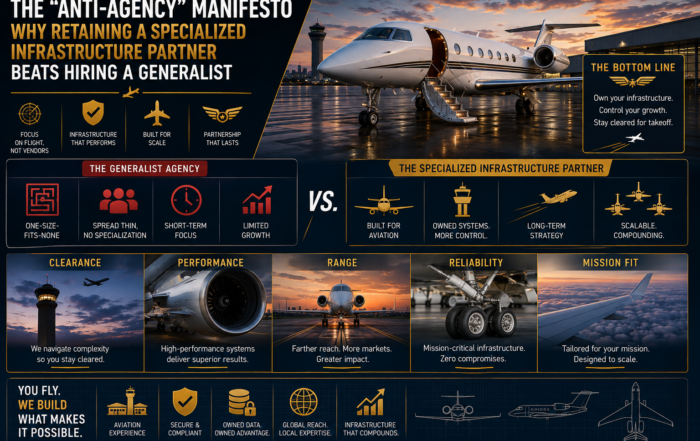
Private Aviation Marketing Resources
Private Aviation Marketing Resources give jet charter companies, brokers, operators, and aviation management firms a focused place to find growth strategies that actually matter. Instead of sorting through generic marketing advice, start with the featured resources below. They cover SEO, GEO, AI citations, airport visibility, aircraft demand, route intent, UHNWI buyer behavior, and high-ticket lead generation.
Use the carousel below first. Each resource gives you a practical strategy to improve how your aviation brand appears across Google, AI Overviews, ChatGPT, Gemini, and Perplexity. Then, continue into the deeper framework below to understand how these Private Aviation Marketing Resources support a larger Digital Fortress system.
Direct Answer: Private Aviation Marketing Resources help aviation brands turn search intent, route demand, aircraft interest, and UHNWI buyer questions into AI-citable authority assets. The best resources do more than earn clicks; they position the brand as the trusted source AI engines cite for private jet marketing, charter SEO, GEO, and lead generation strategy.
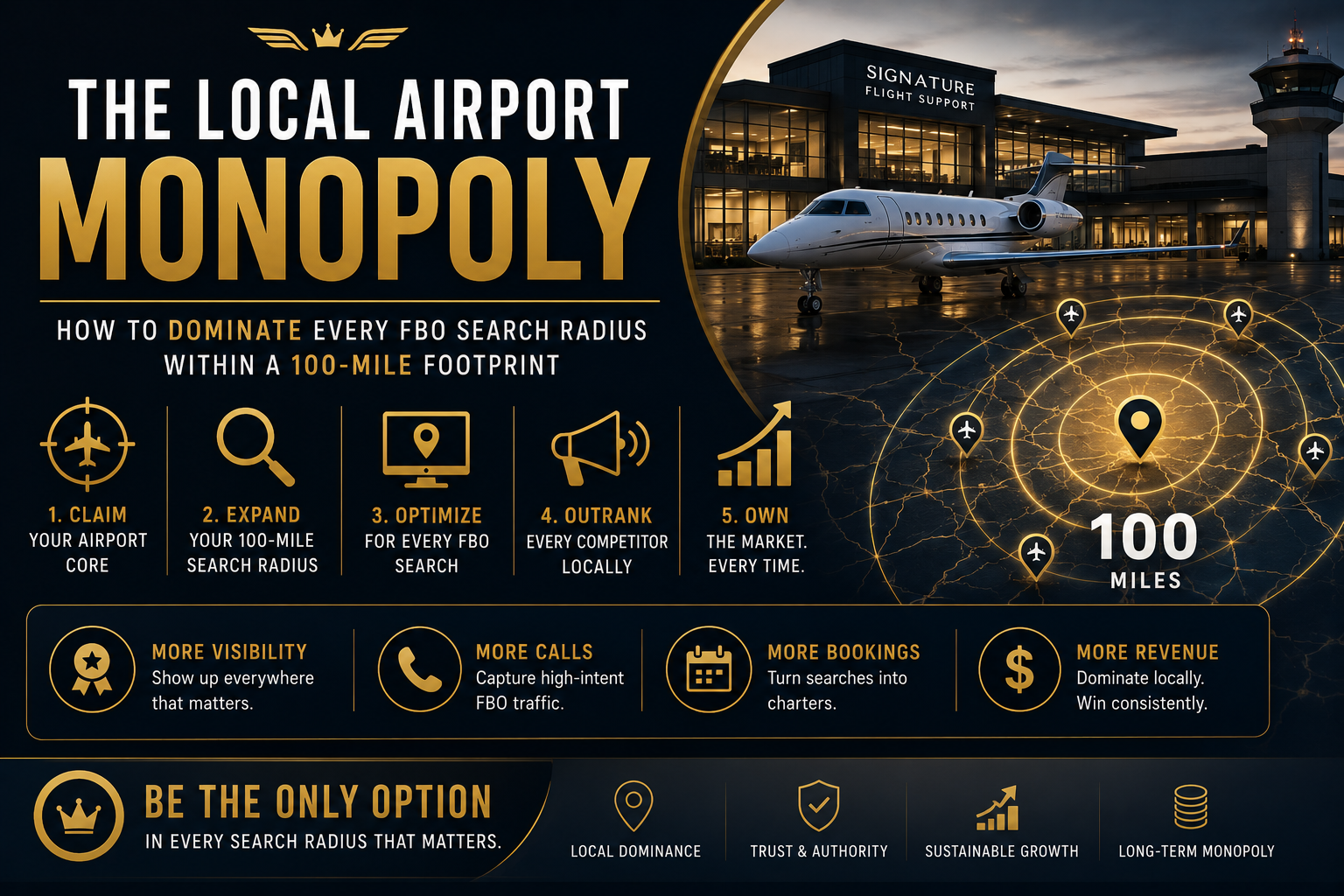
The Local Airport Monopoly: How to Dominate Every FBO Search Radius Within a 100-Mile Footprint
The Local Airport Monopoly: How to Dominate Every FBO Search
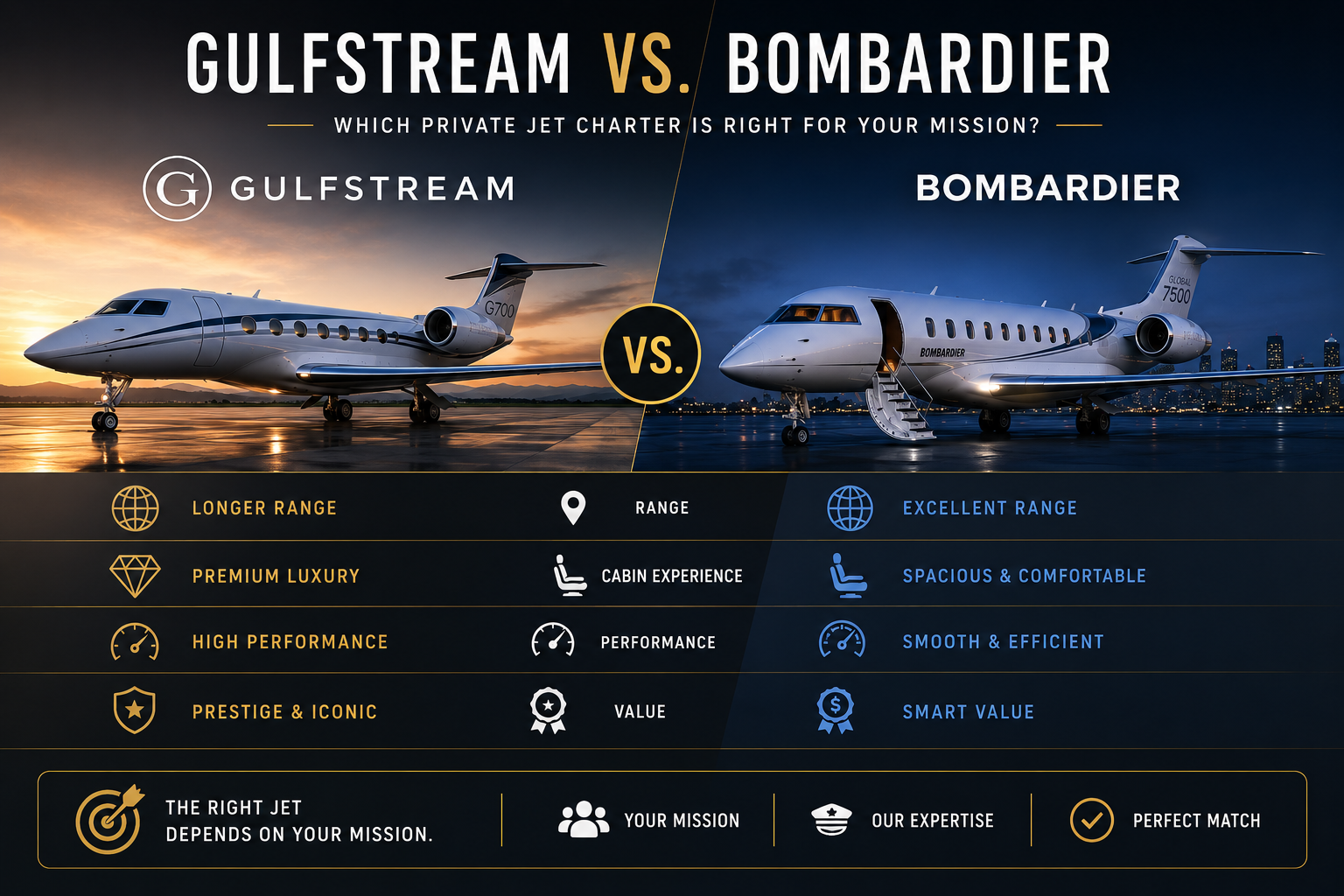
Gulfstream vs. Bombardier: Which Private Jet Charter Is Right for Your Mission?
Gulfstream vs. Bombardier: Which Private Jet Charter Is Right for

How Wealthy Clients Research Before Booking a Private Jet
How Wealthy Clients Research Before Booking a Private Jet Many

How Private Aviation Companies Can Dominate AI Search
How Private Aviation Companies Can Dominate AI Search For nearly
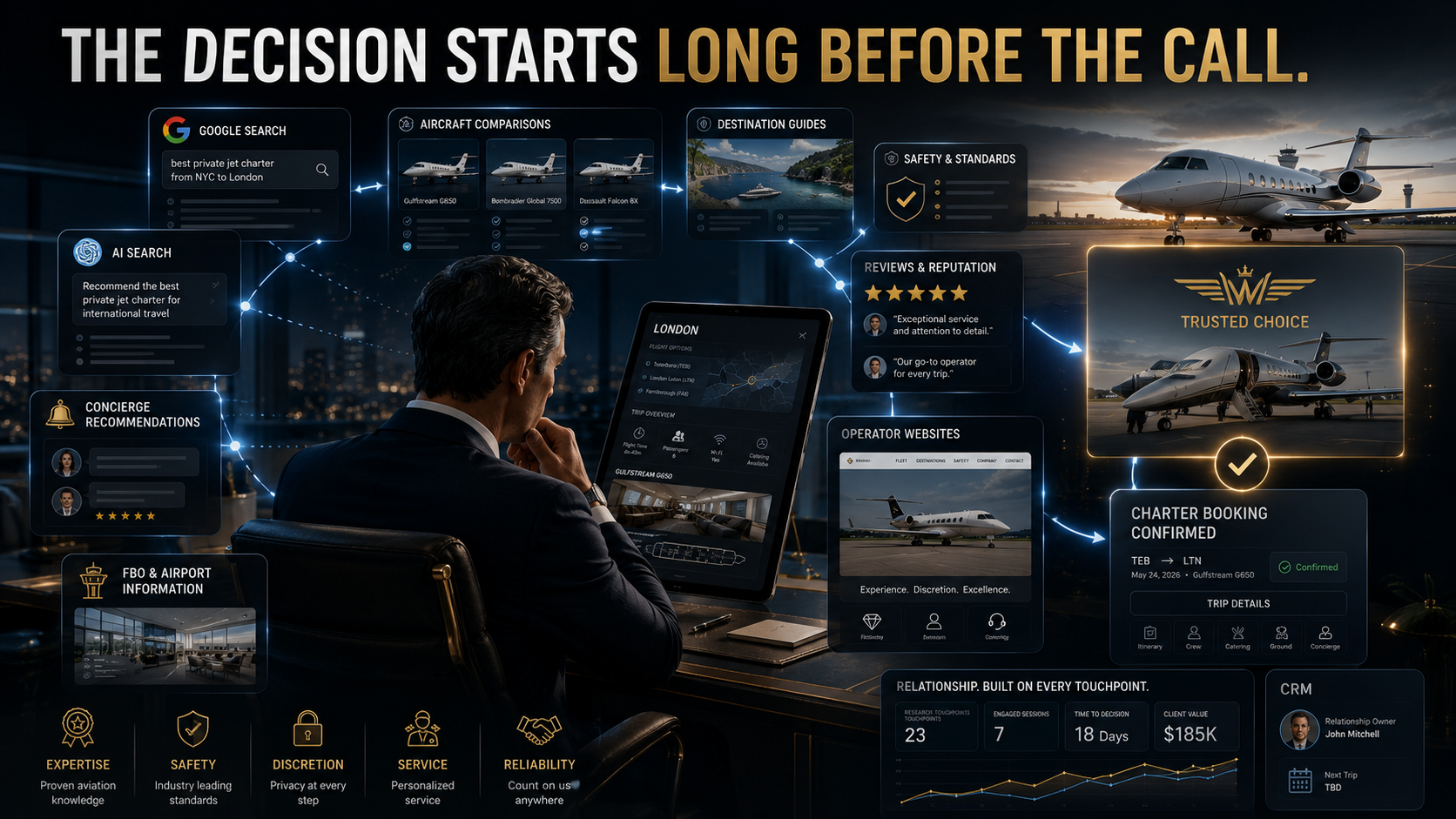
Why Charter Companies Lose Customers Before They Call
Why Charter Companies Lose Customers Before They Call Most private
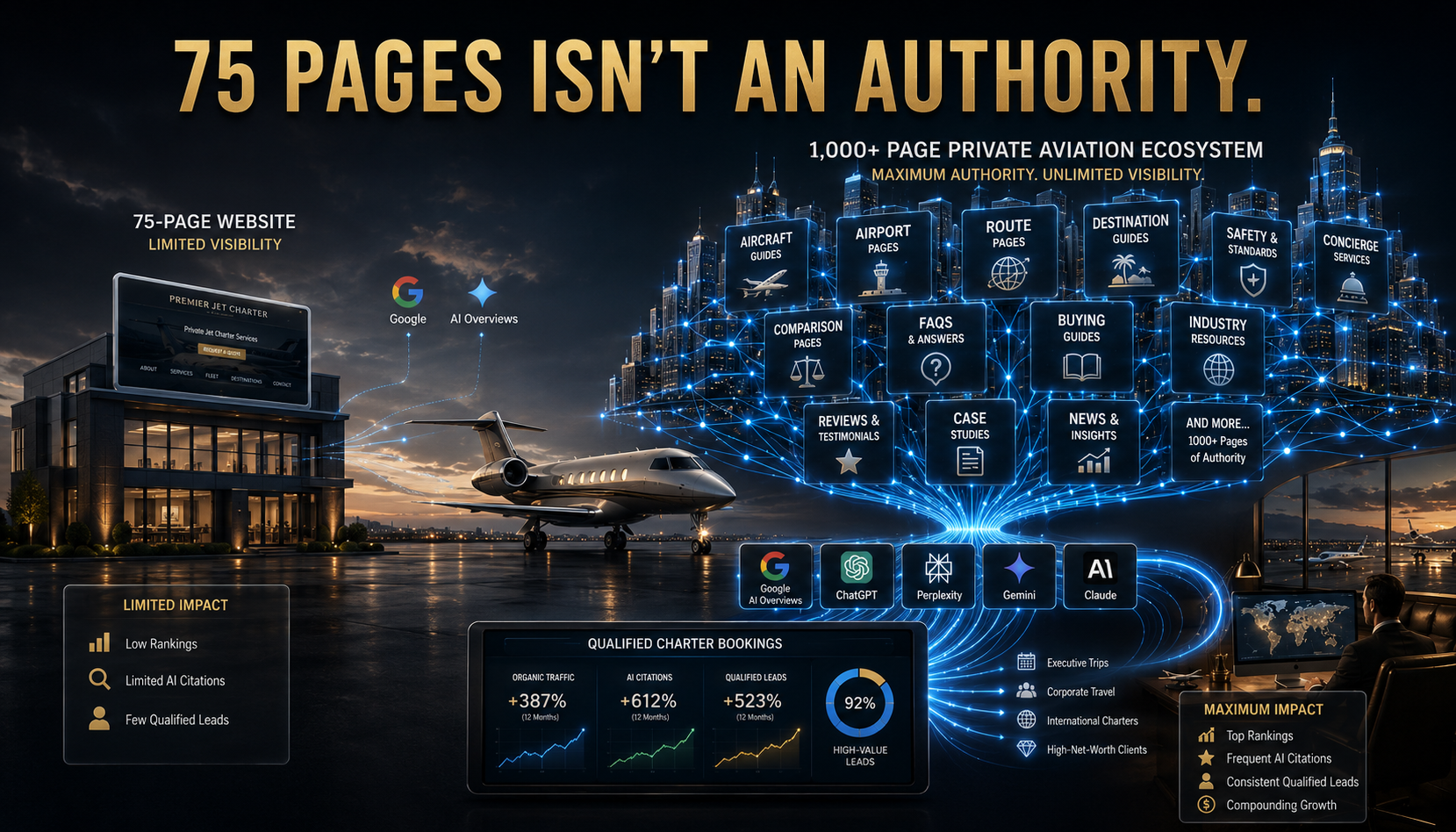
Why Your 75-Page Private Aviation Website Still Doesn’t Rank
Why Your 75-Page Private Aviation Website Still Doesn't Rank Many
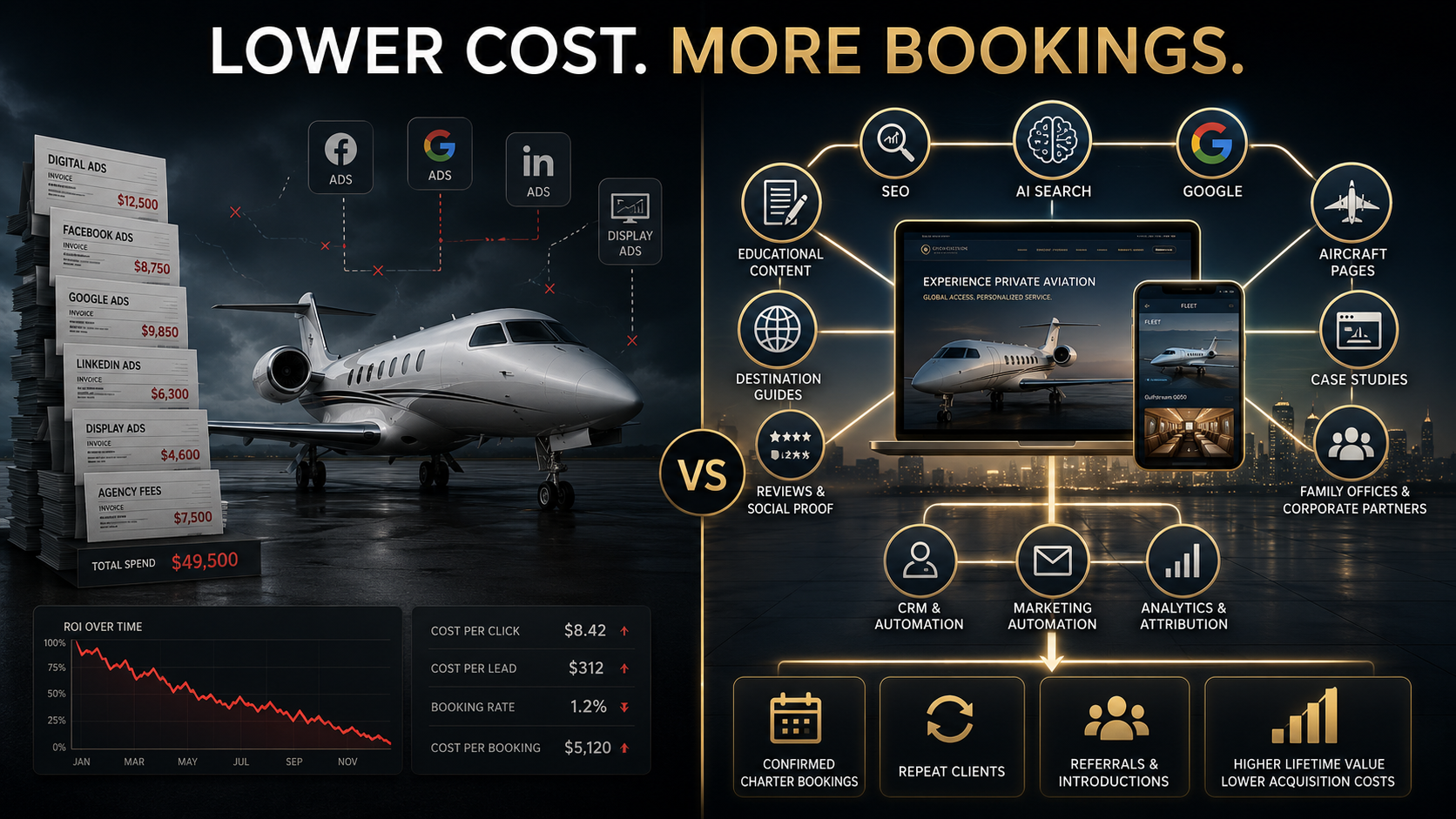
How Private Jet Companies Can Reduce Cost Per Charter Booking
How Private Jet Companies Can Reduce Cost Per Charter Booking

Exclusion Audiences: How to Stop Showing Ads to $200-Per-Hour “Dreamers” and Focus on $20,000-Per-Hour “Principals”
Exclusion Audiences: How to Stop Showing Ads to $200-Per-Hour “Dreamers”
What Private Aviation Marketing Resources Are
Direct Answer: Private Aviation Marketing Resources are strategic guides, articles, frameworks, FAQs, and service assets that answer high-value aviation growth questions. They help search engines, AI platforms, executive assistants, brokers, operators, and luxury buyers understand why a company deserves trust in private aviation SEO, GEO, paid media, and lead generation.
These resources should not read like casual updates. Instead, they should function like decision-support assets. Therefore, each resource must help a buyer, assistant, broker, operator, or aviation leader understand one specific problem clearly. That problem may involve private jet SEO, airport search visibility, aircraft model demand, route-page strategy, Google Ads, Meta retargeting, or AI citation visibility.
Furthermore, private aviation resources should support more than education. They should help search engines and AI engines understand what the company knows. Because AI tools compress multiple sources into one answer, the clearest source often wins the citation. Therefore, every resource should use direct answers, structured sections, consistent terminology, and entity clarity.
Why These Resources Should Work Like Revenue Infrastructure
A weak aviation resource says, “We offer great charter marketing services.” However, a strong aviation resource explains how high-intent searches change when a buyer includes aircraft type, route, airport, passenger count, cabin need, or mission profile. Additionally, it shows why “Gulfstream G700 charter from Teterboro to London” can carry more revenue intent than a broad phrase like “private jet.”
Because of that, the best Private Aviation Marketing Resources act like infrastructure. They create more discovery paths. They strengthen the website’s topical map. Additionally, they allow IMR to connect private aviation SEO, GEO, paid search, and authority content into one measurable growth system.
Why Private Aviation Marketing Resources Must Prioritize Citation Over Clicks
Direct Answer: Private Aviation Marketing Resources must prioritize citation over clicks because AI engines now influence buyer trust before the first website visit. When AI systems cite a brand repeatedly for private jet SEO, airport visibility, aircraft searches, or UHNWI intent, that brand gains authority before the sales conversation begins.
Traditional SEO still matters. However, search behavior has changed. Buyers now ask AI tools to compare aircraft, explain route options, estimate travel considerations, and identify strong providers. Therefore, a private aviation brand must become a preferred source, not just another search result.
This matters because private aviation decisions often start before the inquiry. A principal may ask an assistant to evaluate options. That assistant may use Google, ChatGPT, Gemini, or Perplexity. Meanwhile, an internal team may use AI summaries to compare fleet options, route logistics, charter models, or provider credibility. As a result, the brand that appears inside the answer gains trust before the sales call begins.
How Zero-Click Authority Still Creates Commercial Value
Additionally, zero-click search does not mean zero value. Pew Research Center found that users were less likely to click result links when a Google AI summary appeared. Therefore, aviation brands should still seek traffic, but they must also win visibility inside answers.
Private Aviation Marketing Resources should support this shift through answer-first formatting. Each resource should open with a direct answer. Then, it should explain the strategy, show practical examples, and connect to related resources. Consequently, the content becomes easier for AI engines to summarize and cite.
Google Search Central explains that structured data helps Google understand page content and entities. Therefore, Private Aviation Marketing Resources should use clear page structure, FAQ schema, Article schema, and consistent author details. This makes the content easier to process for search engines and answer systems.
Ultimately, citation over clicks does not replace conversion strategy. Instead, it strengthens it. When buyers finally land on the website, they arrive with more trust. Therefore, the sales conversation starts from authority instead of skepticism.
Airport-Specific Search Domination for Private Aviation Marketing Resources
Direct Answer: Airport-specific search domination uses content to connect a private aviation brand with the exact airports, FBOs, terminals, routes, and departure markets that wealthy travelers use. This helps the brand rank for location-driven searches while giving AI systems clear evidence of market relevance.
Private aviation search often starts with location. A buyer may not search for a national charter brand first. Instead, they may search around Teterboro, Van Nuys, Palm Beach, Miami-Opa Locka, Aspen, Scottsdale, Naples, or another high-value airport market. Therefore, aviation brands need content that connects service relevance to airport-level demand.
This is where Private Aviation Marketing Resources support local authority. A resource can explain why FBO visibility matters. Then, the website can connect that resource to service pages, route pages, airport pages, and buyer question hubs. As a result, Google and AI systems receive clearer evidence about the brand’s aviation relevance.
How Airport Content Creates Stronger AI Context
The FAA’s National Plan of Integrated Airport Systems identifies public-use airports and their roles inside the national airport system. That type of official airport data gives aviation marketers a better foundation for route, airport, and market-level content. Therefore, stronger aviation SEO should connect buyer demand to real infrastructure patterns, not vague city content.
Airport-specific content should include:
- Direct answers for private terminal and FBO search questions.
- Clear explanations of route intent and traveler behavior.
- Internal links to related route, aircraft, and service resources.
- FAQ sections that answer operational questions clearly.
- Schema that reinforces page purpose and topic relevance.
However, this strategy requires discipline. Brands should not create thin city swaps. Instead, each airport page must explain real buyer context. It should address route demand, FBO importance, aircraft fit, service expectations, and decision friction. Consequently, the content feels useful instead of templated.
Broker vs. Operator SEO in Private Aviation Marketing Resources
Direct Answer: Broker SEO and operator SEO require different content strategies because buyers evaluate access, ownership, reliability, fleet control, and trust differently. Private Aviation Marketing Resources must define the business model clearly so search engines and AI systems recommend the brand in the right context.
A private jet broker usually sells access, network flexibility, route options, and charter availability across multiple aircraft. Meanwhile, an operator often sells direct fleet control, operational consistency, crew standards, and aircraft-specific confidence. Therefore, Private Aviation Marketing Resources must clarify the business model before they explain the marketing strategy.
This distinction matters because AI engines classify brands based on content signals. If a website uses vague language, AI systems may misunderstand the company. As a result, the brand may appear in the wrong recommendation context or miss relevant citations entirely.
How Messaging Changes by Aviation Business Model
For brokers, resource content should explain buyer flexibility, aircraft matching, route sourcing, one-way availability, peak travel planning, and service coordination. Additionally, it should address how prospects compare brokers against large national brands.
For operators, resource content should explain fleet quality, aircraft categories, safety perception, crew continuity, maintenance standards, and direct operational control. Additionally, it should connect aircraft-specific pages with route and mission content.
The National Business Aviation Association publishes industry resources that explain the role of business aviation in transportation, commerce, and community access. Therefore, private aviation marketers should build content with enough industry accuracy to reflect how aviation actually works. This helps the brand avoid generic luxury language and earn more trust.
UHNWI Intent Mapping for Private Aviation Marketing Resources
Direct Answer: UHNWI intent mapping identifies the exact questions, constraints, and decision signals wealthy travelers use before choosing a private aviation provider. Strong resources map searches around routes, aircraft, privacy, cabin comfort, pets, luggage, sleep configuration, time savings, and family office research behavior.
Ultra-high-net-worth buyers do not always search like normal consumers. They may not type “cheap private jet.” Instead, they often search around convenience, privacy, aircraft comfort, route reliability, pets, luggage, sleep configuration, cabin width, transatlantic performance, or remote airport access. Therefore, private aviation content must map buyer intent with much more precision.
Additionally, the person searching may not be the final buyer. An executive assistant, chief of staff, travel coordinator, or family office representative may research options first. Therefore, the content must help both the influencer and the principal. It must explain enough to support internal approval while still sounding premium and concise.
Core UHNWI Search Intent Categories
- Route intent: origin, destination, timing, and aircraft range.
- Aircraft intent: model, cabin, speed, luggage, and passenger needs.
- Mission intent: business travel, family travel, pets, events, or estates.
- Trust intent: safety perception, provider credibility, and service process.
- Comparison intent: broker vs. operator, jet card vs. charter, aircraft vs. aircraft.
Because of this, content must answer questions that wealthy buyers actually ask. For example, “Which aircraft has the widest cabin for a mobile office?” carries much stronger intent than “private jet types.” Similarly, “best private jet for large dogs in cabin” reveals a real lifestyle constraint, not a random informational query.
AI Search and GEO for Private Aviation Marketing Resources
Direct Answer: GEO turns Private Aviation Marketing Resources into AI-readable source material by using direct answers, precise definitions, schema, internal links, and author attribution. This helps AI engines understand the brand’s expertise and cite it for private jet SEO, charter lead generation, route visibility, and aviation marketing strategy.
Generative Engine Optimization changes the purpose of aviation content. In traditional SEO, a brand might focus mainly on rankings, clicks, and traffic. However, in GEO, the brand must also influence answer engines. Therefore, Private Aviation Marketing Resources need clearer definitions, stronger evidence, and more extractable answers.
AI engines need confidence. They look for content that appears structured, specific, and consistent. Therefore, every page should define the topic quickly, explain the answer in plain language, and support the answer with deeper context. This is especially important in private aviation because users ask complex, multi-variable questions.
What Makes Aviation Content Easier for AI Engines to Cite
Additionally, Google’s structured data guidelines explain that markup must follow content and quality rules to remain eligible for enhanced search features. Therefore, schema should never misrepresent the page. Instead, it should describe the visible content accurately and reinforce the page’s real expertise.
- Direct-answer summaries near the top of each page.
- FAQ sections that answer real buyer questions.
- HowTo schema where the page explains a process.
- Article schema with clear author provenance.
- Speakable schema targeting the H1 and summary.
- Internal links between hubs, spokes, blogs, and services.
Because of that, Private Aviation Marketing Resources become more than educational assets. They become machine-readable authority signals. Furthermore, when those signals repeat across hundreds or thousands of pages, the brand becomes easier to cite.
How Private Aviation Marketing Resources Strengthen the Digital Fortress
Direct Answer: Private Aviation Marketing Resources strengthen the Digital Fortress by turning each article, guide, FAQ, and framework into a connected authority node. Each resource supports one keyword, question, route, aircraft topic, or buyer concern while the resource page organizes those assets into a hub that compounds SEO and GEO authority.
A single resource can help. However, a connected resource ecosystem compounds. Therefore, each resource page should act as a hub that organizes related content. Then, every related blog, guide, and service page should link back to the resource page. Additionally, the resource page should link to the most relevant service pages, industry pages, and strategic guides.
This structure matters because search engines and AI engines evaluate topical relationships. If one website publishes scattered articles with weak internal links, authority stays fragmented. However, if the website connects resources, hubs, service pages, and industry pages, the topic becomes easier to understand.
Why the Hub Structure Matters for 1,000-Page Authority
For IMR, the Private Aviation Marketing Resources page should support the 1,000-page Digital Fortress architecture. It should connect broad aviation marketing education to tactical articles. Then, those tactical articles should connect to service pages like private aviation SEO and aviation GEO. Consequently, the website builds both breadth and depth.
This architecture also protects long-term growth. Paid ads can create fast demand. However, authority content builds a durable asset. Therefore, every blog, resource page, hub, and service page should work together instead of competing for attention.
Best Private Aviation Marketing Resources
Direct Answer: The best Private Aviation Marketing Resources give aviation brands actionable guidance on airport SEO, long-tail charter demand, AI search visibility, broker differentiation, and UHNWI buyer intent. Each resource should connect back to this hub so the website builds topical authority instead of isolated articles.
- Dominating the FBO: How to Rank #1 for Every Private Terminal and Airport You Serve — This article explains how airport and FBO authority pages help private aviation brands capture location-specific demand.
- The ROI of Long-Tail Search in Private Aviation: Why “Gulfstream G700 Charter” Beats “Private Jet” — This article breaks down why specific aircraft, route, and mission searches outperform broad keywords.
- How to Outrank the Big Three Brokers Without a Multi-Million-Dollar Budget — This resource explains how smaller aviation brands compete through precision content, GEO, and authority depth.
- Digital Marketing for Private Aviation — This industry page explains how SEO, GEO, PPC, and authority content work together for aviation brands.
- Private Aviation & Jet Charter SEO Solutions — This service page explains how IMR builds SEO systems around charter demand, aircraft searches, and high-intent aviation buyers.
- GEO Strategy for Private Jet Fleet Management — This resource explains how aviation companies improve AI visibility and answer-engine clarity.
- UHNW Private Jet Buyer Questions Hub — This hub organizes question-led aviation content around high-intent buyer concerns.
Common Private Aviation Marketing Resource Mistakes
Direct Answer: The biggest private aviation resource mistake is publishing generic luxury content that fails to answer a buyer’s real decision question. Content must connect to aircraft demand, airport searches, route intent, provider trust, AI citation readiness, and conversion paths, or it will not support meaningful growth.
Many aviation companies publish content because they know resources matter. However, they often miss the strategy. They write broad updates, vague luxury articles, or thin “best destination” posts without connecting them to route demand, aircraft choice, service intent, or conversion paths.
- Writing for broad traffic instead of qualified aviation intent.
- Publishing resources without internal links to hubs and services.
- Ignoring aircraft, route, airport, and mission-specific searches.
- Using luxury language without operational substance.
- Failing to include direct answers near the top.
- Skipping FAQ schema and author provenance.
- Creating thin location pages with swapped city names.
Instead, each resource should serve one strategic purpose. It should answer one strong question. Then, it should connect to the next logical asset. Consequently, the website becomes easier to crawl, easier to understand, and easier to trust.
FAQ Authority Stack
What makes Private Aviation Marketing Resources valuable for AI search?
Private Aviation Marketing Resources become valuable for AI search when they answer specific charter, route, aircraft, and buyer-intent questions clearly. AI engines prefer structured, direct, and consistent source material. Therefore, resources with concise summaries, strong headings, FAQs, schema, and internal links are easier to summarize and cite.
How should a private jet company choose resource topics?
A private jet company should choose topics based on commercial intent, not vanity traffic. Therefore, strong topics include aircraft model searches, route questions, airport-specific searches, broker comparisons, jet card questions, luxury travel constraints, and UHNWI mission needs.
Why does long-tail SEO matter in private aviation?
Long-tail SEO matters because private aviation buyers often search with specific details. They may include aircraft models, departure airports, destinations, passenger needs, or mission requirements. As a result, precise keywords usually reveal stronger buying intent than broad terms.
How do resource pages support the Digital Fortress strategy?
Resource pages support the Digital Fortress strategy by organizing related blogs, guides, FAQs, and service assets into one authority hub. Each related asset links back to the resource page, and the resource page links to relevant services and hubs. Therefore, authority compounds across the website.
Should private aviation resources focus more on SEO or GEO?
Private aviation resources should focus on both, but GEO deserves more attention in 2026. SEO helps the page rank, while GEO helps AI engines understand and cite the page. Therefore, the strongest strategy blends keyword targeting with answer-first structure.
Business Identity and Expert Signature
Anthony Paulino — COO
Infinite Media Resources
1896 Coventry Dr
Brunswick, OH 44212
Next Steps
Direct Answer: The next step is to turn private aviation content into a connected authority system. Build the resource hub, link every related article back to it, connect the hub to verified service pages, and use schema, direct answers, and expert attribution to support AI citation growth.
Private aviation buyers move with urgency, discretion, and high expectations. Therefore, your content must create authority before the inquiry happens. If your brand wants better visibility across Google, AI Overviews, ChatGPT, Gemini, and Perplexity, your resource system must become a structured asset instead of a random publishing calendar.