
The “Tail Number” SEO Strategy: How to Capture High-Intent Searches for Specific Aircraft Models
Direct Answer: A Tail Number SEO Strategy helps private aviation companies capture high-intent searches around specific aircraft models, configurations, missions, cabin features, routes, and availability. However, the strategy should focus on aircraft model authority, not exploiting private owner tail numbers. Therefore, operators should build model-specific pages for aircraft like the Gulfstream G650ER, Global 7500, Citation Longitude, Challenger 3500, Phenom 300E, and Pilatus PC-24 while using privacy-safe language, useful comparisons, route context, and strong conversion paths.
Many charter websites treat aircraft pages like brochures. They add a photo, list a few specs, mention passenger count, and stop there. However, serious buyers search differently. They compare aircraft by mission, luggage, runway performance, range, cabin comfort, nonstop capability, airport access, and total travel outcome.
Therefore, aircraft model SEO is one of the highest-value opportunities in private aviation marketing.
When a prospect searches “G650ER charter Teterboro to London,” “Global 7500 cabin altitude,” or “best jet for Aspen,” that search often signals real buying intent. Additionally, these queries can reveal whether the prospect needs charter, aircraft management, jet card guidance, or ownership support.
Google recommends helpful, people-first content that answers real user needs. Additionally, structured data helps search systems understand page content and entities. Therefore, aircraft SEO should combine practical answers, clear model data, route examples, airport context, FAQs, internal links, authority references, and full schema markup. Google Search Central explains helpful content, while Google explains structured data.
Key Takeaways
- Aircraft model searches often reveal high buyer intent.
- However, tail-number targeting must stay privacy-safe and ethical.
- Therefore, operators should target aircraft models, missions, routes, and configurations instead of private owner identifiers.
- Additionally, aircraft SEO should connect model pages to route-pair pages, airport pages, safety pages, and conversion pages.
- Ultimately, model-specific content creates stronger SEO, GEO, lead generation, and aircraft authority.
What Is a Tail Number SEO Strategy?
Direct Answer: A Tail Number SEO Strategy is a private aviation SEO framework that captures high-intent aircraft searches by building content around aircraft models, missions, routes, cabin features, and buyer questions.
The phrase “tail number” sounds specific. However, the best strategy does not chase private owner identifiers aggressively. Instead, it uses the concept of aircraft-specific demand to build pages that answer model-level search intent.
This Strategy Targets Searches Like
- Gulfstream G650ER charter
- Global 7500 vs G700
- Citation Longitude range
- Challenger 3500 luggage capacity
- Phenom 300E charter cost
- best jet for Aspen
- best aircraft for Teterboro to London
- Pilatus PC-24 unpaved runway performance
As a result, the brand captures buyers who already understand aircraft value and mission requirements.
Why Privacy-Safe Targeting Matters
Direct Answer: Private aviation brands should avoid building invasive content around individual private tail numbers unless the aircraft is publicly marketed, company-owned, or clearly part of the operator’s approved fleet.
Privacy is one of the strongest buying motivations in private aviation. Therefore, a marketing strategy that feels invasive can damage trust quickly. Although public aircraft registries exist, that does not mean every tail-number search deserves a landing page.
Privacy-Safe Aircraft SEO Focuses On
- aircraft model pages
- fleet pages
- charter availability pages
- route-fit pages
- airport-performance pages
- aircraft comparison pages
- ownership and management pages
- approved operator fleet content
However, avoid pages that imply knowledge of a private owner’s movements, personal travel, aircraft location, or sensitive operational details. Instead, build trust by creating model-level authority.
Why Aircraft Model Searches Are So Valuable
Direct Answer: Aircraft model searches are valuable because they usually come from buyers with stronger aviation knowledge and clearer mission intent.
A broad search like “private jet charter” may come from anyone. However, a search like “G650ER charter from Teterboro to London” usually reflects a more serious buyer, assistant, broker, family office, or aviation advisor.
Aircraft Model Searches Reveal
- route intent
- budget awareness
- aircraft preference
- range requirements
- cabin expectations
- airport constraints
- ownership interest
- charter readiness
Therefore, aircraft SEO often generates fewer visitors but better conversations.
Which Aircraft Models Should You Target?
Direct Answer: Target aircraft models that match your fleet, route demand, customer questions, charter availability, ownership services, or high-value mission profiles.
Ultra-Long-Range Jets
- Gulfstream G650ER
- Gulfstream G700
- Bombardier Global 7500
- Bombardier Global 8000
- Dassault Falcon 8X
Super-Midsize and Large-Cabin Jets
- Challenger 3500
- Challenger 650
- Citation Longitude
- Gulfstream G280
- Praetor 600
Light and Midsize Jets
- Phenom 300E
- Citation CJ4
- Citation M2 Gen2
- HondaJet Elite II
- Pilatus PC-24
Additionally, aircraft model selection should reflect your market. For example, a Caribbean strategy may prioritize light jets, while a London-to-Dubai strategy may prioritize ultra-long-range aircraft.
How to Build a High-Authority Aircraft Model Page
Direct Answer: A strong aircraft model page should explain who the aircraft is for, which missions it fits, what routes it serves, where it performs well, and how a buyer should evaluate it.
Recommended Aircraft Page Sections
- direct answer summary
- aircraft overview
- best use cases
- range and route fit
- cabin comfort
- passenger capacity
- luggage considerations
- airport performance
- comparison section
- ideal buyer profile
- FAQ section
- route review CTA
Furthermore, the page should avoid thin manufacturer-style descriptions. Instead, it should explain practical decision factors.
Weak Aircraft Copy
“The Gulfstream G650ER offers luxury, performance, and comfort for elite travelers.”
Stronger Aircraft Copy
“The Gulfstream G650ER often fits travelers who need nonstop international range, a large cabin, strong long-haul comfort, and fewer repositioning compromises on routes such as Teterboro to London, Van Nuys to Tokyo, or Palm Beach to Paris.”
Therefore, the stronger version attracts high-intent buyers because it connects the aircraft to real missions.
Add Route Context to Every Aircraft Page
Direct Answer: Aircraft pages perform better when they include route examples because buyers choose jets based on missions, not specs alone.
A buyer rarely cares about range in isolation. Instead, they care whether the aircraft can complete a specific route comfortably, efficiently, and reliably.
Route Context Examples
- G650ER for Teterboro to London
- Global 7500 for London to Dubai
- Phenom 300E for Miami to Nassau
- Challenger 3500 for New York to Aspen
- Pilatus PC-24 for short-field destination access
Additionally, route context helps internal linking. For example, aircraft pages should connect naturally to The Route-Pair Strategy because route-pair SEO and aircraft SEO strengthen each other.
Add Airport and Runway Context
Direct Answer: Airport context improves aircraft SEO because airport restrictions, runway length, elevation, weather, and access can shape aircraft selection.
For example, Aspen, Teterboro, Van Nuys, Palm Beach, and St. Barts create very different decision factors. Therefore, aircraft pages should explain where a model works well and where another aircraft may fit better.
Airport Context Questions
- Can this aircraft use short runways?
- Does this aircraft perform well at high-elevation airports?
- Is the cabin appropriate for long-haul routes?
- Does the aircraft need a fuel stop?
- Is luggage capacity enough for ski or golf travel?
- Is the aircraft practical for island-hopping?
Consequently, airport context turns a basic aircraft page into a useful buyer guide.
Build Aircraft Comparison Pages
Direct Answer: Aircraft comparison pages capture high-intent buyers who are already close to a decision.
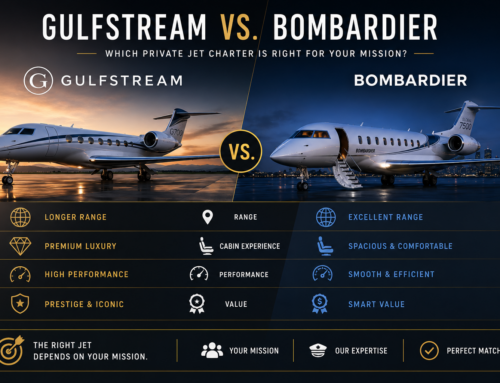
When someone searches “G650ER vs Global 7500,” they are not casually browsing. Instead, they are evaluating fit, comfort, prestige, range, and mission performance. Therefore, comparison pages can generate extremely qualified leads.
High-Intent Comparison Pages
- G650ER vs Global 7500
- G700 vs Global 7500
- Challenger 3500 vs G280
- Citation Longitude vs Challenger 3500
- Phenom 300E vs Citation CJ4
- Pilatus PC-24 vs Phenom 300E
Additionally, comparison content supports AI-search visibility because answer engines often summarize differences between options.
How Aircraft SEO Supports GEO and AI Search
Direct Answer: Aircraft SEO supports GEO because AI systems need structured, clear, and useful explanations when answering model-specific aviation questions.
AI search users ask questions like “What private jet is best for London to Dubai?” or “Can a large jet land at Aspen?” Therefore, your content should answer these questions directly and repeatedly.
AI-Friendly Aircraft Content Includes
- direct answers
- model comparisons
- route examples
- airport considerations
- FAQ sections
- schema markup
- internal links
- trusted external references
Furthermore, aircraft pages should connect to broader authority topics like citation authority in AI search and schema markup for aviation. As a result, model-specific pages become part of the larger authority graph.
Conversion Strategy for Aircraft Model Pages
Direct Answer: Aircraft model pages should convert readers with route reviews, aircraft fit consultations, availability checks, and private advisor CTAs.
A generic “Contact Us” button is weak. Instead, the CTA should match the aircraft-intent stage.
Strong Aircraft SEO CTAs
- Request an Aircraft Fit Review
- Compare Aircraft for Your Route
- Check Charter Availability
- Review Long-Haul Jet Options
- Request a Private Route Review
- Discuss Aircraft Management Options
Additionally, forms should ask useful qualifying questions.
Recommended Form Fields
- departure airport
- arrival airport
- travel window
- passenger count
- luggage needs
- aircraft preference
- charter, jet card, ownership, or management interest
Therefore, the page helps sales teams understand buyer intent immediately.
Internal Linking Strategy
Direct Answer: Aircraft model pages should link to route pages, airport pages, comparison pages, safety pages, and aircraft management content.
Internal links help buyers move through the decision journey. Additionally, they help search systems understand relationships between aircraft, missions, airports, and services.
Aircraft Page Internal Links Should Connect To
- route-pair pages
- airport authority pages
- aircraft comparison pages
- empty leg pages
- jet card pages
- aircraft management pages
- safety pages
- private aviation marketing hub
For example, an aircraft page about the Global 7500 should link to a London-to-Dubai route page, while a Pilatus PC-24 page should connect to mountain airport and island-hopping content. Additionally, safety-sensitive aircraft pages should connect to Marketing Your ARGUS/Wyvern Ratings as Your Primary Competitive Edge.
Aircraft SEO Content Map
Direct Answer: A strong aircraft SEO system requires model pages, comparison pages, route pages, airport pages, and buyer-intent FAQs.
| Content Type | Example | Primary Intent |
|---|---|---|
| Aircraft Model Page | Gulfstream G650ER Charter Guide | Model research |
| Aircraft Comparison Page | G650ER vs Global 7500 | Decision support |
| Route + Aircraft Page | Best Jet for Teterboro to London | Mission fit |
| Airport + Aircraft Page | Best Aircraft for Aspen Operations | Airport performance |
| Use-Case Page | Best Jets for Caribbean Island-Hopping | Travel scenario |
| Ownership Page | Managing a Gulfstream G650ER | Owner-service intent |
Consequently, each aircraft becomes a node inside a larger aviation knowledge graph.
Schema Strategy for Aircraft SEO
Direct Answer: Aircraft SEO pages should use structured data to clarify page type, topic, FAQs, how-to steps, breadcrumbs, and service relevance.
Google explains that structured data helps Google understand information on a page. Therefore, schema should support aircraft pages whenever the content includes clear questions, steps, services, or articles.
Recommended Schema Types
- Organization
- WebSite
- ProfessionalService
- WebPage
- Article
- FAQPage
- HowTo
- BreadcrumbList
- SpeakableSpecification
Additionally, aircraft pages should use clear H2s, direct-answer paragraphs, and FAQ sections so both users and AI systems can extract meaning quickly.
Metrics That Matter
Direct Answer: Aircraft SEO should be measured by qualified aircraft intent, not just page traffic.
Track These Metrics
- aircraft model impressions
- aircraft page traffic
- comparison page engagement
- route review submissions
- availability checks
- qualified lead rate
- aircraft preference submitted
- quote requests
- aircraft management inquiries
- AI-search visibility
- internal link clicks
- conversion rate by aircraft model
Additionally, compare aircraft page leads against generic charter leads. Often, model-specific leads carry stronger buyer intent.
Common Aircraft SEO Mistakes
Direct Answer: Aircraft SEO fails when companies publish thin spec pages without route context, comparison value, or conversion strategy.
- copying manufacturer specs only
- using generic luxury language
- ignoring route fit
- ignoring airport performance
- not adding FAQs
- not building comparison pages
- not linking model pages to route pages
- not using schema
- not adding safety context
- not protecting privacy around tail-number language
- not tracking aircraft-specific lead quality
Instead, build aircraft pages that help buyers choose the right jet for the mission.
Frequently Asked Questions
What is a Tail Number SEO Strategy?
A Tail Number SEO Strategy is a privacy-safe aircraft SEO approach that targets high-intent searches around aircraft models, routes, airports, comparisons, and mission fit.
Should private aviation companies target individual tail numbers?
Usually, no. Unless the aircraft is publicly marketed or part of an approved operator fleet, the safer strategy is to target aircraft models and mission-related searches.
Why are aircraft model searches valuable?
Aircraft model searches often come from buyers, assistants, family offices, brokers, and advisors who already understand private aviation and need specific guidance.
What should an aircraft model page include?
It should include aircraft overview, best use cases, range, cabin details, route examples, airport considerations, comparisons, FAQs, schema, and a clear CTA.
Does aircraft SEO help AI search visibility?
Yes. AI systems need structured, useful answers about aircraft models, routes, and mission fit, so strong aircraft pages can support GEO visibility.
External Sources
Conclusion
Direct Answer: The Tail Number SEO Strategy works when private aviation brands use aircraft-specific search intent to build model authority, route relevance, airport context, comparison content, and privacy-safe conversion pages.
However, the best strategy does not exploit private aircraft identifiers. Instead, it captures the deeper buyer intent behind aircraft-specific searches. Therefore, operators should build high-authority model pages, comparison pages, route-fit pages, and airport-performance guides that help serious buyers choose the right aircraft.
Ultimately, aircraft SEO is not about ranking for specs. It is about owning the decision path between the buyer’s mission and the aircraft that solves it.
Final Insight: The buyer who searches for a specific aircraft model is already telling you what they value. Your job is to become the most useful answer before a broker, competitor, or AI system fills that gap.
About the author : Anthony Paulino