Marketing Your ARGUS/Wyvern Ratings as Your Primary Competitive Edge
Direct Answer: Most private aviation companies underutilize their ARGUS and Wyvern safety ratings in marketing. However, these ratings are often more persuasive than luxury messaging because they signal operational discipline, safety culture, trustworthiness, and professional credibility. Therefore, charter operators should position ARGUS and Wyvern credentials as core trust assets across SEO, GEO, landing pages, ads, sales scripts, airport pages, and AI-search content.
Most aviation marketing focuses on luxury, convenience, or exclusivity. However, affluent travelers and family offices increasingly prioritize risk reduction, operational consistency, and trusted flight standards. Therefore, safety positioning often creates stronger psychological confidence than glamorous branding.
Many operators place their ARGUS or Wyvern logos quietly in the footer of a website and never mention them again. However, that approach wastes one of the strongest differentiators in private aviation.
Trust is one of the biggest conversion drivers in high-ticket services. Additionally, Google continues emphasizing experience, expertise, authority, and trust signals in content quality systems. Structured data and authoritative topic coverage also help search systems understand credibility and expertise. Google explains helpful content, while Google explains structured data.
Key Takeaways
- ARGUS and Wyvern ratings are major trust signals in private aviation.
- However, most operators barely market them.
- Therefore, safety positioning creates a major differentiation opportunity.
- Additionally, trust-focused messaging often converts better than luxury messaging.
- Ultimately, safety credibility can become a long-term SEO, GEO, and lead-generation advantage.
What Are ARGUS and Wyvern Ratings?
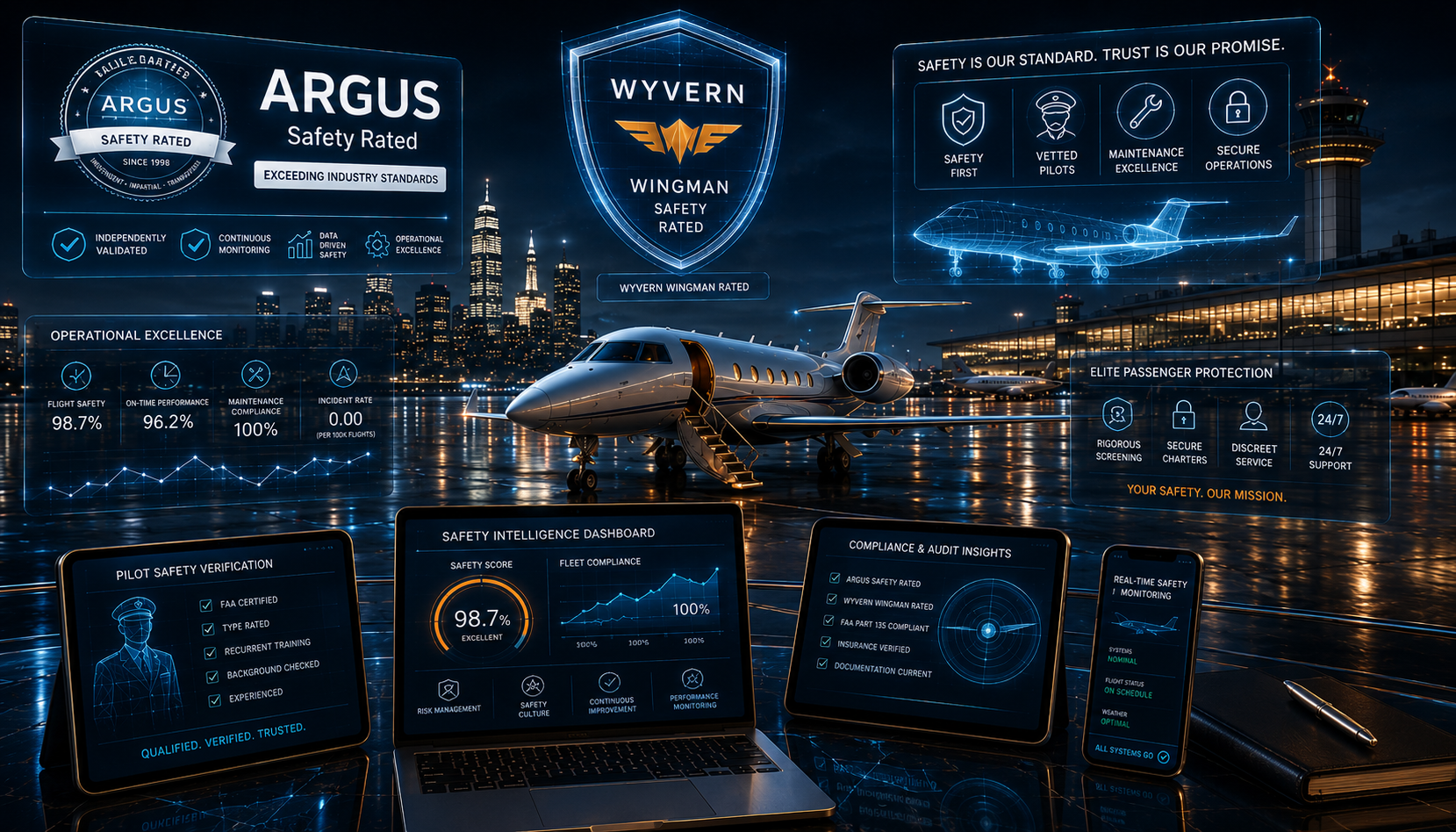
Direct Answer: ARGUS and Wyvern are aviation safety auditing and certification organizations that evaluate operational standards, safety practices, crew qualifications, maintenance procedures, and risk-management systems.
These ratings help charter buyers, advisors, corporations, and family offices evaluate operator credibility. Therefore, they often act as trust shortcuts during the buying process.
These Ratings Evaluate
- pilot qualifications
- maintenance standards
- safety procedures
- operational consistency
- risk-management systems
- training standards
- organizational oversight
- compliance practices
Consequently, they carry major psychological weight with sophisticated buyers.
Why These Ratings Matter More Than Most Operators Think
Direct Answer: Safety ratings matter because private aviation buyers are purchasing trust as much as transportation.
Most charter customers cannot independently evaluate flight operations. Therefore, third-party safety verification reduces uncertainty.
These Ratings Signal
- professional discipline
- operational maturity
- reduced risk
- crew quality
- maintenance consistency
- organizational professionalism
- high operational standards
Additionally, family offices and corporate advisors often use safety standards as filtering criteria.
Trust Is the Real Product in Private Aviation
Direct Answer: Trust drives aviation conversions more than luxury branding alone.
Private aviation involves significant financial cost, personal safety, scheduling importance, and reputation considerations. Therefore, buyers prioritize reliability and professionalism.
Trust Drivers in Aviation
- safety standards
- crew professionalism
- privacy protection
- operational consistency
- advisor confidence
- transparent communication
- aircraft quality
- reliable execution
As a result, safety positioning often improves lead quality and conversion rates.
Why Family Offices Pay Attention to Safety Standards
Direct Answer: Family offices prioritize operational risk management because they protect high-value individuals, families, executives, and reputational assets.
Family office travel coordinators are not usually looking for the flashiest operator. Instead, they look for the safest, most reliable, and most operationally disciplined option.
Family Offices Often Prioritize
- verified safety systems
- pilot standards
- operational transparency
- consistency
- privacy procedures
- reliability
- low-friction coordination
- trusted vendors
Therefore, safety-focused messaging aligns naturally with sophisticated buyer psychology.
Why Safety Messaging Often Outperforms Luxury Messaging
Direct Answer: Safety messaging creates confidence and lowers buyer anxiety, while luxury messaging often feels generic.
Most charter websites use similar luxury language. However, fewer operators clearly explain operational excellence and safety standards.
Weak Luxury Messaging
- exclusive luxury
- VIP experience
- elite travel lifestyle
- luxury above all
Stronger Safety Messaging
- third-party verified safety standards
- professional operational oversight
- trusted crew procedures
- disciplined flight operations
- family-office-level aviation standards
Consequently, safety positioning creates stronger differentiation.
SEO Opportunities Around Aviation Safety
Direct Answer: Aviation safety topics create major SEO opportunities because buyers actively search trust-related questions.
High-Intent SEO Topics
- what is ARGUS aviation rating
- what is Wyvern aviation certification
- how safe are private jet charters
- best private jet safety standards
- ARGUS vs Wyvern
- private jet operator safety checklist
- how family offices vet charter operators
- private aviation due diligence
Additionally, safety content supports stronger E-E-A-T signals.
GEO and AI Search Opportunities
Direct Answer: AI search systems prefer trusted, authoritative explanations around risk, expertise, and operational standards.
When users ask AI systems about the safest charter operators or private aviation safety standards, AI models look for authoritative explanations. Therefore, operators with strong safety-focused content gain an advantage.
AI Search Questions
- What makes a private jet operator safe?
- What is ARGUS Platinum?
- How do I vet a charter operator?
- What safety standards matter in private aviation?
- What do family offices look for in charter providers?
Consequently, safety authority becomes part of GEO strategy.
How to Build Landing Pages Around Trust
Direct Answer: Trust-focused landing pages should explain operational standards clearly and confidently.
Strong Landing Page Sections
- direct trust-focused headline
- ARGUS/Wyvern explanation
- crew standards
- maintenance overview
- privacy and professionalism
- family office positioning
- FAQ section
- advisor consultation CTA
Additionally, the page should explain what the ratings actually mean operationally.
Advertising Angles That Use Safety Positioning
Direct Answer: Aviation ads should position operational trust as a competitive advantage.
Strong Ad Hooks
- Private Aviation Built Around Verified Safety Standards
- Why Family Offices Prioritize ARGUS and Wyvern Operators
- Operational Discipline Matters More Than Luxury
- Private Jet Travel With Third-Party Verified Standards
- Professional Aviation for Privacy-Conscious Travelers
- Trusted Charter Operations for High-Stakes Travel
Therefore, the ads create confidence instead of just aspiration.
How Sales Teams Should Discuss Ratings
Direct Answer: Sales teams should explain how safety standards reduce operational risk and improve consistency.
Strong Sales Positioning
- third-party oversight
- crew professionalism
- maintenance discipline
- operational consistency
- risk-management systems
- family-office-level standards
Additionally, sales should explain the operational meaning behind the ratings instead of simply naming them.
Where ARGUS and Wyvern Should Appear on Your Website
Direct Answer: Safety credentials should appear throughout the website instead of only in the footer.
Best Placement Areas
- homepage hero area
- airport pages
- fleet pages
- about pages
- safety pages
- FAQ sections
- route pages
- family office pages
- landing pages
- sales collateral
Consequently, the trust signal becomes impossible to miss.
Using Safety Positioning on Airport Pages
Direct Answer: Airport pages should combine local route relevance with operational trust messaging.
Most airport pages focus only on convenience and local search optimization. However, adding safety positioning strengthens authority.
Airport Page Additions
- crew professionalism
- verified standards
- privacy positioning
- family office coordination
- operational oversight
- risk-management standards
Therefore, airport pages become stronger conversion assets.
Luxury Marketing vs Safety-Authority Marketing
Direct Answer: Safety-authority marketing often creates more trust and stronger buyer confidence than generic luxury positioning.
| Category | Luxury Marketing | Safety-Authority Marketing |
|---|---|---|
| Main Emotion | Status | Trust and confidence |
| Core Focus | Appearance | Operational discipline |
| Buyer Psychology | Aspiration | Risk reduction |
| Lead Quality | Moderate | Often stronger |
| Family Office Alignment | Moderate | High |
| SEO/GEO Value | Moderate | Strong authority signals |
Metrics That Matter
Direct Answer: Safety-focused marketing should measure trust and qualified-opportunity indicators.
Track These Metrics
- qualified lead rate
- family office inquiries
- advisor-call bookings
- landing-page conversion rate
- airport-page engagement
- AI-search visibility
- safety-page organic traffic
- repeat booking rate
- time-on-page
- quote-request rate
Additionally, compare safety-focused campaigns against luxury-focused campaigns directly.
Common Safety-Marketing Mistakes
Direct Answer: Most operators hide their strongest trust differentiators instead of leading with them.
- burying ratings in the footer
- never explaining what ratings mean
- overusing luxury clichés
- not building safety-focused pages
- not targeting family-office intent
- not optimizing safety content for SEO
- not using trust-based CTAs
- not integrating ratings into airport pages
- not training sales teams on trust positioning
- not creating AI-search-ready safety content
Instead, safety positioning should become a central trust framework.
Frequently Asked Questions
What are ARGUS and Wyvern ratings?
ARGUS and Wyvern are aviation safety auditing organizations that evaluate operational standards, crew qualifications, maintenance procedures, and safety systems.
Why do these ratings matter in private aviation marketing?
They create trust, reduce buyer uncertainty, and signal operational professionalism to charter clients and family offices.
Should safety positioning replace luxury branding?
Not entirely. However, operational trust and safety standards should become much more prominent in aviation marketing.
Do family offices care about ARGUS and Wyvern ratings?
Yes. Family offices often use safety standards as part of their charter vetting process.
Can safety-focused content improve SEO and GEO?
Yes. Buyers frequently search aviation safety questions, and AI systems prefer trusted authority content around risk and expertise.
External Sources
Conclusion
Direct Answer: ARGUS and Wyvern ratings are not minor badges. They are powerful trust assets that should shape the entire aviation marketing strategy.
Most charter operators still compete on luxury imagery and generic prestige messaging. However, sophisticated buyers increasingly prioritize professionalism, safety standards, and operational trust. Therefore, operators who lead with verified credibility can separate themselves from competitors quickly.
Final Insight: In private aviation, the strongest luxury signal is often operational trust, not visible excess.
About the author : Anthony Paulino