Why Your Fleet Is Invisible to the 0.1%: The Difference Between “Luxury Travel” SEO and UHNWI Intent
Definition: The Invisible Hangar Problem happens when a private aviation company owns real aircraft access, route knowledge, and premium service capability, yet remains invisible online because its website only targets broad luxury travel keywords instead of the exact aircraft, airport, route, and mission searches used by ultra-high-net-worth buyers.
Direct Answer: If you are not ranking for specific aircraft models, you are not in the game. UHNWIs, executive assistants, family offices, and serious charter buyers do not usually search generic phrases like “luxury travel” or “private jet” once the mission becomes real. Instead, they search phrases such as “G650ER empty legs Teterboro,” “Challenger 3500 charter rates,” “Global 7500 charter from Van Nuys,” or “best super midsize jet for Aspen.” Therefore, a 1,000-page private aviation SEO and GEO build must cover every commercially important tail type, aircraft class, airport pairing, route, and buyer scenario.
Most private aviation websites look impressive but rank like brochures. They show polished fleet photos, soft lifestyle language, and a few generic service pages. However, those pages rarely match how elite buyers search when money is actually on the line. A buyer who knows they want a Gulfstream G650ER, a Challenger 3500, or a Global 7500 does not need a generic pitch about luxury travel. They need route fit, aircraft fit, pricing logic, airport convenience, timing, and discreet availability.
That is where most fleets become invisible. They exist operationally, yet they do not exist in the specific digital places where UHNWI demand appears. Consequently, competitors with deeper content infrastructure win the search, win the AI citation, and often win the inquiry before your sales team ever gets a chance.
Google’s AI features guidance explains that AI experiences still rely on core Search requirements, while Google also encourages unique, helpful content that answers specific user needs. In addition, OpenAI’s ChatGPT Search guidance explains that search results use relevance and reliability factors rather than fixed guaranteed placement. Therefore, the brands that publish deeper, clearer, and more specific source material give both search engines and AI assistants more reasons to surface them. Google Search Central: AI Features and Your Website
Key Takeaways
- The Invisible Hangar Problem happens when a fleet exists offline but lacks enough specific search coverage online.
- UHNWI buyers often search by aircraft model, airport pair, route, mission type, and timing.
- Broad “luxury travel” SEO usually misses high-intent aircraft-model demand.
- A 1,000-page build can cover aircraft models, airports, routes, empty legs, rates, and mission profiles.
- Private aviation SEO now must support both Google rankings and AI recommendations.
The Realistic Short Answer
Direct Answer: If you are not ranking for specific aircraft models, airport pairings, and mission-profile searches, your fleet is invisible to serious UHNWI buyers at the exact moment they show the strongest intent.
That is the hook. Broad luxury travel SEO can create awareness. However, UHNWI intent SEO captures active demand. A person searching “luxury travel ideas” may still be browsing. By contrast, a person searching “G650ER empty legs Teterboro” or “Challenger 3500 charter rates” already understands the category and often wants a specific solution.
Proof Breadcrumb: generic keyword → broad interest → weak buyer clarity. Aircraft-model keyword → specific mission → stronger commercial intent.
Therefore, the private aviation company with deeper aircraft, route, and airport content usually enters the conversation first.
What Is the Invisible Hangar Problem?
Direct Answer: The Invisible Hangar Problem describes the gap between your real operational capability and your digital discoverability.
Your company may have access to exceptional aircraft. Your team may understand premium routes. Your operators may serve demanding clients. However, if your website only includes a homepage, a general fleet page, a contact page, and a few broad service sections, search engines and AI systems have very little specific material to match against high-intent charter queries.
As a result, the fleet stays hidden from the searches that matter most. The aircraft may sit in the real hangar, yet the digital version of that hangar does not exist in enough detail. Therefore, buyers searching for specific aircraft, airports, and routes often find competitors instead.
This is especially dangerous because private aviation buyers rarely announce that they could not find you. They simply contact the brand that appeared more relevant, more specific, and more credible.
Luxury Travel SEO vs. UHNWI Intent
Direct Answer: Luxury travel SEO targets broad aspirational interest, while UHNWI intent SEO targets specific buying behavior tied to aircraft, routes, airports, and missions.
This difference matters because private aviation demand does not behave like a normal travel blog audience. A generic luxury travel reader may want inspiration. A serious charter buyer wants execution. Therefore, the keywords, page structure, proof, and calls to action must change.
Luxury travel SEO often targets phrases like:
- luxury travel ideas
- best luxury destinations
- private jet lifestyle
- luxury vacation inspiration
UHNWI intent SEO targets phrases like:
- G650ER empty legs Teterboro
- Challenger 3500 charter rates
- Global 7500 charter from Van Nuys
- Falcon 8X charter to Europe
- private jet charter TEB to Nice
- best jet for Aspen ski trip with 8 passengers
Consequently, the second group usually carries more booking relevance. It tells you what the buyer knows, what they value, and where they sit in the decision process.
How UHNWIs Actually Search for Private Aviation
Direct Answer: UHNWIs and their teams often search by mission variables instead of generic category labels.
That means the search may include aircraft model, airport code, route, destination, urgency, passenger count, luggage need, empty leg availability, or charter rate logic. Therefore, your content architecture should mirror those variables.
Common UHNWI search patterns include:
- Aircraft model: “Gulfstream G700 charter,” “Challenger 3500 charter rates”
- Airport pair: “Teterboro to Nice private jet,” “Van Nuys to Cabo charter”
- Empty leg: “G650ER empty leg Teterboro,” “empty leg Aspen to Miami”
- Mission profile: “best jet for 10 passengers to Europe”
- Airport convenience: “private jet charter near Signature TEB”
- Timing: “same-day private jet from Palm Beach to New York”
Therefore, a serious private aviation website needs far more than broad “private jet charter” pages. It needs a demand map that matches how elite buyers actually express intent.
Why Aircraft-Model Searches Matter More Than Generic Keywords
Direct Answer: Aircraft-model searches matter because they usually reveal a more educated, higher-intent buyer than generic private jet searches.
A person searching “private jet” may still compare commercial first class, fractional ownership, jet cards, or simple curiosity. However, a person searching “G650ER charter” or “Challenger 3500 charter rates” already understands a more specific level of the market. Therefore, the search often sits closer to a real inquiry.
Manufacturer data also supports the idea that model distinctions matter. Gulfstream positions the G650ER around long-range performance, and Guardian Jet lists the G650ER long-range capability at 7,500 nautical miles. Bombardier lists the Challenger 3500 at 3,400 nautical miles, which supports a different mission profile. Therefore, aircraft model pages should explain fit, not just repeat specs. Guardian Jet: Gulfstream G650ER aircraft data
Proof Breadcrumb: model knowledge → stronger fit awareness → higher-quality inquiry.
Example: G650ER Empty Legs From Teterboro
Direct Answer: A page targeting “G650ER empty legs Teterboro” captures a buyer who understands both aircraft value and departure convenience.
This is not a generic luxury travel search. It combines aircraft model, inventory type, and airport intent. Therefore, it may signal an assistant, principal, or broker looking for a very specific opportunity. A generic empty leg page cannot match that search as well as a dedicated page can.
A strong page for this intent should include:
- what a G650ER empty leg means
- why Teterboro matters for New York-area private aviation
- common repositioning route examples
- how quickly empty leg opportunities expire
- what information a buyer needs to confirm availability
- how to request discreet notification for future legs
Therefore, the page should not simply say “ask about empty legs.” Instead, it should make the buyer feel that your company understands the exact mission.
Example: Challenger 3500 Charter Rates
Direct Answer: A page targeting “Challenger 3500 charter rates” captures a buyer who likely wants practical pricing context around a specific super-midsize aircraft.
Bombardier lists the Challenger 3500 with 3,400 nautical miles of range. That positions the aircraft differently from ultra-long-range options like the G650ER. Therefore, the content should explain when the Challenger 3500 makes sense, how pricing variables work, and what routes or passenger profiles commonly fit that aircraft class. Bombardier aircraft overview
A strong page for this intent should include:
- what affects Challenger 3500 charter rates
- route length and repositioning factors
- airport fees and timing considerations
- passenger and luggage fit
- super-midsize alternatives
- how to request a precise mission quote
As a result, the page attracts a more serious buyer than a generic “cheap private jet” page. It also helps AI systems understand when to recommend the aircraft.
Why Airport Pairing Pages Capture Serious Intent
Direct Answer: Airport pairing pages capture serious intent because they match how charter buyers plan real trips.
A buyer does not only need a jet. They need a jet from one point to another point. Therefore, airport-pair searches often reveal a live mission. Examples include “TEB to Nice private jet,” “VNY to Cabo charter,” or “OPF to Nassau private flight.” These searches carry route, geography, and timing context.
Airport pairing pages should answer:
- which aircraft classes fit the route
- what airport or FBO advantages matter
- how luggage, passengers, and timing affect the mission
- which seasonal or event factors influence demand
- how to request availability quickly
Proof Breadcrumb: airport pair + aircraft fit + route context = stronger charter relevance.
Therefore, a 1,000-page build should not stop at city pages. It should cover airport pairs that match real charter behavior.
How to Cover Every Tail Type Without Creating Thin Pages
Direct Answer: Cover every commercially important tail type by building useful mission-fit pages, not thin spec pages.
This is important because scale can either create authority or clutter. A weak page swaps aircraft names into generic copy. However, a strong page explains how each aircraft fits real missions. Therefore, every model page should teach something specific.
Each aircraft model or tail-type page should include:
- plain-English aircraft overview
- ideal mission profile
- route examples
- passenger and luggage fit
- cabin and comfort positioning
- airport or runway considerations
- common alternatives
- FAQ section
- clear inquiry path
Therefore, the goal is not “one page per model” for its own sake. The goal is one genuinely useful mission page for each model that attracts valuable search and supports AI retrieval.
How the 1,000-Page Build Solves the Problem
Direct Answer: A 1,000-page build solves the Invisible Hangar Problem by turning your fleet, routes, airports, aircraft types, empty legs, and buyer questions into searchable assets.
A 10-page website cannot cover enough intent. It usually has one fleet page, one service page, one contact page, and a few lifestyle sections. However, a 1,000-page architecture can cover thousands of high-intent combinations.
The build can include:
- aircraft model pages
- aircraft class pages
- airport authority pages
- airport-pair route pages
- empty leg route pages
- charter rate pages
- destination pages
- mission-profile pages
- event travel pages
- comparison pages
- FAQ pages
Consequently, your digital hangar becomes visible. Buyers can find you through the exact language they use when they are closer to action.
Why AI Search Makes This Even More Important
Direct Answer: AI search makes specific content more important because assistants need clear source material before they can cite, summarize, or recommend your fleet.
A user may ask ChatGPT, Gemini, or Google AI features, “What is the best aircraft for a nonstop New York to Nice charter?” or “Which super-midsize jet fits a Dallas to Los Cabos trip?” If your site has clear model, route, and mission-profile pages, AI systems have stronger material to retrieve. However, if your site only has broad lifestyle copy, those systems may rely on competitors or third-party sources.
Google’s AI documentation reinforces that content still needs to meet core Search requirements, while OpenAI’s ChatGPT Search documentation explains that results use relevance and reliability factors. Therefore, stronger content architecture supports both classic SEO and answer-layer visibility. OpenAI Help Center: ChatGPT Search
Proof Breadcrumb: specific pages → stronger retrieval signals → more AI citation potential.
The UHNWI Intent Content Map
Direct Answer: A UHNWI intent content map organizes pages around the variables elite buyers use when planning private travel.
That map should include six major layers:
1. Aircraft Layer
Build pages for models such as G650ER, G700, Global 7500, Challenger 3500, Praetor 600, Falcon 8X, and other commercially relevant aircraft.
2. Airport Layer
Build pages for Teterboro, Van Nuys, Opa-locka, Westchester County, Palm Beach, Aspen, Naples, Scottsdale, and other relevant private aviation markets.
3. Route Layer
Build pages for high-value origin-destination pairs.
4. Empty Leg Layer
Build pages and retargeting systems around one-way repositioning demand.
5. Rate and Cost Layer
Build pages that explain charter rate variables by aircraft class and route type.
6. Mission Layer
Build pages for ski trips, family travel, executive roadshows, events, island travel, pet-friendly travel, and international missions.
When these layers connect through internal links, the site becomes much harder for competitors to copy quickly.
90-Day Implementation Plan
Days 1–30: Map the Invisible Demand
- List every aircraft model or class your brand can credibly represent.
- Identify top airports, FBO markets, and route pairs.
- Pull real inquiry data from CRM and sales teams.
- Prioritize searches with strong booking relevance.
- Build the first aircraft-model content template.
Days 31–60: Build Model and Route Clusters
- Publish priority aircraft model pages.
- Publish top airport authority pages.
- Build route pages around profitable pairings.
- Add FAQ sections and direct answer blocks.
- Connect pages through internal links.
Days 61–90: Add Empty Leg, Rate, and AI Layers
- Build empty leg landing page systems.
- Create charter rate explainer pages by aircraft type.
- Add schema, FAQ, and speakable answer structures.
- Launch retargeting audiences for model and route visitors.
- Test AI assistants for citation and recommendation gaps.
Action Principle: Build depth first around the highest-value models and routes. Then scale outward after the structure proves traction.
Common Mistakes That Keep Fleets Invisible
Direct Answer: Fleets stay invisible when websites target broad luxury language instead of real charter-buying behavior.
Common mistakes include:
- targeting “luxury travel” instead of aircraft-model intent
- using one generic fleet page for all aircraft demand
- ignoring airport codes and FBO search behavior
- not building route-pair pages
- publishing thin model pages with copied specs
- failing to explain charter rates by aircraft class
- not building empty leg retargeting paths
- ignoring AI search and citation visibility
Therefore, the fix is not more generic content. The fix is more precise content that matches how the 0.1% actually searches.
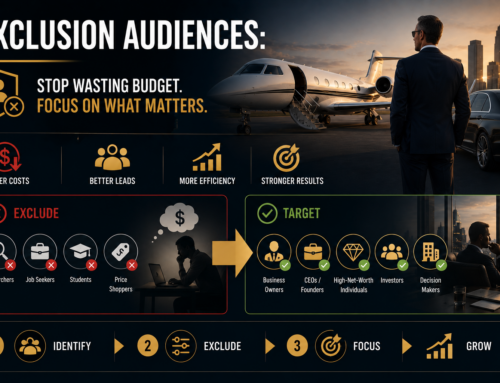
Generic SEO vs. UHNWI Intent SEO
| Generic Luxury Travel SEO | UHNWI Intent SEO |
|---|---|
| Targets broad inspiration keywords | Targets aircraft, route, airport, and mission queries |
| Attracts mixed-interest traffic | Attracts higher-intent charter buyers |
| Uses lifestyle language | Uses mission-fit and operational language |
| Relies on one fleet page | Builds model-specific and tail-type pages |
| Ignores airport pairings | Builds route and FBO authority |
| Weak AI citation context | Strong AI retrieval and recommendation context |
| Looks beautiful but shallow | Looks authoritative and useful |
People Also Ask
Why should private aviation companies target aircraft models?
They should target aircraft models because model-specific searches often reveal stronger charter intent, clearer budget awareness, and more advanced buyer understanding than generic private jet searches.
What is UHNWI intent SEO?
UHNWI intent SEO targets the specific searches used by ultra-high-net-worth buyers and their teams, including aircraft models, airport pairs, empty legs, charter rates, and mission profiles.
Why is “luxury travel” SEO not enough for jet charter companies?
Luxury travel SEO often attracts broad aspirational traffic. However, jet charter companies need specific buyer intent tied to aircraft fit, route planning, airport access, and availability.
How does a 1,000-page SEO build help private aviation?
It creates pages for aircraft models, airports, routes, empty legs, charter rates, and buyer questions. Therefore, the brand appears in more high-intent searches and gives AI systems more source material.
Frequently Asked Questions
What is the Invisible Hangar Problem?
The Invisible Hangar Problem happens when a private aviation company has real fleet capability but lacks enough specific search coverage for buyers to find it online.
Why do UHNWIs search by aircraft model?
UHNWIs and their teams often understand the aircraft class or mission need already. Therefore, they search by model when they want a specific fit, rate, route, or availability answer.
Should every aircraft model have its own page?
Every commercially relevant aircraft model should have a useful page. However, the page must explain mission fit, route examples, passenger use, and alternatives rather than just repeating specs.
Do airport-pair pages really matter?
Yes. Airport-pair pages match real charter planning behavior because buyers often think in specific origin-destination routes rather than broad service categories.
Can this strategy help ChatGPT and Gemini recommend my fleet?
Yes. Specific pages give AI systems clearer retrieval signals and stronger context, which can increase the chance that they cite or recommend your brand for relevant travel prompts.
External Sources
Conclusion
Direct Answer: Your fleet becomes invisible to the 0.1% when your website targets broad luxury travel language instead of the specific aircraft, airport, route, and mission searches serious charter buyers actually use.
If you are not ranking for specific aircraft models, you are not in the game. That is the central lesson. A polished 10-page website may look elite, yet it cannot capture enough UHNWI intent. Therefore, a serious private aviation brand needs a 1,000-page content system that covers every valuable tail type, airport pairing, empty leg opportunity, charter rate question, and mission profile.
Authority Insight: The real hangar may hold the aircraft. However, the digital hangar must hold the answers. If AI systems and search engines cannot find those answers on your site, they will recommend someone else’s fleet instead.
About the author : Anthony Paulino