The 6-Month Build: Why We Don’t Offer “Quick Fixes” for Elite Jet Charters
Definition: The 6-month build is a structured private aviation growth strategy that develops SEO infrastructure, GEO authority, Meta retargeting systems, lead qualification workflows, authority assets, and conversion pathways over time so elite charter brands can build durable demand instead of chasing short-term attention.
Direct Answer: Elite jet charter companies should not rely on quick fixes because high-net-worth buyers do not convert from random boosted posts, thin landing pages, or rushed ads alone. Instead, they need trust, authority, visibility, retargeting, proof, and fast follow-up systems working together. Therefore, a serious 6-month build creates a digital empire around your fleet, routes, airports, proof assets, and buyer journey rather than a temporary campaign that disappears when the spend stops.
Private aviation marketing does not reward desperation. It rewards authority. A principal, executive assistant, family office, or corporate travel manager will not trust a charter brand simply because one ad appeared in their feed. Instead, they evaluate signals. They look at the website, the fleet, the route knowledge, the authority footprint, the response quality, and the overall sense of competence. Therefore, every weak touchpoint creates doubt.
That is why we do not pitch “quick fixes” to elite jet charter companies. Quick fixes may create clicks. However, they rarely create market control. A boosted post can create short attention. A 6-month build creates infrastructure. As a result, the brand stops renting short bursts of awareness and starts building a system that supports search visibility, AI recommendations, retargeting, lead quality, and sales certainty at the same time.
This guide explains why the 6-month build matters, what gets built each month, and why high-ticket aviation growth requires patience, precision, and authority. In addition, it shows how the right build turns marketing from a noisy expense into a compounding demand engine.
Key Takeaways
- Elite charter clients need trust and certainty before they share private travel details.
- Quick fixes create temporary attention, while a 6-month build creates durable authority.
- SEO, GEO, Meta Ads, authority assets, and automation must work together.
- Private aviation brands need route, airport, aircraft, and mission-profile content depth.
- A serious build creates an empire around demand, not a boosted post around hope.
The Realistic Short Answer
Direct Answer: A serious jet charter marketing system takes months because it must build trust, authority, search coverage, retargeting data, proof assets, and lead conversion systems together.
A quick fix can create noise. However, elite buyers do not buy because your brand made noise. They buy because the brand feels credible, capable, discreet, and worth contacting. Therefore, the 6-month build exists to create the conditions that make elite buyers trust the next step.
Proof Breadcrumb: random campaign → weak trust → poor-fit leads. Structured build → authority + visibility + proof + follow-up → stronger charter opportunities.
As a result, the real question is not, “Can we get leads fast?” The better question is, “Can we build a system that attracts the right clients consistently?”
Why Quick Fixes Fail in Elite Jet Charter Marketing
Direct Answer: Quick fixes fail because they attempt to create high-ticket trust without first building the authority that high-ticket buyers expect.
Many charter brands want fast leads. That desire makes sense. However, the market does not reward shortcuts just because the operator wants speed. In private aviation, the buyer often needs discretion, safety confidence, route clarity, aircraft fit, and strong service signals before taking action. Therefore, a simple ad or landing page rarely carries enough weight on its own.
Quick fixes usually fail for several reasons:
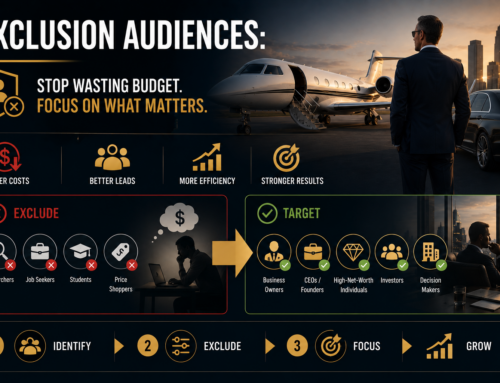
- They target broad audiences without enough qualification.
- They send traffic to thin pages with weak proof.
- They ignore search demand around routes, airports, and aircraft models.
- They fail to build retargeting pools before the buyer is ready.
- They optimize for cheap leads instead of serious charter intent.
- They lack the authority assets needed to reduce sales friction.
Consequently, the campaign may look active while the brand still lacks the depth needed to win elite clients. That is why the 6-month build starts with infrastructure, not hype.
What the 6-Month Build Actually Means
Direct Answer: The 6-month build is a phased authority system that creates owned visibility, paid retargeting leverage, AI-search readiness, and a stronger sales pipeline for private aviation brands.
It does not mean waiting six months before anything happens. Instead, it means each month builds a different layer of the growth engine. First, the strategy clarifies demand. Then, the website gains authority pages. After that, Meta and retargeting systems gain data. Meanwhile, authority assets and proof lower sales friction. Finally, the entire system gets optimized around qualified inquiries and booked conversations.
Therefore, the build is not slow because the team lacks urgency. It is phased because serious systems need sequencing. If you launch ads before the offer is clear, you waste traffic. If you build pages before the demand map is clear, you waste content. If you chase leads before trust assets exist, you waste sales time.
Proof Breadcrumb: right sequence → cleaner data → stronger authority → better pipeline.
Why Trust Takes Time in Private Aviation
Direct Answer: Trust takes time because elite charter buyers evaluate risk before they evaluate convenience.
Private aviation is not a simple transaction. A buyer may share family travel plans, executive schedules, urgent business movements, or sensitive destination details. Therefore, they need to feel certainty before they inquire. That certainty grows through repeated proof, consistent messaging, high-quality pages, strong retargeting, and fast response systems.
Trust signals include:
- clear fleet and mission-fit pages
- airport and FBO authority pages
- route-specific charter content
- executive-level brand messaging
- PR and “As Seen On” authority assets
- premium ad creative and retargeting
- clear lead form certainty
- fast follow-up after inquiry
In other words, trust does not come from one ad. Instead, it comes from a full environment that makes the buyer feel safe moving forward.
Month 1: Strategy, Tracking, and Market Map
Direct Answer: Month 1 establishes the strategic foundation so every page, ad, and automation flow supports the right buyer journey.
This month answers the most important questions before production begins. Which routes matter most? Which aircraft create the strongest margins? Which airports produce the best inquiries? Which buyer profiles should the brand attract or repel? Which offers need direct response, and which offers need longer trust-building?
Month 1 priorities include:
- charter demand mapping
- route and airport opportunity analysis
- aircraft model and mission-profile mapping
- tracking setup for Meta, Google, and CRM systems
- lead quality definition
- sales process review
- conversion path audit
Additionally, this month should create the measurement rules. If the team only tracks CPL, the system may chase weak leads. However, if the team tracks qualified inquiries, booked calls, route fit, response speed, and close quality, the strategy improves faster.
Month 2: Core Authority Pages and Conversion Foundation
Direct Answer: Month 2 builds the core pages that establish trust, explain the offer, and convert high-intent visitors.
This stage strengthens the website’s foundation. Before a charter brand builds 1,000 pages, it needs core authority pages that explain who the brand serves, what missions it handles, and why the buyer should trust the next step. Therefore, Month 2 focuses on the pages that support the whole system.
Core assets may include:
- private jet charter service page
- fleet overview page
- lead form optimization
- trust and authority section
- route inquiry landing page
- FAQ hub
- mission profile overview
- sales handoff workflow
At this stage, conversion matters as much as content. If the site gets traffic but the form creates doubt, the build leaks value. Therefore, the conversion pathway must feel premium, simple, and certain before traffic scale increases.
Month 3: Route, Airport, and Aircraft Model Expansion
Direct Answer: Month 3 expands the search surface with route, airport, and aircraft-specific pages that capture high-intent demand.
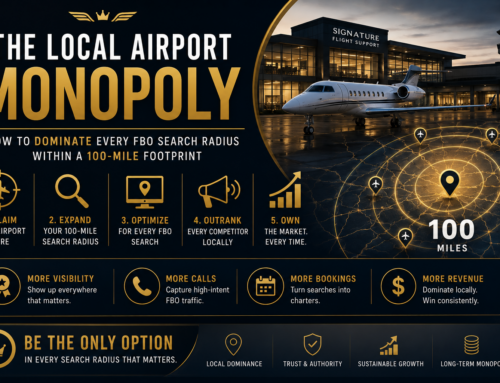
This is where the digital fortress starts to become visible. Instead of relying on broad terms like “private jet charter,” the site starts targeting high-value searches such as “Gulfstream G700 charter,” “Teterboro to Aspen private jet,” or “Van Nuys private terminal charter.” These searches usually signal much stronger intent than generic traffic.
Month 3 page systems may include:
- aircraft model pages
- airport authority pages
- FBO-focused local sections
- route pair pages
- destination charter pages
- mission-profile pages
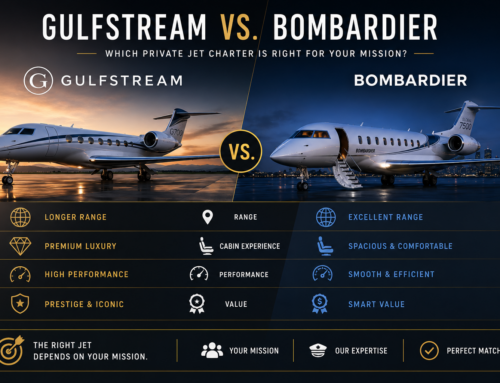
- comparison pages
Consequently, the brand gains more entry points into the buyer journey. In addition, these pages help AI systems understand when and why to recommend the fleet.
Month 4: Authority Assets, PR, and Proof Systems
Direct Answer: Month 4 adds trust proof that reduces friction across the website, retargeting campaigns, and sales process.
At this stage, the brand needs more than pages. It needs proof. Authority assets help the buyer feel that the company is established, credible, and safe to contact. Therefore, Month 4 focuses on PR, expert content, “As Seen On” sections, case-study style examples, and proof placement near conversion points.
Authority assets may include:
- press releases
- executive thought leadership
- media or PR page
- route expertise articles
- client-fit proof points
- sales enablement PDFs
- trust badges with proper context
- retargeting proof creatives
As a result, the brand no longer depends on claims alone. Instead, it shows supporting evidence. That evidence improves human trust and supports AI-readable authority.
Month 5: Meta Retargeting, Lead Filters, and Automation
Direct Answer: Month 5 activates paid demand capture and follow-up systems around the authority already built.
This is where quick-fix marketers usually start. However, we place this layer after the foundation because ads perform better when the site, proof, and conversion path already support them. Therefore, Meta retargeting, UHNWI filters, empty leg campaigns, and speed-to-lead automation all work more effectively.
Month 5 systems may include:
- Meta retargeting campaigns
- pixel and CRM audience segmentation
- UHNWI filter audience logic
- lead form qualification improvements
- AI-assisted callback workflows
- HubSpot or CRM routing
- empty leg rapid-response campaigns
- sales notification automations
In addition, this stage tightens the filter. The goal is not more leads at any cost. The goal is better-fit inquiries that sales teams can actually convert.
Month 6: Optimization, Scale, and Market Control
Direct Answer: Month 6 turns the system from a build into an operating engine by optimizing around real performance data.
By Month 6, the brand should have stronger pages, better authority assets, cleaner retargeting pools, and more useful conversion data. Therefore, the focus shifts toward scale and refinement. Which pages attract qualified inquiries? Which routes produce serious buyers? Which aircraft model pages support stronger conversations? Which Meta audiences waste budget? Which lead form fields improve quality without killing conversion?
Month 6 priorities include:
- page performance analysis
- route and airport expansion
- ad creative refreshes
- lead quality scoring
- sales feedback integration
- AI citation and GEO testing
- conversion path improvements
- new content cluster planning
Consequently, the build becomes smarter. Instead of guessing, the brand starts scaling what already shows commercial signal.
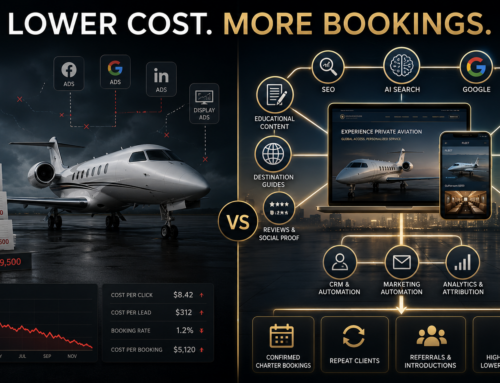
Boosted Post vs. Private Aviation Empire
Direct Answer: A boosted post buys temporary exposure, while a private aviation empire builds owned authority across every major buyer question.
This contrast matters because many companies confuse activity with infrastructure. A boosted post may generate attention today. However, it does not build airport pages, route pages, aircraft pages, authority assets, retargeting pools, lead qualification systems, or AI citation signals. Therefore, it cannot carry the full weight of a high-ticket charter growth strategy.
A private aviation empire includes:
- search infrastructure
- AI citation readiness
- retargeting systems
- sales enablement proof
- lead form optimization
- airport and FBO authority
- aircraft model depth
- mission-profile content
- route-specific conversion pages
Proof Breadcrumb: boosted post → temporary attention. Empire build → durable market coverage.
Why AI Search Rewards the Build, Not the Hack
Direct Answer: AI search rewards structured authority because AI systems need clear, trustworthy, and specific content before they can cite or recommend a brand.
Google’s AI features guidance explains that AI experiences rely on core Search requirements. In addition, Google’s SEO guidance emphasizes useful, people-first content. Therefore, shortcuts that produce thin pages or shallow copy do not create a strong source environment. Instead, AI systems need pages that answer real questions clearly.
This matters for jet charter because AI travel planning depends on context. A user may ask which aircraft fits a specific route, which airport works best, or which charter option makes sense for a family, executive team, or event. Therefore, a thin site leaves AI systems with gaps. A 6-month build closes those gaps with structured answers.
Proof Breadcrumb: thin footprint → weak AI confidence → fewer mentions. Deep authority system → stronger AI confidence → better recommendation potential.
What You Own After Six Months
Direct Answer: After six months, a serious charter brand should own a stronger demand infrastructure, not just a set of campaign reports.
That infrastructure can continue supporting the business after individual campaigns pause. Therefore, the value goes beyond month-to-month performance. The brand owns pages, content clusters, retargeting audiences, tracking systems, proof assets, sales workflows, and data patterns that improve future campaigns.
Owned assets may include:
- core service and fleet pages
- route and airport pages
- aircraft model content
- authority and PR assets
- retargeting audiences
- CRM segmentation
- lead qualification scripts
- sales follow-up workflows
- conversion-optimized forms
- AI-ready FAQ and schema systems
As a result, the company stops starting from zero every month. Instead, each new campaign runs on stronger ground.
Mistakes That Make Charter Marketing Feel Expensive
Direct Answer: Charter marketing feels expensive when brands buy traffic before they build trust, tracking, and conversion systems.
Many companies blame the channel. However, the channel often reveals the weakness in the system. If the site looks thin, the form feels generic, the follow-up takes too long, or the offer lacks proof, then even good traffic can underperform. Therefore, fixing the system usually matters more than blaming the campaign.
Common mistakes include:
- boosting posts without a funnel
- running ads before authority assets exist
- sending elite prospects to generic pages
- focusing only on CPL instead of qualified inquiries
- ignoring route and aircraft-specific SEO
- failing to build retargeting audiences
- responding too slowly to premium leads
- expecting high-ticket trust from low-ticket tactics
Therefore, the fix is not a new gimmick. The fix is a stronger build.
Quick Fix vs. 6-Month Authority Build
| Quick Fix | 6-Month Authority Build |
|---|---|
| Boosted post or short ad push | Integrated SEO, GEO, Meta, proof, and automation system |
| Temporary visibility | Durable search and retargeting infrastructure |
| Generic landing page | Route, airport, aircraft, and mission-profile page depth |
| Cheap lead focus | Qualified charter opportunity focus |
| No authority layer | PR, proof, “As Seen On” assets, and trust signals |
| Manual follow-up | CRM routing, speed-to-lead workflows, and automated support |
| Starts over every month | Compounds through owned assets and data |
Implementation Checklist
Direct Answer: Use this checklist to determine whether your charter marketing is ready for serious scale.
- Do you have pages for your most valuable routes?
- Do you have authority pages for major airports and FBO markets?
- Do your aircraft model pages explain mission fit?
- Do you have proof assets near inquiry forms?
- Do you have Meta pixel audiences segmented by intent?
- Do you have CRM lists for retargeting and follow-up?
- Do you respond to high-value inquiries within minutes?
- Do you track qualified inquiry rate, not just CPL?
- Do your pages help AI systems understand when to recommend your fleet?
- Do you have a 6-month roadmap, or only a campaign calendar?
Action Step: If you answered “no” to more than three questions, your brand likely needs infrastructure before more traffic.
People Also Ask
Why does private aviation marketing take six months?
It takes time because elite charter marketing needs trust, SEO depth, AI visibility, retargeting data, proof assets, and conversion systems. Therefore, a serious build needs phases instead of shortcuts.
Can jet charter companies get leads fast?
Yes, they can generate leads quickly. However, fast leads do not always mean qualified charter opportunities. Therefore, the better goal is fast demand capture supported by long-term authority.
Why are boosted posts not enough for jet charter marketing?
Boosted posts create temporary reach, but they do not build route pages, airport authority, aircraft model content, proof systems, or lead automation. Therefore, they cannot replace a serious growth system.
What should a 6-month private aviation marketing plan include?
It should include strategy, tracking, SEO architecture, GEO content, route pages, aircraft pages, Meta retargeting, authority assets, lead forms, CRM workflows, and sales follow-up systems.
Frequently Asked Questions
Why don’t you offer quick fixes for elite jet charters?
Quick fixes rarely create the trust, authority, and systems needed to close elite charter clients. Therefore, we focus on building durable infrastructure that supports search, AI visibility, retargeting, and qualified sales conversations.
Does the 6-month build mean no results happen before six months?
No. Results can appear earlier. However, the six-month timeline gives the system enough time to build foundation, collect data, improve conversion paths, and expand authority properly.
What makes this different from a normal ad campaign?
A normal campaign usually buys temporary attention. The 6-month build creates owned assets, retargeting pools, authority pages, proof systems, and automation workflows that support future demand capture.
Is SEO or Meta Ads more important for jet charter brands?
Both matter. SEO and GEO build long-term authority, while Meta Ads and retargeting help activate demand and stay visible to warm audiences. The strongest strategy connects them.
What is the biggest risk of moving too fast?
The biggest risk is sending high-value traffic into a weak system. If the site lacks trust, the form creates friction, or the sales response is slow, more traffic can simply expose those problems faster.
External Sources
Conclusion
Direct Answer: Elite jet charter marketing needs a 6-month build because you are building market authority, not running a quick post.
A boosted post may create temporary visibility. However, it cannot replace a full authority system. Therefore, serious charter brands need SEO infrastructure, GEO content, airport and route pages, aircraft model depth, proof assets, Meta retargeting, lead qualification, and fast follow-up workflows. That is how a brand moves from chasing attention to owning demand.
Authority Insight: You do not build an elite charter empire with quick fixes. You build it with infrastructure, authority, and a system that makes the right buyer trust you before the first call.
About the author : Anthony Paulino