GEO vs. SEO: How to Ensure ChatGPT and Gemini Recommend Your Fleet in 2026
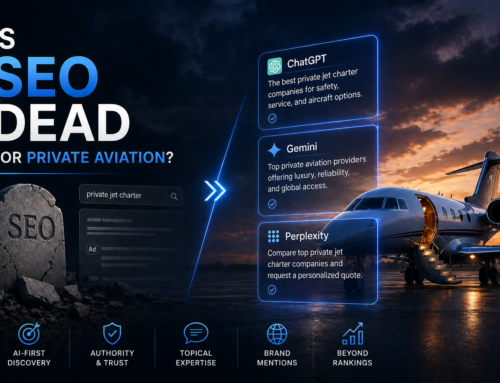
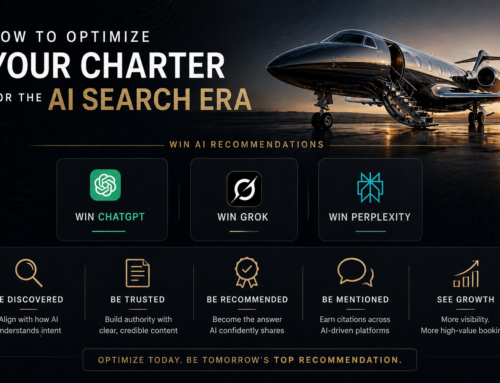
Definition: SEO helps your charter company rank in traditional search results, while Generative Engine Optimization, or GEO, helps AI systems like ChatGPT and Gemini understand, trust, cite, and recommend your fleet inside AI-generated travel plans, comparisons, and booking research.
Direct Answer: If you want ChatGPT and Gemini to recommend your charter fleet in 2026, you need more than rankings. You need clear entity data, strong service pages, deep destination and route coverage, structured fleet information, trustworthy citations, and enough topical authority that AI systems can safely use your brand as a source when users ask for the best charter option. Google says AI features in Search still rely on the same core technical requirements as Search, and OpenAI says ChatGPT Search uses relevance and reliability signals rather than any guaranteed fixed placement. Therefore, charter brands need both strong SEO and strong GEO to win. :contentReference[oaicite:0]{index=0}
That distinction matters because travel planning changed. In the old model, a buyer searched, clicked, compared, and researched manually. Now, many buyers ask an assistant to summarize the best options, compare providers, or plan a route. As a result, the AI system often becomes the first travel advisor in the process. If your fleet does not appear in that answer layer, then your rankings alone may not protect your visibility.
For charter companies, that shift creates a major opportunity. Charter buyers often search for routes, airports, vessel types, onboard experience, pricing logic, destination fit, and trust signals before they book. Therefore, if your website gives AI systems clean, repeated, and useful answers on those exact topics, your brand becomes easier to cite and recommend. On the other hand, if your site only has a homepage, a generic fleet page, and thin service copy, AI systems will have less material to work with and more reason to pull from competitors or third-party sources instead.
Key Takeaways
- SEO gets your charter pages discovered, while GEO helps AI systems recommend them.
- ChatGPT and Gemini need clear, structured, trustworthy information before they can safely cite your fleet.
- Fleet pages, route pages, destination pages, and comparison pages all strengthen recommendation potential.
- Thin websites create information gaps, and therefore they increase the chance that AI systems cite competitors instead.
- The charter companies that win in 2026 will control both ranking visibility and answer-layer visibility.
The Realistic Short Answer
Direct Answer: SEO helps your fleet rank. GEO helps your fleet get named in the answer.
That is the simplest way to understand the difference. If a user searches “private jet charter in Miami” or “best yacht charter for Amalfi Coast week,” SEO helps your page appear in search results. However, if that same user asks ChatGPT or Gemini to recommend the best option for a specific route, group size, or experience level, then GEO determines whether your company becomes part of the generated response.
Therefore, charter companies should stop treating rankings as the finish line. Rankings still matter, of course, because they help retrieval and search eligibility. However, recommendation now matters just as much because users increasingly trust AI systems to narrow the field before they visit websites. :contentReference[oaicite:1]{index=1}
GEO vs. SEO: What Is the Real Difference?
Direct Answer: SEO focuses on page visibility in search results, while GEO focuses on brand and content visibility inside AI-generated summaries, comparisons, and recommendations.
SEO still covers the fundamentals: crawlability, indexability, keyword relevance, internal linking, page experience, and helpful content. Google explicitly says the best practices for SEO remain relevant for AI features in Search and that there are no separate extra requirements just to appear in AI Overviews or AI Mode. That means GEO does not replace SEO. Instead, GEO extends SEO into the answer layer. :contentReference[oaicite:2]{index=2}
For charter brands, SEO asks questions like these:
- Can my page rank for “jet charter to Aspen”?
- Can my fleet page rank for “luxury yacht charter Greece”?
- Can my airport page rank for “Teterboro private jet charter”?
GEO asks a different set of questions:
- Will ChatGPT cite my company when someone asks for the best option for an Aspen ski trip?
- Will Gemini understand which aircraft or vessel fits the itinerary?
- Will the AI see my company as trustworthy enough to recommend in a travel plan?
So SEO wins retrieval, while GEO wins recommendation. The smartest charter companies now build for both at the same time.
Why Charter Fleets Need GEO Now
Direct Answer: Charter fleets need GEO because travel planning, luxury booking research, and vendor shortlisting increasingly begin inside AI systems rather than on a classic search results page.
That trend matters even more in charter because the purchase is complex. Users do not only ask for one company name. Instead, they ask for itinerary help, destination guidance, capacity fit, seasonality advice, pricing expectations, luxury comparisons, airport access details, and route-specific recommendations. Therefore, an AI assistant often becomes the first research layer before a buyer ever contacts a charter company.
Google said in 2025 that AI experiences create new ways for users to ask more complex questions and that clicks from AI Overviews can be higher quality because users receive more context first. OpenAI also explains that ChatGPT Search gives timely answers with relevant web links rather than acting like a simple list of blue links. Therefore, if your fleet content does not serve AI systems well, you may lose highly qualified discovery moments before your sales team ever has a chance to respond. :contentReference[oaicite:3]{index=3}
How ChatGPT and Gemini Decide What Fleets to Mention
Direct Answer: AI systems tend to mention fleets that look relevant, clearly defined, trustworthy, and easy to understand across multiple pages and signals.
Neither Google nor OpenAI publishes a simple step-by-step formula for “how to get recommended.” However, their guidance still shows the direction clearly. Google emphasizes helpful, reliable, people-first content and standard Search eligibility. OpenAI says ChatGPT Search uses relevance and reliability factors and depends on crawl access. Therefore, the AI systems want sources they can retrieve, interpret, and trust. :contentReference[oaicite:4]{index=4}
For a charter company, that usually means AI systems need to understand:
- What type of fleet you operate
- Which routes or destinations you serve
- What size groups you handle best
- What experience level you provide
- Why your company is credible and distinct
- How your services compare to alternatives
Therefore, the clearer and more complete your web footprint becomes, the easier it becomes for AI to recommend your fleet in a way that feels confident rather than generic.
What Data AI Systems Need From Your Charter Company
Direct Answer: AI systems need structured, repeated, and route-specific information about your fleet, locations, services, and credibility so they can connect your brand to the exact travel request a user makes.
Many charter sites make this harder than it should be. They show beautiful imagery, yet they hide important facts behind vague copy. That looks elegant to a human skimmer, but it creates ambiguity for machines. Therefore, you should publish the exact information AI systems need in a clear and repeated way.
That includes:
- Fleet type and model details
- Passenger capacity or guest capacity
- Route and destination coverage
- Service categories and use cases
- Home bases or departure hubs
- Experience differentiators
- Trust indicators, awards, ratings, and proof where accurate
Action Step: Audit your current site and ask, “Could an AI system answer who we serve, where we fly or charter, what our fleet fits best, and why buyers trust us?” If the answer is no, then you need stronger source material.
How to Structure Fleet Pages for AI Recommendation
Direct Answer: Fleet pages should act like recommendation assets, not just brochure pages.
That means every fleet page should clearly define the vessel or aircraft, ideal use cases, passenger fit, comfort profile, route fit, and what type of traveler it serves best. If the page only says “luxury experience with world-class service,” then it gives AI very little to work with. On the other hand, if the page explains who the fleet fits, what itineraries it supports, and how it compares to other options, then the page becomes far more citeable.
Each fleet page should include:
- A clean definition near the top
- Direct answer paragraphs under key headings
- Passenger capacity and use-case guidance
- Destination and route relevance
- FAQs about fit, timing, and experience
- Clear internal links to related routes and destinations
Proof Breadcrumb: vague fleet page → weak machine understanding → lower citation confidence.
Proof Breadcrumb: clear fit + route relevance + structured answers → stronger citation confidence.
Why Route and Destination Pages Matter
Direct Answer: Route and destination pages matter because AI travel planning often starts with the trip, not the provider.
A user may not begin by asking for your brand. Instead, they may ask for the best way to charter from New York to Aspen, the best yacht option for a week in the Amalfi Coast, or the best private aviation route for a family trip to St. Barts. Therefore, route pages and destination pages often act as your first AI-facing assets.
That is why strong charter GEO requires content such as:
- Origin-to-destination route pages
- Airport or marina pages
- Seasonal destination guides
- Itinerary-specific pages
- Use-case pages for ski, business, family, island, and event travel
These pages create match points between user intent and your brand. As a result, ChatGPT and Gemini have more opportunities to retrieve your company when the travel request becomes specific.
How to Support “Top-Rated” Positioning Without Sounding Fake
Direct Answer: You support “top-rated” positioning by publishing verifiable trust signals, not by repeating empty superlatives.
This matters because AI systems prefer content they can trust and synthesize safely. If your site claims to be the “best” or “top-rated” everywhere without showing any supporting evidence, the language sounds weak. However, if you demonstrate customer satisfaction, route expertise, operational clarity, premium experience standards, recognitions, and strong brand consistency, then your positioning becomes much more believable.
Therefore, support premium positioning through:
- Verified reviews and testimonials where available
- Awards or recognitions where accurate
- Case-study style itinerary examples
- Clear service standards and experience details
- Comparison content that explains your strengths honestly
Action Step: Replace vague claims with specific proof. Instead of saying “top-rated fleet,” explain what travelers consistently value, what differentiates the experience, and why specific routes or traveler types choose you.
Why a Fortress Architecture Gives AI Better Answers
Direct Answer: A fortress architecture helps because it gives AI systems a dense network of accurate, route-specific, and experience-specific answers rather than a thin set of generic pages.
This is the core sales angle for GEO. A charter brand with 20 pages leaves huge information gaps. AI then has to guess, generalize, or rely on third-party sources. By contrast, a brand with hundreds or thousands of tightly structured pages around fleet types, destinations, routes, customer scenarios, seasonal travel, airports, marinas, and FAQs gives the system far more direct evidence.
That density matters because it reduces ambiguity.
Proof Breadcrumb: thin site → information gaps → AI fills gaps with weaker outside signals.
Proof Breadcrumb: fortress site → repeated structured truth → AI cites your brand more confidently.
So the “fortress” angle is not about publishing pages for the sake of scale. Instead, it is about eliminating gaps in the exact areas where AI systems need clarity to recommend your fleet safely.
A Practical Charter GEO Action Plan
Direct Answer: Start by making your fleet more understandable, then expand into route, destination, and comparison coverage that gives AI systems stronger reasons to cite your company.
A practical roadmap looks like this:
- Rewrite core fleet pages with direct definitions, fit guidance, and route relevance.
- Create destination and route pages for the most profitable charter patterns.
- Add structured FAQ content for fleet selection, itinerary planning, and booking considerations.
- Standardize your brand entity information across site pages and profiles.
- Publish comparison content such as route options, fleet type fit, and experience tradeoffs.
- Expand into fortress-style coverage for neighborhoods, airports, marinas, destinations, and itinerary use cases.
Therefore, do not treat GEO as one extra page. Treat it as a system that feeds AI the exact information it needs to recommend your fleet in real planning contexts.
SEO vs. GEO for Charter Brands
| SEO Focus | GEO Focus |
|---|---|
| Rank fleet and charter pages | Get cited in AI-generated travel plans |
| Optimize for query matching | Optimize for recommendation and trust |
| Page-level visibility | Brand-level answer visibility |
| Homepage and service pages matter | Fleet, route, destination, FAQ, and comparison pages all matter |
| Blue-link clicks drive value | Answer-layer mentions drive value first |
| Ranking proves discoverability | Citation and recommendation prove AI usefulness |
People Also Ask
What is the difference between GEO and SEO?
SEO helps pages rank in traditional search results, while GEO helps brands and pages get cited or recommended inside AI-generated answers. In practice, GEO builds on SEO rather than replacing it.
Can ChatGPT and Gemini recommend charter fleets?
Yes. They can recommend charter providers when the source material is relevant, trustworthy, well-structured, and clear enough for the system to retrieve and summarize confidently.
Do I need schema and structured content for AI visibility?
You should use structured content and strong schema because they reduce ambiguity and help AI systems understand your brand, your fleet, and your service relationships more clearly.
Why do route pages matter so much for charter GEO?
They matter because many travel-related AI prompts begin with the route, destination, or itinerary rather than the provider name. Therefore, route pages create more entry points into the recommendation layer.
Frequently Asked Questions
How do I ensure ChatGPT and Gemini recommend my fleet in 2026?
Build a strong combination of SEO and GEO by making your fleet, routes, destinations, service fit, and trust signals easy for AI systems to retrieve and understand. Then expand that structure into a broader authority architecture that reduces ambiguity.
Does GEO replace SEO for charter companies?
No. GEO extends SEO. You still need crawlability, indexability, relevance, internal linking, and helpful content. GEO adds the recommendation layer on top of those basics.
What kind of pages help charter companies most in AI search?
Fleet pages, route pages, destination pages, FAQ pages, comparison pages, and itinerary-specific pages usually help the most because they answer the exact questions AI users tend to ask.
Can a smaller charter company still win in GEO?
Yes. A smaller company can still win if it builds clearer, more useful, and more specific authority content than larger competitors. AI systems often prefer the clearest source, not just the biggest brand.
What is the “fortress” strategy for charter GEO?
It is a large, structured page architecture that covers your fleet, routes, destinations, traveler scenarios, comparisons, and FAQs deeply enough that AI systems can confidently retrieve and cite your company across many travel-planning prompts.
External Sources
Conclusion
Direct Answer: SEO helps charter brands get found, while GEO helps charter brands get recommended.
In 2026, that difference matters because buyers increasingly start travel research inside AI systems, not just inside search result lists. Therefore, if you want ChatGPT and Gemini to recommend your fleet, you need more than a well-ranked homepage. You need a charter-specific authority system that feeds AI the right information across fleet pages, route pages, destination pages, FAQs, and proof-driven brand content.
Authority Insight: The fleets that win in 2026 will not simply rank for charter terms. Instead, they will teach AI systems exactly when, where, and why to recommend them.
About the author : Anthony Paulino