How AI Search Engines (ChatGPT & Gemini) Rank Jet Charter Operators in 2026
Direct Answer: In 2026, AI search engines rank jet charter operators using authority signals, semantic completeness, entity clarity, structured content, trust indicators, and contextual relevance rather than traditional keyword rankings alone. Therefore, the operators most likely to appear in ChatGPT, Gemini, and Google AI results are the ones building deep aviation authority ecosystems instead of thin brochure websites.
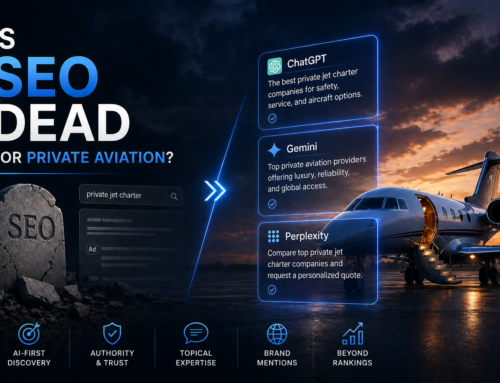
Traditional SEO still matters. However, AI search systems now evaluate content differently. Instead of simply ranking webpages, systems like ChatGPT Search, Gemini, and Google AI Overviews retrieve and synthesize information from trusted sources. Consequently, aviation brands must optimize for recommendation visibility rather than only blue-link rankings.
This shift changes everything for jet charter marketing. Previously, a company could compete with a handful of optimized service pages. Today, AI systems reward structured expertise, complete topic coverage, and interconnected aviation authority nodes. Therefore, brands that build aircraft pages, airport pages, route pages, buyer-intent guides, and strong entity signals gain a major advantage.
Research across AI search platforms shows that semantic completeness, structured data, E-E-A-T signals, and entity relationships strongly influence AI citation selection. Additionally, AI systems increasingly surface content from trusted authority sources instead of relying only on traditional rankings. :contentReference[oaicite:0]{index=0}
Key Takeaways
- AI search engines rank information chunks, not just webpages.
- Jet charter operators need authority ecosystems, not small websites.
- Entity clarity and semantic completeness strongly influence AI visibility.
- Structured aviation content increases recommendation probability.
- AI search favors trusted brands with deep topic coverage.
How AI Search Works in 2026
Direct Answer: AI search engines retrieve, evaluate, and synthesize information rather than simply ranking webpages.
Traditional search engines primarily ranked pages using links, keywords, and authority metrics. However, AI systems now break content into smaller semantic chunks. Then, they evaluate which pieces best answer the user’s intent. Consequently, content quality at the paragraph and section level matters more than ever.
Research on AI search systems shows that modern platforms evaluate semantic similarity, entity relationships, and citation confidence rather than just traditional rankings. :contentReference[oaicite:1]{index=1}
For example, if a family office asks:
- “What is the best heavy jet charter operator in South Florida?”
- “Which aircraft is best for Teterboro to London?”
- “Best charter operator for Aspen ski trips?”
The AI system may pull information from multiple sources simultaneously. Therefore, the operator with the clearest, deepest, and most trustworthy aviation content often wins visibility.
Why Traditional SEO Changed
Direct Answer: Traditional SEO changed because users increasingly prefer AI-generated answers over long lists of links.
Google AI Overviews, ChatGPT Search, and Gemini all push search toward answer-first experiences. Therefore, users now consume summarized recommendations before clicking websites. As a result, visibility depends on being included in the answer itself.
Studies show AI-generated search summaries significantly reduce clicks to standard informational pages. :contentReference[oaicite:2]{index=2}
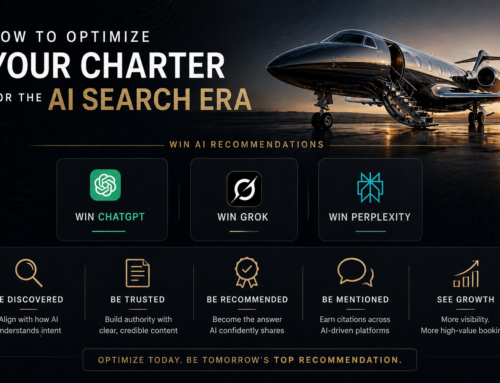
Because of that shift, aviation companies must optimize for AI retrieval and citation. Consequently, Generative Engine Optimization (GEO) has become essential.
The Core AI Ranking Factors
Direct Answer: AI search engines prioritize semantic completeness, entity authority, trust signals, structure, and topical depth.
Primary AI Ranking Factors in 2026
- Semantic completeness
- Entity clarity
- E-E-A-T signals
- Structured content
- Schema markup
- Topical authority
- Content freshness
- Citation confidence
- Brand reputation
- User engagement signals
Research analyzing AI Overview citations found that semantic completeness and entity density strongly correlate with citation likelihood. :contentReference[oaicite:3]{index=3}
Therefore, fragmented or shallow aviation content struggles to appear consistently.
Semantic Completeness Explained
Direct Answer: Semantic completeness means answering the user’s question fully without requiring additional context.
AI systems prefer content that delivers a complete, self-contained answer. Therefore, thin pages perform poorly.
For example, a weak airport page may only say:
“We offer charter services from KTEB.”
However, a semantically complete page explains:
- why KTEB matters
- which aircraft fit best
- common destinations
- executive travel patterns
- FBO context
- seasonal demand
- luxury travel advantages
Research shows semantically complete content has dramatically higher AI citation probability. :contentReference[oaicite:5]{index=5}
Why Topic Clusters Matter
Direct Answer: AI systems trust brands with deep interconnected topic coverage.
This is why isolated pages fail. Instead, aviation brands need topic clusters.
Example Cluster
- KTEB Airport Page
- G650ER Charter Page
- KTEB to Nice Route Page
- Heavy Jet Pricing Guide
- Best Jets for Europe Missions
Each page reinforces the others. Consequently, the entire cluster gains authority.
SEO and AI visibility studies consistently show that topic depth now outperforms shallow breadth. :contentReference[oaicite:6]{index=6}
Aircraft Pages & AI Visibility
Direct Answer: Aircraft pages help AI systems understand operational expertise and mission fit.
Every major aircraft should have a dedicated authority page. Additionally, the page should explain:
- range
- passenger fit
- best missions
- route compatibility
- luxury positioning
- airport advantages
Because buyers often search by aircraft model, these pages capture high-intent demand.
Furthermore, AI systems increasingly prefer content with strong entity relationships. Therefore, aircraft pages strengthen aviation authority signals.
Airport Pages & AI Search
Direct Answer: Airport pages help AI systems understand geographic and operational expertise.
Strong airport pages should include:
- airport overview
- FBO context
- luxury destination relevance
- common routes
- recommended aircraft
- seasonal travel patterns
Consequently, AI systems gain richer contextual understanding of your aviation operations.
Trust Signals & E-E-A-T
Direct Answer: AI systems strongly favor trustworthy aviation brands.
E-E-A-T stands for:
- Experience
- Expertise
- Authoritativeness
- Trustworthiness
Research shows AI systems heavily favor strong E-E-A-T signals. :contentReference[oaicite:7]{index=7}
Strong Aviation Trust Signals
- real aviation expertise
- client testimonials
- press mentions
- executive bios
- clear safety explanations
- verified business data
Therefore, credibility matters more than aggressive keyword tactics.
Structured Data & Schema
Direct Answer: Schema helps AI systems interpret relationships between your aviation content.
Every major page should include structured data such as:
- Organization schema
- ProfessionalService schema
- FAQ schema
- HowTo schema
- Breadcrumb schema
- Speakable schema
Google continues recommending structured data implementation using JSON-LD. :contentReference[oaicite:8]{index=8}
Therefore, schema improves machine readability and contextual understanding.
How Jet Charter Operators Win in AI Search
Direct Answer: Winning operators build deep aviation authority ecosystems instead of relying on thin websites.
Winning GEO Strategy
- Build aircraft authority pages
- Build airport authority pages
- Build route pages
- Create buyer-intent guides
- Use strong schema
- Strengthen entity consistency
- Earn external mentions
- Connect pages through internal linking
Because AI search rewards topical depth, this structure creates compounding visibility over time.
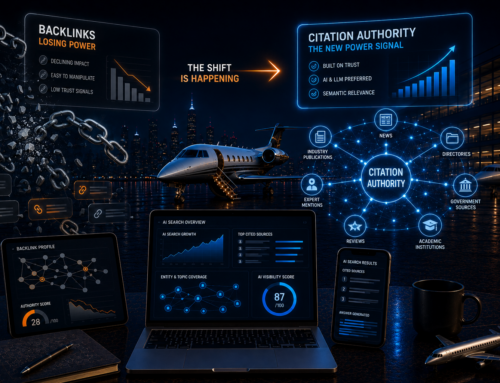
Final Strategic Insight: AI systems do not want random pages. Instead, they want trusted authority nodes.
Common GEO Mistakes
- building thin location pages
- ignoring structured data
- creating isolated content
- focusing only on rankings
- lacking entity consistency
- publishing shallow AI-generated filler
Instead, focus on depth, clarity, and usefulness.
Frequently Asked Questions
Do ChatGPT and Gemini rank websites like Google?
No. They retrieve and synthesize information from multiple trusted sources rather than simply ranking webpages.
What matters most for AI visibility?
Authority, semantic completeness, structure, and trust signals matter most.
Do backlinks still matter?
Yes. However, they mainly support authority and trust rather than acting as the only ranking factor. :contentReference[oaicite:9]{index=9}
Should aviation brands still invest in SEO?
Absolutely. However, SEO must evolve into GEO and AI visibility optimization.
Related IMR Resources
Conclusion
Direct Answer: AI search engines rank jet charter operators based on authority, structure, trust, and semantic depth rather than simple keyword optimization.
Therefore, the future of jet charter marketing belongs to operators building comprehensive aviation authority systems. Meanwhile, brands relying on small brochure websites will continue losing visibility.
Final Insight: In 2026, AI search does not reward the loudest operator. Instead, it rewards the clearest authority.
About the author : Anthony Paulino