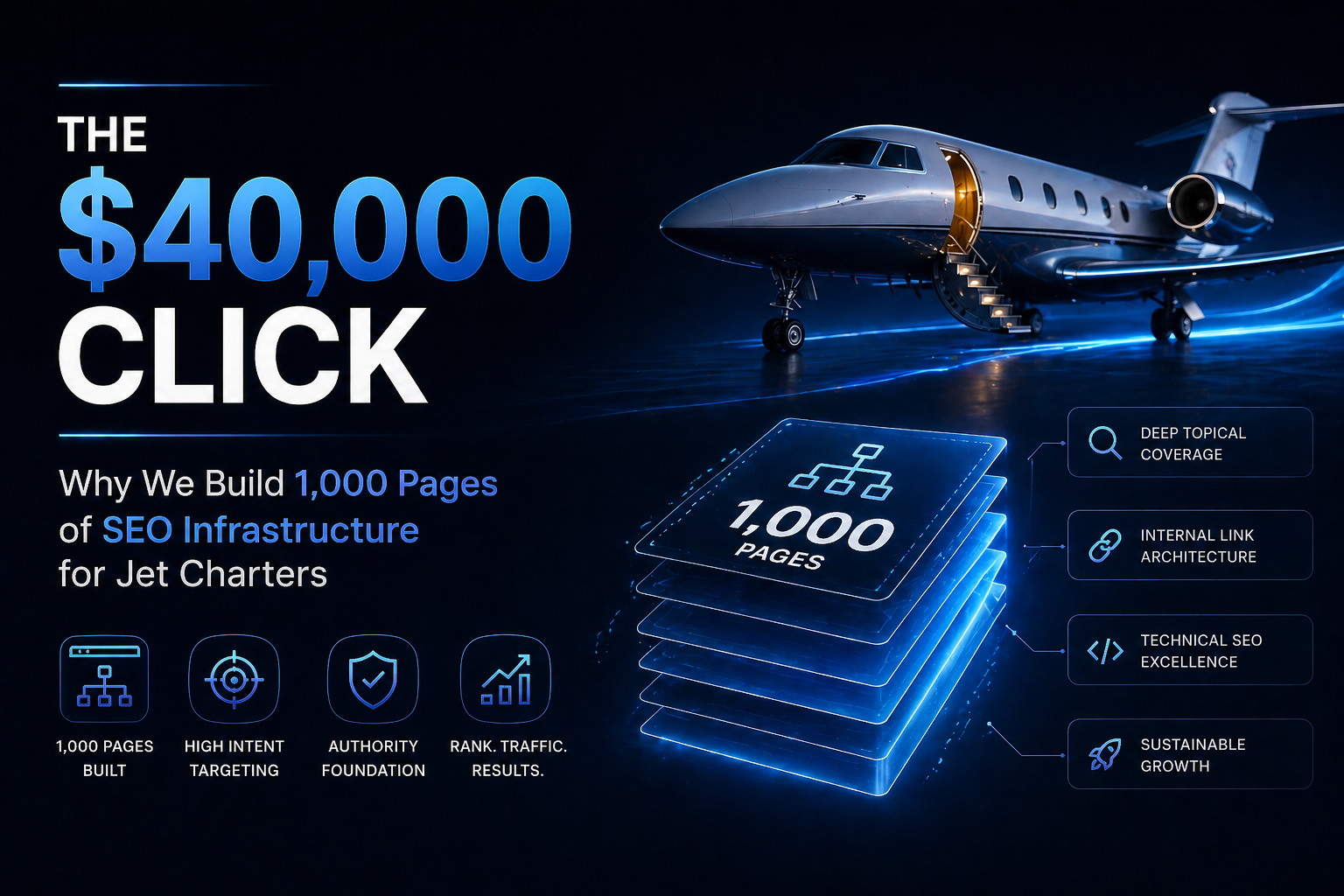
The $40,000 Click: Why We Build 1,000 Pages of SEO Infrastructure for Jet Charters
Direct Answer: We do not build websites. Instead, we build digital real estate that pays dividends in charters. In private aviation, one qualified visitor can become a five-figure booking. Therefore, a single premium click may be worth $40,000 or more. Because of that, serious charter brands should build assets, not brochures.
Many operators still treat websites like online business cards. However, premium growth companies treat websites like infrastructure. Rather than relying on ten generic pages, they build hundreds or thousands of pages around aircraft models, airport markets, route pairs, empty legs, buyer scenarios, pricing questions, and trust signals. As a result, they appear where premium demand actually exists.
This approach also explains the six-month build timeline. A Digital Fortress is not a quick fix, because quick fixes often disappear when ad budgets stop. In contrast, SEO infrastructure can grow stronger month after month. Consequently, every strong page becomes another asset working day and night.
Google continues to reward helpful, people-first content. Likewise, AI systems reward clarity, depth, and trustworthy sources. Therefore, brands that invest in real infrastructure often gain stronger long-term visibility. Google Helpful Content Guidance
Key Takeaways
- One premium charter click can create significant revenue.
- Thin websites often miss high-intent searches.
- 1,000-page systems create durable digital assets.
- The six-month timeline reflects real construction.
- SEO compounds, while ads often reset monthly.
- Deep infrastructure also improves AI visibility.
What Is the $40,000 Click?
Direct Answer: The $40,000 click is a visitor whose search can become a premium charter booking.
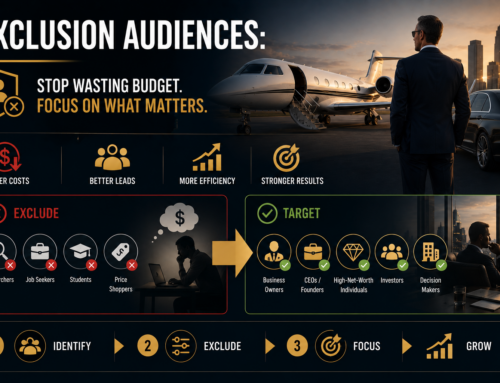
For example, someone searching “G650ER charter Teterboro to Nice” is rarely browsing casually. Instead, that person often has a real trip, real budget, and real urgency. Therefore, one click from that query can create major revenue.
By comparison, broad traffic like “luxury travel ideas” may create awareness. However, it often lacks immediate purchase intent. Consequently, smart operators focus on commercial value rather than vanity traffic totals.
Proof Breadcrumb: broad click = uncertain value. Mission-specific click = premium opportunity.
Why Brochure Sites Fail
Direct Answer: Brochure websites fail because they look polished yet cover too little real demand.
Many charter sites include a homepage, fleet page, contact page, and a few general service pages. While that may look professional, it does not match how buyers actually search. Therefore, these sites often remain invisible during profitable buying moments.
Examples include:
- Global 7500 charter Miami to Aspen
- Heavy jet charter Palm Beach to London
- G650ER empty leg Teterboro
- Best jet for 10 passengers to Europe
- Challenger 650 charter South Florida
As a result, competitors with deeper content ecosystems gain the lead first.
The Mission Profile Strategy
Direct Answer: Mission profile SEO targets how real buyers plan real trips.
Instead of chasing only broad phrases like “private jet charter,” we build pages around route type, aircraft fit, timing, passenger count, baggage needs, destination goals, and airport convenience. Therefore, the content aligns with real purchase behavior.
Examples include:
- best jet for Miami to Aspen ski travel
- same-day heavy jet Fort Lauderdale to Nassau
- pet-friendly private jet Palm Beach to Colorado
- best aircraft for Europe family trip
- Gulfstream G700 charter transatlantic travel
Because these searches show intent, they often outperform vanity keywords. Consequently, fewer visitors can still mean more revenue.
Why We Build 1,000 Pages
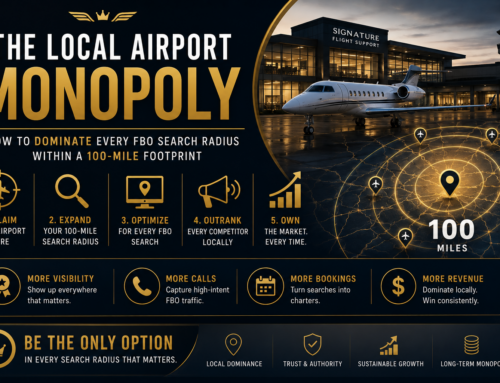
Direct Answer: We build 1,000 pages because premium demand is spread across thousands of search combinations.
Every aircraft model, airport, route pair, mission need, and buyer question can become its own opportunity. Therefore, one homepage cannot capture enough market share.
Additionally, every page supports the others through internal links, topic depth, and stronger authority signals. As a result, the entire domain becomes more valuable over time.
That is how serious brands stop relying on one traffic source and start owning many revenue pathways.
What Is a Digital Fortress?
Direct Answer: A Digital Fortress is a content ecosystem competitors struggle to copy.
Anyone can launch ads quickly. However, few companies can build years of structured authority. Therefore, the fortress creates leverage and long-term defensibility.
It often includes:
- aircraft model pages
- airport authority pages
- route pages
- pricing education pages
- comparison pages
- FAQ libraries
- review and trust assets
- schema layers
Consequently, competitors must do far more than simply spend money.
Why the 6-Month Timeline Matters
Direct Answer: Six months reflects disciplined construction, not delay.
During the first phase, market mapping, keyword research, page architecture, and technical systems are built. Then, core authority pages launch. After that, aircraft clusters, route clusters, and conversion systems expand. Finally, real data guides the next growth phase.
Therefore, six months often creates lasting momentum instead of short spikes.
Proof Breadcrumb: rushed launch = weak structure. Strategic rollout = compounding asset.
SEO Infrastructure vs Paid Ads
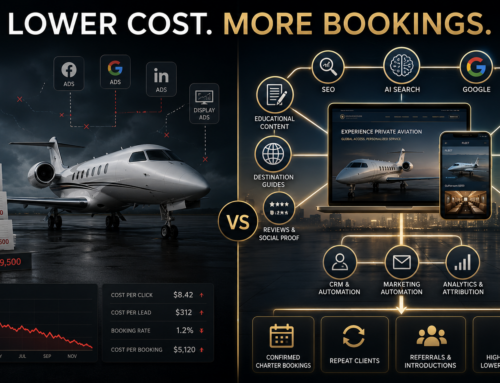
Direct Answer: Paid ads rent attention, while SEO infrastructure owns attention pathways.
Ads can create immediate traffic. However, when spending pauses, traffic often disappears. In contrast, a strong route page may continue producing leads for years. Therefore, the strongest brands combine both systems.
| Paid Ads | SEO Infrastructure |
|---|---|
| Fast traffic | Long-term traffic |
| Requires constant spend | Can compound over time |
| Rental model | Ownership model |
| Often broader targeting | Specific intent targeting |
The 1,000-Page Content Map
Aircraft Layer
Pages for G650ER, Global 7500, Falcon 8X, Challenger 650, Praetor 600, and more.
Airport Layer
Pages for Teterboro, Opa-locka, Palm Beach, Van Nuys, Aspen, Scottsdale, and more.
Route Layer
Origin and destination combinations tied to profitable demand.
Buyer Question Layer
Pricing, safety, pets, ski travel, Europe trips, and more.
AI Search Layer
Pages structured for citations, summaries, and recommendation visibility.
Therefore, the brand gains both depth and breadth.
ROI Example
Direct Answer: A few extra bookings can justify serious infrastructure quickly.
Suppose a charter company gains four additional premium trips annually through search. If each averages $40,000, that equals $160,000 in top-line revenue. Moreover, those pages may continue producing demand in future years.
Therefore, SEO should be viewed as asset creation rather than only marketing expense.
How This Supports AI Search
Direct Answer: Deep infrastructure can also improve visibility inside AI-generated answers.
When users ask ChatGPT or Gemini about routes, aircraft fit, or airport options, AI systems need trustworthy sources. Therefore, brands with richer content libraries provide stronger material for recommendations.
OpenAI explains ChatGPT Search uses relevance and reliability signals rather than guaranteed rankings. Consequently, authority and depth matter greatly. ChatGPT Search Guidance
Common Mistakes
- building only a brochure website
- targeting vanity keywords only
- ignoring aircraft demand
- ignoring route demand
- depending only on ads
- expecting overnight SEO wins
- publishing thin repetitive pages
Instead, think like an investor building durable assets.
90-Day Starting Plan
Days 1–30
- Map top routes and markets
- Identify premium aircraft opportunities
- Build page architecture
Days 31–60
- Launch aircraft pages
- Launch airport authority pages
- Launch route clusters
Days 61–90
- Add FAQ and comparison content
- Improve internal linking
- Measure lead quality and growth
Therefore, the foundation forms quickly while long-term gains continue building.
Frequently Asked Questions
Why 1,000 pages?
Because premium demand is spread across thousands of search intents.
Does every page need to rank?
No. Many pages strengthen the ecosystem and support authority.
How long does SEO take?
Serious infrastructure usually needs months, not days.
Can ads still help?
Yes. Paid traffic and owned traffic often work best together.
What is digital real estate?
Owned online assets that can generate recurring demand.
Conclusion
Direct Answer: We do not build websites. Instead, we build digital real estate that pays dividends in charters.
A thin site may look impressive. However, it often misses premium demand. Therefore, serious operators need route pages, aircraft pages, airport pages, and authority assets that keep working over time. As a result, every strong page becomes another revenue-producing asset.
Final Insight: In private aviation, one qualified click can be worth $40,000. Build like it matters.
About the author : Anthony Paulino