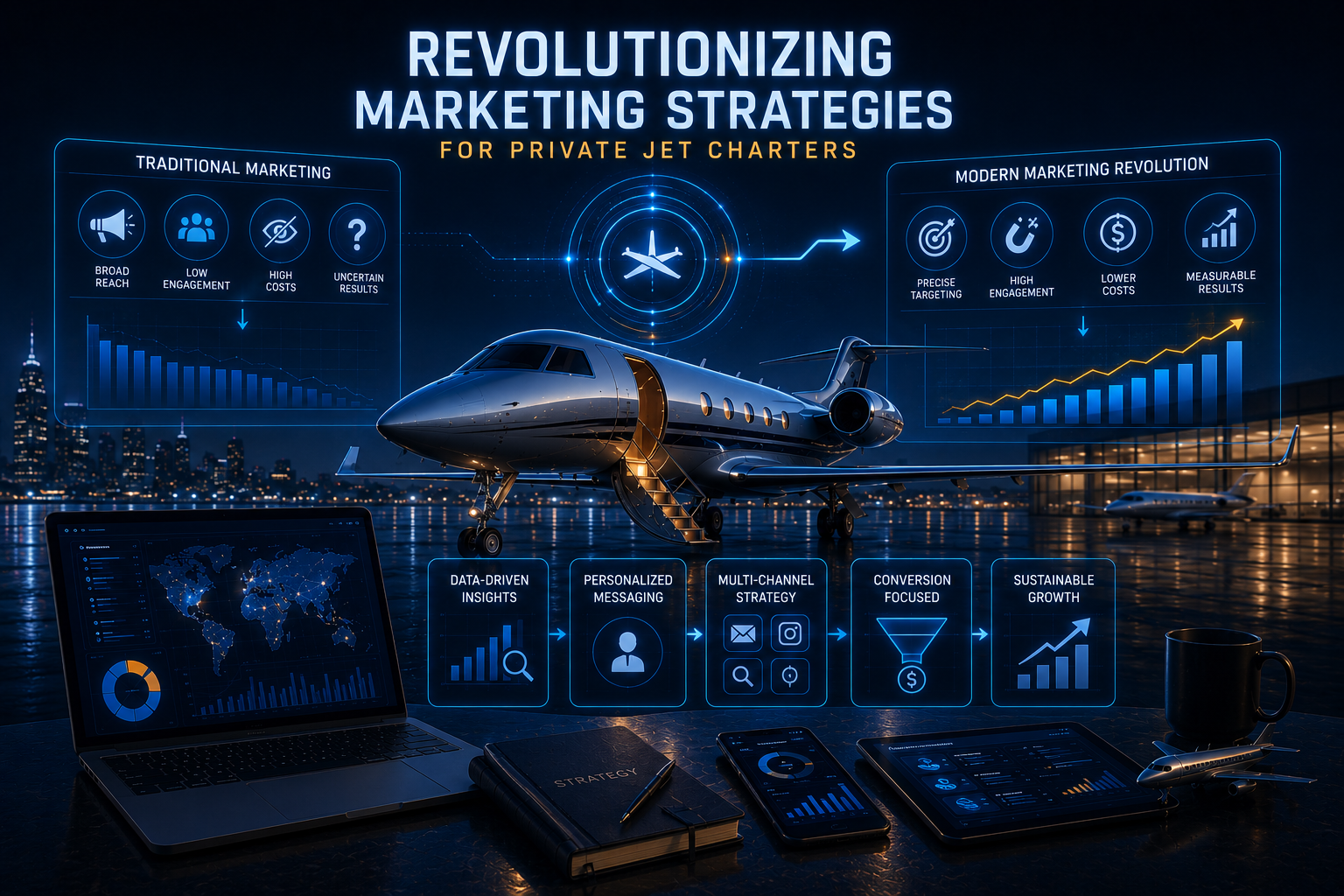
Revolutionizing Marketing Strategies for Private Jet Charters
Direct Answer: Modern private jet charter marketing now depends on AI search visibility, direct-response advertising, route-specific SEO infrastructure, CRM-driven retargeting, and highly personalized buyer journeys. Therefore, the companies winning in 2026 are not simply running luxury ads. Instead, they are building digital ecosystems that capture high-intent travelers before competitors even appear in the conversation.
The private aviation industry has changed dramatically. Traditional luxury branding still matters. However, branding alone no longer creates consistent charter demand. Today’s buyers search differently, compare differently, and interact with information differently. Therefore, operators and brokers must evolve beyond static websites and generic “fly private” messaging.
Search engines are changing from link directories into AI-generated answer systems. Additionally, Meta’s advertising systems now prioritize conversion signals, first-party data, and machine learning. Meanwhile, high-net-worth travelers expect instant responses, customized planning, and frictionless communication.
Consequently, private jet charter companies must combine GEO, SEO, paid advertising, AI search optimization, direct-response funnels, retargeting systems, CRM automation, and authority-building content into one integrated growth strategy.
Google explains that helpful, people-first content and strong page experience contribute to better search visibility, while Meta emphasizes conversion-focused campaign objectives and audience optimization. Therefore, modern aviation marketing requires both technical infrastructure and persuasive conversion systems. Google explains helpful content principles, while Meta explains campaign objectives.
Key Takeaways
- Private aviation marketing is shifting from branding-first to intent-first strategies.
- However, luxury positioning still matters when paired with measurable lead generation.
- Therefore, modern charter brands need AI-search visibility, SEO depth, and direct-response systems.
- Additionally, route-specific pages and aircraft-specific content outperform generic charter pages.
- Ultimately, companies that build digital infrastructure now will dominate future AI-driven search results.
Why Private Aviation Marketing Changed
Direct Answer: Private aviation marketing changed because buyer behavior, search technology, and advertising systems evolved rapidly.
In the past, many operators relied on broker relationships, referrals, print placements, trade events, or broad luxury branding. However, modern buyers often begin their research digitally. Additionally, they expect instant answers, transparent information, and highly personalized communication.
Consequently, the old “beautiful website plus generic ads” strategy is losing effectiveness. Buyers now compare routes, airports, aircraft classes, timing, flexibility, and pricing variables before making contact.
Modern Buyer Expectations
- fast response times
- route-specific information
- aircraft comparisons
- clear availability guidance
- mobile-friendly communication
- privacy-conscious interactions
- high-trust digital presence
- AI-generated search answers
Therefore, aviation brands must build systems that answer these expectations before the buyer contacts a competitor.
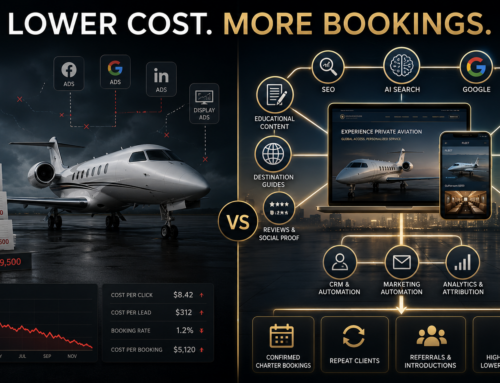
The Death of the Traditional Luxury Ad Model
Direct Answer: Traditional luxury ads often fail because they create attention without creating measurable demand.
Generic jet photography and vague “fly private” messaging can still attract views. However, views do not guarantee qualified leads. Therefore, modern campaigns must focus on intent, not vanity metrics.
Why Traditional Ads Underperform
- they target broad luxury interests
- they lack route specificity
- they fail to qualify travelers
- they do not educate buyers
- they rely on weak CTAs
- they create little urgency
- they rarely integrate with CRM systems
Instead, direct-response aviation campaigns ask the prospect to take a measurable next step. As a result, the business can track which campaigns create real opportunities.
The Rise of AI Search and GEO
Direct Answer: Generative Engine Optimization (GEO) helps private jet charter companies become the answer inside AI-generated search results.
Search engines are shifting toward AI-generated summaries and recommendation systems. Therefore, ranking on page one alone is no longer enough. Instead, brands must become trusted authority sources that AI engines reference directly.
For example, a traveler may ask:
- “What is the best heavy jet charter in South Florida?”
- “What aircraft is best for a New York to London private flight?”
- “Which private airport is best near Palm Beach?”
Consequently, companies with deeper content infrastructure, stronger schema markup, and clearer authority signals are more likely to appear in AI-generated recommendations.
Google explains that structured data helps search engines understand page content. Therefore, aviation websites should use schema markup across aircraft pages, airport pages, FAQs, route guides, and service content. Google explains structured data.
The 1,000-Page Digital Fortress Strategy
Direct Answer: The Digital Fortress strategy builds hundreds or thousands of interconnected aviation pages that capture high-intent searches competitors ignore.
Most charter sites contain fewer than 50 pages. However, buyers search with incredible specificity. Therefore, a shallow website misses massive search opportunities.
High-Intent Search Examples
- G650ER charter from Teterboro to Nice
- Global 7500 charter Palm Beach to Aspen
- heavy jet charter near KVNY
- empty leg Miami to Dallas
- best airport for private jet in Los Angeles
- private jet for 12 passengers with pets
Consequently, the company with the deepest route, aircraft, airport, and mission content often dominates search visibility.
Additionally, this content becomes an AI authority node. Therefore, AI search engines gain more confidence referencing the brand.
Route-Pair SEO and Mission-Based Content
Direct Answer: Route-pair pages target travelers searching for specific private flight missions.
These pages perform well because they match real buyer intent. Instead of targeting “private jet charter,” they target exact travel scenarios.
Strong Route Page Elements
- departure airport options
- arrival airport options
- aircraft range guidance
- typical passenger fit
- travel timing considerations
- weather and seasonal notes
- ground transportation context
- FAQ sections
- private route review CTA
As a result, route pages attract travelers who are much closer to booking.
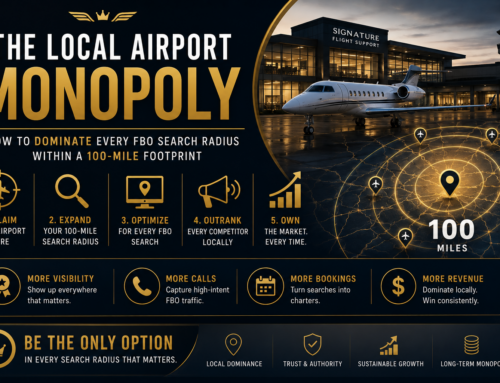
Airport and FBO Authority Pages
Direct Answer: Airport and FBO pages help charter brands dominate local private aviation searches.
Many buyers search around airports, not companies. Therefore, brands should build authority pages for key private aviation airports and FBOs.
Examples
- KTEB private jet charter
- KVNY private aviation guide
- KPBI charter airport options
- best FBO near Aspen
- private aviation near Van Nuys
Additionally, airport pages reinforce geographic authority. Consequently, they improve both SEO and AI-search visibility.
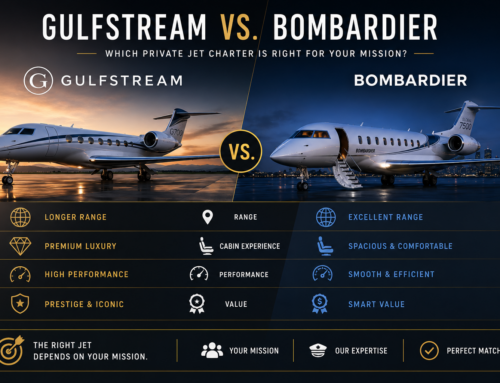
Aircraft-Specific Marketing Strategies
Direct Answer: Aircraft-specific pages convert better because serious buyers often search by aircraft model.
A traveler searching “Gulfstream G650ER charter” usually has stronger intent than someone searching “private jet.” Therefore, aircraft-specific pages can produce higher-quality traffic.
Aircraft Page Topics
- range and mission fit
- passenger capacity
- cabin layout
- luggage capacity
- speed and comfort
- airport compatibility
- route examples
- comparison guides
As a result, the website captures more educated buyers who are further into the decision process.
Direct-Response Meta Ads for Aviation
Direct Answer: The best aviation Meta ads focus on measurable buyer actions instead of vague brand awareness.
Meta’s advertising system rewards strong conversion signals. Therefore, campaigns should optimize around qualified leads, route reviews, booked calls, and mission-specific inquiries.
Meta explains that campaign objectives should align with business goals. Therefore, aviation campaigns should often use leads or sales objectives instead of awareness campaigns alone. Meta explains campaign objectives.
High-Performing Aviation Ad Angles
- empty leg opportunities
- airport-specific travel
- heavy jet comparisons
- mission-fit aircraft reviews
- family office travel planning
- private route consultation
Consequently, the campaigns attract travelers with real travel intent instead of general luxury curiosity.
Retargeting High-Intent Travelers
Direct Answer: Retargeting helps aviation brands stay visible to prospects already considering private travel.
Most buyers do not book immediately. Therefore, retargeting keeps the brand present during the decision process.
Retargeting Audiences
- route-page visitors
- aircraft-page visitors
- pricing-page visitors
- airport-guide readers
- video viewers
- form openers
- past charter leads
Additionally, retargeting should match the user’s previous behavior. Therefore, route-page visitors should see route-specific follow-up ads.
CRM Automation and Speed-to-Lead
Direct Answer: Speed-to-lead systems dramatically improve charter lead conversion rates.
Private aviation buyers often contact multiple providers quickly. Therefore, the first professional response frequently gains a major advantage.
CRM Automation Features
- instant lead routing
- SMS confirmations
- advisor notifications
- calendar scheduling
- automated follow-up
- lead scoring
- route-based tagging
- aircraft-interest segmentation
Consequently, sales teams respond faster and maintain more organized buyer journeys.
Video Marketing and Talking-Head Trust Ads
Direct Answer: Talking-head videos build trust faster than polished luxury montages alone.
Luxury visuals still matter. However, travelers also want expertise and confidence. Therefore, advisor-led videos can outperform cinematic-only ads.
Strong Video Topics
- best aircraft for specific missions
- airport comparison guides
- empty leg education
- heavy jet versus midsize jet comparisons
- family travel planning
- private aviation FAQs
- pricing variables explained
As a result, buyers begin trusting the company before the first conversation.
Voice Search and AI Assistant Optimization
Direct Answer: Voice search optimization helps aviation brands appear in conversational AI and assistant-driven searches.
People increasingly ask natural-language questions like:
- “What is the best airport for a private jet near Palm Beach?”
- “Which heavy jet can fly nonstop to Europe?”
- “Who offers private jet charters near Teterboro?”
Therefore, websites should use conversational headings, FAQ sections, schema markup, and direct-answer summaries.
Google recommends creating people-first content that answers user questions clearly. Therefore, conversational aviation content supports both traditional search and AI search systems. Google explains SEO fundamentals.
Metrics That Matter
Direct Answer: Modern aviation marketing should measure revenue-focused metrics instead of vanity metrics.
Important Metrics
- qualified lead rate
- booked consultations
- route-review requests
- cost per qualified lead
- speed-to-lead time
- opportunity value
- closed revenue
- airport-page conversion rates
- aircraft-page engagement
- AI-search visibility
- organic route-page traffic
Additionally, businesses should track which aircraft pages, airport pages, and route pages generate the highest-value inquiries.
The Future of Private Jet Charter Marketing
Direct Answer: The future belongs to aviation brands that combine AI-search visibility, direct-response systems, and deep digital infrastructure.
AI-driven search will continue expanding. Additionally, paid advertising systems will rely more heavily on first-party data and machine learning. Therefore, brands that build structured content ecosystems now will have a major long-term advantage.
Future Marketing Trends
- AI-generated recommendations
- voice-search growth
- first-party audience systems
- route-specific automation
- predictive CRM workflows
- dynamic aircraft recommendation engines
- AI-assisted lead qualification
- hyper-personalized remarketing
Consequently, charter companies must think beyond campaigns and start building permanent digital assets.
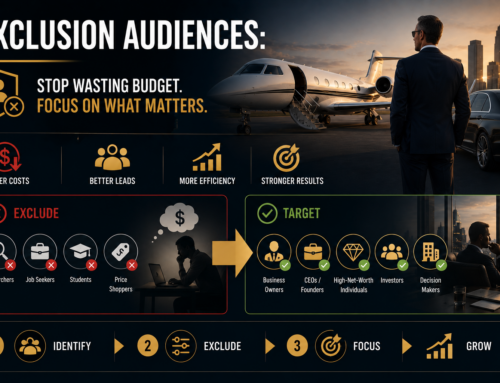
Common Marketing Mistakes
Direct Answer: Aviation brands fail when they rely on shallow marketing infrastructure and generic messaging.
- using generic luxury ads
- having too few website pages
- ignoring AI-search optimization
- failing to build airport pages
- failing to build aircraft pages
- not tracking qualified opportunities
- responding slowly to leads
- using weak CTAs
- relying only on referrals
- not retargeting warm audiences
Instead, build systems designed around intent, trust, speed, and authority.
Frequently Asked Questions
What is the best marketing strategy for private jet charters?
The best strategy combines GEO, SEO, route-specific content, airport pages, direct-response ads, retargeting, CRM automation, and authority-building content.
Why are route-specific pages important?
Route-specific pages match real buyer intent and attract travelers searching for exact missions rather than general aviation terms.
How does AI search affect private aviation marketing?
AI search systems increasingly recommend trusted authority sources instead of simply listing websites. Therefore, brands with deeper content infrastructure gain visibility advantages.
Should private aviation companies use Meta ads?
Yes. However, the campaigns should focus on qualified buyer actions, route-specific offers, and direct-response funnels instead of broad awareness alone.
Why is a 1,000-page strategy important?
A large aviation content ecosystem captures highly specific searches related to aircraft, routes, airports, missions, and travel scenarios competitors ignore.
External Sources
Conclusion
Direct Answer: Private jet charter marketing is evolving from simple luxury branding into sophisticated AI-driven demand generation systems.
The companies winning now are building route libraries, airport authority pages, aircraft comparison hubs, AI-search optimization systems, direct-response ad funnels, CRM automation workflows, and long-term digital authority. Therefore, the future of aviation marketing belongs to brands that combine technology, trust, speed, and deep content infrastructure.
Final Insight: In the AI-search era, the most visible charter company will not always be the largest fleet. Instead, it will often be the brand with the strongest digital authority ecosystem.
About the author : Anthony Paulino