Why Contractors Are Moving Away From Shared Leads
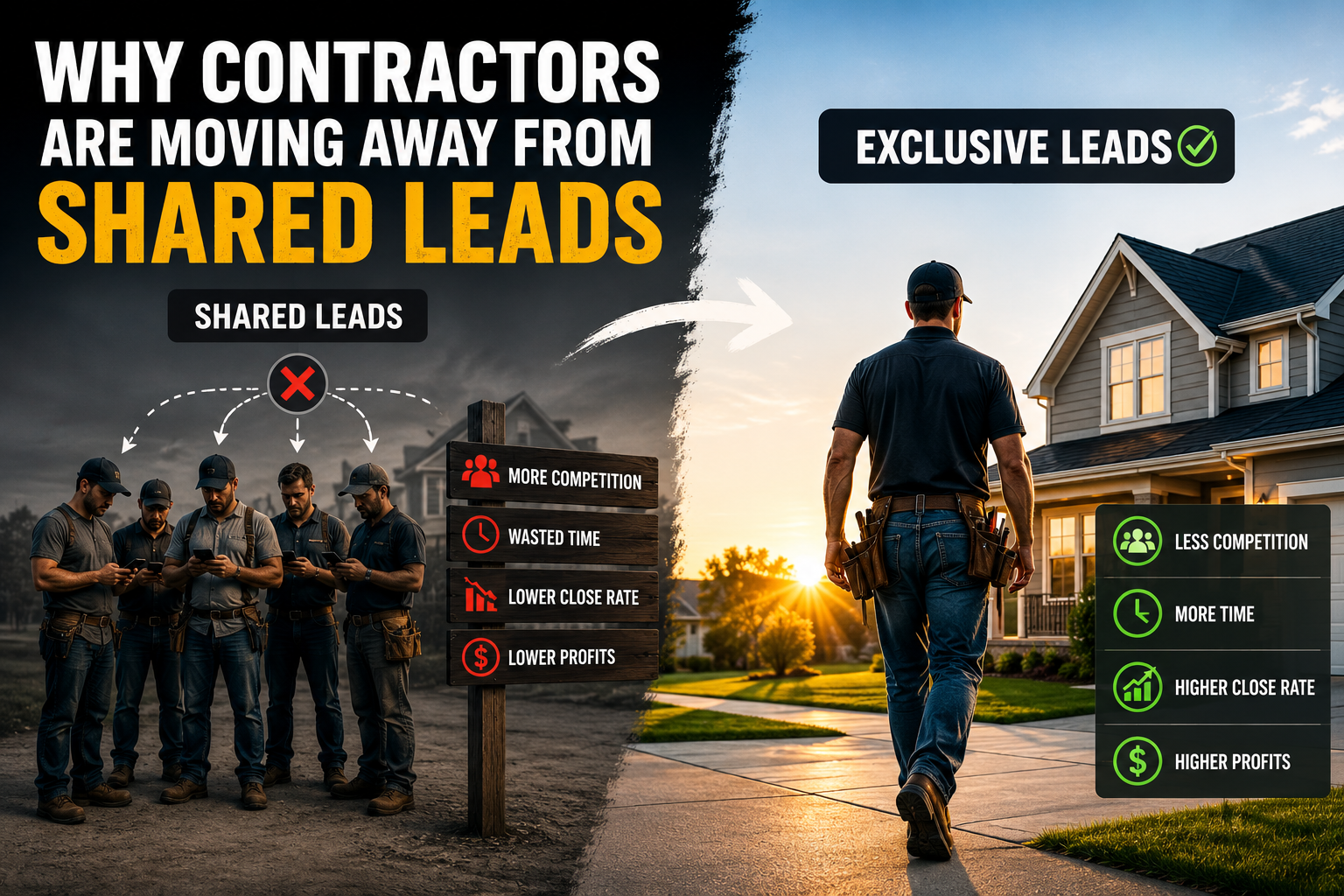
Direct Answer: Contractors are moving away from shared leads because shared lead platforms often create more competition, lower close rates, weaker customer relationships, less data ownership, and smaller profit margins. Therefore, roofing, siding, window, gutter, remodeling, and exterior contractors are shifting toward owned lead systems that generate direct inquiries instead of competing against several companies for the same homeowner.
For years, shared lead platforms looked like an easy solution. A contractor could sign up, receive homeowner inquiries, and immediately start calling prospects. However, the market has changed. Homeowners now research more before making decisions. Competition has increased. Additionally, customer acquisition costs continue rising.
As a result, many contractors are realizing that the cheapest lead is often not the most profitable lead. Meanwhile, companies that build their own lead generation systems are creating more predictable pipelines, stronger close rates, and better long-term margins.
Therefore, the question is no longer whether shared leads can create activity. Instead, the better question is whether shared leads create a sustainable business.
Google recommends helpful, reliable, people-first content, and structured data helps search systems understand page content. Therefore, contractors that build owned content assets, service pages, city pages, reviews, and CRM-connected landing pages create stronger long-term authority than companies that only rent leads. Google explains helpful content, while Google explains structured data.
Key Takeaways
- Shared leads often force contractors into immediate price and speed competition.
- However, direct leads usually start with stronger trust because homeowners choose the company first.
- Therefore, contractors should measure cost per closed job, not only cost per lead.
- Additionally, owned lead systems create first-party data, retargeting audiences, CRM insights, and long-term business equity.
- Ultimately, contractors are moving away from shared leads because they want to own demand instead of renting access.
Why Contractors Are Leaving Shared Lead Platforms
Direct Answer: Contractors are leaving shared lead platforms because the model often creates more competition before the contractor has built trust with the homeowner.
The Relationship Starts Cold
When a homeowner receives calls from several companies within minutes, the conversation starts from a weak position. The homeowner may not know your brand. Additionally, they may not understand your quality, warranties, reviews, process, or local reputation.
The Contractor Becomes Interchangeable
As a result, the contractor becomes one of many options. Instead of discussing craftsmanship, trust, financing, warranties, or project quality, the conversation often shifts toward speed and price.
The Sales Team Feels the Pressure
Meanwhile, sales reps must chase homeowners who may be receiving calls from several competitors. Therefore, contact rates can drop, follow-up gets harder, and close rates become inconsistent.
Ultimately, many contractors leave because they want a better starting position.
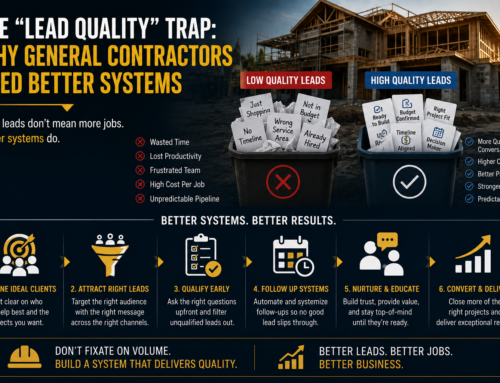
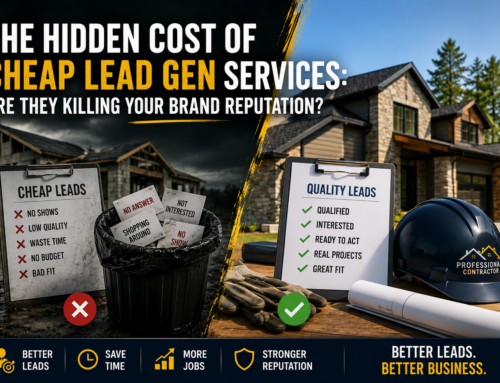
Why Shared Leads Create Price Shoppers
Direct Answer: Shared leads often create price shoppers because homeowners receive multiple contractor options at the same time.
When several companies contact the same homeowner, the easiest comparison point becomes price. However, price-focused buying behavior creates weaker margins and harder sales conversations.
Price Shopping Creates
- lower gross margins
- more discount requests
- longer sales cycles
- lower close rates
- weaker customer loyalty
- more canceled appointments
- more “just getting quotes” conversations
Trust Changes the Sales Conversation
In contrast, direct inquiries behave differently. When a homeowner specifically searches for your company, reads your reviews, views your projects, and submits a form through your website, the relationship starts with more trust. Therefore, the sales call begins from authority instead of comparison.
Why Customer Data Ownership Matters
Direct Answer: Customer data ownership matters because it helps contractors improve marketing, sales, retargeting, follow-up, and long-term revenue.
Shared Leads Limit Learning
When demand comes through a third-party platform, the contractor may receive basic lead information. However, the platform often owns more of the original discovery path, audience data, and marketplace behavior.
Owned Leads Create First-Party Data
When a homeowner enters your system directly, you can track more useful information.
- service interest
- location
- lead source
- campaign source
- website behavior
- form answers
- call recording
- appointment status
- estimate value
- closed job value
- gross profit
- lifetime value potential
Additionally, this data helps improve future campaigns. As a result, every lead creates long-term value beyond the immediate sale.
This concept connects directly to HomeAdvisor vs. Your Own Lead System: Who Owns Your Customer Data?, because the contractor that owns the data owns more leverage.
Why Direct Leads Close Better
Direct Answer: Direct leads often close better because homeowners intentionally choose the contractor before submitting an inquiry.
Trust Happens Before the Call
A direct lead may have already read your reviews, viewed project photos, compared warranties, watched videos, read service pages, or visited your Google Business Profile. Therefore, the call starts warmer.
Direct Leads Usually See More Proof
- Google reviews
- project galleries
- before-and-after photos
- service explanations
- financing options
- warranty information
- local proof
- case studies
- helpful blogs
Consequently, direct leads tend to understand your value before the salesperson asks for the appointment.
The Rise of Owned Lead Systems
Direct Answer: Contractors are building owned lead systems because they provide more control, better attribution, stronger retargeting, and long-term business value.
What an Owned Lead System Includes
- service pages
- city pages
- neighborhood pages
- Google Business Profile optimization
- review generation
- Meta Ads
- Google Ads
- retargeting campaigns
- CRM attribution
- email follow-up
- SMS follow-up
- problem-solving content
- AI-search-ready FAQs
Moreover, every owned asset can improve over time. A city page can rank longer. A review can help future buyers. A retargeting audience can grow. A CRM workflow can improve close rates. Therefore, the system compounds.
Why Roofing Contractors Are Leading the Shift
Direct Answer: Roofing contractors are moving away from shared leads quickly because roofing markets are competitive, urgent, seasonal, and highly price-sensitive when trust is missing.
Roofing Shared Lead Problems
Roofing leads often attract several contractors at once. Additionally, storm restoration markets can become especially crowded after hail or wind events. Therefore, roofers feel the shared lead problem faster than many other trades.
Roofers Are Building
- storm restoration SEO pages
- roof repair service pages
- roof replacement pages
- city pages
- neighborhood pages
- insurance claim guides
- hail damage blogs
- Meta lead campaigns
- Google Ads campaigns
- review systems
As a result, roofing companies can capture homeowners before those homeowners enter a crowded shared lead marketplace.
The Digital Fortress Advantage
Direct Answer: A Digital Fortress is a contractor-owned marketing ecosystem that creates direct demand and compounds in value over time.
Why It Works
Unlike shared leads, Digital Fortress assets continue working after they are built. Furthermore, each new page, review, case study, and retargeting audience strengthens the overall system.
Digital Fortress Assets Include
- service pages
- city pages
- neighborhood pages
- Google reviews
- project galleries
- case studies
- FAQ pages
- problem-solving blogs
- retargeting audiences
- CRM databases
- press releases
- AI-search content
Additionally, this strategy connects to Stop Buying Cheap Leads, because the strongest contractors are building assets instead of renting every opportunity.
How AI Search Is Accelerating the Trend
Direct Answer: AI search is accelerating the move away from shared leads because contractors with helpful content can appear earlier in the homeowner research journey.
Homeowners Ask Better Questions Now
Homeowners increasingly ask questions before requesting estimates. Therefore, contractors that answer those questions can build trust before the lead form.
AI Search Questions Contractors Should Answer
- How do I know if my roof has hail damage?
- Should I repair or replace my roof?
- What are signs my siding needs replacement?
- Are gutter guards worth it?
- How much do replacement windows cost?
- How does a storm damage insurance claim work?
- What should I ask before hiring a roofer?
Meanwhile, shared lead platforms often cannot build authority around an individual contractor’s local expertise. Consequently, owned content becomes a stronger long-term advantage.
What Contractors Should Do Instead
Direct Answer: Contractors should replace shared lead dependence with diversified owned acquisition channels that build trust, data, visibility, and repeatable pipeline growth.
Build the Foundation First
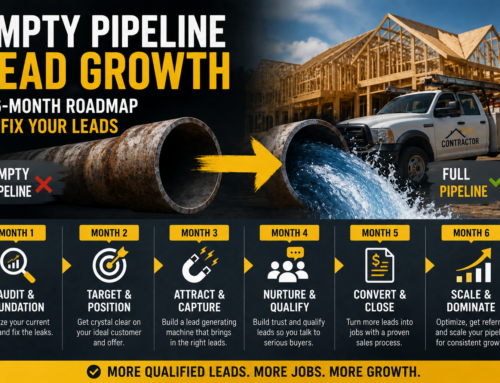
First, contractors should fix service pages, city pages, tracking, CRM attribution, Google Business Profile, and review generation. Otherwise, more traffic may only expose a weak system.
Then Add Traffic
Next, contractors can use Meta Ads, Google Ads, retargeting, SEO, and GEO content to drive homeowners into owned assets. Additionally, old-lead reactivation and past-customer campaigns can create faster wins.
Best Alternatives to Shared Lead Dependence
- local SEO
- Google Business Profile optimization
- Meta advertising
- Google Ads
- retargeting campaigns
- review generation
- referral systems
- neighborhood authority pages
- educational content
- CRM automation
- AI search optimization
- first-party data collection
Therefore, contractors gain more control over lead quality, close rates, and profitability.
Shared Leads vs. Owned Lead Systems
Direct Answer: Shared leads rent access to demand, while owned lead systems create contractor-controlled demand.
| Category | Shared Leads | Owned Lead System |
|---|---|---|
| Lead Ownership | Limited | Full |
| Customer Data | Limited | Direct first-party data |
| Competition | High | Lower |
| Close Rates | Often lower | Often higher |
| Brand Trust | Weak initially | Built before contact |
| Retargeting | Limited control | Full control |
| SEO Value | Benefits platform | Benefits contractor |
| Business Equity | Low | Compounding |
Metrics That Matter
Direct Answer: Contractors should measure shared leads against owned leads by contact rate, appointment rate, close rate, cost per closed job, and gross profit.
Track These Metrics
- cost per lead
- contact rate
- appointment booking rate
- estimate completion rate
- close rate
- average job value
- gross profit per job
- cost per closed job
- follow-up completion rate
- source by service
- source by city
- repeat customer rate
- review growth
- retargeting audience growth
Additionally, contractors should compare each source by profit, not just volume. As a result, decision-making becomes clearer.
Common Mistakes Contractors Make
Direct Answer: Contractors struggle with lead quality when they buy more leads before fixing trust, tracking, pages, reviews, follow-up, and data ownership.
- judging sources only by cost per lead
- not tracking cost per closed job
- depending too heavily on shared leads
- not building service pages
- not building city pages
- not collecting enough reviews
- not using CRM attribution
- not retargeting website visitors
- not following up with old leads
- not creating AI-search-ready content
- not separating repair, replacement, and storm intent
- not measuring gross profit by source
Instead, contractors should build the owned system first. Then, they can use paid or third-party channels more strategically.
Frequently Asked Questions
Are shared leads always bad?
No. Shared leads can create opportunities, especially for newer contractors. However, growing companies often seek more control, better margins, and stronger customer ownership.
Why do contractors leave shared lead platforms?
Many contractors leave because of higher competition, lower close rates, shrinking margins, limited customer data, and weaker brand control.
What is the best alternative to shared leads?
The strongest alternative is an owned lead system built around SEO, GEO, reviews, paid media, CRM tracking, first-party data, retargeting, and local authority.
Do direct leads close better?
In many cases, yes. Direct leads often begin with stronger trust because homeowners intentionally choose the contractor before submitting an inquiry.
Should contractors stop buying leads completely?
Not necessarily. However, purchased leads should supplement an owned marketing system rather than replace one.
External Sources
Conclusion
Direct Answer: Contractors are moving away from shared leads because they want more control over customer acquisition, better close rates, stronger margins, and long-term business value.
Shared leads can create activity. However, activity does not guarantee profitability. Meanwhile, owned lead systems create assets that continue generating opportunities year after year.
Therefore, the most successful contractors are not asking how to buy more leads. Instead, they are asking how to own more demand.
Final Insight: Shared leads rent opportunity. Owned lead systems create business equity.
About the author : Anthony Paulino