The “Digital Fortress” vs. The “Brokers”: Who Will Win the Next Decade?
Direct Answer: The Digital Fortress will beat broker-dependent marketing over the next decade because owned authority, SEO infrastructure, GEO visibility, content depth, first-party demand, and AI-search trust compound over time. Brokers can still sell access, relationships, and short-term distribution. However, the companies that build permanent digital real estate will own more intent, control more demand, and reduce their dependence on paid intermediaries.
Every market eventually splits into two groups. One group owns demand. The other group rents demand.
The businesses that own demand build authority assets. They publish useful content. They answer buyer questions. They rank for important topics. They become visible in AI answers. Additionally, they create trust before the sales call ever happens.
The businesses that rent demand rely on brokers, marketplaces, paid platforms, lead sellers, referral channels, and temporary visibility. That can work for a season. However, it rarely creates a moat.
Therefore, the real question for the next decade is simple: will your company become the trusted source buyers find first, or will it keep paying others for access to the same buyers?
This matters even more because search behavior is changing. Google has said AI-powered search is creating longer, more complex queries and may shorten the distance between discovery and decision. Therefore, companies with deep authority ecosystems have a major advantage because they can answer more of the buyer’s journey before competitors ever enter the conversation. Think with Google discusses AI-powered search behavior.
Additionally, Google explains that structured data can help Google understand page content, while Article structured data can help Google better understand news, blog, and sports article pages. Therefore, the Digital Fortress is not only a content strategy. It is also a technical authority strategy. Google explains structured data, and Google explains Article structured data.
Key Takeaways
- A Digital Fortress owns demand through authority, content, search, and AI visibility.
- However, broker-dependent businesses rent access and often lose margin control.
- Therefore, the next decade will reward companies that build permanent digital real estate.
- Additionally, AI search makes authority ecosystems more important than isolated service pages.
- Ultimately, brokers may still matter, but they will lose leverage against companies that own their own demand.
What Is a Digital Fortress?
Direct Answer: A Digital Fortress is an owned authority ecosystem that captures search demand, AI-search visibility, buyer questions, comparison intent, local intent, service intent, and long-tail conversion intent across hundreds or thousands of connected pages.
A normal website explains who you are. However, a Digital Fortress explains the entire market around your service. Therefore, it does not only rank for one keyword. It becomes the source buyers, search engines, and AI systems trust when they need clarity.
A Digital Fortress Includes
- service pages
- authority hubs
- question-led spokes
- comparison pages
- case studies
- industry reports
- technical guides
- location pages
- schema markup
- internal link architecture
- external authority citations
- PR-backed entity reinforcement
- conversion-focused landing pages
As a result, the company owns more of the buyer journey.
What Is the Broker Model?
Direct Answer: The broker model relies on intermediaries that control access to demand, relationships, marketplace visibility, leads, or distribution.
Brokers can create value. They may know the market. They may have relationships. They may create speed. Additionally, they may simplify complex decisions. However, broker dependence becomes dangerous when the broker owns the customer relationship and the provider only fulfills the service.
The Broker Model Often Controls
- lead flow
- customer relationships
- pricing leverage
- market visibility
- buyer trust
- comparison framing
- deal access
- repeat customer communication
Consequently, companies that rely too heavily on brokers often lose direct market power.
The Core Conflict: Owned Demand vs Rented Demand
Direct Answer: Owned demand compounds, while rented demand resets every month.
When a company owns demand, buyers find it directly. They search the brand. They read the content. They trust the expertise. Then, they enter the sales process with more certainty.
However, when a company rents demand, it pays continuously for access. That access may come from brokers, ad platforms, lead sellers, affiliates, or marketplaces. Therefore, the business does not truly control the channel.
Owned Demand Assets
- organic rankings
- AI-search citations
- branded search
- email lists
- remarketing audiences
- direct traffic
- content authority
- category ownership
Rented Demand Channels
- broker referrals
- marketplace listings
- paid ads only
- third-party lead sellers
- pay-to-play directories
- platform-dependent visibility
Therefore, every business should ask one question: are we building an asset, or are we only buying temporary access?
Why Brokers Won the Last Decade
Direct Answer: Brokers won the last decade because they aggregated demand faster than many service providers built direct authority.
In many industries, providers focused on operations while brokers focused on visibility. As a result, brokers became easier to find, easier to compare, and easier to trust online. Therefore, buyers often contacted brokers first, even when the provider delivered the actual service.
Brokers Won Because They Built
- better search visibility
- stronger landing pages
- faster response systems
- comparison frameworks
- buyer education content
- lead capture funnels
- remarketing audiences
- brand familiarity
Meanwhile, many operators, service businesses, and local companies relied on thin websites and referrals. Consequently, brokers captured the buyer before the actual provider became visible.
Why the Digital Fortress Wins the Next Decade
Direct Answer: The Digital Fortress wins because search, AI, and buyer behavior increasingly reward depth, trust, and direct authority.
Thin websites cannot answer complex buyer questions. Generic ads cannot build lasting trust by themselves. Additionally, broker relationships cannot replace owned visibility forever. Therefore, companies that build complete authority ecosystems gain long-term leverage.
The Digital Fortress Wins Because It Creates
- compounding search visibility
- stronger AI-search eligibility
- direct buyer trust
- lower dependence on intermediaries
- more pricing power
- higher-quality leads
- better sales conversations
- long-term market defensibility
Additionally, the Digital Fortress gets stronger with every page, report, press release, citation, schema layer, and internal link.
How AI Search Changes the Power Balance
Direct Answer: AI search shifts power toward brands that publish the clearest and most comprehensive answers.
Traditional search showed many links. However, AI search often summarizes and recommends. Therefore, the brands that become the trusted source inside the answer gain disproportionate visibility.
Google has described AI Mode as using a query fan-out technique that breaks a question into subtopics and searches across those subtopics. Therefore, a business with deep content around many related questions can benefit because it covers more of the topic graph. Google explains AI Mode and query fan-out.
AI Search Rewards
- topic depth
- clear direct answers
- structured content
- FAQ coverage
- entity consistency
- trusted citations
- schema markup
- original frameworks
- helpful explanations
Consequently, broker sites that only aggregate options may lose advantage to operators that explain the category better.
The Content Moat Brokers Cannot Easily Copy
Direct Answer: Brokers can copy offers, but they cannot easily copy a deep content moat built across years of expertise, internal links, citations, and proof.
A competitor can rebuild a landing page in a week. However, copying 500 authority pages, 50 case studies, 20 industry reports, recurring press releases, schema architecture, and strong internal links takes much longer.
This is why content infrastructure matters. It creates a moat around the brand’s expertise. Additionally, it gives search engines and AI systems more evidence that the business deserves to be considered authoritative.
This connects directly to Building a Competitive Moat Using Content, because the real advantage comes from building assets competitors cannot quickly replicate.
First-Party Demand Is the New Asset Class
Direct Answer: First-party demand is valuable because it gives a company direct access to prospects, buyers, readers, remarketing audiences, and brand-search demand without relying fully on intermediaries.
First-party demand includes people who found your website, read your content, joined your list, searched your brand, visited your hub, downloaded your report, or engaged with your authority pages. Therefore, it gives you more control than broker-provided traffic.
First-Party Demand Sources
- organic search visitors
- AI-search visitors
- email subscribers
- remarketing audiences
- CRM contacts
- webinar registrants
- report downloaders
- branded searchers
- direct traffic
Additionally, first-party demand improves paid media because remarketing and lookalike audiences become stronger.
Private Aviation Example: Operators vs Brokers
Direct Answer: In private aviation, operators that build route, airport, aircraft, safety, and ownership content can reduce dependence on brokers over time.
Private aviation brokers often win because they are visible during research. They publish pages around aircraft models, route pricing, empty legs, jet cards, and airport access. However, operators often have more operational expertise and proof.
Therefore, operators should build authority around what they actually know best.
Operator Authority Assets
- airport authority pages
- route-pair pages
- aircraft comparison pages
- ARGUS and Wyvern safety content
- aircraft management guides
- empty leg playbooks
- family office aviation resources
- CRM attribution content
- ownership cost guides
For example, a private aviation company can strengthen direct demand with pages like The Route-Pair Strategy, Marketing Your ARGUS/Wyvern Ratings as Your Primary Competitive Edge, and The Owner-Service Play.
Consequently, the operator becomes the trusted source instead of the hidden fulfillment layer.
The SEO + GEO Fortress Framework
Direct Answer: The SEO + GEO Fortress Framework combines content depth, schema, entity consistency, internal links, external citations, PR, and conversion paths into one authority system.
Layer 1: Service Authority
First, build complete service pages that explain what you do and why it matters.
Layer 2: Topic Authority
Next, build hubs around major buyer problems and market categories.
Layer 3: Question Authority
Then, answer every high-intent question buyers ask before they convert.
Layer 4: Comparison Authority
Afterward, create comparison content that frames the buying decision.
Layer 5: Proof Authority
Additionally, publish case studies, benchmarks, reports, and original frameworks.
Layer 6: Technical Authority
Use schema, breadcrumbs, internal links, clean URLs, fast pages, and crawlable structure. Google’s structured data documentation says structured data helps Google understand page content and gather information about entities included in markup. Therefore, schema supports the fortress layer. Google explains how structured data works.
Layer 7: External Authority
Finally, reinforce the ecosystem with PR, citations, industry mentions, and trusted external references.
As a result, the brand becomes harder to ignore across Google, AI search, and buyer research journeys.
The Hidden Risk of Broker Dependence
Direct Answer: Broker dependence creates risk because the business may lose pricing power, customer ownership, data access, and long-term brand equity.
Brokers may be useful partners. However, overdependence can weaken the provider’s direct market position. Therefore, companies should use brokers strategically without allowing them to become the main source of demand.
Broker Dependence Risks
- lower margins
- weaker customer relationships
- less control over brand perception
- limited first-party data
- less pricing power
- more competition at the point of sale
- less direct search visibility
- higher long-term acquisition cost
Consequently, the safest long-term strategy is to build owned demand while still using brokers only where they make economic sense.
How to Build the Digital Fortress
Direct Answer: Build the Digital Fortress by mapping every buyer question, creating authority hubs, publishing deep spokes, adding schema, integrating PR, and measuring qualified demand.
Step 1: Define the Category
Decide what you want to own. For IMR, examples include SEO Infrastructure, GEO Strategy, AI Search Optimization, Digital Real Estate, and Lead Generation.
Step 2: Build the Main Hub
Create a comprehensive hub that explains the full topic. This hub should link to every major spoke.
Step 3: Build Question-Led Spokes
Answer the questions buyers ask before they trust you.
Step 4: Build Comparison Pages
Frame the market so buyers understand why your model is different.
Step 5: Add Proof Assets
Publish case studies, reports, and frameworks that support your claims.
Step 6: Add Schema and Internal Links
Use Article, FAQPage, HowTo, BreadcrumbList, WebPage, Organization, WebSite, ProfessionalService, and SpeakableSpecification schema when appropriate.
Step 7: Reinforce With PR
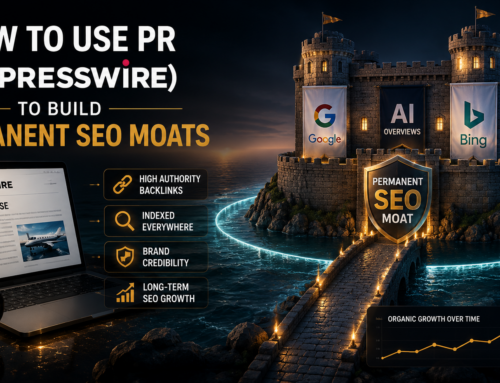
Use press releases and external citations to expand the brand’s authority footprint. This works especially well with a strategy like How to Use PR (EIN Presswire) to Build Permanent SEO Moats.
Step 8: Convert Authority Into Pipeline
Finally, connect authority pages to audits, consultations, lead forms, calls, and CRM attribution.
Therefore, the fortress becomes both a visibility engine and a sales engine.
Digital Fortress vs Broker Model
Direct Answer: The Digital Fortress builds owned leverage, while the broker model creates rented access.
| Category | Digital Fortress | Broker Model |
|---|---|---|
| Demand Source | Owned search, AI, content, brand, email, retargeting | Third-party relationships and marketplaces |
| Customer Ownership | Direct | Often broker-controlled |
| Long-Term Value | Compounding | Repeated cost |
| Pricing Power | Stronger | Often weaker |
| Data Access | First-party | Limited |
| AI Search Potential | High | Depends on broker visibility |
| Competitive Moat | Harder to copy | Easier to disrupt |
Metrics That Matter
Direct Answer: Digital Fortress performance should be measured by owned demand, authority growth, AI visibility, lead quality, and revenue efficiency.
Track These Metrics
- organic impressions
- AI-search visibility
- branded search growth
- direct traffic
- authority page engagement
- internal link clicks
- qualified lead rate
- cost per qualified lead
- conversion rate
- deal value
- close rate
- CRM source attribution
- PR citations
- topic cluster growth
Additionally, compare owned leads against brokered leads. Therefore, leadership can see which channel creates better long-term economics.
Common Fortress-Building Mistakes
Direct Answer: Businesses fail to build a Digital Fortress when they publish scattered content without strategy, proof, internal links, or conversion paths.
- building only a homepage and a few service pages
- publishing thin blogs
- not building hubs
- not answering buyer questions
- not using schema
- not integrating PR
- not creating original frameworks
- not linking related content
- not tracking qualified leads
- not optimizing for AI search
- not comparing brokered leads against owned demand
- expecting instant results from a long-term infrastructure strategy
Instead, treat authority like infrastructure. Build it deliberately, connect it clearly, and improve it consistently.
Frequently Asked Questions
What is a Digital Fortress?
A Digital Fortress is an owned authority ecosystem made of hubs, spokes, service pages, schema, internal links, proof assets, PR, and conversion paths that capture search and AI-driven demand.
Why is broker dependence risky?
Broker dependence is risky because the broker may control the customer relationship, pricing leverage, data, and repeat demand.
Can brokers still be useful?
Yes. Brokers can still create value. However, businesses should avoid depending on brokers as their primary demand source.
How does AI search favor the Digital Fortress?
AI search favors brands with deep, structured, helpful, and consistent content because answer engines need trusted sources to summarize and recommend.
How long does it take to build a Digital Fortress?
Most serious authority builds take months, not weeks. However, the advantage compounds as more content, citations, links, and proof assets accumulate.
External Sources
Conclusion
Direct Answer: The Digital Fortress will beat broker-dependent marketing over the next decade because owned authority compounds while rented demand repeats its cost.
Brokers may still play a role. However, the strongest companies will not depend on them for survival. Instead, they will build their own content ecosystem, search visibility, AI-search presence, first-party demand, proof assets, and direct conversion paths.
Therefore, the next decade will not reward the company with the prettiest homepage. It will reward the company that becomes the most trusted answer in its category.
Final Insight: Brokers control access until the market finds you directly. The Digital Fortress is how the market finds you directly.
About the author : Anthony Paulino