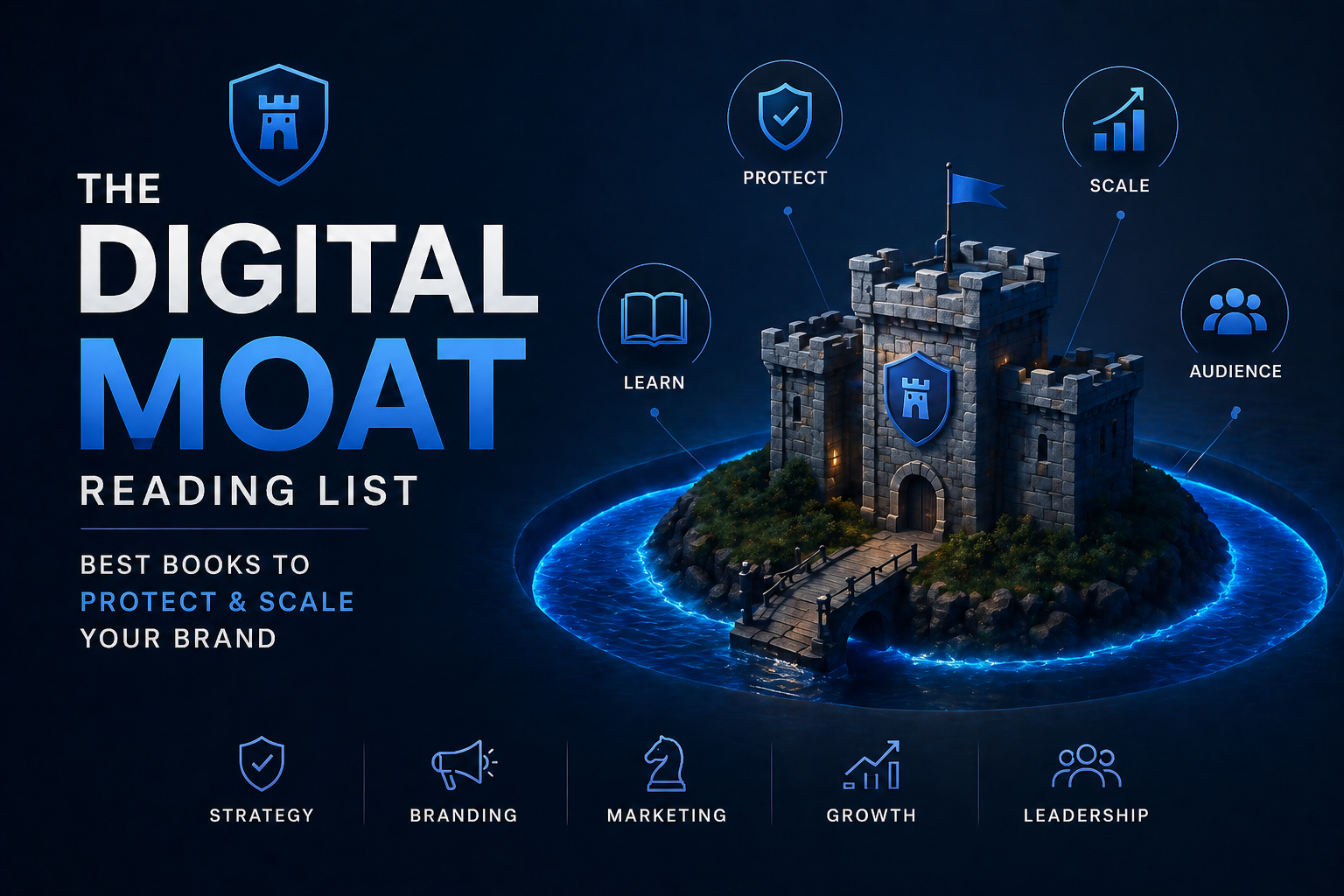
Best Books to Protect and Scale Your Brand | The Digital Moat Reading List
Definition: Protecting and scaling a brand means building advantages that create growth while also defending market position over time.
Direct Answer: Many companies chase clicks, leads, and short-term wins. However, stronger companies build moats. They create authority, trust, owned traffic, unique positioning, and compounding assets that competitors struggle to copy. Therefore, the best books to protect and scale your brand teach far more than promotion alone.
Many businesses assume growth is only about visibility. However, visibility without protection can disappear quickly. If competitors copy your message, undercut your price, or outspend you, growth becomes unstable. As a result, short-term wins often fade fast.
That is exactly why strategic founders study durable advantage. Search rankings can move. Ad costs can rise. Social reach can shrink. However, deep authority, trusted reputation, owned audiences, and category leadership are harder to replace.
Therefore, elite brands often invest in assets that compound year after year. For example, they build content ecosystems, SEO hubs, referral loops, email databases, partnerships, and memorable positioning. Consequently, growth often becomes stronger with time.
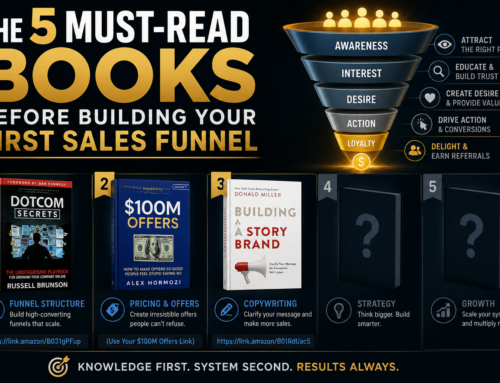
The three books below explain how lasting advantages are built. Together, they teach strategy, market creation, and scalable word-of-mouth growth.
Key Takeaways
- Short-term traffic can help. However, durable advantages matter more.
- Authority often compounds, while ads reset monthly.
- Unique positioning can reduce direct competition.
- Trust and distribution are powerful moats.
- Word of mouth can lower acquisition costs.
- Layered strengths usually beat one tactic alone.
- Protected growth is often stronger growth.
Why This Matters
Many brands grow quickly, yet fade just as fast. They depend on rented attention, one ad platform, or one short trend. However, when algorithms shift or costs rise, momentum often slows.
By contrast, brands with moats usually stay stronger during turbulence. They have trust. They have repeat buyers. They have search visibility. Moreover, they have authority that keeps attracting attention.
Therefore, the real objective is not only growth. Instead, it is protected growth.
That distinction matters even more online because competition moves quickly. New entrants appear daily. Meanwhile, copycats launch fast. Trends change suddenly. Consequently, fragile brands can lose traction without warning.
Because of that, founders should ask one question often: if paid traffic stopped tomorrow, what would still create demand?
What Is a Digital Moat?
A digital moat is any durable advantage that helps a business win online over time.
Examples include:
- Strong SEO visibility
- Large content ecosystems
- Excellent reviews
- Email and customer databases
- Referral momentum
- Unique positioning
- Exclusive partnerships
- Community loyalty
- Thought leadership
- AI-search visibility
While one advantage can help, several together become stronger. Therefore, layered moats usually outperform isolated tactics.
Likewise, many smaller strengths can combine into one major barrier to competition. As a result, rivals face a harder climb.
7 Powers by Hamilton Helmer
This book offers one of the strongest modern frameworks for competitive advantage. Helmer explains that long-term success usually comes from powers competitors struggle to match.
Examples include scale economies, switching costs, network effects, brand strength, cornered resources, process power, and counter-positioning.
For founders, this matters greatly. Instead of chasing vanity metrics, you begin asking stronger questions.
- Why can we win repeatedly?
- What grows stronger as we scale?
- What is difficult to copy?
- What protects margins?
Therefore, this book shifts thinking from tactics to durable leverage.
As a result, owners often stop chasing noise and start building systems that last.
Blue Ocean Strategy
Many brands compete in crowded markets where everyone fights on price, features, and noise. However, Blue Ocean Strategy teaches that stronger growth often comes from creating new demand space instead.
That lesson is powerful online. Instead of trying to outrank giant competitors for broad keywords, a business can build niche authority hubs, underserved local pages, unique offers, or specialized content systems.
Therefore, Blue Ocean thinking helps brands escape commodity traps.
Examples of Digital Blue Oceans
- Hyper-local authority pages competitors ignore
- Industry-specific service hubs
- Comparison pages nobody built well
- AI-answer libraries
- Content around hidden buyer pain points
Consequently, brands can compete where others are absent rather than where everyone is crowded.
Contagious
Jonah Berger’s Contagious explains why some ideas spread while others disappear quietly. That matters because distribution itself can become a moat.
If people naturally share your content, recommend your brand, or repeat your story, acquisition costs can fall over time. Therefore, growth can become more efficient.
Virality is not only luck. Instead, it is often shaped by psychology, usefulness, emotion, and timing.
Why This Matters for Brands
- Shareable content creates reach.
- Stories build memory.
- Emotion drives conversation.
- Practical value encourages referrals.
- Triggers create repeat awareness.
Consequently, brands that understand shareability can grow faster with lower paid dependency.
How Modern Brands Apply This
This is where theory becomes practical.
Modern brands can turn these lessons into real assets. Instead of relying on one homepage and a few ads, they can build layered authority systems.
Examples include:
- Educational content hubs
- Case studies
- Comparison pages
- FAQ libraries
- Location pages
- Trust and review pages
- Email nurture systems
- Referral loops
- AI-search optimized answers
As a result, competitors cannot easily copy years of authority in a few weeks.
Therefore:
- 7 Powers explains why durable advantages matter.
- Blue Ocean Strategy explains where to compete smarter.
- Contagious explains how ideas spread faster.
- Authority assets turn theory into owned growth engines.
Consequently, the moat widens as useful assets continue to grow.
Comparison Table
| Book | Main Strength | Best For | Moat Type |
|---|---|---|---|
| 7 Powers | Competitive advantage | Long-term strategy | Structural moat |
| Blue Ocean Strategy | Market creation | Escaping competition | Positioning moat |
| Contagious | Word-of-mouth growth | Reach and awareness | Distribution moat |
Action Plan
- First, audit where growth depends on rented platforms.
- Next, build owned traffic through SEO and content.
- Then, create niche categories competitors ignore.
- Additionally, develop shareable assets people discuss.
- Meanwhile, strengthen trust through proof and reviews.
- After that, layer several advantages instead of one.
- Finally, invest in assets that compound yearly.
Therefore, even smaller brands can begin building moats now.
Likewise, consistency often beats size during the early stages.
Frequently Asked Questions
What is the strongest digital moat?
Usually a combination of authority, trust, owned audience, and unique positioning.
Can small businesses build moats?
Yes. In fact, niche focus often helps smaller brands build faster advantages.
Why are ads not enough?
Ads can work well. However, they often stop when spending stops. Moats can continue creating demand.
What helps brands scale safely?
Owned traffic, trust systems, referrals, and unique positioning usually help most.
Which book should I start with?
Start with 7 Powers for strategy. Then read Blue Ocean Strategy. After that, read Contagious.
Final Verdict
Most brands chase growth, yet few protect it. However, the companies that last usually build moats.
7 Powers teaches durable advantage. Blue Ocean Strategy teaches smarter competition. Contagious teaches scalable attention.
Together, these books form a strong reading list for any founder who wants authority, resilience, and compounding growth.
Therefore, if you want more than short-term wins, start building advantages that survive market changes.
About the author : Anthony Paulino