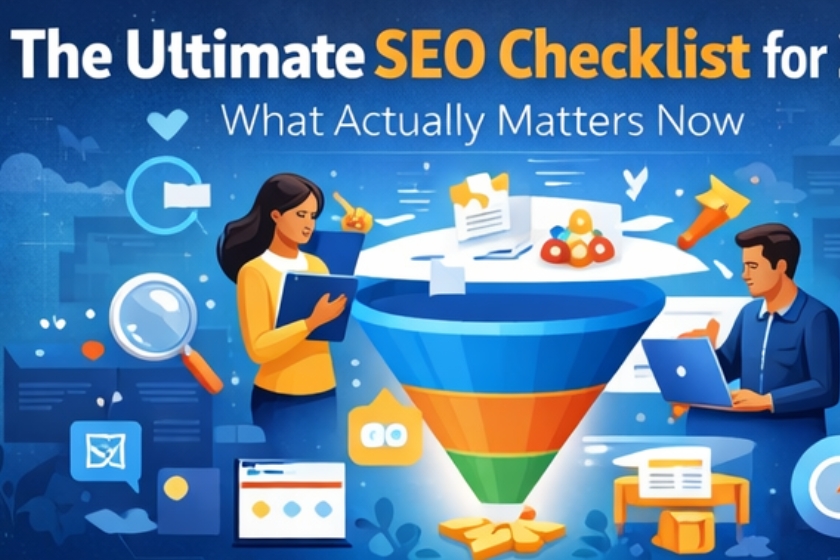
The Ultimate SEO Checklist: What Actually Matters Now
SEO changes every year, but not always in the way people think. Some strategies that once worked well have lost their impact. Others, like helpful content and strong site structure, have become even more important. Because search engines now rely heavily on AI and user signals, it is crucial to focus your efforts on what actually moves the needle.
This ultimate SEO checklist for 2025 will help you prioritize the tasks that matter and avoid outdated tactics. Use it to review your current site, tighten up weak spots, and build a stronger foundation for long-term visibility.
URL: https://infinitemediaresources.com/blog/seo-checklist/
Technical SEO Checklist
Technical SEO ensures that search engines can crawl, understand, and index your site. If this layer is weak, even great content may struggle to rank.
- Make sure your site uses HTTPS and has no major security issues.
- Check that your pages load quickly on both desktop and mobile devices.
- Fix broken links and remove or redirect dead pages.
- Use clean, descriptive URLs that reflect the page content.
- Ensure your XML sitemap and robots.txt are configured correctly.
These steps help search engines crawl your site efficiently and give users a smoother experience.
On-Page SEO Checklist
On-page SEO focuses on the content and HTML elements on each page. This is where you align your message with the terms and topics your audience searches for.
- Use a clear, descriptive title tag that includes your main topic.
- Write a concise meta description that encourages clicks.
- Structure content with logical H1, H2, and H3 headings.
- Use your target keyword naturally, not excessively.
- Include internal links to related pages on your site.
When each page has a clear focus, both people and search engines understand it more easily.
Content Strategy Checklist
In 2025, helpful, original content remains one of the strongest ranking signals. Search systems reward content that answers real questions and reflects real expertise.
- Create content that solves specific problems for your audience.
- Use plain language and avoid unnecessary jargon.
- Include examples, steps, and details that show real understanding.
- Update older content with fresh information where appropriate.
- Align your content with your products, services, and offers.
When your content makes life easier for your ideal customer, search engines take notice.
Trust, Experience, and User Experience Checklist
Search engines consider signals related to experience, expertise, authority, and trust. At the same time, user experience metrics show how people actually interact with your site.
- Clearly state who you are and what your business does.
- Include author bios on important content pieces where relevant.
- Make it easy to find contact, location, and support information.
- Ensure navigation is simple and intuitive.
- Avoid intrusive pop-ups that block content on mobile devices.
A site that is trustworthy and easy to use tends to perform better over time, even if ranking changes happen along the way.
Off-Page SEO Checklist
Off-page SEO focuses on signals outside your site, with backlinks playing a central role. However, quality matters much more than quantity.
- Earn links from relevant, reputable sites in your industry.
- Avoid spammy link schemes or paid link networks.
- Promote your best content through email and social media.
- Build relationships with partners, publishers, and communities.
Off-page authority builds over time. Focus on genuine relationships and useful content instead of quick hacks.
Frequently Asked Questions About SEO in 2025+
Has SEO changed a lot in recent years?
The core principles of SEO are similar, but search engines now rely more on AI, user intent, and content quality. Old tactics like keyword stuffing and low-quality link building no longer work.
Do I still need keywords in 2025+?
Yes, but they should be used naturally. Search systems focus on topics and intent rather than exact match keyword repetition. Clear language and structured content matter more than keyword density.
How often should I update my SEO strategy?
Review your SEO performance regularly, at least every quarter. You do not need to chase every trend, but you should adjust your strategy as your audience, offers, and site structure evolve.
Final Thoughts
SEO in 2025 rewards businesses that focus on helpful content, solid technical foundations, and good user experiences. Use this checklist to shore up weak areas and build a plan that can last. By focusing on what actually matters, you avoid chasing every minor update and instead build a stable, growing presence in search.
About the author : Justin McDaniels