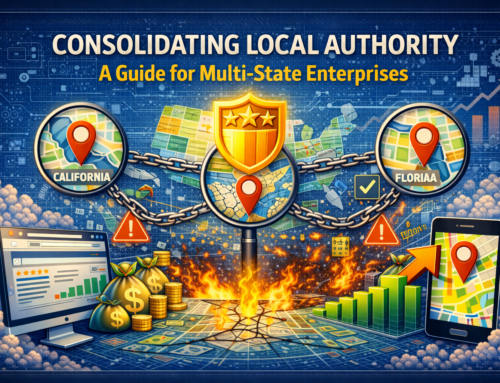

Scaling Your Digital Footprint: The Power of 1,000 Local Authority Pages
Scaling your digital footprint determines whether customers discover your brand or choose a competitor down the street. Traditionally, enterprise companies rely on a strong homepage supported by a limited set of location pages. However, modern buyers rarely search in broad terms. Instead, they use city names, neighborhoods, and highly specific service queries. As a result, brands that expand local coverage consistently capture higher-intent traffic.
At the same time, search behavior continues to shift toward precision. As AI-generated results become more prominent, clarity and structure matter even more. Consequently, organizations that invest in large-scale local authority pages build trust that compounds across every market they serve.
Ultimately, this guide explains how scaling your digital footprint works in practice, why 1,000 local authority pages outperform traditional SEO models, and how enterprises scale responsibly without sacrificing quality.
If you want IMR to design and deploy this entire system for you, start here:
1000 Page Local Authority Lockdown.
Table of Contents
- What scaling your digital footprint really means
- Why 1,000 local authority pages outperform traditional SEO
- The architecture behind scalable local dominance
- Content systems that preserve quality at scale
- Unique local elements that prevent duplication
- Internal linking strategies that multiply authority
- Schema markup for AI and search clarity
- A safe rollout strategy for 1,000 pages
- KPIs to measure local ROI
- Next steps
- FAQs
What scaling your digital footprint really means
Scaling your digital footprint means aligning your website with how customers actually search at the local level. Rather than relying on a few generalized pages, you intentionally build a structured library that answers precise location-based intent. Therefore, your brand appears more frequently in searches that lead directly to revenue.
Importantly, Google consistently reinforces the importance of people-first content. According to
Google’s Helpful Content Guidelines,
pages that genuinely solve user problems outperform thin or generic alternatives. Because of that emphasis, scale only works when usefulness remains central.
As a result, effective scaling creates three clear advantages:
- Coverage: visibility across thousands of local queries
- Relevance: alignment with real buyer intent
- Authority: trust reinforced through consistency
Why 1,000 local authority pages outperform traditional SEO
Scaling your digital footprint succeeds because it mirrors how people search in the real world. Buyers rarely begin with brand names. Instead, they search for nearby solutions. Consequently, pages built around local intent consistently outperform generic landing pages.
For example, high-intent searches often include:
- Service + city
- Service + neighborhood
- Service + zip code
- Best service near me
Individually, each query seems minor. Collectively, however, they represent massive cumulative demand. Therefore, enterprises that publish hundreds or thousands of local authority pages capture traffic competitors overlook.
Additionally, AI-driven summaries favor structured, quotable content. Clear local pages answer questions quickly. As a result, scaling your digital footprint improves both traditional rankings and AI citation visibility.
The architecture behind scalable local dominance
Strong architecture prevents internal competition. Without structure, pages dilute each other. With structure, pages reinforce one another. Therefore, architecture becomes the foundation of sustainable growth.
Specifically, effective enterprise architecture includes:
- Service hubs defining core offerings
- Regional market hubs
- City-specific service pages
- Neighborhood-level coverage
- Supporting FAQs and resources
Google explains the importance of this structure in its
internal linking documentation.
At IMR, this framework powers our
Local Authority Services,
ensuring scale strengthens authority instead of fragmenting it.
Content systems that preserve quality at scale
Scaling your digital footprint requires systems, not shortcuts. Many enterprises fear thin content. However, that risk disappears when consistency and uniqueness work together.
First, consistent elements anchor every page:
- Core service explanations
- Process descriptions
- Brand differentiators
Meanwhile, unique elements change by market:
- Local service boundaries
- Market-specific expectations
- Localized FAQs
Because writers follow defined rules, pages remain helpful while production scales efficiently.
Internal linking strategies that multiply authority
Internal linking transforms individual pages into a unified system. Without links, pages stand alone. With links, authority flows naturally. Consequently, internal linking acts as a force multiplier.
Effective linking includes:
- City pages linking to service hubs
- Hubs emphasizing priority markets
- Blogs reinforcing cornerstone pages
Meanwhile, paid channels can accelerate validation through
PPC Management
and
Full Service Digital Marketing.
Schema markup for AI and search clarity
Schema markup clarifies meaning for machines. While content persuades people, structured data helps AI interpret relationships. Therefore, schema strengthens entity trust.
Reference sources include:
When schema remains consistent, scaling your digital footprint becomes more predictable and resilient.
Next steps
Scaling your digital footprint creates compounding advantage because it aligns with how people search and how AI summarizes. Ultimately, enterprises that invest in local authority systems outperform competitors market by market.
FAQs
Does scaling your digital footprint require exactly 1,000 pages?
No. The number should match your footprint and demand.
Will large-scale pages cause thin content?
No, when systems enforce uniqueness and quality.
Should pages publish all at once?
No. Phased rollouts protect performance.
About the author : Anthony Paulino