Building a Competitive Moat: Using Content to Outlast the “Big Three” Brokers
Direct Answer: A private aviation content moat is a deep, connected content system that helps your brand outlast larger brokers by owning specific aircraft, airport, route, pricing, empty leg, and buyer-intent searches. Therefore, instead of trying to outspend the largest brokers, you build digital real estate that compounds, protects visibility, and creates qualified charter demand over time.
Large brokers usually win because they have brand recognition, broad search authority, and major paid media budgets. However, they also have a weakness. Because they serve broad markets, their content often stays generic. Therefore, a focused aviation brand can compete by going deeper into the exact missions, aircraft, airports, and buyer questions the big players overlook.
Additionally, this strategy works because buyers do not always want the biggest broker. Instead, they want the clearest answer, the safest option, and the provider that understands their exact mission. As a result, content becomes more than marketing. It becomes a trust engine, a sales asset, and a long-term competitive moat.
Google recommends helpful, reliable, people-first content. Additionally, Google’s AI features still rely on web content to support AI-generated answers. Therefore, a strong content moat supports SEO, GEO, voice search, retargeting, and lead generation at the same time. Google Search Central explains helpful content and Google explains AI features and your website.
Key Takeaways
- A content moat helps specialized aviation brands compete without matching broker ad budgets.
- However, the moat must cover specific buyer intent, not generic blog topics.
- Aircraft, airport, route, FBO, pricing, and proof pages all work together.
- Additionally, internal links turn separate pages into a defensible authority network.
- Ultimately, the moat compounds through search visibility, AI visibility, and qualified lead generation.
What Is a Private Aviation Content Moat?
Direct Answer: A private aviation content moat is a connected ecosystem of pages that makes your brand harder to outrank because it owns more specific buyer intent.
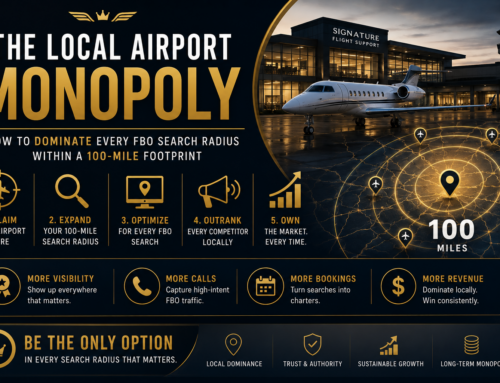
A normal website explains what your company does. However, a content moat proves what your company knows. Therefore, it should not stop at a homepage, fleet page, and contact page. Instead, it should build authority across every search path that can lead to a premium charter conversation.
For example, your content moat should include aircraft model pages, airport authority pages, route-pair pages, FBO pages, empty leg guides, pricing education pages, comparison pages, FAQ pages, and proof assets. Additionally, each page should link to related pages. As a result, the whole system grows stronger over time.
Therefore, the moat does not depend on one keyword. Instead, it owns hundreds or thousands of high-intent search moments.
Why the Big Brokers Usually Win
Direct Answer: Large brokers usually win because they already have authority, budget, brand recognition, and broad search coverage.
They often rank for broad terms. Additionally, they can spend heavily on paid search, display, social, and retargeting. Meanwhile, smaller operators may struggle when they compete only for the same generic keywords. Therefore, trying to beat large brokers head-on for “private jet charter” can become expensive and slow.
However, broad strength does not always create specific relevance. For example, a buyer searching “G650ER charter from Teterboro to Nice” wants a specific answer. Therefore, a focused brand can win by answering that mission better than a large broker’s generic page.
Proof Breadcrumb: broad authority creates visibility. However, specific authority creates high-intent relevance.
Where Large Brokers Are Vulnerable
Direct Answer: Large brokers are most vulnerable when buyers search for specific aircraft, routes, airports, seasonal missions, pricing questions, and decision-stage comparisons.
Because large brokers often build scalable content, their pages can feel broad. Meanwhile, a specialist can build deeper content around exact buyer situations. Therefore, your opportunity is not to look bigger. Instead, your opportunity is to become more useful.
High-Value Vulnerability Zones
- Specific aircraft model searches
- Airport-to-airport route searches
- FBO and private terminal searches
- Empty leg route searches
- Seasonal luxury travel missions
- Family office decision guides
- Aircraft comparison pages
- Pricing variable explanations
- Local airport authority pages
Consequently, a smaller brand can build a stronger position by attacking these gaps. Additionally, every specific page creates another reason for search engines and AI systems to understand your expertise.
The Content Moat Formula
Direct Answer: A content moat combines specific intent, deep pages, internal links, authority proof, schema, and lead capture.
Use this formula:
Content Moat = Specific Intent × Deep Pages × Internal Links × Authority Proof × Schema × Lead Capture
Each piece matters. First, specific intent brings the right buyer. Next, deep pages build trust. Additionally, internal links compound authority. Furthermore, proof reduces hesitation. Meanwhile, schema improves machine understanding. Finally, lead capture turns visibility into revenue.
Therefore, the moat is not just an SEO play. Instead, it is a full revenue infrastructure that compounds.
Layer 1: Aircraft Model Authority
Direct Answer: Aircraft model authority helps your brand capture buyers who already know which aircraft they want or which aircraft class they need.
These buyers often sit deeper in the funnel. Therefore, aircraft pages can attract stronger inquiries than generic charter pages. Additionally, aircraft pages help AI systems understand your operational expertise and mission fit.
Aircraft Pages to Build
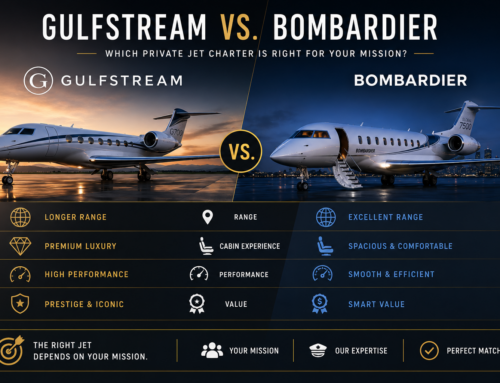
- Gulfstream G650ER charter
- Bombardier Global 7500 charter
- Citation Longitude charter
- Challenger 3500 charter
- Falcon 8X charter
- Praetor 600 charter
Each page should include mission fit, route examples, passenger profile, airport context, pricing factors, comparisons, FAQs, and aircraft-specific CTAs. As a result, the page becomes a decision guide instead of a basic spec sheet.
Action Step: Build one primary page for each commercially valuable aircraft model. Then, build comparison and route support pages around each model.
Layer 2: Airport and FBO Authority
Direct Answer: Airport and FBO pages help your brand compete where buyers actually depart and arrive.
Private aviation is location-specific. Therefore, airport authority matters. Instead of saying “we serve South Florida,” build pages for KPBI, KOPF, KFLL, KMIA, and other high-value markets. Additionally, build pages for KTEB, KVNY, KSDL, HPN, and other strategic airport nodes when they fit your target buyer.
Airport Pages Should Include
- Airport overview
- Why private flyers use it
- Nearby luxury destinations
- Common routes
- Recommended aircraft
- FBO context
- Seasonal travel patterns
- Airport-specific CTA
Furthermore, FBO pages can support searches around convenience and private terminal access. However, avoid claiming partnerships unless they exist. Therefore, the page remains credible.
Layer 3: Route-Pair Ownership
Direct Answer: Route-pair pages help your brand own high-value global missions that generic broker pages often miss.
Routes reveal intent. Therefore, pages like “Teterboro to Nice private jet” or “Palm Beach to London private jet” can attract serious buyers. Additionally, each route page can connect to aircraft pages, airport pages, and pricing guides.
Route-Pair Pages Should Explain
- Departure and arrival airport options
- Estimated flight time range
- Best aircraft classes
- Pricing variables
- Seasonal demand
- Passenger and luggage considerations
- Related aircraft
- Related routes
As a result, each route page becomes a mission-specific sales asset. Therefore, the moat grows stronger with every route you publish.
Layer 4: Buyer-Intent Education
Direct Answer: Buyer-intent content answers the questions that prevent high-value prospects from converting.
Large brokers often focus on booking language. However, high-ticket buyers need education. Therefore, your content should explain decisions clearly and confidently.
Buyer-Intent Topics
- How do empty legs work?
- Which aircraft is best for 10 passengers?
- How much does a heavy jet charter cost?
- What is the best airport for private travel near Manhattan?
- How do family offices choose charter providers?
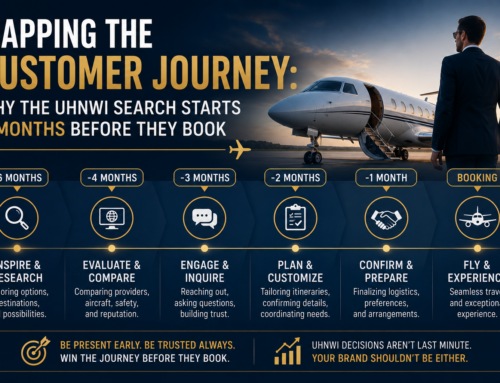
- What should a first-time private jet client know?
Moreover, these pages can support sales enablement. For example, your team can send them to prospects before calls. Consequently, the content reduces objections and improves lead quality.
Layer 5: Authority, Proof, and Trust Assets
Direct Answer: Proof assets make your content moat more persuasive, more credible, and more defensible.
In private aviation, trust matters more than traffic. Therefore, your moat needs proof. This proof can come from reviews, press mentions, safety explanations, executive bios, case-study-style mission examples, and clear process pages.
Proof Assets to Build
- Safety and service standards page
- Executive leadership page
- Press and media page
- Client experience page
- Mission example pages
- FAQ trust library
- Review and testimonial sections
Additionally, proof should appear near CTAs. As a result, the buyer sees credibility at the exact moment they consider taking action.
Layer 6: AI Search and GEO Structure
Direct Answer: A content moat must help AI systems understand, retrieve, summarize, and recommend your brand.
AI search favors clear answers, complete context, entity consistency, and strong source material. Therefore, each page should include direct-answer sections, structured headings, FAQs, internal links, and schema.
AI-Ready Content Elements
- Direct answer under the H1
- Question-led headings
- Concise summary sections
- FAQs with visible answers
- Schema markup
- Internal links to related pages
- External authority references
- Consistent brand descriptions
Additionally, Google explains that structured data helps search systems understand page content, while OpenAI explains that ChatGPT Search uses relevance and reliability factors. Therefore, GEO should support the entire moat. Google Search Central explains structured data and OpenAI explains ChatGPT Search.
Layer 7: Lead Generation and Retargeting
Direct Answer: A content moat only becomes valuable when it converts qualified traffic into conversations.
Therefore, every high-intent page needs a conversion path. However, the CTA should match the page intent.
CTA Examples by Content Type
- Aircraft page: Request availability for this aircraft class.
- Route page: Plan this route with a charter advisor.
- Airport page: Request departure options from this airport.
- Pricing guide: Get mission-specific pricing guidance.
- Empty leg page: Get notified about this route.
Additionally, retargeting can keep high-intent visitors engaged. Meta Custom Audiences can support retargeting from website traffic when implemented properly. Therefore, your moat can feed both organic and paid lead generation. Meta Business Help explains Custom Audiences.
90-Day Content Moat Build Plan
Direct Answer: Start the content moat with the highest-value searches, then expand based on revenue signals.
Days 1–30: Strategy and Architecture
- Map top aircraft, routes, airports, and buyer questions.
- Score topics by revenue potential.
- Build the URL structure and internal linking plan.
- Create the main service and authority page templates.
- Define schema rules for each page type.
Days 31–60: Core Authority Build
- Publish top aircraft model pages.
- Publish top airport pages.
- Publish top route-pair pages.
- Add FAQs, schema, and internal links.
- Add lead-generation CTAs and CRM source tracking.
Days 61–90: Expansion and Conversion
- Publish comparison pages.
- Publish buyer-intent guides.
- Add proof assets near key CTAs.
- Create retargeting audiences by page category.
- Measure qualified lead quality by page type.
Consequently, your first 90 days create the foundation. After that, the moat expands through monthly content batches.
How to Measure the Moat
Direct Answer: Measure a content moat by qualified demand, not just traffic.
Traffic can be misleading. Therefore, track the metrics that show business value.
Metrics That Matter
- Organic traffic by page type
- Qualified inquiry rate
- Booked call rate
- Aircraft-specific leads
- Route-specific leads
- Airport-specific leads
- CRM source attribution
- Retargeting audience growth
- AI citation share
- Closed revenue influenced by content
Additionally, Google Analytics 4 can track events, while CRM data can connect pages to opportunities. Therefore, combine analytics and sales reporting. Google Analytics Help explains events in GA4.
Common Content Moat Mistakes
Direct Answer: Content moats fail when brands publish volume without strategy, depth, or conversion tracking.
- Publishing thin pages at scale
- Chasing traffic instead of revenue intent
- Ignoring aircraft-model searches
- Skipping airport and route pages
- Using generic CTAs
- Failing to add internal links
- Leaving out schema
- Not building proof assets
- Not tracking leads by page type
- Copying competitor content instead of going deeper
Instead, build every page like a permanent asset. Therefore, each page should have a search role, authority role, conversion role, and internal link role.
Frequently Asked Questions
How can a smaller charter brand compete with large brokers?
A smaller charter brand can compete by building deeper content around specific aircraft, airports, routes, FBOs, buyer questions, and proof assets that large brokers often treat broadly.
What is a content moat in private aviation marketing?
A content moat is a connected ecosystem of pages that makes your brand harder to outrank because it owns more specific buyer intent across the search journey.
Does a content moat replace paid ads?
No. However, it reduces dependence on paid ads over time and improves retargeting because high-intent visitors enter your owned ecosystem first.
How long does it take to build a content moat?
The first meaningful foundation can launch in 90 days. However, a serious moat usually compounds over six months or longer.
Why does content help close charter leads?
Content helps close charter leads because it builds trust, explains options, answers objections, and prepares buyers before they contact sales.
External Sources
Conclusion
Direct Answer: The best way to outlast the biggest brokers is to build a content moat they cannot quickly copy.
Large brokers may have scale. However, specialized brands can win through depth. Therefore, your private aviation marketing should build aircraft pages, airport pages, route-pair pages, buyer guides, proof assets, schema, internal links, and conversion paths as one connected system.
Final Insight: You do not need to outspend the Big Three forever. Instead, you need to out-teach, out-structure, and outlast them with digital real estate that compounds.
About the author : Anthony Paulino