

How Do I Allocate a Multi-Million Dollar Ad Budget Across Search, Social, and AI?
Definition: Multi-channel ad budget allocation is the process of distributing advertising spend across high-intent channels like Search, demand-generation channels like Social, and AI-driven campaign systems based on revenue goals, conversion probability, efficiency targets, and expected return.
Direct Answer: The best way to allocate a multi-million dollar ad budget across Search, Social, and AI is to start with revenue goals, calculate acceptable cost per acquisition, give the largest share to channels that capture existing intent, reserve a meaningful portion for demand creation, and use AI-driven campaign systems to improve efficiency instead of replacing strategy. In practice, that usually means Search gets the highest percentage, Social gets the second-largest share, and AI-enabled campaign types get budget based on where automation can improve conversion volume or return on ad spend.
AD Budget Mistakes Hurt
Many companies mishandle large budgets because they treat allocation like a balancing exercise instead of a performance exercise. They divide money evenly across channels because equal distribution feels safe. However, equal distribution often produces unequal returns. Search usually captures people who are already looking. Social often reaches people who are not yet ready to buy. AI systems can improve bidding, audience matching, and cross-channel delivery, yet they still depend on clear goals, clean tracking, and strong creative inputs. Therefore, the right answer is not balance for the sake of balance. The right answer is weighted allocation based on how each channel contributes to pipeline and profit.
Google’s advertising documentation reinforces that return on investment should be measured from conversion value and cost, not from spend alone. Likewise, Google’s Smart Bidding and Performance Max documentation makes clear that AI-powered bidding and campaign systems are built to optimize for conversions or conversion value when the account has strong signals. Meta says its Advantage+ systems are designed to improve efficiency with machine learning, yet those systems still work inside a broader media strategy, not above one. As a result, enterprise allocation should treat Search, Social, and AI as distinct roles inside one performance system rather than competing silos.
If you are managing millions in spend, the real goal is not to “be present everywhere.” Instead, the goal is to put the next dollar where it is most likely to create incremental value. That is the mindset that separates disciplined media allocation from expensive channel preference.
Key Takeaways
- Start with revenue targets before deciding percentages.
- Then calculate allowable CPA, ROAS, or margin thresholds for each channel.
- Search usually deserves the largest share because it captures high-intent demand.
- Social deserves meaningful budget because it creates and expands demand.
- AI systems should improve efficiency and scale, not replace channel strategy.
The Realistic Short Answer
Direct Answer: A strong multi-million dollar ad budget often starts with roughly 40% to 55% in Search, 25% to 40% in Social, and 10% to 25% in AI-driven campaign systems, then shifts over time based on incremental performance.
That does not mean every company should use the exact same split. However, it does reflect how the channels tend to behave. Search typically captures existing demand, which is why it often deserves the largest share. Social typically creates or expands demand, which is why it often deserves the second-largest share. AI campaign types and AI-driven bidding systems can unlock efficiency across both, yet they still need strong conversion signals and good inputs to work well.
Therefore, the starting allocation should be directional, not final. The first goal is to create a rational initial mix. The second goal is to adjust the mix based on cost per lead, cost per acquisition, conversion rate, and return on ad spend once real data comes in.
Why Equal Budget Splits Usually Fail
Direct Answer: Equal budget splits usually fail because channels do not produce equal intent, equal efficiency, or equal business outcomes.
Search users are often closer to a buying decision. Social users are often earlier in the journey. AI systems can optimize delivery, yet they do not create intent by themselves. As a result, placing the same amount of budget into each environment assumes the same probability of conversion, which is rarely true.
For example, imagine one million dollars spent in Search and one million dollars spent in Social. If Search converts at 5% and Social converts at 1.5%, the same spend produces very different outcomes. That difference matters even more at enterprise scale because small efficiency gaps become large financial gaps once millions are involved.
Proof Breadcrumb: If $1,000,000 in Search generates leads at $100 CPL, it produces 10,000 leads. If $1,000,000 in Social generates leads at $200 CPL, it produces 5,000 leads. Same spend, half the lead volume.
Therefore, enterprise allocation should not ask, “How do we treat channels equally?” Instead, it should ask, “Where does the next dollar produce the most valuable outcome?”
Step 1: Start With Revenue Goals
Direct Answer: The budget should always start with the revenue target because channel allocation only makes sense when it is tied to an actual business outcome.
If leadership wants $25 million in revenue from paid media, that target should drive the plan. Otherwise, channel percentages become arbitrary. Once the revenue target is clear, you can work backward into deals, leads, traffic, and budget requirements.
Example:
- Revenue goal = $25,000,000
- Average revenue per closed deal = $10,000
- Deals needed = 2,500
- Lead-to-sale close rate = 25%
- Leads needed = 10,000
Proof Breadcrumb: $25,000,000 ÷ $10,000 average deal = 2,500 deals needed.
Proof Breadcrumb: 2,500 deals ÷ 0.25 close rate = 10,000 leads required.
Once you know you need 10,000 leads, the budget question becomes much more practical. Now you are no longer debating channels in the abstract. Instead, you are deciding which mix is most likely to produce 10,000 profitable leads.
Step 2: Calculate Allowable CPA, ROAS, and Payback
Direct Answer: Before allocating money, define what a lead or acquisition can cost while still protecting margin and acceptable payback.
This is where enterprise media planning becomes disciplined. If the company knows its average deal value, gross margin, close rate, and acceptable payback period, then it can set real acquisition guardrails. Without those guardrails, channels often get judged emotionally instead of financially.
For example, if the company has a $5,000,000 ad budget and needs 10,000 leads, then the average allowable cost per lead across the program would be $500.
Proof Breadcrumb: $5,000,000 budget ÷ 10,000 required leads = $500 average allowable CPL.
That does not mean every channel must hit exactly $500. Search may outperform that threshold. Social may sit higher on a last-click basis but still justify spend because it influences demand creation and remarketing pools. AI-driven campaign types may land somewhere in between depending on the goal and the amount of conversion history available. Therefore, the correct way to use allowable CPL is as a decision framework, not as a rigid rule that ignores channel role.
Action steps:
- Define target CPL, maximum CPL, and target ROAS.
- Then decide whether the business can accept longer payback from awareness-driving channels.
- Finally, document those thresholds before budgets are distributed.
Step 3: Assign Each Channel a Clear Job
Direct Answer: Search, Social, and AI should each have a defined role inside the media system rather than being treated as interchangeable buckets.
This is where many ad budgets go off track. Teams often spread money across channels without defining what success looks like for each one. As a result, Search gets judged like Social, Social gets judged like Search, and AI gets treated like magic instead of an execution layer.
A better framework looks like this:
- Search: capture existing demand, high-intent traffic, and bottom-funnel conversions
- Social: create demand, expand audience reach, drive retargeting pools, and support creative testing
- AI systems: improve bidding efficiency, automate delivery, and help scale conversion value when enough data exists
Therefore, the right allocation depends on what the business needs more urgently. If the company needs demand capture right now, Search deserves more. If the company has weak pipeline creation at the top of funnel, Social deserves stronger funding. If the company already has volume and strong data, AI-enabled campaigns can improve efficiency faster.
How to Think About Search Allocation
Direct Answer: Search usually deserves the largest budget share because it captures users who are already demonstrating intent.
That intent is what makes Search so valuable. People in Search are often asking for a product, solution, price, comparison, or provider directly. Therefore, Search often produces better conversion rates, cleaner attribution, and faster learning than channels built primarily for awareness.
Google’s bidding and conversion documentation reinforces this orientation toward value-based optimization. Search also gives large advertisers more immediate visibility into which keywords, queries, and landing pages are producing real business outcomes. As a result, Search is often the anchor channel in a multi-million dollar plan.
That said, Search should not be overfunded blindly. Search volume is finite. If the category only supports a certain amount of efficient demand capture, then extra budget may create diminishing returns. Therefore, Search should usually be funded to the point where marginal return begins to weaken, not just because leadership likes the channel.
A practical rule is that Search often starts in the 40% to 55% range, then moves up or down depending on search volume, brand strength, and category competition.
How to Think About AI Allocation
Direct Answer: AI should be funded as an optimization and scale layer, not as a replacement for strategic media planning.
In practice, “AI” budget usually means campaigns and systems such as Performance Max, Smart Bidding, value-based bidding, Advantage+ sales campaigns, or other machine-learning-driven buying systems. Those tools can be powerful because they adjust bids, audiences, and delivery faster than manual systems. However, they still depend on good goals, strong conversion tracking, adequate signal volume, and relevant creative.
That is why AI should not automatically receive budget just because it sounds advanced. Instead, it should earn budget where automation can genuinely improve return. For example, if the account has strong conversion data and stable creative, AI-driven systems may deserve more budget. On the other hand, if conversion tracking is weak or the offer is unclear, AI systems may amplify the wrong behavior.
Therefore, a common starting range is 10% to 25%, with room to grow if the systems prove they can outperform manual or semi-manual structures on incremental return.
A Realistic Starting Allocation Model
Direct Answer: A strong starting model for many enterprise advertisers is to anchor around Search, support with Social, and scale with AI.
A practical starting split often looks like:
- Search: 45%
- Social: 30%
- AI-driven campaigns and automated optimization layers: 25%
That model is useful because it reflects the natural roles of the channels. Search captures. Social creates and expands. AI optimizes and scales. However, it is still only a starting model. The real objective is to reallocate based on marginal performance after the first round of data comes in.
Therefore, the best enterprise planners do not ask, “Is 45/30/25 the perfect split?” Instead, they ask, “What does the next quarter of data tell us about where the next dollar should go?”
Proof-Breadcrumb Example With Multi-Million Dollar Math
Direct Answer: The easiest way to understand enterprise allocation is to tie the percentage mix directly to revenue and lead math.
Example:
- Total paid media budget = $12,000,000
- Revenue target = $24,000,000
- Average deal value = $12,000
- Deals needed = 2,000
- Lead-to-sale close rate = 20%
- Leads needed = 10,000
Proof Breadcrumb: $24,000,000 ÷ $12,000 average deal = 2,000 deals needed.
Proof Breadcrumb: 2,000 deals ÷ 0.20 close rate = 10,000 leads required.
Now apply a starting allocation:
- Search = 45% = $5,400,000
- Social = 30% = $3,600,000
- AI-driven campaigns = 25% = $3,000,000
Proof Breadcrumb: $12,000,000 × 0.45 = $5,400,000 Search allocation.
Proof Breadcrumb: $12,000,000 × 0.30 = $3,600,000 Social allocation.
Proof Breadcrumb: $12,000,000 × 0.25 = $3,000,000 AI allocation.
If the average allowable CPL across the whole program is $1,200, then this budget can support the 10,000-lead target at a blended level.
Proof Breadcrumb: $12,000,000 ÷ 10,000 leads = $1,200 allowable blended CPL.
At that point, the job of channel management is to beat the blended threshold where possible and justify higher-CPL channels only when they improve total system output, not just isolated last-click metrics.
How to Optimize the Mix Over Time
Direct Answer: The budget should move over time based on marginal performance, not just average performance.
This distinction matters. Average performance tells you what happened overall. Marginal performance tells you whether the next dollar should go into Search, Social, or AI. For enterprise advertisers, that is the more important question.
Optimization rules should include:
- Scale channels or campaigns when marginal CPA remains below target.
- Reduce or reshape campaigns when spend rises faster than conversion value.
- Watch saturation in Search, especially when impression share gains become expensive.
- Use Social to test new offers, audiences, and creative angles before scaling everywhere.
- Increase AI-driven budget only when tracking is clean and conversion data is strong.
Therefore, the best enterprise budget managers do not set the split once and walk away. Instead, they create a system for monthly or quarterly reallocation based on where incremental value is strongest.
Allocation Comparison Table
| Channel | Primary Role | Why It Gets Budget | Typical Starting Range |
|---|---|---|---|
| Search | Capture existing demand | High intent, clearer attribution, stronger conversion rates | 40% to 55% |
| Social | Create and expand demand | Audience growth, creative testing, retargeting support, market expansion | 25% to 40% |
| AI-driven campaigns | Improve efficiency and scale | Automated bidding, cross-placement optimization, conversion-value optimization | 10% to 25% |
Why This Matters
Direct Answer: This matters because a weak allocation model can waste millions even when the creative, audience, and offer are strong.
Large budgets do not create safety. In fact, they amplify mistakes. If the split is wrong, then the waste becomes larger faster. However, when the allocation model is grounded in intent, economics, and performance, the budget becomes a growth asset instead of a risk multiplier. Therefore, disciplined allocation is one of the highest-leverage decisions in enterprise media buying.
People Also Ask
How should I split a large advertising budget?
Start with revenue and acquisition math, then give more budget to channels that capture or create the most valuable demand efficiently. For many businesses, that means Search gets the largest share, Social gets the next share, and AI gets funded where automation improves return.
Should Search always get the biggest budget?
Usually, Search deserves the largest share because it captures stronger intent. However, it should only receive more budget up to the point where incremental return remains attractive. Once saturation or rising costs reduce efficiency, more money should shift elsewhere.
Does AI replace media planning?
No. AI improves bidding, matching, and delivery when the account has strong signals, but it does not replace strategy. You still need channel roles, budget discipline, clean tracking, and clear business goals.
Why is Social important if Search converts better?
Social matters because it creates demand, expands reach, improves brand familiarity, and feeds retargeting and branded search. Even when it converts weaker on a last-click basis, it can improve the total system.
Frequently Asked Questions
How do I allocate a multi-million dollar ad budget across Search, Social, and AI?
Start with revenue goals, calculate allowable CPA and ROAS, assign Search the largest share for demand capture, fund Social for demand creation, and use AI systems where they improve conversion efficiency and scale.
Should ad budgets be split evenly across channels?
No. Equal splits usually ignore intent, conversion rate, and marginal return. Budget should follow where the next dollar is most likely to create profitable growth.
What usually delivers the highest ROI?
Search often delivers the strongest direct response ROI because it captures users who are already looking for a solution. However, Social and AI can still be critical when judged as part of a broader growth system.
How much budget should go to AI campaigns?
Many large programs start with 10% to 25% in AI-driven campaign types or automated optimization systems, then increase that share if conversion tracking is strong and the systems outperform manual structures.
How often should I reallocate a large media budget?
Most enterprise teams should review allocation monthly and make bigger strategic shifts quarterly. The key is to react to meaningful performance trends, not to random short-term noise.
External Sources
Conclusion
Direct Answer: A multi-million dollar ad budget should be allocated by intent, economics, and incremental return rather than by equal channel percentages.
In practice, that means Search usually earns the largest share because it captures high-intent demand, Social earns a meaningful share because it creates and expands demand, and AI earns budget where automation can improve conversion efficiency or scale. Therefore, the strongest allocation model is not static. It is a disciplined starting mix that gets better as real data reveals where the next dollar performs best.
Authority Insight: The advertisers who usually win with large budgets are not the ones trying to be perfectly balanced everywhere. Instead, they are the ones that understand channel role, respect margin, and move money faster toward incremental return. That is what turns a large ad budget from a spend problem into a growth system.
About the author : Anthony Paulino



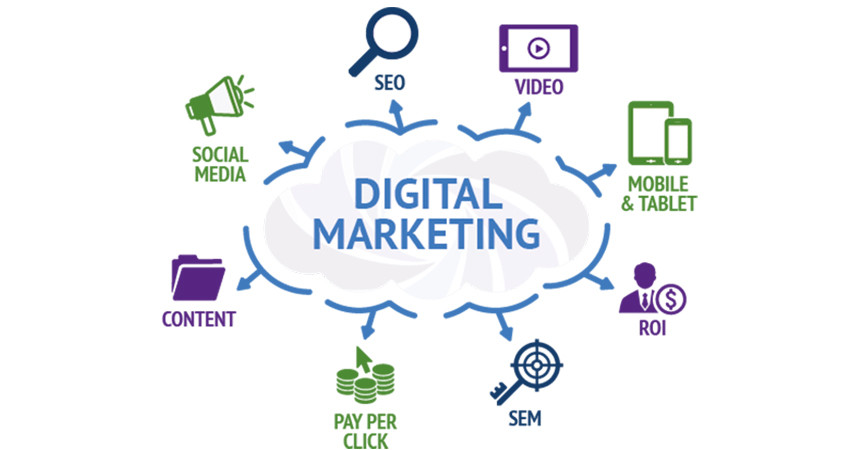










How to Think About Social Allocation
Direct Answer: Social deserves a meaningful share because it creates demand, expands reach, supports remarketing, and improves the total system even when last-click efficiency looks weaker than Search.
This is where many brands misjudge Social. They compare it to Search on a narrow last-click basis and conclude that it is inefficient. However, Social often plays a different role. It introduces the brand to new audiences, builds familiarity, tests offers and creative, and fills remarketing pools that improve performance elsewhere.
Therefore, Social should usually be judged on a broader view of impact. That may include assisted conversions, branded search lift, audience growth, video engagement quality, or incremental reach among target segments. Meta’s Advantage+ systems also show how Social is increasingly blending audience expansion and automation, which means the role of Social is not just awareness anymore. It can also help scale conversion-oriented campaigns when creative and signal quality are strong.
Because of that, Social often earns 25% to 40% of the mix in larger programs, especially when the business needs demand creation or broader market penetration.