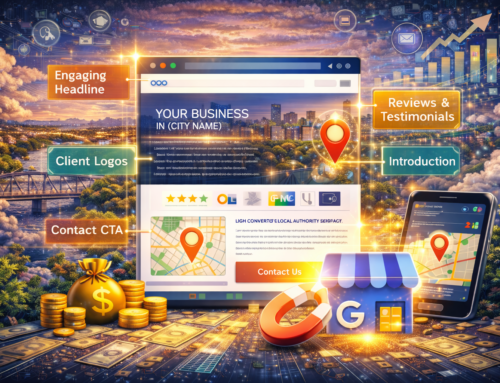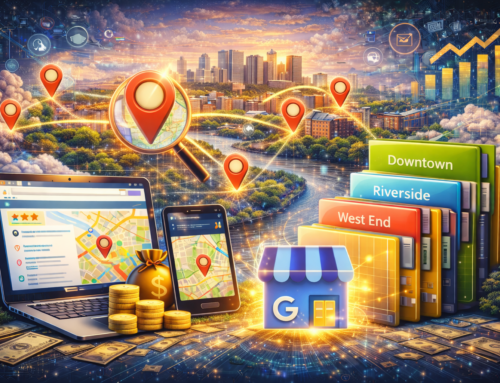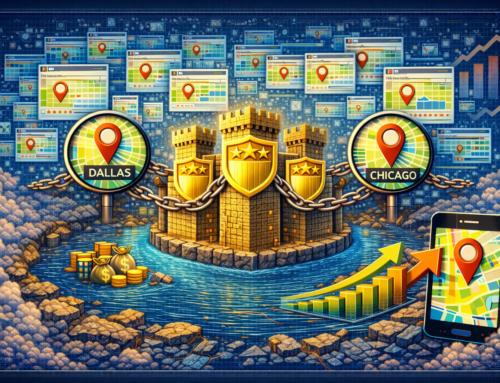
What is a “Local Authority Lockdown” and Why Your Business Needs One?
Direct answer: A Local Authority Lockdown is a scalable SEO + GEO system that builds trust, relevance, and market-level visibility by mapping your services to every city you serve using structured pages, internal linking, and schema, so Google and AI platforms consistently recommend your business.
Most businesses want more leads from local search. However, many brands still rely on one homepage, one service page, and a Google Business Profile, hoping that will carry the entire market. While that approach sometimes works early on, it breaks once competitors scale. As a result, brands lose calls even when they deliver better service.
Search also changes fast. Google still ranks links, yet AI-generated answers increasingly shape buyer decisions earlier in the journey. Because of that shift, businesses need more than rankings. Instead, they need an authority system that makes search engines and AI platforms trust them across every market they serve.
This guide explains Local Authority Lockdown in plain language. Additionally, it gives you actionable steps you can apply right now. If you want IMR to build the full system for you, start here:
1000 Page Local Authority Lockdown.
Table of Contents
- What is a Local Authority Lockdown?
- Why your business needs a Local Authority Lockdown now
- How a Local Authority Lockdown works step by step
- The core building blocks of a Local Authority Lockdown
- Why “service + city” pages win the money searches
- How GEO and AI search change local authority
- How internal linking creates compounding authority
- How schema markup makes your authority easier to trust
- How to deploy a Local Authority Lockdown without chaos
- The most common mistakes that weaken local authority
- A 30-day Local Authority Lockdown rollout plan
- Next steps
- FAQs
What is a Local Authority Lockdown?
Direct answer: A Local Authority Lockdown is a structured content and SEO system that makes your business the most visible and most trusted option across your service area through scalable local pages, internal linking, and consistent entity signals.
Local authority does not mean “having a lot of pages.” Instead, authority means the market trusts you. In search, that trust shows up through rankings, engagement, and citations. Therefore, a Local Authority Lockdown builds that trust by creating a complete map of who you serve, where you serve, and what you do best.
Think of it like a digital territory plan. Rather than competing city by city manually, you build an ecosystem that covers your market fully. As a result, your business appears more often, converts more consistently, and grows with less randomness.
If you want a proven done-for-you framework, IMR builds this entire system through:
1000 Page Local Authority Lockdown.
Why your business needs a Local Authority Lockdown now
Direct answer: Your business needs a Local Authority Lockdown because buyers search locally, competitors scale quickly, and AI search rewards brands with clear structure, trust, and coverage.
Most businesses lose leads for one painful reason: they appear invisible when buyers search by city. Even if your service is great, search systems cannot recommend what they cannot understand. Because of that, you need more than a homepage and a generic services page.
Local competitors also keep expanding. As more businesses publish local pages and optimize for “near me” searches, the market gets crowded. Consequently, businesses that fail to scale their coverage fall behind over time.
Google also confirms that relevance and prominence impact local performance. The official guidance here explains the local ranking factors clearly:
Google: Improve Your Local Ranking.
Additionally, because AI Overviews and AI-generated answers can influence decisions before the click, your content must be structured and quotable. That structure is a core advantage of a Local Authority Lockdown.
How a Local Authority Lockdown works step by step
Direct answer: A Local Authority Lockdown works by turning your business into the most complete, most organized, and most trusted local resource in your category.
Local authority grows when signals stack. First, you publish pages that match buyer intent. Next, you connect pages with internal links. Then, you reinforce identity with consistent business information and schema. After that, performance compounds across the entire market.
Here is the simple process:
- Map services to locations based on real demand.
- Build structured local pages that match “service + city” searches.
- Support those pages with helpful content that removes objections.
- Connect the ecosystem with internal linking.
- Strengthen trust with schema and entity consistency.
- Expand market coverage until competitors cannot keep up.
Google also rewards people-first content. Because of that, each page should solve a real user problem rather than exist to rank.
Google Helpful Content Guidance
supports this approach.
The core building blocks of a Local Authority Lockdown
Direct answer: The core building blocks are location coverage, service clarity, internal linking, trust signals, and structured data.
Authority is not one tactic. Instead, authority is a system. Therefore, you need the full stack working together for predictable results.
Here are the foundational components:
- Service hubs that explain what you do in detail.
- City-service pages that capture the highest-intent searches.
- Supporting blogs that answer questions and build topical authority.
- Internal links that connect everything in a clear hierarchy.
- Schema markup that clarifies business identity and page purpose.
- Conversion assets that turn traffic into calls and forms.
If you want a complete done-for-you build, our program includes every layer:
1000 Page Local Authority Lockdown.
Why “service + city” pages win the money searches
Direct answer: “Service + city” pages win because they match the exact way buyers search when they are ready to call, book, or buy.
Most buyers do not search in vague terms. Instead, they search like “roof repair Brunswick” or “IT support Cleveland.” Because that phrasing signals intent, it usually converts better than broad informational traffic.
Here is the basic difference:
- “HVAC repair” often signals research.
- “HVAC repair Medina” often signals action.
Because city intent filters low-quality clicks, lead quality often improves. As a result, your team spends less time qualifying and more time closing.
How GEO and AI search change local authority
Direct answer: GEO and AI search change local authority by prioritizing structured, quotable content that AI systems can confidently summarize and cite.
Traditional SEO focused heavily on ranking pages in a list of blue links. However, AI-generated summaries often answer the question before the click. Because of that shift, your content must provide direct answers, clear structure, and strong identity signals.
To stay competitive, a Local Authority Lockdown must include:
- Direct answer intros that AI can quote cleanly.
- Clear section structure with helpful subheadings.
- FAQ sections that remove objections quickly.
- Schema markup that clarifies entities and offerings.
If you want done-for-you GEO execution as part of your system, our service lives here:
Generative Engine Optimization (GEO).
How internal linking creates compounding authority
Direct answer: Internal linking creates compounding authority by helping search engines understand relationships, while also guiding users to the next best page.
Links create pathways. Therefore, a strong link network turns your website into a connected authority system instead of random pages. Additionally, internal links help distribute power from strong pages to newer pages, which speeds up growth.
Use these internal linking rules:
- Link every city page back to the relevant service hub.
- Link every service hub down to priority city pages.
- Link sibling cities where buyers compare options.
- Link supporting blogs into the same hierarchy.
Google explains the importance of internal links here:
Google Internal Link Documentation.
How schema markup makes your authority easier to trust
Direct answer: Schema markup makes authority easier to trust because it gives search engines and AI systems clean, machine-readable facts about your business and your content.
Schema does not replace good writing. However, schema reduces confusion. Because machines need clarity to connect entities, schema strengthens how your brand appears across search results and AI summaries.
Google explains structured data here:
Google Structured Data Overview.
Schema standards also live here:
Schema.org Getting Started.
Additionally, our Local Authority system includes structured data built into the foundation:
Local Authority Services.
How to deploy a Local Authority Lockdown without chaos
Direct answer: You deploy it without chaos by mapping intent, locking templates, enforcing linking rules, and running quality checks before scaling volume.
Many teams rush to publish. However, speed without structure creates duplication and cannibalization. Therefore, the correct approach is “system first, scale second.”
Use this execution checklist:
- Keyword-to-URL map with one primary intent per page.
- Local content requirements that prevent copy-paste scaling.
- Internal linking rules that enforce hierarchy.
- Schema standards that keep entity signals consistent.
- Review workflows that block low-quality publishing.
If you want this done-for-you with governance built in, our program includes the full system:
1000 Page Local Authority Lockdown.
The most common mistakes that weaken local authority
Direct answer: The biggest mistakes are duplicating content, skipping internal linking, ignoring schema, and relying on one generic service page to cover every city.
Local authority fails when businesses publish pages without a plan. Additionally, it fails when pages look like they exist only for rankings. Because search systems measure usefulness, low-value pages underperform.
Avoid these common mistakes:
- Publishing city pages with no real local differentiation.
- Creating multiple pages for the same “service + city” intent.
- Skipping internal linking between hubs and city pages.
- Using inconsistent business details across the site.
- Ignoring FAQ and objection-handling content.
A 30-day Local Authority Lockdown rollout plan
Direct answer: A 30-day rollout succeeds when you map your market first, launch a pilot set next, and expand only after you validate performance.
Week 1: Map services to cities and assign one primary intent per URL.
Week 2: Build templates, internal linking rules, and schema standards.
Week 3: Publish a pilot set across a mix of cities, then measure results.
Week 4: Expand into the next tier of markets while keeping quality consistent.
Many teams can do this internally. However, the fastest path often comes from proven systems. If you want a complete done-for-you rollout, start here:
1000 Page Local Authority Lockdown.
Next steps
Direct answer: To build a Local Authority Lockdown, start by mapping services to cities, then build structured pages, then reinforce everything with links and schema.
Local authority does not happen by accident. Instead, it happens through structure, consistency, and scale. Because competitors keep expanding, the cost of doing nothing grows every quarter. Therefore, the best time to build your authority system is now.
If you want IMR to build the full program for you, start here:
1000 Page Local Authority Lockdown.
FAQs
Is a Local Authority Lockdown only for big companies?
Direct answer: No, any business that serves multiple cities can benefit because the system helps dominate service-area searches.
Will a Local Authority Lockdown replace Google Business Profile optimization?
Direct answer: No, it complements GBP by expanding your visibility beyond maps into organic and AI-driven results.
How fast can a Local Authority Lockdown start working?
Direct answer: Many businesses see early visibility gains within weeks, although compounding results typically grow over months.
Does a Local Authority Lockdown help with AI Overviews and ChatGPT citations?
Direct answer: Yes, it helps because the system uses structured content, direct answers, and schema that support AI extractability.
Author
Infinite Media Resources Strategy Team builds scalable Local Authority SEO and GEO systems for brands that want to dominate city-level intent. Our team designs structured page ecosystems, internal linking frameworks, and schema-first implementations that help businesses earn trust in search and AI-generated answers. If you want the done-for-you system, explore the 1000 Page Local Authority Lockdown.
About the author : Anthony Paulino