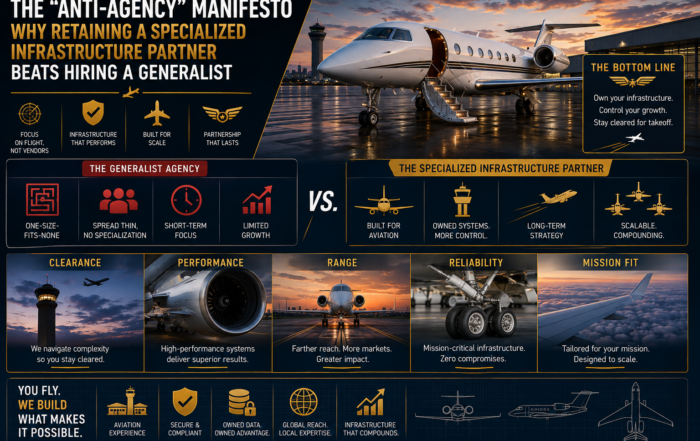
Vail Private Aviation Destination Guide
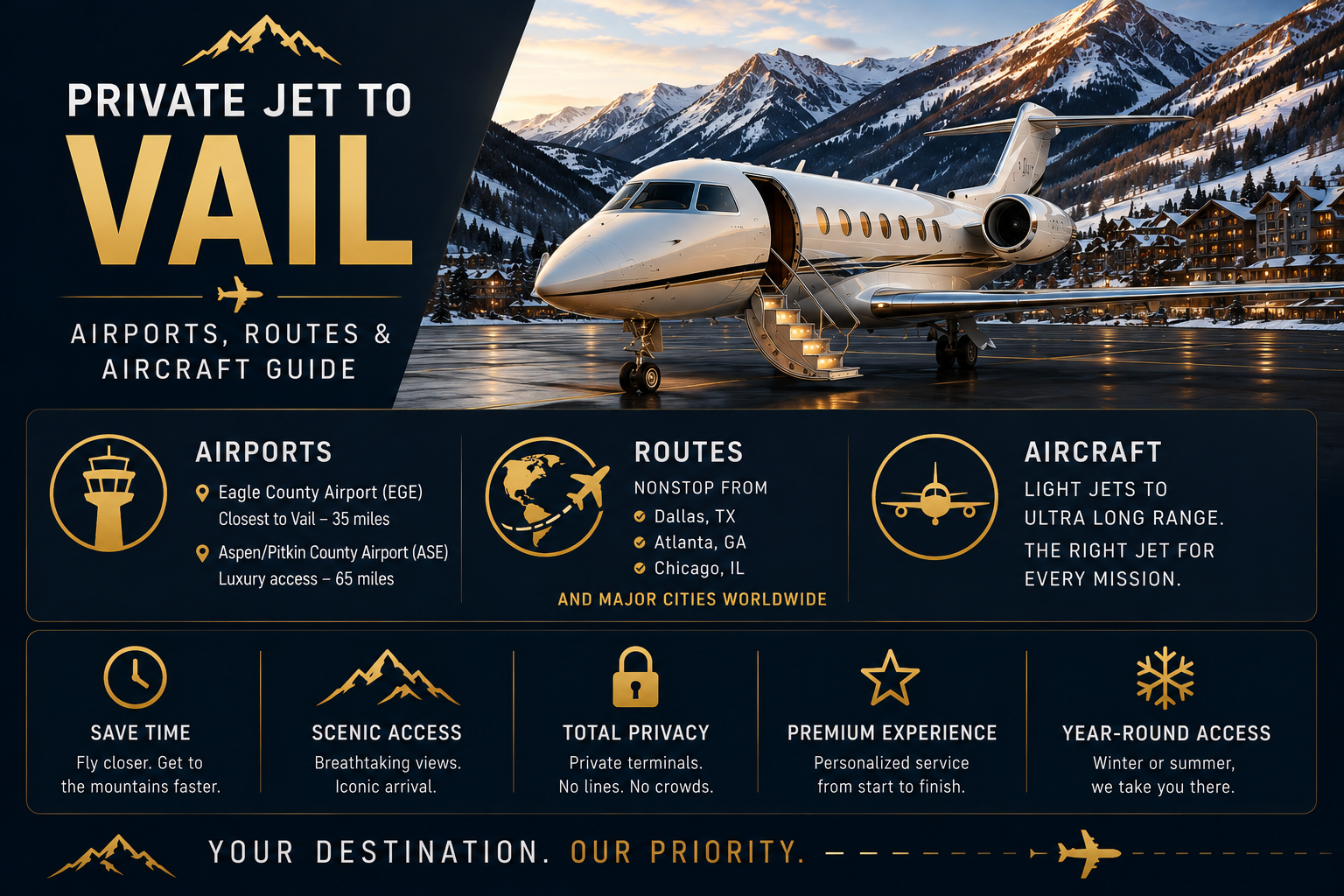
Private Jet to Vail: Airports, Routes and Aircraft Guide
Flying by private jet to Vail requires coordinated planning between the aircraft, departure market, mountain weather, passenger load, luggage, skis, arrival airport, ground transportation, road conditions, seasonal demand, and the traveler’s final destination within the Vail Valley.
Vail is one of the most valuable private aviation destinations in the Rocky Mountains. It attracts property owners, executives, family offices, investors, skiers, athletes, entertainers, wedding guests, corporate groups, international families, and leisure travelers throughout the year.
However, Vail does not have a private jet airport directly inside the resort village. Instead, many travelers use Eagle County Regional Airport, commonly identified as EGE, before completing the trip by vehicle to Vail, Beaver Creek, Avon, Edwards, Bachelor Gulch, Arrowhead, or another nearby community.
Therefore, the strongest private jet to Vail plan connects the flight with the ground journey. Although Eagle County Regional Airport provides the closest major airport access to the Vail Valley, weather, runway conditions, aircraft performance, parking, crew duty, road conditions, and passenger needs can still affect the mission.
Additionally, some travelers compare Eagle County Regional Airport with Aspen/Pitkin County Airport, Rifle Garfield County Airport, Centennial Airport, Denver International Airport, or another Colorado airport. Nevertheless, the closest airport by air does not always create the most reliable complete trip.
Consequently, travelers should evaluate the preferred airport, alternate airports, aircraft category, baggage, skis, winter vehicles, weather flexibility, and final ground destination before confirming the flight.
This guide connects Vail destination demand with Eagle County Regional Airport, suitable alternate airports, popular routes, aircraft selection, winter operations, summer travel, family planning, privacy, baggage, events, ground transportation, and related private aviation resources.
Is Vail a Major Private Jet Destination?
Direct Answer: Yes. Vail is a major private jet destination because it combines world-class skiing, luxury residences, family travel, executive retreats, summer recreation, major events, and limited direct commercial access. Most private travelers use Eagle County Regional Airport, although aircraft performance, weather, runway conditions, baggage, and road access still require careful planning.
A private jet to Vail may support a winter ski trip, an extended stay at a seasonal residence, a corporate retreat, a wedding, a property visit, a family vacation, or an event in Vail or Beaver Creek.
However, Vail should not be treated like a city with a private airport located a few minutes from downtown. Instead, travelers generally land at Eagle County Regional Airport and then continue through the Eagle Valley by vehicle.
The official Eagle County Regional Airport website describes EGE as the closest airport to Vail and the Eagle Valley. Therefore, EGE often provides the strongest balance between aircraft access and ground convenience for travelers headed to Vail, Avon, Beaver Creek, Edwards, Bachelor Gulch, and nearby communities.
Additionally, Eagle County Regional Airport supports both airline and general aviation operations. Its private aviation facilities can provide passenger handling, aircraft fueling, crew support, ground transportation coordination, baggage assistance, and other FBO services.
Nevertheless, airport proximity does not guarantee that every requested aircraft, schedule, or operating condition will work. Weather, runway condition, wind, visibility, aircraft load, crew duty, airport parking, and current notices may affect the mission.
Therefore, travelers should confirm the complete itinerary rather than requesting only a flight into “Vail.” The operator needs the exact passenger count, baggage, skis, pets, departure airport, preferred schedule, final address, return plan, and acceptable alternatives.
Vail private aviation begins with Eagle County Regional Airport, but it does not end there.
The strongest plan connects the aircraft arrival with winter-capable vehicles, luggage capacity, accurate road information, property access, alternate-airport options, and a communication process for changing mountain conditions.
Access, Time and Flexibility
Why Do Travelers Fly by Private Jet to Vail?
Direct Answer: Travelers fly by private jet to Vail to avoid commercial connections, control departure timing, reach Eagle County Regional Airport directly, carry skis and extended-stay baggage, travel with children or pets, improve privacy, and reduce the long ground journey that often follows arrival in Denver.
Commercial airline service into mountain markets can be seasonal, limited, or poorly aligned with the traveler’s departure city. Therefore, private aviation may provide a more direct option from smaller executive airports, secondary cities, seasonal residences, and markets without convenient nonstop airline service.
Moreover, travelers can select an aircraft around the actual group rather than adapting the passengers to an airline itinerary. Families can coordinate children, pets, staff, skis, food, accessibility needs, and extended-stay luggage within one planned mission.
Reach the Vail Valley More Directly
Landing at Eagle County Regional Airport can eliminate the much longer drive that often follows arrival at a Denver-area airport. Therefore, travelers may return several hours to the vacation or business trip.
Control the Departure Schedule
Travelers can coordinate departure around school, work, meetings, events, property access, weather windows, and the readiness of the complete passenger group.
Carry Ski and Seasonal Equipment
Skis, snowboards, boots, helmets, winter clothing, strollers, pet supplies, gifts, and extended-stay luggage often require more capacity than a standard airline itinerary provides.
Travel With Family and Pets
A private cabin can simplify travel with children, grandparents, pets, assistants, household staff, medical items, special food, and several generations traveling together.
Protect Privacy
Private terminals, controlled passenger lists, coordinated vehicles, and fewer public touchpoints can support executives, athletes, entertainers, family offices, and public figures.
Connect Multiple Seasonal Markets
Private aviation can connect Vail with Miami, Palm Beach, New York, Scottsdale, Dallas, Houston, Los Angeles, Chicago, Las Vegas, and other high-value markets.
However, private aviation does not eliminate mountain weather, airport limitations, road conditions, or operational requirements. Instead, it provides more tools for managing the complete journey.
For example, the operator may adjust the departure time, select another aircraft, add a fuel stop, recommend an alternate airport, or reposition ground transportation when conditions change.
Consequently, the real value comes from flexibility and control rather than an unrealistic promise that every requested itinerary will operate exactly as planned.
A Four-Season Private Aviation Market
What Creates Private Aviation Demand in Vail?
Direct Answer: Vail private aviation demand comes from skiing, seasonal residences, luxury real estate, family travel, executive retreats, weddings, summer recreation, cultural events, corporate gatherings, wellness travel, and frequent movement between the Vail Valley and major wealth markets.
Vail is best known as a winter resort destination. However, its private aviation market extends throughout the year because the region also attracts summer travelers, property owners, investors, business groups, event guests, athletes, wedding parties, and families seeking extended mountain stays.
Therefore, demand changes by season rather than disappearing outside ski season.
Ski and Holiday Travel
Winter demand includes skiing, snowboarding, school breaks, holiday stays, private residences, family gatherings, luxury hospitality, and travel from warmer seasonal markets.
Recreation and Mountain Escapes
Summer attracts golfers, cyclists, hikers, families, wedding guests, event travelers, property owners, and passengers seeking cooler mountain conditions.
Property Owners and Investors
Owners, buyers, developers, family offices, brokers, architects, managers, and advisors travel for acquisitions, projects, maintenance, and extended stays.
Executive Retreats and Meetings
Founders, boards, investors, leadership teams, advisors, and corporate groups may use Vail for retreats, strategy sessions, conferences, and relationship development.
Weddings and Private Gatherings
Wedding parties, sponsors, speakers, entertainers, planners, executives, and guests can create compressed arrival and departure demand.
Multi-Generational Travel
Families often travel with children, grandparents, household staff, pets, skis, sporting equipment, food, medical items, and extended-stay baggage.
Health and Outdoor Travel
Travelers may visit for training, recovery, recreation, wellness retreats, private medical support, or extended time away from major cities.
Connected Wealth Markets
Vail connects frequently with Miami, Palm Beach, New York, Scottsdale, Dallas, Houston, Los Angeles, Chicago, and other affluent markets.
Additionally, demand often concentrates around specific holiday periods and event weekends. Consequently, aircraft availability, FBO capacity, airport parking, catering, winter vehicles, property access, and preferred departure windows may tighten at the same time.
Therefore, travelers should begin planning earlier when the trip overlaps with Christmas, New Year’s, Presidents’ Day weekend, spring breaks, summer festivals, weddings, or other compressed periods.
Passenger and Buyer Profiles
Who Typically Flies Privately to Vail?
Direct Answer: Travelers flying privately to Vail include property owners, families, executives, family offices, investors, ski groups, athletes, entertainers, wedding parties, corporate teams, international travelers, and leisure passengers who value schedule control, privacy, baggage capacity, and direct access to the Vail Valley.
The traveler researching a private jet to Vail may not be the passenger. Executive assistants, family office staff, travel managers, property managers, household staff, security professionals, event planners, and concierge teams often coordinate the mission.
Therefore, the page must answer both passenger-experience questions and operational planning questions.
Seasonal and Extended-Stay Travelers
Property owners may travel with family members, staff, pets, food, gifts, sporting equipment, personal items, and several weeks of luggage.
Multi-Generational Groups
Families may include infants, young children, grandparents, assistants, caregivers, pets, strollers, child seats, skis, and medical requirements.
Leaders and Corporate Teams
Executives may travel for retreats, board meetings, investor gatherings, client events, private discussions, conferences, and relationship development.
Principals, Advisors and Staff
Family office missions may involve several residences, household staff, security, aircraft coordination, vehicles, property access, and complex seasonal schedules.
Sports and Training Travel
Athletes, coaches, representatives, and support teams may visit for skiing, training, events, recovery, appearances, or personal travel.
Artists and Public Figures
Performers, executives, media teams, and public figures may require privacy, irregular schedules, equipment handling, security, and discreet ground transportation.
Families, Guests and Vendors
Wedding travel may involve hosts, guests, planners, entertainers, production teams, photographers, security, and several coordinated arrival windows.
Global Travelers
International passengers may connect through a larger U.S. gateway before continuing privately to Eagle County Regional Airport or another Colorado airport.
Why Does the Passenger Profile Affect the Aircraft?
A smaller passenger group may still require a larger aircraft because skis, boots, helmets, winter clothing, pets, staff, and extended-stay luggage consume significant space.
Conversely, a larger group traveling lightly may fit a different aircraft category. Therefore, passenger count alone cannot determine the right cabin.
Additionally, every passenger and bag contributes to total aircraft weight. Consequently, the operator must consider payload, fuel, runway performance, weather, and baggage dimensions before confirming the mission.
Primary Vail Private Aviation Airport
What Should Travelers Know About Eagle County Regional Airport?
Direct Answer: Eagle County Regional Airport is the closest major airport to Vail and the Eagle Valley. It supports airline and private aviation operations while providing access to Vail, Beaver Creek, Avon, Edwards, Bachelor Gulch, and nearby communities. However, weather, aircraft performance, parking, runway conditions, and ground transportation still require review.
Eagle County Regional Airport, commonly identified by the airport code EGE, sits near Gypsum and Eagle, Colorado. Although travelers often call it the Vail airport or Eagle-Vail airport, the facility does not sit inside Vail itself.
Nevertheless, EGE provides valuable regional access because travelers can continue east through the Eagle Valley without crossing the entire I-70 mountain corridor from Denver.
The official FlyEGE website identifies Eagle County Regional Airport as the closest airport to Vail and the surrounding Eagle Valley. Additionally, the airport publishes official information about flights, airport services, general aviation, parking, and ground transportation.
Closest Major Airport to Vail
EGE provides practical access to Vail, Beaver Creek, Avon, Edwards, Arrowhead, Bachelor Gulch, Cordillera, and other Eagle Valley destinations.
General Aviation Services
The airport supports private and business aviation through FBO services that may include fueling, passenger handling, vehicles, catering, crew support, and baggage coordination.
Broad Mission Potential
EGE can support a broad range of private aircraft. However, the operator must still evaluate aircraft weight, runway performance, weather, parking, fuel, and current conditions.
Mountain Conditions Still Matter
Snow, wind, visibility, icing, thunderstorms, temperature, and rapidly changing mountain weather may affect airport operations and flight timing.
Peak Demand Can Compress Capacity
Winter holidays, ski weekends, weddings, and major summer events may tighten aircraft, parking, FBO services, vehicles, catering, and departure windows.
The Journey Continues After Landing
Passengers still need suitable vehicles, luggage capacity, winter road planning, property access, and communication with hotels, residences, or event venues.
Why Is EGE Often Preferred Over Denver?
Eagle County Regional Airport sits much closer to Vail than Denver International Airport. Therefore, travelers can avoid much of the longer I-70 mountain drive from the Front Range.
Additionally, arriving from the west generally avoids crossing Vail Pass before reaching Vail. Nevertheless, weather, traffic, road closures, accidents, and construction may still affect the final ground segment.
Consequently, travelers should review current road conditions even when landing at EGE.
Can Every Private Aircraft Use Eagle County Regional Airport?
No airport should be assumed suitable for every aircraft under every condition. The operator must review runway requirements, weight, weather, wind, temperature, fuel, aircraft dimensions, parking, crew qualifications, and current airport information.
Moreover, the return mission may produce different limitations because the aircraft may require more fuel for the outbound route. Therefore, the arrival and departure should be evaluated separately.
EGE usually creates the best geographic access to Vail, but the exact aircraft still requires approval.
Travelers should provide complete passenger, baggage, ski, pet, timing, and return-flight details before the operator confirms that a specific aircraft and itinerary fit the mission.
Private and Business Aviation at EGE
What Private Aviation Services Are Available at Eagle County Regional Airport?
Direct Answer: Private aviation services at Eagle County Regional Airport may include aircraft fueling, passenger handling, ground transportation coordination, baggage assistance, catering, crew facilities, aircraft parking, deicing, and other FBO support. However, travelers should confirm services, capacity, and reservations for the actual date.
Eagle County Regional Airport hosts private and general aviation operations alongside its passenger terminal. Therefore, charter operators, aircraft owners, corporate flight departments, management companies, crews, and private travelers can use dedicated aviation support services.
The airport’s official general aviation resource identifies Signature Aviation as the airport’s FBO provider. Additionally, the FBO publishes current location and service information through its official Eagle County Regional Airport location page.
Passenger Handling
Private terminal services may support passenger arrival, waiting areas, vehicle access, luggage coordination, refreshments, and communication with the flight crew.
Aircraft Fueling
The FBO can coordinate fuel for private aircraft. However, the operator should confirm fuel requirements, availability, timing, and any peak-period limitations.
Ground Transportation
Vehicles may be staged for Vail, Beaver Creek, Avon, Edwards, private residences, hotels, event venues, and other Eagle Valley destinations.
Aircraft Parking
Aircraft parking can become more limited during holidays and major travel periods. Therefore, operators should confirm parking and repositioning requirements early.
Crew Support
Crew facilities may include rest areas, transportation assistance, weather resources, flight-planning support, lodging coordination, and related services.
Winter Operations
Deicing, snow removal, ramp conditions, aircraft preparation, passenger timing, and crew duty can affect winter departures.
Why Should FBO Services Be Reserved Early?
Peak travel periods can produce several aircraft arrivals within similar windows. Consequently, parking, vehicles, catering, passenger services, deicing, and crew support may experience increased demand.
Therefore, the operator should coordinate directly with the FBO before the trip. Meanwhile, the passenger representative should confirm vehicles, luggage capacity, property access, and any special requests.
Furthermore, a late passenger arrival can affect more than the departure time. During winter, it may also affect deicing, crew duty, weather windows, road conditions, and the availability of the requested airport.
Aircraft Performance in the Mountains
How Do Elevation and Weather Affect a Private Jet to Vail?
Direct Answer: Although Eagle County Regional Airport sits at a lower elevation than Aspen, mountain weather, aircraft weight, runway conditions, fuel requirements, temperature, winds, passenger load, and climb performance still influence whether a private jet can safely complete the mission.
Many travelers assume that because Eagle County Regional Airport is easier to access than Aspen, every aircraft can operate there without limitations. However, mountain airports still require detailed performance calculations before departure.
Aircraft performance changes throughout the year. Winter weather may introduce snow, ice, deicing requirements, and braking-action considerations. Conversely, summer temperatures increase density altitude, which can reduce aircraft performance during departure.
Aircraft Weight
Passengers, luggage, skis, snowboards, pets, fuel, catering, and equipment all affect aircraft performance. Consequently, the actual payload often matters more than published seating capacity.
Mountain Elevation
Higher airport elevations reduce air density. Therefore, takeoff performance, climb capability, and allowable payload may differ from operations at lower-elevation airports.
Weather Conditions
Snow, wind, visibility, icing, thunderstorms, turbulence, and changing mountain conditions may affect runway availability and aircraft performance.
Fuel Planning
The departure often requires different fuel planning than the arrival. Consequently, the operator may recommend a fuel stop or different departure time depending on route and weather.
Runway Conditions
Snow, slush, standing water, ice, and braking reports all contribute to landing and departure calculations during mountain operations.
Crew Planning
Qualified crews review aircraft limitations, weather, airport procedures, alternate airports, and current NOTAMs before approving the mission.
Can Passengers or Baggage Affect Aircraft Selection?
Yes. Large ski groups, several weeks of luggage, household staff, pets, oversized sporting equipment, or additional fuel requirements may require a larger aircraft than passenger count alone would suggest.
Likewise, a larger aircraft does not automatically create the best solution. Instead, the operator evaluates runway performance, baggage volume, weather, payload, climb capability, and passenger comfort together.
The best aircraft for Vail is determined by the mission—not by cabin size.
Passenger count, baggage, skis, route length, weather, fuel, runway conditions, and mountain performance all influence the recommendation.
Mountain Weather Planning
How Does Weather Affect a Private Jet to Vail?
Direct Answer: Weather influences nearly every Vail private aviation mission. Snow, wind, visibility, mountain turbulence, runway conditions, thunderstorms, and icing may affect aircraft selection, departure timing, alternate airports, and ground transportation.
The Rocky Mountains produce rapidly changing weather throughout the year. Therefore, conditions that appear favorable during booking may change significantly before arrival.
Private aviation operators monitor airport observations, forecasts, NOTAMs, runway conditions, winds aloft, alternate airports, radar, and aircraft performance rather than relying on a standard weather application.
Snow Operations
Snowfall, runway contamination, aircraft deicing, reduced visibility, and winter driving conditions all affect mission planning.
Mountain Winds
Mountain waves, turbulence, crosswinds, and gusts can influence approach stability, runway selection, and passenger comfort.
Thunderstorms
Afternoon thunderstorms may delay departures, increase turbulence, and require modified routing during summer months.
Mountain Cloud Layers
Changing visibility and cloud ceilings may affect approaches, departures, and alternate-airport planning.
Density Altitude
Warm temperatures reduce aircraft performance even when the skies remain clear.
Prepared Backup Plans
Every mission should identify a practical alternate airport before departure rather than reacting after weather changes.
Should Travelers Expect Schedule Changes?
Yes. Safety decisions always take priority over schedule. Consequently, the operator may recommend an earlier departure, later arrival, alternate airport, fuel stop, or overnight stay.
Travelers who understand this flexibility typically experience smoother trips because alternate plans already exist before weather changes occur.
Current aviation weather information is available through the National Weather Service Aviation Weather Center, although passengers should always rely on their operator and crew for mission-specific decisions.
Backup Airport Planning
What Alternate Airports Should Travelers Consider Near Vail?
Direct Answer: Although Eagle County Regional Airport serves as the primary airport for Vail, travelers should also evaluate Aspen/Pitkin County Airport, Rifle Garfield County Airport, Centennial Airport, and Denver International Airport depending on weather, aircraft, parking, road conditions, and final destination.
The best alternate airport depends on much more than distance. Ground travel, winter weather, vehicle availability, traffic, road closures, and passenger priorities all contribute to the final decision.
Eagle County Regional Airport
The preferred airport for most Vail private aviation missions because it provides the shortest overall journey to the Vail Valley.
Aspen/Pitkin County Airport
Useful for selected itineraries when operational conditions and the traveler’s final destination support the route.
Rifle Garfield County Airport
May provide a practical alternative depending on weather, parking, aircraft capability, and road conditions.
Centennial Airport
Offers strong business aviation infrastructure near Denver, although travelers must complete a significantly longer drive.
Denver International Airport
Useful for airline connections, international arrivals, and certain operational situations despite the extended ground transfer.
Additional Airports
Operators may recommend another airport based on weather, aircraft, parking, fuel availability, or passenger priorities.
Why Is Ground Transportation Part of Airport Selection?
The aircraft only completes part of the journey. Therefore, road conditions, winter weather, vehicle availability, and total travel time often influence the best airport as much as runway considerations.
For example, a slightly longer flight to Eagle County Regional Airport may still reduce overall travel time compared with flying into Denver during heavy mountain traffic.
Comparing Airport Options
Which Airport Provides the Best Overall Experience for Vail?
Direct Answer: Eagle County Regional Airport usually provides the strongest balance between flight time and ground transportation for Vail. However, weather, aircraft capability, passenger priorities, and mountain conditions can make another airport the better overall choice.
| Airport | Primary Advantage | Main Consideration |
|---|---|---|
| Eagle County Regional Airport | Closest airport to Vail | Mountain weather still affects operations |
| Aspen/Pitkin County Airport | Useful for selected mountain itineraries | Operational complexity and different valley access |
| Rifle Garfield County Airport | Operational flexibility | Longer drive to Vail |
| Centennial Airport | Excellent business aviation infrastructure | Extended ground transportation |
| Denver International Airport | Large commercial and international gateway | Longest drive to Vail |
Rather than selecting an airport based only on distance, travelers should evaluate the complete mission—including aircraft suitability, road conditions, weather, timing, and the final destination within the Vail Valley.
Ground Logistics
How Should Ground Transportation Be Planned for Vail?
Direct Answer: Ground transportation planning should include winter-capable vehicles, skis, luggage, children, pets, hotel access, road conditions, alternate airports, and communication between drivers, property managers, and the flight crew.
Unlike many metropolitan destinations, Vail requires thoughtful coordination after landing. Consequently, vehicle planning should occur before the aircraft departs.
Winter SUVs
Select vehicles that comfortably transport passengers, luggage, skis, and pets while remaining suitable for mountain roads.
Hotel Coordination
Communicate arrival timing with resorts, residences, concierge teams, and property managers before landing.
Alternate Airport Planning
Drivers should understand backup airports so transportation continues smoothly if the destination changes.
Oversized Equipment
Confirm ski bags, bicycles, golf clubs, strollers, and other oversized equipment before selecting vehicles.
Road Conditions
Monitor weather, construction, closures, and I-70 traffic throughout the travel day.
Communication
Maintain direct contact between drivers, the passenger representative, and the operator if weather or timing changes.
I-70 and Mountain Road Planning
How Do I-70 and Mountain Road Conditions Affect a Private Jet to Vail?
Direct Answer: I-70 traffic, snow, accidents, construction, chain restrictions, closures, holiday demand, and mountain weather can significantly affect the final drive to Vail. Therefore, travelers should monitor road conditions throughout the travel day and prepare alternate routes, vehicles, timing, and overnight options when necessary.
Landing closer to Vail can reduce the overall ground journey. However, the final transfer still depends on mountain road conditions, especially during winter storms, holiday weekends, major events, and peak ski periods.
Therefore, the ground team should not assume that a normal drive time will remain accurate throughout the day. Instead, the driver, passenger representative, property manager, and flight team should maintain clear communication when weather or traffic changes.
Snow and Ice
Snowfall, blowing snow, ice, reduced visibility, plowing, and traffic incidents may slow the drive or temporarily close parts of the mountain corridor.
Holiday and Weekend Congestion
Friday arrivals, Sunday departures, holiday periods, school breaks, and major events can create concentrated vehicle traffic throughout the Vail Valley.
Unexpected Delays
Accidents, avalanche control, weather, construction, disabled vehicles, and emergency response may create closures or extended delays.
Mountain-Capable Transportation
Vehicles should provide suitable tires, luggage capacity, experienced drivers, child seating, pet accommodations, and enough space for ski equipment.
Coordinate Every Stakeholder
Drivers, property staff, hotel teams, security, assistants, and flight operators should receive timely updates when the airport or arrival time changes.
Prepare an Overnight Option
Severe weather or road closures may justify an overnight stay near the airport rather than an unsafe or excessively long mountain transfer.
What Should Travelers Review Before Landing?
- Current road conditions between the airport and Vail
- Snowfall, visibility, and expected storm timing
- Traffic near Avon, Vail, Beaver Creek, and resort exits
- Vehicle size and winter capability
- Ski, snowboard, luggage, and pet capacity
- Child seats and accessibility requirements
- Hotel, residence, or resort arrival procedures
- Alternate-airport transportation plans
- Driver contact information
- Overnight options if roads become unsafe
Travelers can review current public highway information through the official Colorado Department of Transportation COtrip resource. However, road conditions can change quickly, so the transportation provider should also monitor conditions directly.
The private aviation mission does not end when the aircraft lands.
The complete trip succeeds only when the passenger reaches Vail safely, efficiently, and with the full group, luggage, skis, pets, and support team properly coordinated.
Aircraft Matching for Vail Missions
Which Aircraft Work Best for a Private Jet to Vail?
Direct Answer: Aircraft commonly considered for Vail include turboprops, light jets, midsize jets, super-midsize aircraft, large-cabin jets, and ultra-long-range aircraft. However, the correct choice depends on route length, runway performance, passengers, skis, luggage, pets, weather, fuel, and expected operating conditions.
Eagle County Regional Airport supports a broad range of business aircraft. Nevertheless, the aircraft should be selected around the actual mission rather than a generic seating chart.
For example, a small group traveling from Scottsdale may fit a light jet. Meanwhile, a family traveling from Miami or New York with skis, pets, household staff, and extended-stay luggage may require a larger cabin and more baggage capacity.
King Air 350
The King Air 350 may support regional Vail missions for smaller groups that value practical airport access, cabin flexibility, and efficient short-range travel.
Pilatus PC-24
The Pilatus PC-24 may appeal to travelers who value accessible baggage, cabin flexibility, regional capability, and useful performance across varied missions.
Phenom 300E
The Phenom 300E may support efficient western and regional missions for smaller groups with moderate baggage and ski requirements.
Citation Latitude
The Citation Latitude may fit domestic business and leisure missions where passengers value a stand-up cabin, practical range, and useful baggage capacity.
Challenger 3500
The Challenger 3500 may support transcontinental routes, larger groups, business travel, family missions, and more substantial luggage requirements.
Praetor 600
The Praetor 600 may suit longer domestic and selected international missions where range, cabin comfort, skis, luggage, and efficiency matter.
Citation X
The Citation X may support longer domestic routes where speed and time savings matter. However, cabin fit, baggage, performance, and fuel still require mission review.
Gulfstream G550
The Gulfstream G550 may support large groups, international travel, extended baggage, working cabins, sleeping arrangements, and long-range missions.
Gulfstream G650
The Gulfstream G650 may support high-speed, long-range travel from domestic and international wealth markets. However, the actual aircraft and mission must remain operationally suitable.
What Aircraft Factors Matter Most?
- Departure city and route distance
- Passenger and staff count
- Skis, snowboards, boots, and baggage
- Pets, children, and accessibility needs
- Runway and climb performance
- Temperature, wind, and weather
- Fuel and alternate-airport requirements
- Cabin, working, and sleeping preferences
- Aircraft parking and FBO availability
- Return-flight baggage and fuel requirements
The return flight should receive a separate performance review. For example, the aircraft may need more fuel for the outbound route from Vail, while passengers may add luggage, gifts, or equipment during the stay.
Therefore, the aircraft that works comfortably on arrival may require a fuel stop, lower payload, earlier departure, or another operational adjustment on departure.
Published range and maximum seating do not confirm a Vail mission.
The operator must evaluate the specific aircraft, route, passengers, baggage, skis, weather, runway conditions, fuel, and required safety margins.
High-Value Vail Corridors
What Are the Most Popular Routes for a Private Jet to Vail?
Direct Answer: Popular private jet routes to Vail connect Eagle County Regional Airport with Miami, Palm Beach, Scottsdale, Dallas, Houston, Los Angeles, New York, Chicago, and Las Vegas. However, each route requires aircraft, baggage, weather, fuel, runway, and ground-transportation review.
Vail route demand follows winter skiing, seasonal residences, family movement, luxury real estate, corporate retreats, weddings, events, and summer recreation.
Therefore, route patterns change throughout the year. Winter demand often rises from warmer southern markets, while summer demand expands across business, family, event, and outdoor-travel segments.
Miami to Vail
This corridor connects South Florida residences, family offices, yacht travelers, executives, and winter leisure passengers with the Vail Valley.
Palm Beach to Vail
This route may serve seasonal residents, family offices, investors, property owners, and winter travelers connecting two high-value markets.
Scottsdale to Vail
The Scottsdale-to-Vail corridor connects desert residences, golf markets, family travel, executives, and seasonal property owners with Colorado.
Dallas to Vail
Dallas travelers may include executives, families, investors, real estate owners, ski groups, and passengers connected to Texas business markets.
Houston to Vail
This corridor may serve energy executives, families, investors, ski travelers, corporate groups, and property owners.
Los Angeles to Vail
The route supports entertainment, athletes, executives, family travel, weddings, events, property owners, and shorter mountain stays.
New York to Vail
This longer route may involve larger aircraft, ski equipment, family groups, executives, investors, extended stays, and substantial baggage.
Chicago to Vail
This route supports executives, families, investors, winter travelers, wedding guests, property owners, and corporate retreats.
Las Vegas to Vail
This western route may support entertainment, events, executive travel, leisure, private gatherings, and passengers connecting resort markets.
Why Should Each Direction Have Its Own Route Page?
The arrival and return missions may require different fuel, baggage, winds, departure timing, weather, ground transportation, and passenger coordination.
Therefore, Miami-to-Vail and Vail-to-Miami can answer different buyer questions even though the same cities remain involved.
Additionally, route direction affects airport choice. A traveler may depart from one executive airport but return through another based on residence location, aircraft positioning, schedule, weather, or onward travel.
Winter and Ski Travel
What Should Travelers Know About a Private Jet to Vail in Winter?
Direct Answer: Winter private jet travel to Vail requires earlier planning for snow, deicing, runway conditions, skis, boots, luggage, aircraft parking, winter vehicles, road conditions, peak demand, alternate airports, and possible schedule changes.
Winter creates the strongest and most concentrated private aviation demand in the Vail Valley. At the same time, it introduces weather, runway, road, and baggage complications that can affect the entire mission.
Therefore, travelers should plan the aircraft, airport, vehicles, alternate airport, ski equipment, property arrival, and return flight together.
Runway and Airport Conditions
Snow accumulation, runway treatment, plowing, braking action, ramp conditions, and visibility may affect arrival and departure timing.
Aircraft Preparation
Aircraft may require deicing or anti-icing before departure. Consequently, weather, fluid availability, holdover times, crew duty, and passenger timing matter.
Holiday Compression
Christmas, New Year’s, Presidents’ Day, school breaks, and major ski weekends can tighten aircraft, parking, catering, vehicles, and FBO services.
Skis and Winter Equipment
Ski bags, snowboards, boots, helmets, coats, pet supplies, strollers, and extended-stay luggage may require a larger cabin and several vehicles.
Mountain Ground Conditions
Snow, closures, traffic, accidents, and reduced visibility may extend the drive from EGE or another airport.
Build Schedule Flexibility
Earlier daytime travel may create more operational margin than aggressive evening arrivals during changing winter weather.
How Early Should Winter Travelers Begin Planning?
Travelers should begin planning as soon as the dates become reasonably clear. However, holidays, event weekends, large groups, pets, extensive baggage, and preferred aircraft categories often justify earlier booking.
Moreover, early planning provides more time to reserve winter-capable vehicles, verify ski capacity, coordinate property staff, confirm airport parking, and prepare alternate-airport transportation.
- Provide accurate ski and snowboard dimensions.
- Confirm the number of standard bags and boot bags.
- Reserve winter-capable vehicles early.
- Coordinate the preferred and alternate airports.
- Prepare for deicing delays.
- Monitor mountain weather and road conditions.
- Keep essential items accessible during the flight.
- Confirm property or hotel arrival procedures.
- Review the return flight before departure.
- Maintain communication throughout the travel day.
Summer Mountain Travel
Why Do Travelers Fly Privately to Vail in Summer?
Direct Answer: Summer travelers fly privately to Vail for cooler weather, golf, hiking, cycling, weddings, festivals, family stays, executive retreats, property visits, wellness travel, dining, and outdoor recreation. However, thunderstorms, warm temperatures, events, baggage, and ground transportation still affect the mission.
Vail operates as a four-season destination. Therefore, summer private aviation demand may include property owners, executives, event guests, wedding parties, families, athletes, investors, and travelers seeking relief from hotter markets.
However, summer does not remove operational complexity. Warm temperatures can reduce aircraft performance, while afternoon thunderstorms and mountain weather may affect timing and routing.
Cooler Mountain Climate
Travelers may leave hotter cities for Vail’s mountain environment, outdoor recreation, private residences, dining, and extended stays.
Golf and Outdoor Recreation
Golf clubs, bicycles, fishing equipment, hiking gear, and other sporting items may affect aircraft and vehicle selection.
Weddings and Events
Wedding parties, planners, entertainers, guests, photographers, and vendors may create concentrated arrival and departure demand.
Warm-Weather Performance
Higher temperatures may reduce aircraft performance at elevation. Therefore, the operator may recommend an earlier departure or payload adjustment.
Afternoon Thunderstorms
Storms, turbulence, lightning, gusts, and changing mountain weather may affect arrival and departure timing.
Extended Family Stays
Families may travel with pets, staff, work materials, sporting equipment, children, food, and several weeks of luggage.
Consequently, travelers should provide complete baggage and equipment details even during clear summer weather. Additionally, early-day flight windows may create more scheduling flexibility during thunderstorm season.
Vail Event Travel
Which Vail Events Increase Private Aviation Demand?
Direct Answer: Vail private aviation demand may rise around winter holidays, ski weekends, weddings, music events, culinary gatherings, cultural festivals, corporate retreats, conferences, private celebrations, nonprofit events, and major summer weekends.
Events compress aircraft, airport parking, FBO services, catering, hotels, private residences, ground vehicles, restaurants, and departure windows into specific periods.
Therefore, travelers should coordinate the complete itinerary rather than treating the flight as an isolated reservation.
Holiday and Ski Weekends
Christmas, New Year’s, school breaks, Presidents’ Day, and major ski weekends can create intense aircraft and airport demand.
Destination Celebrations
Families, guests, planners, entertainers, photographers, vendors, and security teams may require coordinated arrival and departure windows.
Performances and Festivals
Artists, patrons, sponsors, executives, media, and guests may require privacy, equipment handling, irregular schedules, and dedicated transportation.
Conferences and Retreats
Founders, executives, boards, investors, advisors, speakers, and corporate teams may travel for meetings and private gatherings.
Culinary Events
Chefs, sponsors, hospitality executives, media, guests, and private groups may create concentrated summer demand.
Celebrations and Fundraisers
Hosts, donors, guests, speakers, entertainers, and production teams may require discreet handling and schedule flexibility.
Why Should the Departure Be Planned Before the Event?
Events often run late. Additionally, passengers may need to return to a residence, change, collect baggage, travel to the airport, complete deicing, and board before crew or weather limitations become relevant.
Therefore, the travel team should establish the target departure, latest acceptable departure, overnight option, alternate airport, and communication plan before the event begins.
Family and Pet Travel
What Should Families Know Before Booking a Private Jet to Vail?
Direct Answer: Families should provide accurate details about adults, children, infants, pets, staff, skis, luggage, food, medical needs, accessibility, vehicles, property access, and international documents before selecting a private jet to Vail.
Family travel to Vail often includes several generations, pets, household staff, ski equipment, winter clothing, strollers, child seats, food, gifts, medication, and extended-stay luggage.
Therefore, the aircraft recommendation must account for the full passenger profile and all belongings.
Family Mission Questions
- How many adults, children, infants, and staff will travel?
- Will any passenger require accessibility support?
- Will pets travel inside the cabin?
- How many skis, snowboards, boots, and bags are included?
- Are strollers, child seats, or medical items required?
- Does the group need specific food or refrigeration?
- Which residence, hotel, or resort is the final destination?
- What alternate airport is acceptable?
- Can the vehicles support the entire group and baggage?
- Will the passengers continue internationally?
Why Accurate Information Matters
Every passenger, pet carrier, ski bag, suitcase, and supply contributes to aircraft weight and baggage volume.
Therefore, incomplete information may create an aircraft recommendation that no longer works when the full group arrives.
Additionally, young children, pets, grandparents, and medical needs may make a long alternate-airport transfer more difficult. Consequently, the ground plan should include food, medication, warm clothing, rest stops, and sufficient vehicle space.
Can Pets Travel in the Cabin?
Many private aviation arrangements allow pets inside the cabin. However, aircraft size, operator policy, passenger allergies, pet behavior, documentation, health needs, and ground transportation should be confirmed before travel.
Moreover, travelers with pet health concerns should consult an appropriate veterinarian before mountain travel.
Skis, Snowboards and Extended-Stay Bags
How Do Skis and Baggage Affect a Private Jet to Vail?
Direct Answer: Skis, snowboards, boots, helmets, winter clothing, strollers, pet carriers, gifts, and extended-stay bags can significantly affect aircraft and vehicle selection. Therefore, travelers should provide accurate quantities, dimensions, photos, and approximate weights before confirming the aircraft.
Ski and snowboard bags create unique loading challenges because they may be long, rigid, and difficult to fit through certain baggage doors.
Therefore, total baggage volume does not tell the complete story. The operator should verify compartment dimensions, baggage-door size, weight, and loading access.
Compartment Dimensions
Long ski and snowboard bags may not fit through every baggage door, even when the aircraft appears to provide enough total storage volume.
Weight and Balance
Passengers, skis, bags, pets, food, equipment, and fuel must remain within the aircraft’s weight and balance limits.
Cabin Storage
Some items may travel inside the cabin when permitted. However, all items must remain secured and cannot block exits or create hazards.
Vehicle Capacity
The ground vehicles must carry the same passengers, bags, skis, pets, child seats, and equipment after landing.
Rental Equipment
Renting equipment locally may reduce aircraft and vehicle requirements. However, many travelers prefer personal equipment and should plan accordingly.
Return-Flight Growth
Shopping, gifts, property items, or additional equipment may increase the baggage load on departure.
What Baggage Details Should Travelers Provide?
- Number of standard checked bags
- Number and length of ski bags
- Number of snowboard bags
- Boot bags and helmet cases
- Strollers and child seats
- Pet carriers and supplies
- Medical or accessibility equipment
- Golf clubs, bicycles, or other sporting equipment
- Food, gifts, or refrigerated items
- Expected additional return-flight baggage
Photos and measurements can prevent a late aircraft change.
When baggage is unusual, travelers should provide photos, dimensions, quantities, and approximate weights so the operator can verify both aircraft and vehicle capacity.
Executive and Corporate Missions
How Does a Private Jet to Vail Support Business Travel?
Direct Answer: A private jet to Vail can support executive retreats, board meetings, investor gatherings, conferences, client events, property visits, and private strategy sessions by providing schedule control, confidential cabin space, group travel, and direct regional access.
Vail attracts executives, founders, investors, family offices, boards, advisors, corporate groups, and private organizations throughout the year.
Therefore, private aviation demand extends beyond leisure and ski travel. The aircraft may function as a working environment before and after the event while also allowing several leaders to travel together.
Executive Retreats
Leadership teams may use Vail for planning, strategy, relationship building, private discussion, and focused time away from daily operations.
Board Meetings
Direct group travel can help directors, executives, advisors, and guests reach the destination within a coordinated schedule.
Investor Events
Private aviation may support founders, investors, family offices, sponsors, advisors, and transaction teams attending confidential gatherings.
Corporate Conferences
Speakers, leadership teams, sponsors, clients, and event personnel may require coordinated arrival windows, baggage, and ground transportation.
Property and Development
Owners, developers, architects, investors, brokers, managers, and advisors may travel for site visits, acquisitions, projects, and portfolio oversight.
Multi-City Travel
Private aviation may connect Vail with Denver, Aspen, Dallas, New York, Miami, Scottsdale, Los Angeles, or another business market within one itinerary.
However, the value should be measured against the complete mission rather than only the charter price. Several executives may work during the flight, avoid overnight stays, reduce connections, and return home sooner.
Consequently, private aviation may protect valuable leadership time while also supporting confidentiality and schedule flexibility.
Privacy, Discretion and Security
How Can a Private Jet to Vail Support Privacy?
Direct Answer: A private jet to Vail can support privacy through controlled passenger lists, private terminal handling, limited itinerary distribution, discreet vehicles, coordinated property access, fewer public touchpoints, and direct communication between the operator and passenger representative.
Vail attracts public figures, athletes, entertainers, executives, investors, family offices, and travelers involved in sensitive personal or business matters.
Therefore, privacy may influence the airport, FBO, arrival time, vehicle plan, hotel or residence access, security team, event entrance, and communication process.
Limit Itinerary Distribution
Passenger names, aircraft details, flight times, vehicles, residences, events, and contact information should remain limited to necessary personnel.
Control the Arrival
Driver identification, luggage transfer, property access, security gates, and passenger pickup should be confirmed before landing.
Prepare the Final Destination
Property managers, household staff, hotels, resorts, and security personnel may need arrival details without receiving unnecessary flight information.
Reduce Predictable Exposure
Weddings, festivals, conferences, and holiday weekends may increase media, crowds, traffic, and public visibility.
Plan for the Passenger Profile
Security teams may require advance airport coordination, vehicle access, site review, alternate-airport plans, and communication with local support.
Protect the Broader Itinerary
Family office travel may involve several passengers, residences, staff, aircraft, vehicles, events, and onward destinations.
However, private aviation does not guarantee anonymity. Regulated flight operations, airport access, passenger identification, and authorized records still remain part of the mission.
Consequently, travelers with elevated security concerns should coordinate with qualified aviation, security, legal, and risk-management professionals.
Vail Mission Planning Process
How Should Travelers Plan a Private Jet to Vail?
Direct Answer: Travelers should plan a private jet to Vail by defining the itinerary, passengers, skis, baggage, pets, aircraft needs, preferred schedule, Eagle County arrival, alternate airport, vehicles, road conditions, property access, privacy, and return-flight requirements before comparing aircraft.
1. Define the Complete Itinerary
Confirm the departure city, travel dates, preferred times, final Vail Valley destination, return plan, onward travel, and additional cities.
2. Confirm the Passenger Profile
List adults, children, infants, staff, security personnel, pets, accessibility needs, food preferences, and medical considerations.
3. Measure Skis and Baggage
Provide quantities, dimensions, photos, weights, ski bags, snowboard bags, boots, strollers, child seats, pet carriers, and oversized items.
4. Evaluate the Aircraft
Compare cabin layout, baggage capacity, route range, runway performance, fuel, weather, pets, passenger comfort, and return-flight needs.
5. Confirm Eagle County Regional Airport
Review whether EGE can support the specific aircraft, schedule, crew, load, weather, parking, and expected operating conditions.
6. Build the Alternate Plan
Select a realistic alternate airport, estimate the ground transfer, reserve vehicles, and coordinate hotel or residence changes.
7. Coordinate Ground Transportation
Arrange winter-capable vehicles, ski capacity, child seats, pet accommodations, drivers, luggage support, property access, and security.
8. Prepare for Operational Changes
Weather, runway conditions, deicing, crew duty, passenger delays, parking, road closures, and traffic may alter the plan.
Why Should the Return Flight Be Reviewed Before the Trip?
The return flight may require different fuel, baggage, weather, departure timing, and runway performance. Additionally, travelers may add shopping, gifts, property items, or equipment during the stay.
Therefore, the operator should review the expected return load before the aircraft is confirmed.
Better early information creates a more reliable Vail mission.
Accurate passengers, skis, luggage, pets, timing, airport preferences, road plans, and return details help the operator recommend the correct aircraft and build realistic alternatives.
Vail Private Aviation Questions
Frequently Asked Questions About Booking a Private Jet to Vail
Direct Answer: The best private jet to Vail depends on the departure city, passengers, skis, luggage, pets, aircraft performance, weather, Eagle County Regional Airport availability, road conditions, ground transportation, and the return itinerary. Therefore, travelers should evaluate the complete mountain mission rather than selecting an aircraft from seating or range alone.
What airport do private jets use for Vail?
Most travelers flying privately to Vail use Eagle County Regional Airport, commonly identified as EGE. It provides the closest major airport access to Vail, Beaver Creek, Avon, Edwards, Bachelor Gulch, and nearby Eagle Valley communities. However, weather, aircraft performance, parking, runway conditions, or road conditions may make another airport more practical.
How far is Eagle County Regional Airport from Vail?
The drive varies according to the final destination, traffic, weather, road conditions, construction, and seasonal demand. Therefore, travelers should review current drive estimates for the planned arrival period rather than relying only on mileage or a normal-weather estimate.
Is Eagle County Regional Airport the same as the Vail airport?
Travelers often call Eagle County Regional Airport the Vail airport or Eagle-Vail airport because it provides the closest major airport access to Vail. However, the airport is located near Gypsum and Eagle rather than inside Vail itself.
Can all private jets fly into Eagle County Regional Airport?
No airport should be assumed suitable for every aircraft under every condition. The operator must evaluate runway performance, aircraft weight, weather, temperature, wind, fuel, passengers, baggage, skis, parking, crew requirements, and current airport conditions before confirming the mission.
What is the best alternate airport for Vail?
The best alternate depends on the aircraft, weather, passenger priorities, road conditions, parking, fuel, and final destination. Aspen/Pitkin County Airport, Rifle Garfield County Airport, Centennial Airport, Denver International Airport, or another regional airport may become suitable under different circumstances.
Can a private jet fly nonstop from Miami to Vail?
Many midsize, super-midsize, and large-cabin aircraft may support Miami-to-Vail travel under suitable conditions. However, winds, passengers, skis, baggage, fuel reserves, weather, aircraft performance, and the exact departure airport may affect nonstop feasibility.
Can a light jet fly to Vail?
Some light jets may support selected regional and domestic Vail missions. Nevertheless, route distance, passenger weight, skis, luggage, fuel, temperature, weather, runway conditions, and the specific aircraft determine whether the mission remains practical.
Which private jets are commonly used for Vail?
Travelers may use turboprops, light jets, midsize jets, super-midsize aircraft, large-cabin jets, and ultra-long-range aircraft. However, the correct choice depends on route length, passengers, baggage, skis, pets, fuel, runway performance, weather, and cabin preferences.
Can a Gulfstream G650 fly into Eagle County Regional Airport?
A Gulfstream G650 may support certain Eagle County Regional Airport missions. However, the specific aircraft, weight, weather, runway conditions, fuel, passengers, baggage, parking, crew procedures, and current operating information determine whether the flight remains suitable.
Can passengers bring skis and snowboards on a private jet to Vail?
Yes. Many private aircraft can carry skis and snowboards. However, travelers should provide the number, length, dimensions, and approximate weight of each bag because baggage-door dimensions and compartment shape may affect aircraft selection.
Can pets travel in the cabin on a private jet to Vail?
Many private aviation arrangements allow pets inside the cabin. However, the operator’s policy, aircraft size, passenger needs, pet behavior, documentation, health concerns, and ground transportation should be confirmed before travel.
When is private aviation demand highest in Vail?
Demand often rises during Christmas, New Year’s, Presidents’ Day weekend, school breaks, peak ski periods, summer weddings, festivals, corporate retreats, and major seasonal weekends. Consequently, aircraft, parking, FBO services, catering, and winter vehicles may become limited.
How early should travelers book a private jet to Vail?
Travelers should begin planning when the schedule becomes reasonably clear. However, winter holidays, major events, large groups, extensive baggage, pets, preferred aircraft categories, and international travel often justify earlier coordination.
What happens if weather prevents landing at Eagle County Regional Airport?
The crew may delay, divert, hold, return, or use a planned alternate airport. Therefore, travelers should confirm the alternate-airport strategy, ground vehicles, estimated drive, property communication, luggage plan, and overnight options before departure.
Does flying privately always save time when traveling to Vail?
Private aviation can reduce airline connections, terminal delays, baggage waits, and the long drive from Denver. However, weather, runway limitations, deicing, an alternate-airport diversion, road closures, or poor ground planning may reduce part of that time advantage.
Turn Vail Destination Demand Into a Compounding Digital Asset
Direct Answer: IMR builds private aviation authority systems that connect destinations, airports, routes, aircraft, buyer questions, SEO, GEO, AI search, paid media, conversion paths, and CRM tracking into one owned Digital Real Estate platform designed to attract and qualify demand over time.
This Vail destination guide demonstrates how one high-value mountain market can support an interconnected cluster of airport pages, alternate-airport guides, aircraft resources, directional routes, winter travel content, ski baggage pages, family guides, event content, business travel resources, privacy pages, and buyer questions.
Therefore, the opportunity extends beyond ranking one page for “private jet to Vail.” Instead, a complete authority system can meet travelers while they compare Eagle County Regional Airport with alternatives, research aircraft, evaluate road conditions, plan skis and luggage, organize vehicles, and prepare the full mountain mission.
Moreover, every connected page strengthens the broader private aviation ecosystem. As the network expands, search engines and AI systems receive clearer relationships between Vail, Eagle County Regional Airport, aircraft categories, routes, winter operations, passenger profiles, ground transportation, and buying intent.
IMR can build the system from the first destination cluster through a complete 100-, 500-, or 1,000-page Digital Real Estate platform designed around the destinations, airports, routes, aircraft, services, and clients a private aviation company wants to attract.