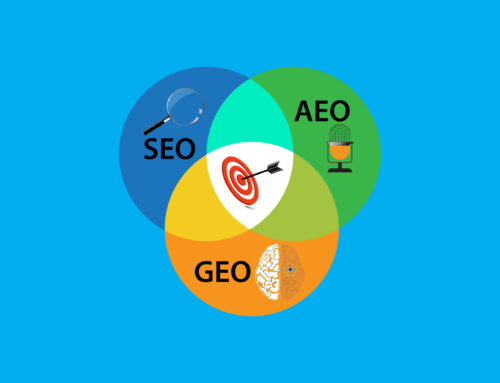
PPC vs. SEO vs. GEO: Where Should You Invest Your First $10,000?
You decide how to split your first $10,000 between PPC, SEO, and GEO by matching each channel to a clear goal: speed, stability, and AI-era visibility. Because PPC buys instant traffic, SEO builds long-term authority, and GEO positions your brand for AI Overviews and generative answers, you gain different advantages from each one. So, when you understand how every channel helps your business, you stop guessing and you start investing with a simple, confident plan.
In this guide, you will see how PPC, SEO, and GEO work, how they support different stages of growth, and how a small business can invest a first $10,000 budget in a smart, balanced way. As you read, you can note which sections match your current situation and adjust the mix step by step.
What Do PPC, SEO, and GEO Actually Do for Your Business?
PPC brings visitors quickly, SEO builds organic demand over time, and GEO helps your brand show up inside AI-generated answers. Because each channel plays a different role, you need all three working together if you want both short-term and long-term growth.
- PPC (Pay-Per-Click): You pay for every click to get immediate visibility and leads, often within days.
- SEO (Search Engine Optimization): You optimize content and site structure so you earn free organic traffic over months.
- GEO (Generative Engine Optimization): You structure content and entities so AI systems like Google AI Overviews and ChatGPT trust and cite your brand.
Because your first $10,000 sets your foundation, you want each dollar to carry clear responsibility. Some dollars create speed, some dollars build assets, and some dollars secure your place in AI search. As a result, your budget works like a system instead of a set of random tests.
For deeper channel breakdowns, you can study PPC basics in the Google Ads help center, SEO fundamentals in the Google SEO starter guide, and GEO concepts in our Generative Engine Optimization resources.
How Should You Think About PPC vs. SEO vs. GEO for a First $10,000 Budget?
You should treat your first $10,000 as a launch pad, not a lottery ticket. So, you want quick proof that your offer converts, and you also want long-term assets that keep working after the money runs out. In addition, you want early signals to AI systems that your brand looks credible and structured.
Because of that, a smart plan usually:
- Uses PPC for fast data and early leads.
- Uses SEO for compounding organic growth.
- Uses GEO to prepare content and schema for AI Overviews and assistants.
So, the real question becomes simple: how much should you give each channel right now, and how do you adjust over time as you see results?
What Are the Strengths and Weaknesses of PPC for a $10,000 Budget?
PPC gives you speed, control, and clear tracking, but it stops the moment you stop paying. Because of this, when you invest part of your $10,000 in PPC, you buy data and leads, not durable visibility. Still, those first numbers matter a lot.
PPC strengths:
- Fast launch and instant traffic, often within days.
- Precise control over keywords, locations, and daily spend.
- Detailed data on cost per click and cost per lead.
- Strong fit for time-sensitive or high-intent searches.
PPC limitations:
- No long-term traffic if you pause ads.
- Rising click costs in competitive markets.
- Weak payoff if your landing pages and offers stay untested.
Because PPC gives you rapid feedback, you can use it to test offers, headlines, and audiences before you lock in your longer-term SEO and GEO strategy. Then, you can use those learnings to shape your content and GEO work. If you want help with this, you can review our PPC Management Services.
What Are the Strengths and Weaknesses of SEO for a $10,000 Budget?
SEO turns part of your $10,000 into a long-term asset that keeps sending buyers to your site without additional click costs. Instead of buying every visit, you invest in content, structure, and authority. Over time, this steady effort builds compounding gains.
SEO strengths:
- Traffic continues after the budget period ends, so the value keeps stacking.
- Higher trust from users who prefer organic results.
- Better support for all other channels, including PPC, email, and social.
- Lower long-term cost per lead once pages rank reliably.
SEO limitations:
- Slower feedback loop than PPC, especially early on.
- Requires consistent content and technical work, not just one quick project.
- Needs time for indexing, ranking, and iteration before full impact shows.
When you invest part of your first $10,000 in SEO, you fund content and technical improvements that support growth for the next year and beyond. As a result, your site becomes easier to find and easier to trust. If you want a structured plan, you can explore our SEO Services for Businesses.
What Does GEO Add Beyond Traditional SEO?
GEO focuses on how AI systems read, trust, and reuse your content inside AI-generated answers. Traditional SEO targets blue links. However, GEO targets AI Overviews, answer boxes, and conversational assistants that many users now rely on first.
GEO focuses on:
- Clear question-and-answer formatting in your content.
- Strong schema and entity structure around your brand and services.
- Consistency between website, Google Business Profile, and key citations.
- Content that AI can quote directly as short, trustworthy answers.
Because AI search continues to grow, you want a slice of your first $10,000 to fund GEO work. Then, your content stays relevant when people ask tools like ChatGPT or Google AI for help instead of scrolling classic search results. To see how GEO fits with your broader plan, you can explore our GEO services and playbooks and compare them with classic SEO frameworks like Moz’s Beginner’s Guide to SEO.
How Should You Split Your First $10,000 Between PPC, SEO, and GEO?
A simple starting split for many small businesses looks like 40% PPC, 40% SEO, and 20% GEO. This mix gives you speed, stability, and AI visibility all at once. Then, as you see results, you can move the sliders.
| Channel | Budget (Example) | Primary Goal |
|---|---|---|
| PPC | $4,000 | Fast leads and real-world data |
| SEO | $4,000 | Long-term organic demand |
| GEO | $2,000 | AI-era visibility and citations |
When you evaluate PPC vs. SEO vs. GEO with this kind of simple model, you give each channel a clear job and clear budget. As a result, you do not let any single channel carry all the pressure, and you also avoid big, risky bets.
What Should You Actually Do With the First $4,000 in PPC?
You should use the first $4,000 in PPC to test high-intent keywords, tighten your targeting, and prove that your offer converts. First, you want learning. Then, you want scale.
Practical PPC steps:
- Start with narrow, high-intent search terms that match your main services.
- Use phrase and exact match instead of broad match to avoid wasted spend.
- Send traffic to focused landing pages with one clear call to action.
- Track conversions cleanly so you know exactly which keywords and ads drive revenue.
During this phase, you do not chase brand awareness. Instead, you chase proof that strangers will click, stay, and convert. Because you see what works early, that clarity helps you shape the rest of your budget.
What Should You Do With the First $4,000 in SEO?
You should use the first $4,000 in SEO to build a clean foundation and a small cluster of high-impact pages. First, you fix major blockers. Then, you launch content that supports your core offers.
Practical SEO steps:
- Run a technical audit and fix obvious crawl, index, and speed issues.
- Create or upgrade key service pages with clear copy and strong internal links.
- Publish a small cluster of support blogs around your highest-value service.
- Add basic schema, titles, and meta descriptions that align with search intent.
When you take this approach, you avoid spreading SEO dollars across dozens of half-finished ideas. Instead, you build a tight core that you can expand over time. For a deeper playbook, you can cross-reference guides from Ahrefs or Backlinko while you work.
What Should You Do With the First $2,000 in GEO?
You should use the first $2,000 in GEO to make your site and brand easy for AI systems to understand, trust, and quote. So, you want to show up not only in classic results, but also inside AI summaries and answer boxes.
Practical GEO steps:
- Rewrite key pages with question-based headings and direct, short answers.
- Add structured data for Organization, LocalBusiness, Service, FAQPage, HowTo, and BreadcrumbList.
- Align your website, Google Business Profile, and core directory listings with consistent name, address, phone, and services.
- Create a few “answer-style” posts that respond clearly to common questions your best buyers ask.
This work helps generative engines read your content easily. In addition, it strengthens your chance to get cited when AI tools pull snippets into overviews and chat-style answers.
How Do You Adjust the Mix by Business Type?
You can shift your PPC vs. SEO vs. GEO mix based on how fast your market moves and how people buy. Because no single split fits every business, you want to match the mix to your sales model.
- Local emergency services: Heavier PPC and GEO in the beginning, then more SEO as you stabilize and build reviews.
- High-ticket B2B: Stronger SEO and GEO early, with PPC focused on retargeting and a small set of high-intent terms.
- E-commerce: Balanced use of all three, with PPC for product testing, SEO for category depth, and GEO for visibility in AI search.
As you see real data, you can move dollars between channels. Because you base changes on evidence, not guesses, your mix grows wiser with every quarter.
Simple Action Plan for Your First $10,000
You can approach your first $10,000 with a clear, step-by-step process instead of random experiments. This way, you reduce stress and increase control.
- Define your main outcome. First, pick a specific target for leads, sales, or booked calls.
- Set your initial split. Next, start with a 40% PPC, 40% SEO, 20% GEO mix unless your situation clearly calls for a shift.
- Launch focused PPC campaigns. Then, use tight targeting and strong landing pages to gather early data.
- Fix critical SEO issues. After that, clean errors, speed up key pages, and build or upgrade core service pages.
- Layer in GEO. In addition, add schema, question-based headings, and clear answers on your most important pages.
- Measure and move. Finally, after 60–90 days, review performance and shift budget toward the channel that proves it can scale.
If you want a partner that can manage PPC vs. SEO vs. GEO together under one strategy, you can review our Full Service Digital Marketing solutions, which connect every channel to revenue, not just clicks.
FAQ: PPC vs. SEO vs. GEO for Your First $10,000
Should you put all $10,000 into PPC?
No, you should avoid putting all $10,000 into PPC because you gain speed but no long-term assets. Instead, a blended plan builds momentum now and later.
Should you put all $10,000 into SEO?
No, you should avoid putting all $10,000 into SEO because you lose early data and quick wins. PPC and GEO help you test offers and support AI visibility while SEO ramps up.
Why include GEO this early?
You include GEO early because AI search grows quickly and favors structured, answer-ready content. As a result, early movers often gain an advantage in AI Overviews and assistants.
How soon should you adjust your PPC vs. SEO vs. GEO split?
You should review your split every quarter. Then, when one channel shows strong, scalable returns, you can move more budget in that direction while you keep the others healthy.
About the author : Anthony Paulino