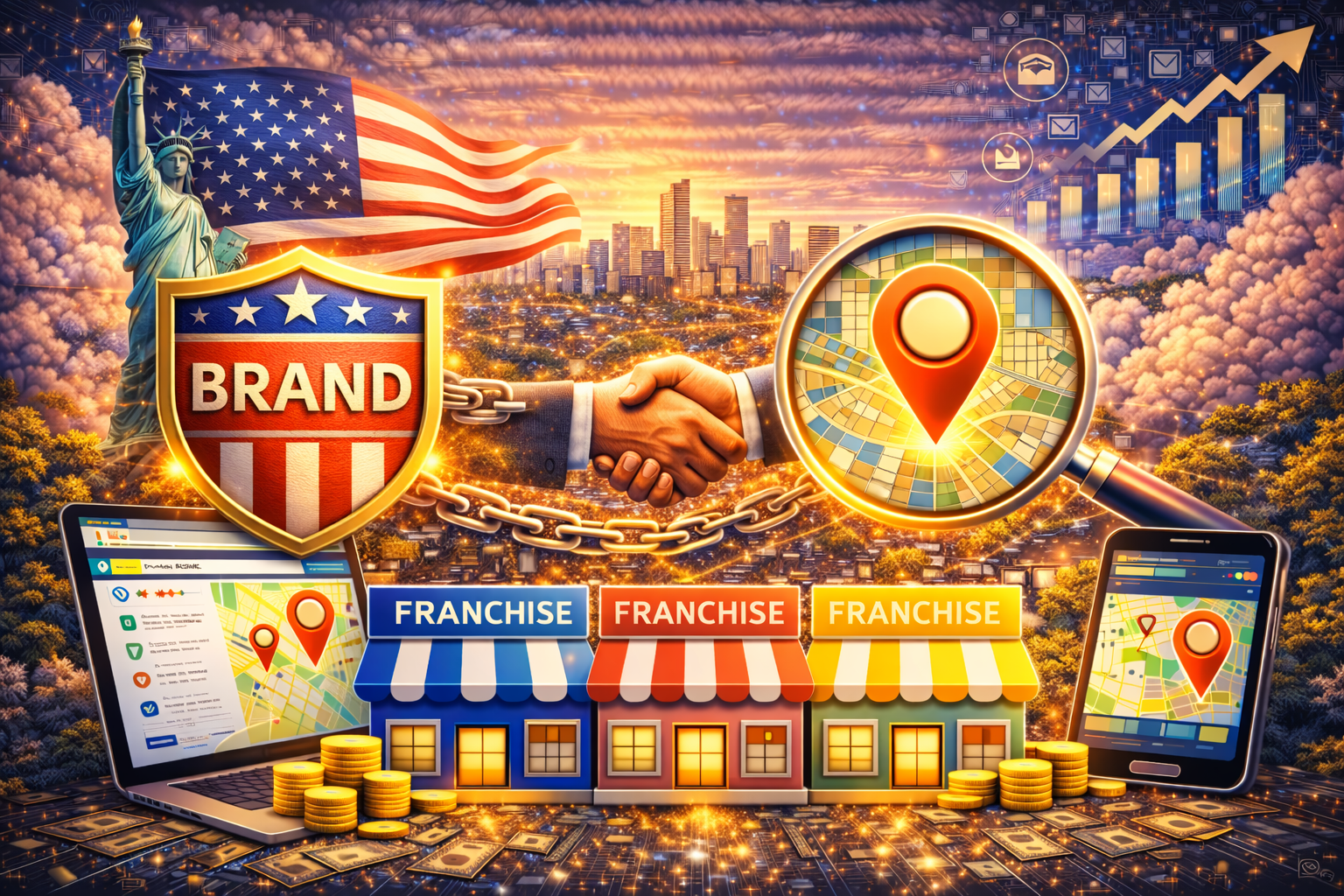
Bridging the Gap Between National Branding and Local Search Intent
Direct answer: National Branding and Local Search Intent align when your website connects your brand promise to city-and-suburb pages, internal linking, and structured data so search engines and buyers trust you locally, not just nationally.
National branding creates recognition. However, recognition alone does not create booked jobs, store visits, or sales calls. People search with cities, suburbs, and “near me” phrases because location helps them decide fast. As a result, many enterprise brands earn plenty of impressions while still losing high-intent local leads.
Search also changes quickly. Google still ranks links, yet AI-generated answers shape decisions earlier in the journey. Because AI prefers clear facts and clean structure, brands must support their message with local relevance signals. Otherwise, your brand gets mentioned, yet your competitors get chosen.
This guide breaks the problem down in simple steps. Additionally, it gives your team a repeatable system you can implement right now. If you want IMR to build the full program for you, start here:
1000 Page Local Authority Lockdown.
Table of Contents
- Why national brands lose local searches
- How National Branding and Local Search Intent differ
- What the local buyer journey looks like now
- Signals that connect brand trust to local rankings
- The page architecture that bridges the gap
- How to build pages that match local intent and still feel on-brand
- Internal linking that strengthens National Branding and Local Search Intent
- Schema markup that helps AI understand your brand locally
- Trust builders that turn local clicks into leads
- How to scale local pages without brand chaos
- KPIs to measure National Branding and Local Search Intent success
- A 30-day plan to close the gap fast
- FAQs
- Next steps
Why do national brands lose local searches?
Direct answer: National brands lose local searches when they rely on broad pages that do not match city-and-suburb intent, which causes weak relevance and lower conversions.
National sites often focus on one of two things: brand storytelling or product-level SEO. However, local buyers do not search for stories first. Instead, they search for solutions nearby. Because of that, a national homepage rarely satisfies local intent.
Local competitors usually publish pages that match location phrases directly. As a result, Google sees clearer relevance for “service + city” queries. Consequently, smaller companies win calls even when the national brand has better credentials.
Google confirms the importance of local relevance signals with its local ranking factors: relevance, distance, and prominence.
Google: Improve your local ranking.
How do National Branding and Local Search Intent differ?
Direct answer: National Branding and Local Search Intent differ because branding builds trust and awareness, while local intent drives action like calls, bookings, and store visits.
Branding answers “Who are you?” Local intent answers “Can you help me here, right now?” Therefore, you need both layers to win the full journey. Because enterprise buyers move fast, the local layer must show up at the moment of demand.
Here is the simple split:
- Branding searches often include your company name and broad product categories.
- Local intent searches include a city, suburb, neighborhood, or “near me.”
When your site does not support local intent, your brand awareness turns into free advertising for competitors. That outcome feels frustrating, yet it happens every day.
What does the local buyer journey look like now?
Direct answer: The local buyer journey includes AI summaries, map listings, review checks, and fast decisions, so your site must reduce friction at every step.
Local buyers take short paths. First, they search. Next, they scan map results or top listings. Then, they check reviews and photos. After that, they call the company that looks trustworthy and close enough.
AI changes this journey even more. Because AI results summarize options quickly, your content must offer clear facts that AI can safely cite. If your brand pages stay vague, AI systems will not trust them as much.
Google also encourages helpful, people-first content that solves problems, not content that only tries to rank. You can review that standard here:
Google: Helpful content guidance.
Which signals connect brand trust to local rankings?
Direct answer: Brand trust connects to local rankings through consistent business data, strong internal linking, local content relevance, reviews, and structured data.
No single factor wins local search. Instead, Google and AI systems stack evidence until they feel confident. Therefore, you need multiple signals working together. Because multi-location brands publish many pages, consistency becomes the difference between a network and a mess.
Use these signals to bridge the gap:
- Unique city and suburb pages that match real search intent.
- Consistent business identity across site and structured data.
- Internal linking that builds hierarchy and spreads authority.
- Review velocity that proves local customer satisfaction.
- Clear service boundaries so users trust coverage.
Internal linking directly improves discovery and context. Google explains internal link importance here:
Google: Internal links documentation.
What page architecture bridges National Branding and Local Search Intent?
Direct answer: The best architecture uses service hubs, regional hubs, and local intent pages so your brand story supports conversion pages instead of competing with them.
Many enterprise sites publish local pages randomly. Consequently, the site lacks a clean map. Because search engines learn from structure, a messy architecture reduces performance.
Use this simple hierarchy:
- Brand core pages (about, credibility, overall promise)
- Service hubs (what you do and how it works)
- Regional hubs (states, regions, or metro clusters)
- City-and-suburb pages (highest intent coverage)
- Support content (FAQs, guides, objection answers)
This system also supports paid traffic. For example, local landing pages raise conversion rates for paid search because ad groups match suburb intent. If you want that alignment, IMR can build it through:
PPC Management.
Additionally, if you want one operating system across channels, explore:
Full Service Digital Marketing.
How do you build pages that match local intent and still feel on-brand?
Direct answer: You build on-brand local pages by keeping messaging consistent while adding unique local context, clear outcomes, and suburb-specific FAQs.
Brands fear local pages because they fear inconsistency. However, you can solve this with structure. Therefore, create one template that enforces brand voice and local usefulness at the same time.
Every local page should include:
- Clear outcome headline that matches the local problem.
- Direct answer summary that confirms service + location fit.
- Local context such as timing, seasonality, or access constraints.
- Service process explained in simple steps.
- Service boundaries that state what you cover and what you do not.
- FAQs based on real calls and objections.
When you write this way, the page becomes helpful. Consequently, the page converts better, and it also earns stronger trust signals.
What internal linking strengthens National Branding and Local Search Intent?
Direct answer: The best internal linking connects brand pages to service hubs, connects hubs to local pages, and connects local pages back to hubs to form a consistent authority network.
Internal links act like a map. Therefore, they help crawlers find pages and help users navigate quickly. Because multi-location systems need structure, internal linking becomes a growth lever, not a “nice-to-have.”
Use these linking rules:
- Link service hubs to priority city and suburb pages based on revenue potential.
- Link city and suburb pages back to service hubs so intent stays clear.
- Link related locations together when buyers compare markets.
- Link blog guides to local pages when the guide answers a local question.
IMR builds these systems through:
Local Authority Services.
Additionally, when you want AI-ready visibility on top of the same structure, explore:
Generative Engine Optimization (GEO).
How does schema help connect National Branding and Local Search Intent?
Direct answer: Schema connects National Branding and Local Search Intent by confirming your identity, services, and page structure in machine-readable formats that Google and AI can trust.
Schema does not replace content. However, schema improves clarity. Therefore, structured data becomes essential when your site contains many similar pages. Because AI and crawlers need certainty, schema reduces confusion.
Use these schema elements:
- Organization with consistent phone, email, and address
- WebSite that connects publisher identity
- ProfessionalService that clarifies offerings
- WebPage + BlogPosting that defines the content entity
- BreadcrumbList that shows hierarchy
- FAQPage that provides extractable answers
- SpeakableSpecification that supports voice-ready summaries
Google structured data overview:
Google: Structured data overview.
Schema.org reference:
Schema.org: Getting started.
Which trust builders turn local clicks into real leads?
Direct answer: Trust builders convert local clicks when they remove risk quickly through proof, process clarity, and local reassurance.
Local buyers worry about wasting time. Therefore, they choose the provider that feels safe and clear. Because trust drives action, your pages must show proof without overcomplicating the message.
Use these trust builders:
- Clear process that explains what happens next
- Proof of standards like licensing, insurance, and warranties
- Expectation setting for timing and pricing factors
- Local FAQs that answer the top objections quickly
Once your system includes these elements, National Branding and Local Search Intent start working together instead of fighting each other.
How do you scale local pages without brand chaos?
Direct answer: You scale without chaos by using governance, meaning templates, rules, approvals, and a keyword-to-URL map that prevents overlap.
Enterprise scale breaks without rules. Therefore, governance should come first. Because teams often publish independently, one shared system protects the brand.
Use this governance checklist:
- Keyword-to-URL mapping so each page owns one intent
- Required unique local blocks so pages stay useful
- Internal linking standards so hierarchy stays consistent
- Schema standards so identity stays stable
- QA review workflow before publishing
- Refresh cadence for top markets each quarter
IMR builds governance into:
1000 Page Local Authority Lockdown.
Which KPIs prove National Branding and Local Search Intent success?
Direct answer: Success shows up when you track local impressions, clicks, leads, and conversion rates by market instead of relying on blended national averages.
Site-wide metrics hide local reality. Therefore, you should track results at the city-and-suburb level. Because local intent drives revenue, the reporting must match local markets.
Track these KPIs:
- Indexation of city-and-suburb pages
- Impressions by market for “service + location” queries
- Clicks by market from local intent searches
- Leads by market (calls, forms, bookings)
- Conversion rates by local landing page
When you see which markets convert best, you can expand faster. Consequently, growth becomes predictable instead of random.
What is a 30-day plan to bridge National Branding and Local Search Intent fast?
Direct answer: A 30-day plan works by mapping markets first, rebuilding core local pages next, strengthening internal linking, and measuring leads by market.
Week 1: Build your market map, confirm where you serve, and assign one primary intent per URL. Next, lock the template rules for every market page.
Week 2: Publish a pilot set of local pages across key markets. Then connect them to service hubs with clean internal linking.
Week 3: Improve local proof blocks, tighten FAQs, and standardize schema. After that, expand internal linking from hub pages to priority markets.
Week 4: Track market-level performance, refine the template based on real lead quality, and expand to the next market tier.
If you want a done-for-you rollout that scales to hundreds or thousands of markets, start here:
1000 Page Local Authority Lockdown.
FAQs
Can a national brand rank locally without separate city pages?
Direct answer: It can happen sometimes, yet city-and-suburb pages usually improve relevance and conversion because they match local intent directly.
Does local content hurt national brand consistency?
Direct answer: No, because templates and governance let you keep brand messaging consistent while still adding useful local detail.
Does schema matter for local rankings and AI answers?
Direct answer: Yes, because schema reduces ambiguity and helps machines understand identity, offerings, and structure.
How fast can enterprises see results from local intent pages?
Direct answer: Many brands see early indexation and impressions within weeks, while conversion improvements follow as markets gain visibility and trust.
Next steps
Direct answer: To bridge the gap, build local pages that match intent, connect them through internal linking, reinforce trust with schema, and track results by market.
National awareness becomes valuable when local pages turn it into action. Therefore, your structure must connect the brand promise to city-and-suburb demand. Because local intent drives revenue, aligning National Branding and Local Search Intent protects growth.
If you want IMR to deploy the entire system for you, start here:
1000 Page Local Authority Lockdown.
Author
Infinite Media Resources Strategy Team builds scalable local authority systems for enterprise and multi-location brands. We design market architecture, intent-based local pages, internal link frameworks, and structured data so your national visibility turns into predictable local leads. To deploy the program at scale, explore:
1000 Page Local Authority Lockdown.
About the author : Anthony Paulino