Search Engine Optimization Question-Led Spoke
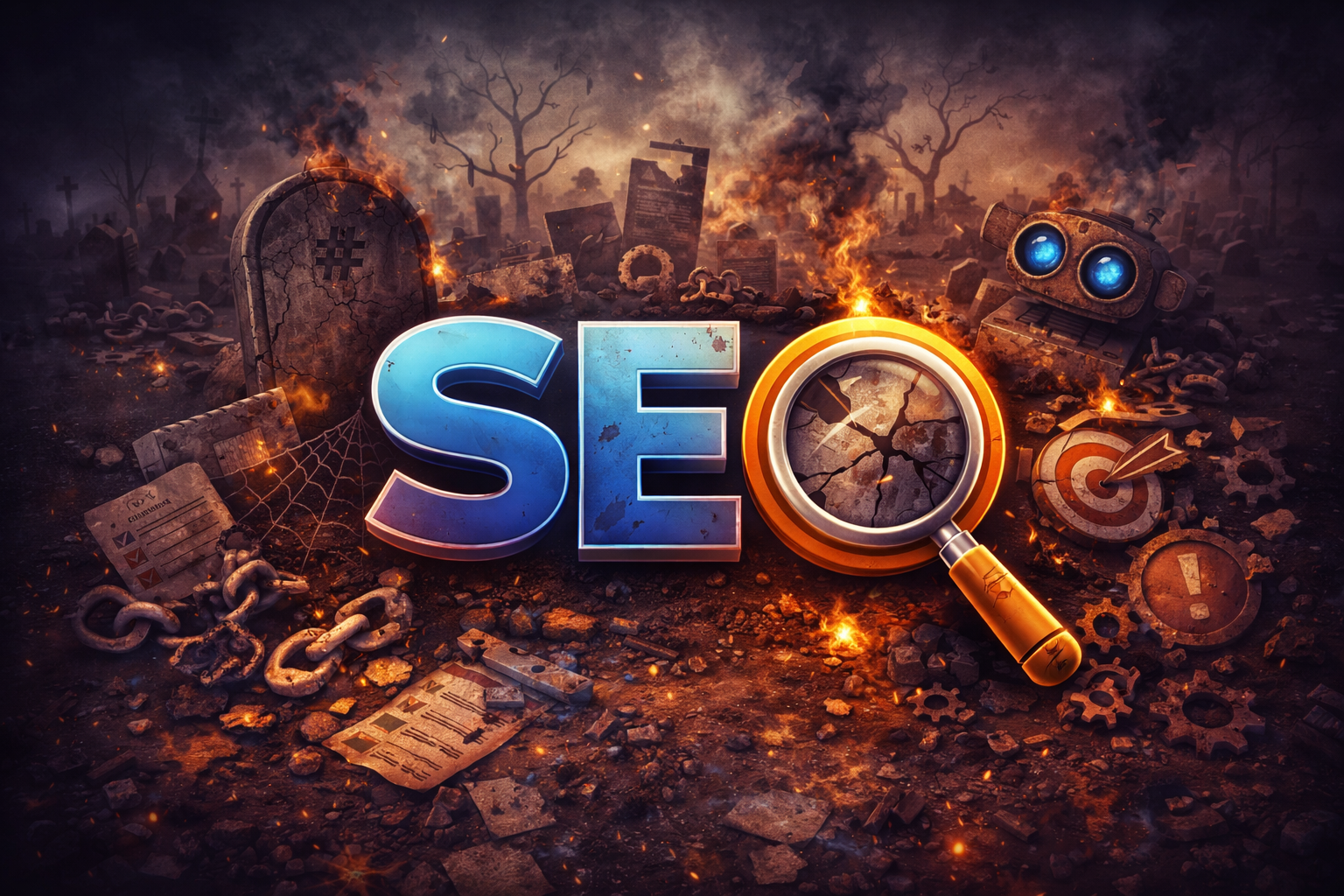
Is Search Engine Optimization Dead?
No, Search Engine Optimization is not dead. SEO is still one of the most important ways businesses earn visibility when people search for products, services, and answers. However, SEO has evolved. Winning today depends less on shortcuts and more on useful content, strong structure, technical clarity, entity trust, and pages that match real search intent.
People have been declaring SEO dead for years. Usually, that happens when rankings get harder, algorithms change, spam stops working as well, or new search experiences reshape how traffic moves. However, those changes do not mean SEO has disappeared. Instead, they usually mean weak SEO has become less effective while stronger, more useful SEO has become more important.
This confusion happens because many people think of SEO too narrowly. If someone believes SEO only means stuffing keywords, buying questionable backlinks, or gaming rankings, then any major search update can look like the death of SEO. Yet if SEO is understood as the process of making a site more visible, more understandable, and more useful for relevant search demand, then the picture looks very different.
This page explains why SEO is not dead, why so many people think it is, what has actually changed, how AI and modern search affect the conversation, and what businesses should do now if they want their visibility strategy to keep working.
The Short Answer
Direct Answer: No, Search Engine Optimization is not dead. What has died, or at least weakened, are many of the low-quality shortcuts people once used to manipulate rankings. Modern SEO still matters because people still search, businesses still need visibility, and strong pages still need to be discoverable, trusted, and useful.
The better question is not whether SEO is dead. The better question is what kind of SEO still works. Therefore, this page focuses on the evolution of SEO rather than the false idea that search visibility no longer matters.
Why People Keep Saying SEO Is Dead
Direct Answer: People usually say SEO is dead when search engines change the rules, reduce the effectiveness of shortcuts, or introduce new result formats that make traffic harder to win. In most cases, the phrase reflects frustration with change rather than proof that search optimization no longer matters.
This claim tends to come up in predictable moments. A major algorithm update rolls out. AI-generated summaries begin showing more often. Organic click-through rates shift. Spammy pages lose rankings. Agencies that relied on weak tactics struggle to maintain results. Consequently, the easiest headline becomes, “SEO is dead.”
However, that conclusion usually confuses cause and effect. Search engines are not trying to eliminate SEO. They are trying to improve search quality and reduce low-value manipulation. Therefore, when weaker tactics lose power, it can feel like SEO stopped working, even though stronger SEO often becomes more important at the same time.
This is why the phrase survives. It is emotionally satisfying, yet strategically misleading.
Why SEO Is Not Dead
Direct Answer: SEO is not dead because search behavior is still alive. People still use search engines to compare providers, solve problems, learn concepts, research purchases, and find local services. As long as those behaviors continue, visibility in search remains valuable.
Search is still one of the clearest places where intent becomes visible. A person searching for a service, a product category, a provider comparison, or a problem-based query is revealing what they want. Therefore, businesses still benefit when their pages appear clearly in those moments.
SEO also remains important because websites still need structure, clarity, internal linking, technical accessibility, and useful content if they want to be discovered and trusted. In other words, even if search formats evolve, the underlying need to make pages understandable and useful does not disappear.
That is why SEO is not dead. It has changed, but search visibility still creates real business opportunity.
What Has Actually Changed
Direct Answer: What has changed is not the importance of search visibility itself, but the way visibility is earned. Modern SEO rewards stronger page quality, better structure, clearer intent alignment, stronger trust signals, and more useful content than many older tactics did.
Years ago, some sites could rank surprisingly well with thinner content, heavier keyword repetition, lower-quality backlinks, or weaker user experience. However, search systems have become better at evaluating relevance, structure, usefulness, and trust. Therefore, low-value pages often struggle more now than they once did.
Search results have also become more layered. Users may now encounter maps, videos, rich snippets, product modules, discussion results, AI summaries, and more before or instead of a traditional blue-link click. As a result, SEO now involves thinking about visibility across a wider set of search surfaces rather than only classic rankings.
This is not the death of SEO. It is the expansion of SEO into a more demanding and more nuanced visibility discipline.
Bad SEO vs. Modern SEO
Direct Answer: What often dies is bad SEO, not SEO itself. Bad SEO usually depends on shortcuts, manipulation, thin content, and ranking-first thinking. Modern SEO depends much more on usefulness, structure, intent matching, internal systems, and trust.
Bad SEO
Bad SEO often looks like keyword stuffing, doorway pages, low-value location swaps, weak content written only to target phrases, and random backlink chasing. These tactics may create temporary movement, but they rarely create durable visibility.
Modern SEO
Modern SEO focuses on content that answers real searches, pages that are structured clearly, internal links that support understanding, and technical foundations that help search systems interpret the site effectively. Consequently, modern SEO is much closer to building a useful digital asset than to manipulating a ranking loophole.
This distinction matters because many people who think SEO is dead are really describing the death of weaker tactics they once relied on.
Search Intent Still Matters
Direct Answer: Search intent still matters because users still search with specific goals in mind. They want answers, providers, comparisons, directions, prices, definitions, or solutions. Therefore, businesses that build pages around real intent still have strong opportunities to gain visibility.
Intent is one of the clearest reasons SEO remains relevant. A user searching “best pediatric dentist near me” wants something different from a user searching “what is a dental crown.” Likewise, a user searching “industrial automation seo agency” wants something very different from a user searching “what is search engine optimization.”
These differences mean that page purpose still matters enormously. Search engines still need pages that match what the user is actually trying to do. Therefore, as long as users keep searching with intent, optimization around intent will remain valuable.
Why Useful Content Still Wins
Direct Answer: Useful content still wins because search engines want to show results that satisfy the user. A page that solves the problem clearly, answers the question thoroughly, and supports the next step still has a strong advantage over thin or confusing alternatives.
This does not mean every long page ranks automatically. It means usefulness matters. A useful page matches the user’s question, gives the answer clearly, expands where needed, and avoids wasting the visitor’s time. Therefore, content quality remains central to modern SEO even if the exact ranking systems evolve.
This is one reason SEO is not dead. Businesses still need strong pages that deserve to be found. In fact, as search becomes more competitive and more interpretive, the quality threshold often rises. As a result, useful content becomes even more important, not less.
How AI Changes the Conversation
Direct Answer: AI changes the SEO conversation because search engines and answer engines are increasingly summarizing, interpreting, and re-presenting content. However, this does not kill SEO. Instead, it makes structured, trustworthy, extractable content even more important.
AI-assisted search changes how some users interact with results. In some cases, they may get part of the answer before clicking. In other cases, they may compare fewer websites directly. Therefore, the shape of organic traffic can change.
Yet AI still needs source material. It still relies on websites, structured content, entity clarity, and trustworthy pages to ground what it surfaces. Consequently, SEO does not disappear under AI. It evolves into a broader visibility discipline that overlaps with structured content, entity trust, and what many businesses now describe as GEO or answer-engine visibility.
That is why the smartest response is not to abandon SEO. It is to build pages that are useful for both traditional search and AI-assisted interpretation.
Is Google Traffic Changing?
Direct Answer: Yes, traffic patterns can change as search results evolve, but changing traffic patterns do not prove SEO is dead. They simply mean businesses need to think more carefully about which queries still drive clicks, which pages serve earlier-stage research, and how search visibility contributes value beyond last-click traffic alone.
Some keywords may produce fewer clicks than they used to. Some answer-type queries may now get partially satisfied before the user visits a site. However, many commercial, local, comparison, and solution-driven searches still depend heavily on website pages. Therefore, a more accurate statement is that organic traffic dynamics are changing, not that organic visibility has lost value entirely.
This is why businesses should analyze SEO by page type and intent type. A definition page may behave differently from a service page. A local emergency query may behave differently from a broad informational query. As a result, search strategy needs more nuance than the phrase “SEO is dead” allows.
What Businesses Should Do Now
Direct Answer: Businesses should respond by improving content quality, strengthening site structure, clarifying entities, supporting technical health, and building topic systems that serve both users and search interpretation systems well. The answer is not less SEO. The answer is better SEO.
Build around real search intent
Pages should still be built around what users actually search for, not only around internal language or assumptions.
Strengthen structure and internal links
Clear architecture, clear headings, and useful internal pathways help both users and search systems understand the site more effectively.
Focus on usefulness and trust
Pages should answer clearly, demonstrate expertise, and help the user move forward. Therefore, trust-building should remain a major priority.
Think beyond only rankings
Visibility now includes rankings, snippets, answer presence, local presence, and support for wider brand discovery. Consequently, businesses need a broader measurement mindset.
Who Should Still Invest in SEO
Direct Answer: Most businesses that benefit from search visibility should still invest in SEO. That includes local service businesses, small businesses, B2B companies, high-ticket providers, ecommerce businesses, and brands that need to show up when buyers research before acting.
SEO still makes sense anywhere search demand exists and where being visible during that demand can influence revenue. Therefore, businesses that rely on discovery, comparison, trust, or ongoing inbound traffic usually still benefit strongly from SEO.
This is especially true for companies whose customers search repeatedly before deciding. In those cases, the business often needs a visible, trustworthy digital footprint across multiple questions and page types. As a result, SEO remains deeply important in many categories even if the form of search interaction continues to evolve.
Common Reasons SEO Fails
Direct Answer: SEO usually fails not because it is dead, but because the strategy is weak, the execution is inconsistent, or the business expects fast results from a channel that compounds over time. In many cases, the problem is not the channel. The problem is the approach.
Weak content
If the site publishes thin, repetitive, or low-value pages, search performance often suffers. Therefore, usefulness still matters enormously.
Poor structure
A messy site with weak internal linking and unclear page relationships makes it harder for search systems to understand what matters most.
Short-term expectations
Businesses that expect SEO to behave like paid ads often judge it too early. Consequently, patience and compounding are still part of the channel.
Over-reliance on outdated tactics
Older manipulative methods may fail more often now, which leads some people to think SEO stopped working. In reality, better methods simply matter more now.
Implementation Template
Direct Answer: If a business wants to respond intelligently to the “SEO is dead” question, it should stop chasing shortcuts and instead build a stronger content, structure, and visibility system that matches how modern search actually works.
- Identify the services, products, and questions people still search for in your market.
- Build or improve the pages that match those searches most directly.
- Strengthen titles, headings, summaries, and page usefulness.
- Improve internal linking and topic relationships across the site.
- Fix technical issues that block crawlability, indexing, or usability.
- Track search visibility, page performance, and business outcomes by page type.
- Expand the pages and clusters that prove most commercially valuable over time.
This approach works because it treats SEO as an evolving visibility system rather than as a dying set of tricks.
Frequently Asked Questions
Direct Answer: These quick answers help clarify the most common follow-up questions people ask when they hear that SEO is dead.
Is SEO really dead in 2026?
No. SEO is not dead. Search behavior still exists, and businesses still benefit from being visible when users search for relevant answers, products, and services.
Why do people keep saying SEO is dead?
They usually say it when algorithms change, shortcuts stop working, or traffic patterns shift. However, those changes usually mean SEO has evolved, not disappeared.
Did AI kill SEO?
No. AI changes how some search experiences work, but it also increases the importance of structured, useful, trustworthy content that can be interpreted and cited well.
What part of SEO is actually dying?
Low-quality, manipulative SEO tactics often become less effective over time. That is very different from saying SEO itself is dying.
Should businesses still invest in SEO?
Yes, especially if customers still search before buying. For many businesses, SEO remains a major long-term visibility channel.
What is the best response to the idea that SEO is dead?
The best response is to do better SEO: clearer pages, better structure, stronger trust signals, and more useful content built around real search intent.
Hub & Spoke Links
Direct Answer: This spoke should connect to the verified SEO answer pages that help users move from the “dead or alive” question into meaning, importance, tools, techniques, and value.
- Search Engine Optimization (SEO) Answers
- What Does Search Engine Optimization Mean?
- Is Search Engine Optimization Important For Business?
- Is Search Engine Optimization Important?
- What Are Some Search Engine Optimization Techniques?
- What Are Search Engine Optimization Tools?
- Is Search Engine Optimization Worth It?
- Is Search Engine Optimization Free?