Free Luxury Real Estate Marketing SOP Guide
The 1000 Page Model For Luxury Real Estate
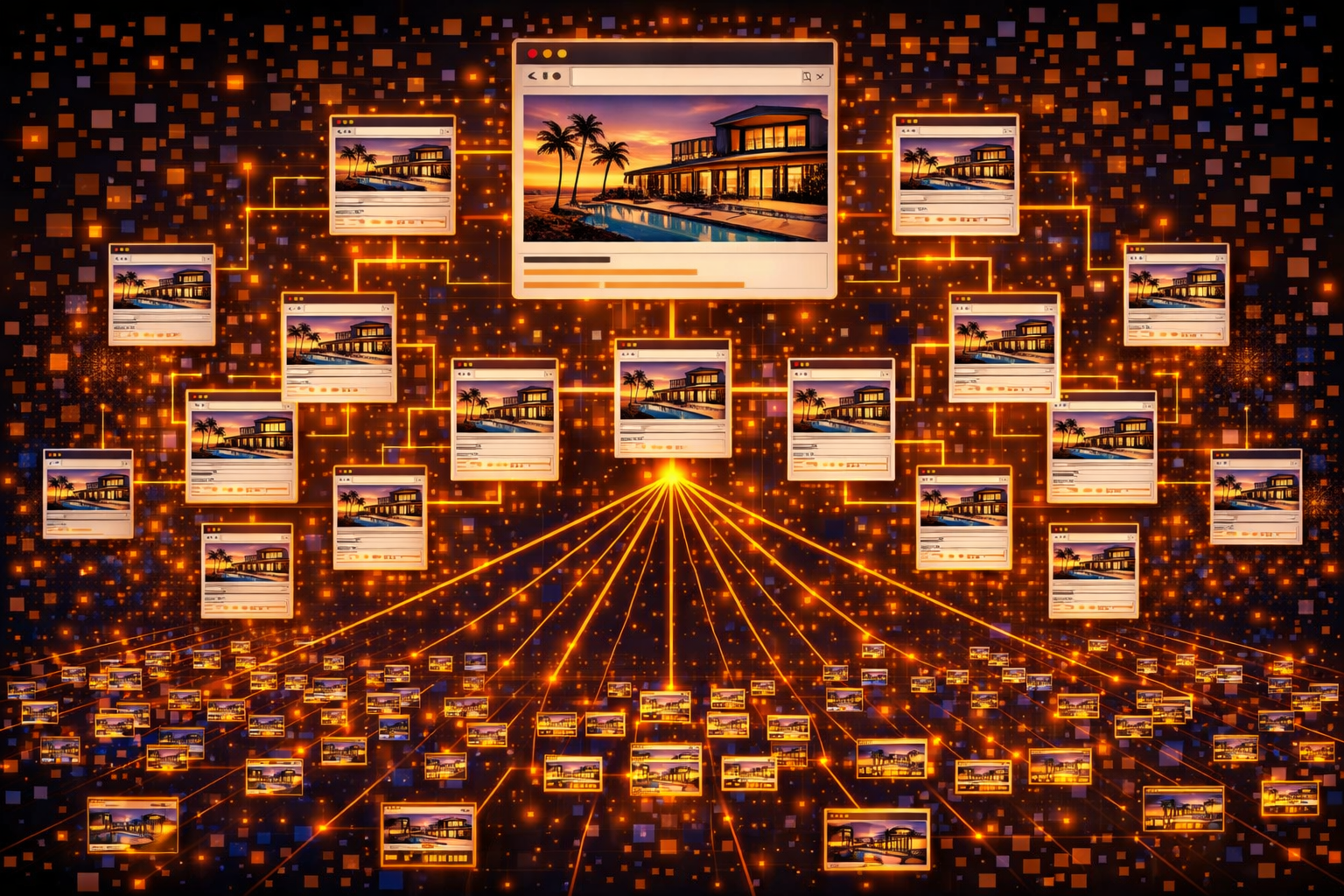
The 1000 Page Model For Luxury Real Estate shows brokers, teams, developers, and marketing leaders how to scale service pages, city pages, neighborhood pages, building pages, lifestyle pages, valuation pages, hub-and-spoke content, and trust assets into a structured digital real estate system that supports SEO, GEO, AI-search visibility, premium positioning, and stronger long-cycle luxury inquiries.
The 1000 Page Model For Luxury Real Estate starts with one critical truth: affluent buyers and sellers do not make major decisions from one homepage, one market page, and a few scattered blog posts. Instead, they research in layers. First, they may explore a city. Then, however, they often compare neighborhoods, buildings, lifestyle categories, valuation questions, tax dynamics, school context, and advisor fit. Therefore, a luxury real estate brand that wants long-term visibility and authority needs a much broader page ecosystem than a traditional brochure-style site.
This guide explains how luxury brokerages, waterfront specialists, golf-community experts, condo and penthouse teams, private-estate advisors, ultra-luxury developers, mountain-market firms, and relocation-focused brands should build a large-scale page network inside the IMR digital real estate framework. It is not a page-count vanity exercise. Rather, it is a working SOP for scaling the right pages in the right order so the website can attract affluent buyers, influence sellers, support local authority, strengthen AI visibility, and improve conversion quality over time.
Luxury Real Estate Digital Real Estate Strategy
The goal is not to hit 1,000 pages as quickly as possible. Instead, the goal is to build complete market coverage with useful, differentiated content. That means creating city gateways, neighborhood authority pages, building pages, lifestyle pages, luxury service pages, seller pages, market guides, comparison content, and trust pages that all support one another. Therefore, the page count matters only when the underlying architecture is strong enough to make the whole system work.
Because luxury real estate decisions often involve long cycles, emotion, family input, wealth planning, market timing, privacy concerns, and highly local tradeoffs, the 1000-page model works especially well in this category. A buyer may enter through a waterfront page, move into a city guide, compare neighborhoods, review a building page, and then request a consultation. Likewise, a seller may start with a valuation page, move into a seller-strategy guide, compare neighborhood positioning, and then inquire privately. Therefore, this page shows how to build the full model in a way that supports real luxury behavior instead of generic traffic growth alone.
What The 1000 Page Model For Luxury Real Estate Means
Direct Answer: The 1000 Page Model For Luxury Real Estate means building a large, structured page network around services, cities, neighborhoods, buildings, lifestyle categories, valuation needs, seller strategy, market comparisons, and trust signals so the website can cover the full luxury search and evaluation landscape instead of relying on a small brochure-style presence.
In luxury real estate, one broad market page cannot carry the full burden of discovery, trust, and conversion. A buyer looking for golf-course homes in Naples is not searching with the same mindset as a seller looking for a private home valuation in Palm Beach. Likewise, a relocation client comparing Scottsdale and Naples behaves differently from a condo buyer comparing two Miami towers. Therefore, the site needs enough page depth to reflect these real differences clearly.
The 1000-page model solves that problem by turning the website into a structured asset base. Instead of one general city page, the site can include the city page plus neighborhood pages, building pages, lifestyle pages, service pages, seller pages, market guides, and comparison pages that support the same market from multiple angles. As a result, the site becomes more useful to affluent clients and more understandable to search engines and answer engines.
That does not mean every brand must publish exactly 1,000 pages on day one. Instead, the number represents a scalable framework. It shows how a luxury real estate brand can keep expanding intelligently as more markets, neighborhoods, building types, and buyer or seller questions justify deeper coverage. Therefore, the model is about complete authority, not arbitrary volume.
Why The 1000 Page Model For Luxury Real Estate Matters
Direct Answer: The 1000 Page Model For Luxury Real Estate matters because affluent clients search in layers, evaluate in layers, and trust brands that demonstrate layered expertise across local markets, lifestyle categories, service offerings, and seller or buyer concerns.
It Matches Real Luxury Search Behavior
Luxury clients do not only search for luxury homes in a city. Instead, they often search for specific neighborhoods, waterfront corridors, golf communities, condo buildings, valuation topics, or relocation questions. Therefore, a broad site often misses the specificity that drives serious inquiries.
It Builds Local And Lifestyle Authority
Luxury real estate depends heavily on place and lifestyle. Consequently, brands that cover cities, neighborhoods, buildings, and lifestyle categories in depth often feel more credible than brands that stay broad and generic. Therefore, the model improves both trust and discoverability.
It Strengthens SEO, GEO, And AI Search
A larger structured site makes topic relationships clearer. As a result, search engines and AI systems can better understand what markets the brand serves, what services it offers, and what local or lifestyle categories it understands. Therefore, the site becomes easier to rank, easier to summarize, and easier to cite.
It Creates Long-Term Digital Real Estate
Each strong page becomes an asset. Then, however, that asset does even more when it connects to other relevant pages in the system. Consequently, the site becomes stronger as the page network expands. Therefore, the model compounds over time instead of resetting every time a new page is published.
How Luxury Clients Move Through A Large Site
Direct Answer: Luxury clients move through a large site by entering through one specific interest point, then navigating across related local, service, lifestyle, valuation, and trust pages as they narrow fit and build confidence.
City-To-Neighborhood Path
A user may begin with a city page such as Naples or Palm Beach. Then, however, that user often moves into neighborhoods, golf communities, waterfront corridors, or building-specific pages. Therefore, city pages should act like gateways, not endpoints.
Lifestyle-To-Local Path
Another user may begin with a lifestyle topic such as waterfront estates, golf-course homes, or penthouses. After that, the user may explore which cities or neighborhoods best fit that lifestyle. Consequently, lifestyle pages often act like powerful entry points into local authority pages.
Seller-To-Local Path
A seller may begin on a valuation page or a luxury home marketing page. Then, however, that same seller may review neighborhood or city pages to understand positioning, pricing patterns, or local expertise. Therefore, seller pages should connect naturally into the local layer too.
Question-To-Service Path
A user may also begin with a spoke page such as condo vs penthouse, what affects luxury home valuation, or best neighborhoods for waterfront privacy. Then, however, that user may move into a city page, a lifestyle page, or a service page. As a result, hub and spoke content helps feed the larger commercial system very effectively.
Core Page Families In The 1000 Page Model
Direct Answer: The 1000 Page Model For Luxury Real Estate is built from several page families, and each family supports a different part of the search journey, the trust journey, or the conversion journey.
The Main Page Families
- Service pages
- City pages
- Neighborhood pages
- Building pages
- Lifestyle pages
- Seller and valuation pages
- Hub pages
- Spoke pages
- Comparison pages
- Advisor and process pages
- Proof and testimonial pages
- FAQ and answer pages
Why Variety Matters
A 1000-page luxury site should never be 1,000 copies of the same page type. Instead, it should reflect the full luxury decision process. Therefore, page-family diversity is not extra complexity. Rather, it is what allows the site to serve real buyer and seller behavior intelligently.
Service Page Layer For Luxury Real Estate
Direct Answer: Service pages form the commercial core of the 1000-page model because they define the brand’s main advisory offers and capture high-intent searches tied directly to representation, valuation, relocation, or listing strategy.
Core Service Examples
- Luxury Buyer Representation
- Luxury Seller Representation
- Private Home Valuation
- Luxury Relocation Services
- Off-Market Luxury Opportunities
- Luxury New Development Guidance
Why This Layer Comes Early
These pages usually reflect the clearest commercial intent. Therefore, they should often be built early because they anchor the local pages, the lifestyle pages, the seller pages, and the spoke content around them. As a result, the rest of the site has stronger commercial destinations to support.
City Page Layer For Luxury Real Estate
Direct Answer: City pages act like market gateways inside the 1000-page model because affluent clients often choose the city before they choose the advisor or the exact neighborhood.
What City Pages Should Do
City pages should define the luxury identity of the market, introduce the major submarkets, and connect users to relevant neighborhoods, buildings, lifestyle categories, and service pages. Therefore, the city layer helps orient both users and search systems at the market level.
Why City Pages Matter So Much
Luxury discovery is often highly local. Consequently, city pages usually form one of the most important expansion layers in the entire model. Therefore, city-page depth should be planned carefully rather than treated like generic local SEO filler.
Neighborhood Page Layer For Luxury Real Estate
Direct Answer: Neighborhood pages are often some of the highest-value pages in the 1000-page model because affluent clients frequently evaluate the exact enclave, community, or corridor rather than the broader city alone.
Why Neighborhood Pages Matter
Neighborhood pages help explain privacy, prestige, architecture, amenities, school context, community feel, waterfront access, golf access, and buyer fit. Therefore, they often carry stronger trust and stronger conversion potential than broader city pages alone.
How The Layer Scales
As the site expands, each major city can support multiple neighborhood pages where search demand and market importance justify it. Consequently, the neighborhood layer often becomes one of the largest and most commercially valuable local sections of the site.
Building Page Layer For Luxury Real Estate
Direct Answer: Building pages strengthen the 1000-page model in condo and urban luxury markets because many high-intent searches focus on a specific tower, development, or branded residence rather than a broad neighborhood alone.
Where Building Pages Work Best
Building pages work especially well in cities where luxury condos or branded residences matter heavily. Therefore, markets like Miami, Manhattan, Chicago, and certain coastal condo markets often justify deep building-page coverage.
What Building Pages Should Cover
Building pages should explain the building identity, unit style, amenities, view logic, ownership appeal, nearby context, and how the building compares to alternatives. Consequently, they help support late-stage evaluation and stronger local trust.
Lifestyle Page Layer For Luxury Real Estate
Direct Answer: Lifestyle pages are essential in the 1000-page model because affluent clients often search by how they want to live before they decide where exactly they want to live.
Examples Of Lifestyle Pages
- Waterfront Estates
- Golf-Course Homes
- Luxury Penthouses
- Equestrian Estates
- Walkable Luxury Condos
- Ski-In Ski-Out Homes
- Marina Properties
Why This Layer Performs Well
Lifestyle pages often connect aspiration to local action. Therefore, they can attract high-quality traffic earlier in the research process and then guide users into city, neighborhood, service, or consultation pages more naturally.
Seller And Valuation Layer For Luxury Real Estate
Direct Answer: Seller and valuation pages help the 1000-page model capture pre-listing and evaluation-stage intent from homeowners who want market clarity, pricing strategy, and advisor confidence before they commit publicly.
Examples Of Seller-Focused Pages
- Private Home Valuation
- How To Sell A Luxury Home
- Luxury Home Marketing Strategy
- Discreet Luxury Home Sale
- Sell A Luxury Condo In [City]
Why This Layer Matters
Many luxury brands focus too heavily on buyer-side content and underinvest in seller intent. Consequently, they miss some of the highest-value listing opportunities. Therefore, the seller layer should be treated like a major pillar in the model, not a minor add-on.
Hub And Spoke Layer For Luxury Real Estate
Direct Answer: Hub and spoke content gives the 1000-page model broader authority by pairing major luxury topics with focused answer pages that support comparison, trust, AI-search visibility, and deeper internal linking.
How Hubs Work
Hubs explain broad categories such as Waterfront Homes, Luxury Condos And Penthouses, Luxury Relocation, Private Home Valuation, or How To Sell A Luxury Home. Therefore, they help organize major themes clearly for both users and search systems.
How Spokes Work
Spokes answer narrower questions such as condo vs penthouse, how off-market luxury homes work, best neighborhoods for waterfront privacy, or what affects luxury home valuation. Consequently, they create better topic depth and better AI-search support.
Why This Layer Compounds
Every strong spoke reinforces the hub, and each cluster strengthens the relevant service pages, local pages, and trust content around it. Therefore, the hub-and-spoke layer helps the entire site feel more authoritative over time.
Trust And Proof Layer For Luxury Real Estate
Direct Answer: Trust and proof pages make the 1000-page model stronger because they show who the brand is, how it works, what expertise supports the claims, and why affluent clients should trust the site during a high-value decision.
Examples Of Trust Pages
- About pages
- Advisor pages
- Process pages
- Testimonials
- Case studies
- Neighborhood expertise pages
- Market insight pages
Why Trust Pages Matter
Luxury real estate trust depends on people, process, and local fluency. Therefore, the proof layer should connect visibly to service pages, city pages, neighborhood pages, and hub content. As a result, the site feels more real, more credible, and more actionable.
Recommended Content Ratio For Luxury Real Estate
Direct Answer: The 1000 Page Model For Luxury Real Estate should usually prioritize city, neighborhood, lifestyle, service, and seller-intent pages first, then support them with hubs, spokes, buildings, and trust content.
Recommended Ratio
- 20% city pages
- 20% neighborhood pages
- 15% lifestyle and property-type pages
- 10% service pages
- 10% seller and valuation pages
- 10% hub and spoke content
- 8% building pages
- 7% trust, proof, advisor, and process pages
Why This Ratio Fits Luxury Real Estate
Luxury search is highly local and highly lifestyle-driven. Therefore, the biggest share of the model should usually focus on cities, neighborhoods, and lifestyle categories first. However, service and seller pages still need strong representation because they carry high commercial intent. Consequently, the ratio reflects both discovery and conversion behavior.
How To Scale The 1000 Page Model
Direct Answer: Scale the 1000-page model by expanding in layers, starting with the strongest service and market pages first, then deepening neighborhoods, lifestyle categories, seller pages, and authority clusters over time.
Phase 1: Build The Core Commercial Layer
Start with the most important service pages, seller pages, and top city pages. Therefore, the strongest commercial and local gateways go live first.
Phase 2: Build The Local Depth Layer
Next, add neighborhood pages, building pages where justified, and lifestyle pages that reflect how affluent clients actually search. Consequently, the site gains stronger local and aspirational coverage.
Phase 3: Build Authority Clusters
After the local and service base is solid, expand with hubs and spokes around valuation, relocation, waterfront living, golf communities, condos, penthouses, and seller strategy. Therefore, the site gains broader educational authority without losing commercial focus.
Phase 4: Build Trust And Proof
Add process pages, advisor pages, case studies, testimonials, and related credibility assets that support the whole system. As a result, the entire network becomes easier to trust.
Phase 5: Expand With Data
Use Search Console, ad data, CRM insights, and advisor feedback to determine which cities, neighborhoods, lifestyle categories, and seller topics deserve deeper buildout next. Therefore, scale follows evidence rather than guesswork.
Governance And Quality Control
Direct Answer: Governance and quality control keep the 1000-page model from turning into generic page sprawl by enforcing page roles, naming standards, linking rules, and content differentiation across the site.
Lock Naming Standards
Service names, city naming, neighborhood naming, building naming, and lifestyle naming should stay consistent across the website. Therefore, the site remains easier to understand and easier to scale.
Define Clear Page Roles
City pages should act like gateways. Neighborhood pages should add depth. Building pages should support condo-specific intent. Lifestyle pages should connect aspiration to location. Service pages should convert. Therefore, every page should have one primary job.
Use Predictable Internal Linking
Each page family should know which other families it supports. Consequently, the internal-link structure becomes easier to manage and more valuable over time.
Protect Quality At Scale
Every page should meet standards for summary clarity, direct answers, heading quality, local differentiation, service relevance, and schema completeness before it goes live. Therefore, speed should never outrun usefulness.
Mistakes To Avoid In The 1000 Page Model For Luxury Real Estate
Direct Answer: The biggest mistakes in the 1000-page model come from chasing page count without structure, building thin local pages, repeating the same luxury language everywhere, and failing to connect the pages into one coherent authority system.
Publishing Generic Local Pages
If every city or neighborhood page sounds the same, then the site may grow in size without growing in authority. Therefore, local pages must reflect real market differences.
Skipping Seller And Trust Content
Brands that focus only on buyer-side local content often miss valuable listing and valuation opportunities. Consequently, the seller and proof layers should never be ignored.
Overusing Broad Lifestyle Language
Luxury brands sometimes lean too heavily on polished but empty messaging. As a result, the pages may look refined while still saying very little. Therefore, specific market and property context should always support premium tone.
Failing To Connect The Page Families
If service pages, city pages, neighborhood pages, seller pages, and hubs do not support one another, then the model loses much of its compounding power. Therefore, internal linking and hierarchy are not optional extras. They are central to the model.
Measuring Success By Page Count Alone
The goal is not simply to hit 1,000 pages. Instead, the goal is to build authority, visibility, trust, and inquiry quality. Therefore, the real success metric is business impact, not raw output volume.
Implementation Template
Direct Answer: Use this implementation template to build The 1000 Page Model For Luxury Real Estate in a way that stays structured, commercially useful, and scalable over time.
Step 1: Map The Core Page Families
List the main services, cities, neighborhoods, buildings, lifestyle categories, seller topics, and trust pages the brand needs first. Then organize them by strategic priority. Therefore, the build starts with architecture instead of random ideas.
Step 2: Launch The Commercial And Local Foundation
Build the most important service pages, seller pages, and city pages first. Consequently, the site gains clear commercial anchors and local gateways right away.
Step 3: Expand Into Neighborhoods, Buildings, And Lifestyle
Add the local and aspirational page layers that reflect how affluent clients actually compare markets. Therefore, the site becomes much more aligned with real luxury behavior.
Step 4: Add Hubs, Spokes, And Proof Layers
Support the commercial and local base with educational clusters, advisor pages, process pages, and proof content. As a result, the system becomes stronger and easier to trust.
Step 5: Review Performance Quarterly
Use keyword data, Search Console, CRM patterns, ad performance, and advisor feedback to decide which page families and markets deserve deeper expansion. Therefore, the site keeps growing in the right directions.
FAQs
What is The 1000 Page Model For Luxury Real Estate?
Direct Answer: The 1000 Page Model For Luxury Real Estate is a structured website-growth framework that scales service pages, city pages, neighborhood pages, building pages, lifestyle pages, seller pages, hubs, spokes, and trust content into a large digital authority system.
Does a luxury real estate brand really need 1,000 pages?
Direct Answer: Not immediately. The number represents a scalable framework, and the right buildout depends on how many services, cities, neighborhoods, building categories, lifestyle categories, and seller topics the brand can support meaningfully.
Which page types should be built first?
Direct Answer: Most brands should start with core service pages, seller pages, and major city pages first, then expand into neighborhoods, lifestyle categories, building pages, and authority clusters.
Why does the 1000-page model work especially well for luxury real estate?
Direct Answer: It works well because affluent clients search and evaluate in layers, and the model creates enough specialized pages to match cities, neighborhoods, buildings, services, lifestyle categories, seller concerns, and comparison behavior more accurately.
Should neighborhood pages matter more than city pages in luxury real estate?
Direct Answer: In many markets, yes. Neighborhood pages often capture more specific intent and stronger trust because affluent clients frequently care about the exact enclave more than the broad city name alone.
How does the 1000-page model support AI search visibility?
Direct Answer: It supports AI visibility by creating clearer topic coverage, stronger internal page relationships, better local differentiation, more direct answers, and more complete market authority across the site.
Hub & Spoke Links
Direct Answer: This spoke should support the Luxury Real Estate SOP hub and connect to the surrounding implementation pages so the 1000-page model stays aligned with keyword strategy, service architecture, local authority, AI-search readiness, and paid traffic systems.
Parent Hub
Related Spokes
- Keyword Research For Luxury Real Estate
- Service Page Architecture For Luxury Real Estate
- Hub And Spoke Content For Luxury Real Estate
- City Page Strategy For Luxury Real Estate
- AI Search Optimization For Luxury Real Estate
- Schema And E-E-A-T For Luxury Real Estate
- Google Ads For Luxury Real Estate
- Facebook / Meta Ads For Luxury Real Estate
Related General Guide Pages