Free Cybersecurity Marketing SOP Guide
Facebook / Meta Ads For Cybersecurity & Data Protection
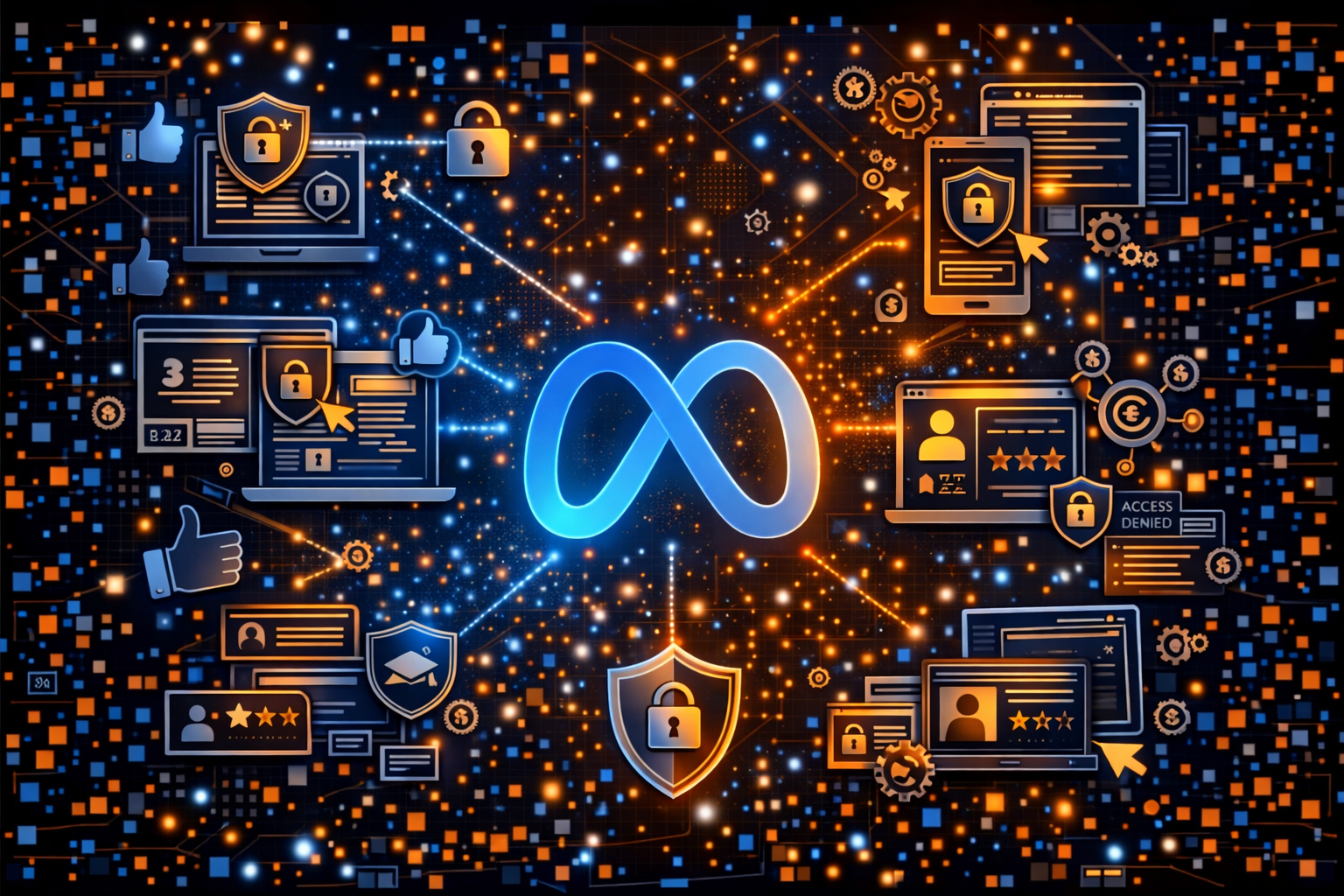
Facebook / Meta Ads For Cybersecurity & Data Protection help security companies stay visible during long buying cycles, reinforce trust, remarket engaged buyers, and distribute useful proof-driven content that supports SEO, GEO, AI-search visibility, and stronger pipeline development over time.
Facebook / Meta Ads For Cybersecurity & Data Protection work differently than Google Ads. Security buyers usually do not open Meta with the same direct project intent they bring to search. However, that does not mean Meta has no role. Instead, it means Meta should support awareness, trust, remarketing, education, and brand reinforcement across longer evaluation windows.
This guide explains how MDR providers, incident response firms, cybersecurity consultants, backup and disaster recovery companies, identity security firms, cloud security providers, vCISO companies, compliance-readiness firms, and security-led consultancies should use Meta Ads inside a broader demand-generation system. It is not a consumer social-media playbook. Rather, it is a working SOP for using Meta where it fits, avoiding unrealistic expectations, and aligning social advertising with security buyer behavior.
Cybersecurity Digital Marketing
The goal is not to generate random low-quality leads with generic lead forms. Instead, the goal is to keep the company visible, reinforce technical credibility, support account-based awareness where possible, and guide the right people back into the website, the CRM, and the broader content ecosystem.
Because cybersecurity and data protection deals often involve multiple stakeholders, internal review, compliance pressure, and long project windows, Meta can help keep the company present between search visits, email follow-up, webinar engagement, event contact, and direct sales conversations. Therefore, this page shows how to use the channel realistically and strategically.
What Facebook / Meta Ads For Cybersecurity & Data Protection Mean
Direct Answer: Facebook / Meta Ads For Cybersecurity & Data Protection mean using social advertising to build awareness, reinforce credibility, remarket engaged buyers, and distribute useful technical or strategic content rather than expecting the platform to behave like high-intent search.
In security markets, Meta is rarely the first place a buyer goes to find a provider. However, stakeholders still spend time on Meta properties during the weeks and months that projects move through internal review. Therefore, Meta can support visibility between search sessions, email nurture, webinar attendance, partner outreach, and direct sales conversations.
That role matters because security buying cycles are long and rarely linear. A buyer may first discover a vendor through search, revisit through direct traffic, see a remarketing ad later, share content internally, and only then schedule a conversation. As a result, Meta can help keep the company present during that extended decision window.
Therefore, Meta should be treated as a strategic support channel inside the larger system. It works best when it amplifies proof, process, credibility, and relevant educational content rather than acting like a low-friction lead farm.
Why Facebook / Meta Ads For Cybersecurity & Data Protection Matter
Direct Answer: Facebook / Meta Ads For Cybersecurity & Data Protection matter because they help security companies stay visible during long cycles, support remarketing, reinforce positioning, and keep decision-makers engaged after the first visit.
They Extend The Buying Conversation
Security deals often take time. Consequently, buyers may not convert on the first website visit. Meta helps the company remain visible while the buyer continues evaluating options and discussing the project internally.
They Support Remarketing Well
Remarketing is often one of Meta’s best uses in security categories. A buyer who has already visited a service page, a framework page, or an ROI guide is much more valuable than a cold audience with no context. Therefore, Meta can work well when it follows real engagement.
They Reinforce Trust And Category Positioning
Meta can help distribute security insights, process content, webinar invitations, case-study snippets, framework education, and leadership perspective. As a result, the channel can reinforce trust even when it does not drive immediate form submissions.
They Complement Search, Email, And Sales Outreach
Meta works best as one layer in a multi-touch system. Therefore, it should complement Google Ads, SEO, GEO, CRM nurturing, and direct outreach rather than replacing them.
Where Meta Fits In The Security Buying Cycle
Direct Answer: Meta usually fits best after initial awareness begins, during evaluation, and throughout the remarketing and trust-building stages of the cybersecurity and data protection buying cycle.
Early Awareness Support
In some cases, Meta can introduce category-level ideas, promote educational assets, or support niche awareness campaigns around a specific risk, framework, or industry. However, expectations should stay realistic because cold security social targeting is usually weaker than search intent.
Mid-Cycle Reinforcement
Meta often works well once a buyer has already engaged with the brand. At that point, the platform can reinforce proof, process, and expertise while the buyer continues internal conversations and vendor comparison.
Late-Stage Trust Support
When a company shares case-study snippets, incident-readiness insights, compliance context, or leadership perspective, Meta can help maintain familiarity. Consequently, it can support vendor confidence later in the cycle even if it does not get credit for the final conversion.
Best Use Cases For Facebook / Meta Ads For Cybersecurity & Data Protection
Direct Answer: The best use cases for Facebook / Meta Ads For Cybersecurity & Data Protection are remarketing, educational content distribution, brand reinforcement, webinar promotion, event follow-up, and selective niche audience campaigns.
Remarketing Website Visitors
Visitors who already engaged with service pages, framework pages, industry pages, or educational guides are usually much stronger Meta audiences than cold users with no brand familiarity. Therefore, remarketing should often be the first Meta priority.
Distributing Security Content
Guides, framework explainers, incident-readiness content, process content, and strategic risk education can work well on Meta when the goal is to reinforce expertise rather than force an instant sale.
Promoting Events, Webinars, And Educational Assets
If the company hosts webinars, publishes strong technical insights, or launches useful readiness assets, then Meta can extend that content to relevant engaged audiences.
Supporting Account-Based Visibility
While Meta is not a pure ABM tool, it can still support awareness for known audiences when combined with CRM audiences, site traffic audiences, and campaign sequencing. As a result, it can reinforce broader account-based strategies indirectly.
Campaign Structure For Cybersecurity & Data Protection Meta Ads
Direct Answer: Campaign structure for cybersecurity and data protection Meta Ads should separate remarketing, content promotion, and strategic awareness so each campaign has a clear role and realistic success metric.
Remarketing Campaigns
Start with remarketing to visitors who engaged with core service pages, framework pages, industry pages, comparison pages, and high-value educational content. This is often the strongest Meta layer in security marketing.
Content Distribution Campaigns
Use separate campaigns to distribute useful guides, webinar promotions, event follow-up, or leadership content. These campaigns often support awareness and nurture rather than direct lead volume.
Selective Cold Awareness Campaigns
Cold awareness campaigns can work, but they should be tested carefully. Therefore, keep them controlled, niche-oriented, and aligned with realistic creative and offer strategies.
Separate Objectives Clearly
A remarketing campaign should not be measured the same way as a cold-awareness campaign. Consequently, campaign purpose and KPIs should remain distinct.
Audience Strategy For Cybersecurity & Data Protection Meta Ads
Direct Answer: Audience strategy for cybersecurity and data protection Meta Ads should prioritize first-party signals, site engagement, CRM audiences, and controlled niche targeting over broad generic B2B assumptions.
Use Website Audiences First
Site visitors who viewed service pages, framework pages, industry pages, case studies, or guides usually make stronger Meta audiences than cold interest-only groups. Therefore, first-party audiences should usually lead the strategy.
Use CRM And Customer Lists When Appropriate
If the company has permission-based CRM lists, webinar registrants, event contacts, or relevant prior leads, then those audiences can help reinforce visibility and trust in a more targeted way.
Use Content-Engagement Audiences
Video viewers, webinar registrants, guide readers, and long-session users can all become useful audience segments. As a result, Meta can support nurture paths beyond one-off page visits.
Test Cold Audiences Carefully
Cold audiences can still have a role, yet the targeting should stay realistic and narrow enough to reflect security relevance where possible. Broad generic B2B social targeting often produces weak lead quality if left unfiltered.
Creative Strategy For Cybersecurity & Data Protection Meta Ads
Direct Answer: Creative strategy for cybersecurity and data protection Meta Ads should emphasize clarity, real process context, proof, technical credibility, and useful business outcomes instead of flashy consumer-style creative.
Use Real Security Context
Show architecture diagrams, readiness frameworks, process visuals, analyst perspective, response workflow, recovery concepts, or real security education where appropriate. Consequently, the creative feels more relevant to security buyers.
Use Short, Clear Messaging
Meta creative should still be easy to understand quickly. Therefore, messages about faster detection, stronger recovery readiness, reduced alert overload, clearer framework support, or better visibility often work better than vague brand language.
Promote Proof And Process
Case-study snippets, process visuals, implementation checklists, webinar clips, leadership perspective, and framework education can all perform well when they reinforce credibility and usefulness.
Use Video Strategically
Short explainers, readiness walkthroughs, security trend commentary, framework education, or event recap videos can work well, especially for remarketing and nurture audiences. However, the content should stay informative and focused.
Offer Strategy For Cybersecurity & Data Protection
Direct Answer: Offer strategy for cybersecurity and data protection Meta Ads should use practical, low-friction assets or consultations that match the buyer’s stage rather than forcing aggressive direct-sales asks too early.
Good Offers For Security Meta Campaigns
- Incident-readiness guides
- Framework checklists
- Ransomware resilience planning content
- Webinar registration
- Security gap review consultations
- Recovery readiness resources
- Industry-specific capability guides
Why Low-Friction Offers Work Better
Many buyers on Meta are not ready to request a full security engagement immediately. Therefore, lower-friction offers often align better with the platform’s role in the buying journey.
Match The Offer To The Audience
A cold audience may respond better to a useful guide. A remarketing audience may respond better to a consultation or framework discussion. As a result, audience stage should shape the offer.
Landing Page Strategy For Cybersecurity & Data Protection Meta Ads
Direct Answer: Landing pages for cybersecurity and data protection Meta Ads should align closely with the campaign’s audience stage, content promise, and next-step expectation so the click leads into a coherent experience.
Use Educational Pages For Educational Campaigns
If the ad promotes a guide, webinar, framework explainer, or technical insight, then the landing page should deliver that exact asset or topic clearly.
Use Service Pages For Remarketing
If the audience already visited the site and showed interest in a specific solution, then a relevant service page may become a stronger destination than a generic brand page.
Avoid Generic Homepages
The homepage is usually too broad for Meta campaign alignment. Therefore, destination pages should reflect the specific service, offer, or topic promoted in the ad.
Support Multiple Next Steps
Security buyers may want a guide, a framework explainer, a readiness discussion, a demo, or a consultation. As a result, landing pages should reflect different readiness levels where appropriate.
Remarketing Strategy For Cybersecurity & Data Protection Meta Ads
Direct Answer: Remarketing is often the highest-value Meta strategy for cybersecurity and data protection because it keeps the company visible to already engaged buyers while they continue evaluating options internally.
Segment By Page Type
Segment audiences by service-page visits, framework-page visits, industry-page visits, guide consumption, or case-study engagement. That way, the follow-up message can stay specific and useful.
Sequence The Message
First-touch remarketing may reinforce the service or topic. Later-stage remarketing may emphasize proof, process, or next-step readiness. Consequently, the campaign can become more relevant as time passes.
Use Useful Follow-Up Content
Remarketing should not just repeat the same ad. Instead, it should add value through case-study snippets, implementation content, framework education, readiness assets, or consultation paths.
Measurement And CRM For Cybersecurity & Data Protection Meta Ads
Direct Answer: Measurement and CRM matter in cybersecurity and data protection Meta Ads because the platform often influences pipeline over time rather than producing immediate bottom-funnel conversions in a straight line.
Measure More Than Last-Click Leads
Meta’s value may appear through assisted conversions, repeated site visits, branded search lift, deeper engagement, or later sales activity. Therefore, the platform should not be judged only by immediate last-click form counts.
Track High-Value Engagement Signals
Track video views, guide downloads, webinar signups, high-value page sessions, repeat visits, and meaningful consultation requests. These signals help show whether Meta is contributing to the buying journey.
Connect Leads To CRM Context
When leads do come through, they should enter the CRM with source context, audience type, and campaign theme where possible. As a result, the team can better evaluate lead quality and assisted influence.
Review Downstream Sales Feedback
Sales and security teams often know whether Meta-influenced leads are stronger, weaker, or simply earlier in the cycle. Therefore, campaign judgment should include downstream feedback instead of platform metrics alone.
Mistakes To Avoid In Facebook / Meta Ads For Cybersecurity & Data Protection
Direct Answer: The biggest mistakes in Facebook / Meta Ads For Cybersecurity & Data Protection come from expecting consumer-style lead volume, targeting audiences too broadly, using weak creative, and ignoring the channel’s best role as a trust and remarketing layer.
Expecting Meta To Behave Like Search
Meta usually does not capture the same direct project intent as Google Ads. Therefore, success depends on using the platform for the right job rather than forcing it into a search-only role.
Running Cold Lead Forms Without Strategy
Broad cold lead forms often generate low-quality contacts in technical B2B security categories. As a result, any lead-form strategy should be tested carefully and tied to a realistic offer.
Using Generic Brand Creative
If the creative looks like abstract corporate branding, then it often fails to create meaningful security relevance. Therefore, use proof, process, outcomes, and real technical context instead.
Ignoring Audience Segmentation
If all visitors see the same message, then relevance drops. Consequently, audience segmentation and sequence logic matter more than simple volume.
Judging Meta Too Narrowly
If the team only looks for immediate form fills, then it may miss Meta’s broader role in awareness, nurture, and assisted pipeline influence. Therefore, measurement should reflect the longer journey.
Implementation Template
Direct Answer: Use this implementation template to build Facebook / Meta Ads For Cybersecurity & Data Protection in a way that supports trust, visibility, and remarketing across longer security buying cycles.
Step 1: Define The Role Of Meta
Decide whether Meta will support remarketing, educational distribution, webinar promotion, event follow-up, or selective awareness rather than assuming it should do everything.
Step 2: Build The Audience Map
Create audiences based on website visits, CRM lists, content engagement, video views, and relevant prior interactions.
Step 3: Build Stage-Matched Creative
Use proof, process, educational content, and practical messaging that align with the audience’s level of readiness.
Step 4: Map The Right Landing Pages
Send traffic to guides, service pages, case-study content, webinar pages, framework pages, or consultation pages that match the campaign promise clearly.
Step 5: Measure Assisted Value And Lead Quality
Track engagement, assisted conversions, CRM outcomes, and downstream sales feedback so Meta can be judged in the right context.
FAQs
What are Facebook / Meta Ads For Cybersecurity & Data Protection?
Direct Answer: Facebook / Meta Ads For Cybersecurity & Data Protection are social advertising campaigns used to support awareness, remarketing, educational content distribution, and trust-building across long security buying cycles.
Do Meta Ads work for cybersecurity companies?
Direct Answer: Yes, but they usually work best for remarketing, content distribution, and brand reinforcement rather than as a direct replacement for high-intent search advertising.
What is the best use of Meta Ads in security marketing?
Direct Answer: One of the best uses is remarketing engaged visitors and promoting helpful proof-driven or educational content that keeps the company visible during long evaluation cycles.
Should Meta Ads send traffic to service pages or guides?
Direct Answer: It depends on the audience stage. Educational audiences may respond better to guides, while remarketing audiences may respond better to a relevant service page, framework page, case-study page, or consultation path.
Do Meta Ads generate immediate security leads?
Direct Answer: Sometimes, but they often provide more value as an assisted channel that supports awareness, trust, and later-stage return visits rather than immediate last-click lead volume alone.
How should Meta Ads be measured in security B2B?
Direct Answer: They should be measured with a mix of engagement, assisted conversions, repeat visits, CRM outcomes, and sales feedback instead of using cheap lead counts as the only success metric.
Hub & Spoke Links
Direct Answer: This spoke should support the Cybersecurity & Data Protection SOP hub and connect to the surrounding implementation pages so Meta advertising stays aligned with keyword strategy, page architecture, AI-search readiness, and the broader 1000-page model.
Parent Hub
Related Spokes
- Keyword Research For Cybersecurity & Data Protection
- Service Page Architecture For Cybersecurity & Data Protection
- Hub And Spoke Content For Cybersecurity & Data Protection
- City Page Strategy For Cybersecurity & Data Protection
- AI Search Optimization For Cybersecurity & Data Protection
- Schema And E-E-A-T For Cybersecurity & Data Protection
- Google Ads For Cybersecurity & Data Protection
- The 1000 Page Model For Cybersecurity & Data Protection
Related General Guide Pages