Generative Engine Optimization FAQ — GEO Answers for AI Search Visibility
This Generative Engine Optimization FAQ explains how GEO works and how brands earn visibility inside AI-powered search experiences. Because AI engines summarize answers and cite sources fast, you need structure, entity clarity, and trustworthy signals to compete. Therefore, every answer starts with a concise definition, and then it expands into practical context you can apply.
URL strategy: clean and evergreen — /faqs/generative-engine-optimization
Defining GEO (The New Era)
What is Generative Engine Optimization (GEO)?
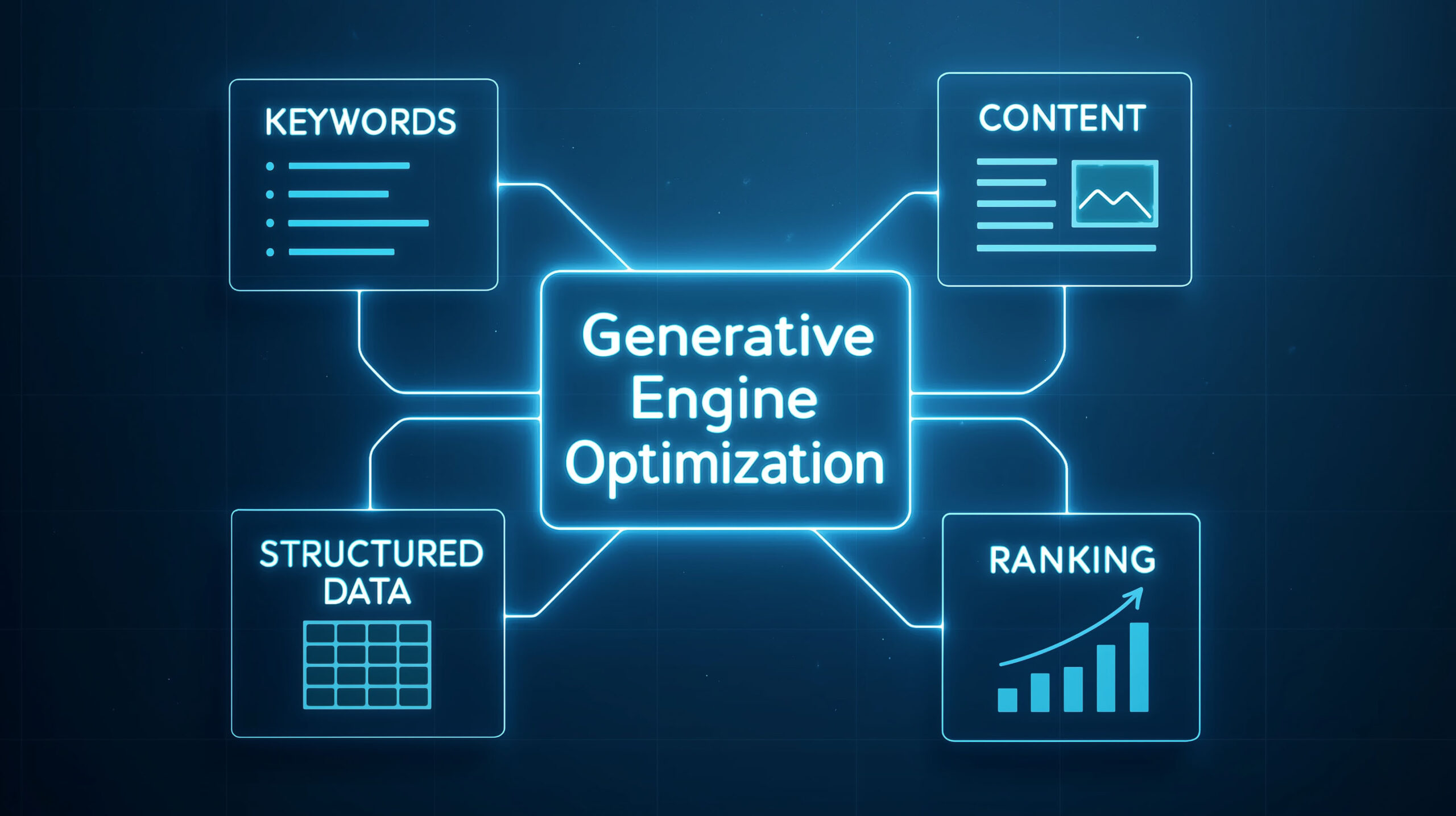
Generative Engine Optimization (GEO) improves how AI systems understand, summarize, and cite your brand in AI-powered search results. It focuses on entity clarity, structured answers, and schema so your content stays eligible for retrieval and citations.
Because AI engines compress information, you must reduce ambiguity. Therefore, you should publish definition-first answers, support them with schema from Schema.org structured data standards, and reinforce your brand entity across pages.
How is GEO different from traditional SEO?
Traditional SEO targets rankings and clicks, while GEO targets AI comprehension and citation inside generative answers. GEO still uses SEO fundamentals, yet it prioritizes extraction-ready structure and entity signals to improve citation likelihood.
So, you should keep technical SEO strong, and you should add answer capsules and schema. As a result, you can win both organic traffic and AI visibility while staying aligned with Google Search Central documentation.
What is the difference between AEO (Answer Engine Optimization) and GEO?
AEO focuses on winning direct answers in search features, while GEO focuses on being used and cited inside AI-generated responses. Infinite Media Resources treats AEO as a component of GEO because strong answer formatting increases both snippet and AI retrieval performance.
Therefore, you should write short definitions first and expand with steps next. Then, you should connect answers to service pages, so intent flows into conversions.
Why is being cited more important than ranking #1 in 2025?
Citations matter because AI summaries often satisfy the query before a click happens. When your brand is cited, you still earn trust, awareness, and downstream demand, even if users do not visit the source page immediately.
So, you should optimize for visibility inside the answer, not only the blue link. Additionally, you should reinforce brand cues near the cited information, so people remember you later.
How do AI engines like SearchGPT and Gemini find my website?
AI engines discover your website through crawling, indexing, and retrieval systems that rely on links, sitemaps, and trusted sources. They favor pages that load fast, present clear structure, and align with verified entities across the web.
Therefore, you should maintain clean technical foundations and strong internal linking using guidance from Google Search Central. Then, you should earn credible mentions, because retrieval systems often trust validated sources more.
What is a generative engine exactly?
A generative engine is an AI system that produces answers by retrieving and synthesizing information from multiple sources. Infinite Media Resources plans content for generative engines by making key facts easy to extract, verify, and cite within summaries.
Because these systems reward clarity, you should structure information in lists and short sections. Also, you should label concepts consistently, so synthesis stays accurate.
How does GEO impact my website’s organic traffic and click-through rates?
GEO can reduce some clicks due to zero-click answers, yet it can increase brand demand, qualified traffic, and conversion intent. When AI highlights your brand, you often earn more branded searches and higher trust when users do click.
So, measure visibility beyond clicks, and track branded growth. Then, align landing pages to capture demand when it arrives, because high-intent visitors convert faster.
Is GEO just a trend or the permanent future of search?
GEO is a durable shift because AI-assisted discovery and summarization are now embedded in how people find information. While interfaces will evolve, the need for structured, trustworthy, citation-ready content will continue to grow.
Therefore, you should build GEO fundamentals now and keep them evergreen. Then, you stay resilient as engines change presentation while continuing to reward clarity and trust.
What are “Zero-Click” searches and how does GEO solve for them?
Zero-click searches happen when users get answers directly in search features or AI summaries without visiting a website. Infinite Media Resources uses GEO to win visibility inside those answers, so your brand earns trust even when the click does not happen.
So, you should design content for extraction and citations. Also, you should place brand signals close to key facts, because recognition drives later action.
Does GEO work for B2B companies as well as B2C?
Yes, GEO works for both because AI engines serve answers for consumer questions and business research alike. B2B often benefits from authority signals, case-based content, and clear differentiation, while B2C benefits from clarity, local trust, and comparison-friendly answers.
Therefore, tailor your answer format to your buying cycle. Then, connect answers to service pages, so research turns into qualified leads.
AI Citations & Retrieval (The How-To)
How do I get my brand cited in ChatGPT’s web search results?
You earn citations by publishing clear, verifiable answers that AI can extract safely and connect to a trusted entity. That includes structured headings, precise definitions, supporting schema, and consistent brand signals across your website and third-party profiles.
So, create answer capsules, strengthen internal linking, and improve technical performance. Then, align your content with publicly available research like OpenAI research publications, because credible patterns strengthen your strategy.
What are “Answer Capsules” and why are they mandatory for GEO?
Answer capsules are short, definition-first blocks that summarize a question in a way AI can reuse directly. They are mandatory because AI retrieval rewards content that can be extracted quickly without losing meaning or introducing risk.
Therefore, lead with a concise definition, and then add steps, lists, or examples. As a result, both humans and AI systems can use the information immediately.
How does Perplexity.ai choose its sources for citations?
Perplexity cites sources that appear reliable, relevant, and easy to verify through structure and consistency. Infinite Media Resources improves citation odds by strengthening entity clarity, adding schema, and building pages that answer one intent cleanly.
Because citations depend on verifiable sources, you should build pages that reduce ambiguity. You can also review platform guidance like Perplexity’s FAQ and methodology to understand how it frames citations.
What is “Chunking” in content and how does it help AI models?
Chunking breaks content into smaller, self-contained sections so AI can retrieve the exact part that answers a question. Good chunking uses descriptive headings, short paragraphs, and lists so meaning stays intact during extraction.
So, write in modular sections and avoid burying key points. Therefore, you improve retrieval accuracy and increase the chance that your content becomes the cited fragment.
Why does “Natural Language” perform better than keyword-stuffing for AI?
Natural language performs better because AI systems interpret meaning, intent, and context, not just repeated phrases. Keyword stuffing introduces noise and reduces trust, while clear explanations improve comprehension and citation safety.
Therefore, write like you answer a real client. Then, reinforce terms naturally, because clarity improves both AI retrieval and human conversion.
How do I optimize for Google’s AI Overviews (formerly SGE)?
You optimize for AI Overviews by writing definition-first answers, supporting them with schema, and reinforcing entity trust. Infinite Media Resources also improves internal linking and technical performance so Google can crawl, index, and extract your best content quickly.
So, target questions, structure answers, and keep pages fast. Then, follow updates from Google’s AI Overviews documentation, because official guidance clarifies how these experiences behave.
What is the role of “Semantic Relevance” in AI retrieval?
Semantic relevance measures how closely your content matches the meaning of a query, not just the exact words. It matters because AI retrieval selects passages that best fit the concept and intent behind the question.
Therefore, cover related subtopics and use consistent terminology. Then, connect pages internally, so engines understand your topic depth and relationships.
How can I track my brand’s “Share of Voice” in AI responses?
Share of voice in AI responses is how often your brand appears or gets cited across a defined set of prompts and competitors. You track it by running consistent query sets, recording outputs, and monitoring citations, mentions, and sentiment over time.
So, build a prompt library by category and intent. Then, measure changes monthly, because trendlines matter more than one-off results.
Do different AI models (Claude vs. GPT-4) prefer different content styles?
Models vary in retrieval and summarization behavior, yet all prefer clear structure, verifiable claims, and strong entity signals. Infinite Media Resources writes in a format that stays extraction-friendly across systems, so your content remains reusable across engines.
Therefore, prioritize definitions, lists, and clean headings. Then, keep your approach aligned with research sources like Anthropic AI research and OpenAI research so you stay grounded in how models evolve.
How do I optimize my About Us page to build AI trust?
An AI-trust About Us page clearly states who you are, what you do, where you operate, and why you are credible. It should include consistent NAP details, leadership, processes, proof points, and schema that reinforces your entity and services.
So, tighten your positioning and add verification signals like addresses and links. Then, keep it consistent across platforms, because consistency increases confidence in entity resolution.
Technical GEO & Schema
What is the best Schema Markup for GEO visibility?
The best schema for GEO includes Organization, WebSite, WebPage, Article, FAQPage, HowTo, BreadcrumbList, and SpeakableSpecification. These types clarify entities, page purpose, and extractable answers, which improves eligibility for rich results and AI retrieval.
Therefore, keep schema consistent across pages, using references from Schema.org. Then, align it to on-page content, because accuracy matters more than volume.
How does “Entity Linking” improve my chances of being recommended by AI?
Entity linking helps AI connect your brand to a consistent identity across your site and the wider web. Infinite Media Resources uses entity consistency, sameAs references, and topical alignment so systems can verify who you are and what you provide.
So, standardize brand naming and use structured data. Then, earn third-party mentions, because corroboration improves trust and recommendation likelihood.
Should I block AI crawlers in my robots.txt file?
Blocking AI crawlers reduces the chance that your content is retrieved or cited in AI experiences. In most cases, you should not block them if you want GEO benefits, although sensitive or proprietary content may justify restrictions.
Therefore, decide based on business goals. Then, protect sensitive sections while keeping public marketing content accessible, because visibility requires access.
How does server response time (TTFB) affect AI indexing?
TTFB affects how quickly crawlers and retrieval systems can access your content, which influences crawl efficiency and extraction reliability. Faster responses reduce timeouts and improve the likelihood that systems use your content during fast answer generation.
So, improve hosting, caching, and code efficiency. Then, retest performance, because consistent speed helps both indexing and user experience.
What is “Vector Search” and how should it change my technical setup?
Vector search retrieves content by meaning using embeddings that represent concepts and relationships. It should push you toward clean information architecture, strong internal linking, and chunk-friendly layouts so your content can be retrieved accurately by topic.
Therefore, structure pages into clear modules and remove duplicate clutter. Then, reinforce semantic relationships with internal links and consistent terminology.
Why are HTML tables and lists superior for AI data extraction?
Tables and lists present structured information that AI can parse and reuse with less ambiguity. Infinite Media Resources uses lists for steps, comparisons, and requirements because they reduce interpretation risk and improve extraction accuracy.
So, use lists for processes and tables for comparisons. Then, keep labels consistent, because stable structure improves retrieval quality.
How does “Freshness” (Last Updated dates) signal quality to LLMs?
Freshness signals quality by showing that content stays maintained, accurate, and aligned with current practices. While not every topic needs constant updates, clear maintenance reduces the chance that AI cites outdated guidance.
Therefore, update content when the landscape changes and when performance slips. Then, improve clarity in the refreshed sections, so systems detect meaningful improvements.
What is the importance of a clean internal link graph for GEO?
A clean internal link graph helps engines understand topic relationships, page hierarchy, and authority flow. It improves crawl paths, supports topical authority, and increases the chance that retrieval systems land on the correct page section.
So, link clusters intentionally and avoid orphan pages. Then, maintain consistent anchor text, because internal links act like semantic labels across your site.
Can AI models read my PDF files for citations?
AI systems can sometimes use PDFs, yet HTML pages usually outperform PDFs for discovery, parsing, and reliable extraction. If you publish PDFs, you should also publish an HTML version with the same key information and clear structure.
Therefore, treat PDFs as supporting assets, not primary targets. Then, link them from an HTML page that summarizes the key points cleanly.
How do I use ‘mentions’ and ‘about’ properties in JSON-LD for AI?
The about and mentions properties help define what a page covers and which entities appear within it. Use them to reinforce key topics, services, and related concepts, so systems can interpret your page purpose with higher confidence.
So, add about for the primary topic and mentions for related entities. Then, keep them consistent with on-page headings, because alignment improves trust.
Authority & E-E-A-T in the AI Era
What is “Digital PR” and how does it fuel GEO rankings?
Digital PR earns editorial mentions and links from trusted publications, which increases authority and verification for AI systems. It fuels GEO because models prefer sources that other credible sources reference and validate.
Therefore, pitch real stories, publish original data, and earn coverage. Then, connect PR wins back to your core pages, because authority should flow into your site.
Why are 3rd-party mentions (Reddit, Quora, News) critical for AI trust?
Third-party mentions act like independent verification that your brand exists and provides real value. Infinite Media Resources leverages reputable mentions because they corroborate your entity and reduce risk for systems deciding what to cite.
So, focus on credible communities and publications. Then, respond with helpful expertise, because helpful participation creates durable trust signals.
How does my Google Business Profile impact AI localized recommendations?
Your Google Business Profile provides structured local signals like category, location, services, and reviews. When AI systems assemble local recommendations, these signals help validate proximity, legitimacy, and customer sentiment.
Therefore, keep GBP accurate and active. Then, align your website and citations, because consistency increases local confidence.
What is the “Verification Ratio” and how do I improve mine?
Verification ratio is how consistently your brand claims match what the wider web confirms through citations, listings, and mentions. Improve it by tightening NAP consistency, earning credible mentions, and publishing schema-backed proof across your site.
So, audit your brand footprint and fix inconsistencies first. Then, build corroboration through PR and partnerships, because confirmation increases AI trust.
Does AI favor brand names over generic informational sites?
AI often favors recognizable brands when the query involves trust, risk, or purchasing decisions. Brands usually have stronger verification signals, which makes them safer to cite; however, focused experts can win when they provide clearer, better-structured answers.
Therefore, build brand signals and publish definitive resources. Then, earn mentions, because recognition and corroboration both increase recommendation likelihood.
How do I build “Topical Authority” so AI sees me as the primary source?
Topical authority comes from publishing a complete set of connected content that covers a topic better than competitors. Infinite Media Resources builds clusters, internal links, and consistent definitions so engines can recognize depth, consistency, and expertise.
So, create a pillar page and supporting spokes. Then, update regularly and keep terminology stable, because authority grows through consistency and completeness.
What role do citations from educational (.edu) or gov (.gov) sites play in GEO?
.edu and .gov citations can strengthen credibility because they often represent vetted, institutional information sources. When relevant, these mentions increase verification signals; however, relevance matters most, so forced links rarely help.
Therefore, cite and earn references where it makes sense. Then, pair them with practical expertise on your site, because trust grows from both authority and usefulness.
How can I ensure AI sentiment toward my brand is positive?
Positive AI sentiment comes from consistent quality signals, helpful public feedback, and clean brand messaging across the web. Reduce negative signals by addressing complaints, improving reviews, and publishing transparent policies and proof points.
So, monitor brand mentions and improve customer experience. Then, publish clear positioning and values, because models summarize the tone they detect across sources.
Why should I include expert quotes and original data in every blog post?
Expert quotes and original data increase uniqueness, credibility, and citation value for both humans and AI systems. They reduce duplication risk, strengthen E-E-A-T, and give AI a stronger reason to cite your page instead of a generic alternative.
Therefore, add real observations, mini-studies, or benchmarks. Then, present them in lists or tables, because structure improves reuse and extraction.
Does social media visibility impact how AI summarizes my brand?
Social media can influence AI summaries indirectly by shaping public perception, branded searches, and third-party discussions. While it is not a direct ranking factor, it amplifies mentions and sentiment signals that models may ingest through web sources.
So, publish consistently and reinforce your positioning. Then, encourage real engagement, because authentic conversation creates stronger corroboration than vanity metrics.
Strategy, Budget & ROI
How much should a business invest in GEO vs. traditional SEO?
Investment depends on competition and how much your customers rely on AI-assisted discovery during research. Many brands start by strengthening SEO fundamentals, and then allocate GEO budget to structured answers, schema, and entity validation so citations and summaries improve.
Therefore, fund technical SEO and content first, and then expand into PR and entity work. As a result, you build a stable base while growing AI visibility.
How do I measure the “ROI” of a GEO citation?
GEO citation ROI is measured through assisted conversions, branded demand growth, and increases in qualified traffic over time. You can track changes in branded searches, direct traffic, pipeline attribution, and lead quality after citation visibility increases.
So, set baseline metrics and monitor trends monthly. Then, connect citation wins to landing pages and offers, because that turns awareness into measurable business value.
What tools can I use to monitor my visibility in AI search?
You can monitor AI visibility using prompt libraries, citation tracking spreadsheets, SERP monitoring, and brand mention tools. Infinite Media Resources combines structured prompt testing with Search Console trends to see how citations and demand move together.
Therefore, build a repeatable test set and track outcomes over time. Then, adjust content and schema based on patterns, because consistent measurement drives better decisions.
Can I “pay” for placement in AI generative responses?
In most cases, you cannot directly pay to be cited as a source inside organic AI answers. While ad products may appear near AI experiences, citations typically rely on relevance, trust, and retrieval eligibility rather than payment.
So, invest in content, schema, and authority signals. Then, use paid media to build brand demand, because strong brands often get cited more often over time.
What are the biggest mistakes agencies make when “doing” GEO?
The biggest GEO mistakes include chasing hacks, ignoring entity verification, and publishing unstructured content that AI cannot extract. Infinite Media Resources avoids this by prioritizing clean structure, schema alignment, and trust-building signals that models can validate.
Therefore, stop stuffing keywords and start structuring answers. Then, build authority through mentions and clarity, because durable signals beat short-term tricks.
How often should I refresh my content to maintain AI visibility?
Refresh frequency depends on topic volatility, yet most core pages benefit from review every six to twelve months. Update faster when platforms change, competitors publish better resources, or your metrics decline.
So, monitor performance and refresh when needed. Then, improve structure and clarity during updates, because fresh, well-organized content stays easier to cite.
Does AI-generated content help or hurt my GEO strategy?
AI-generated content can help when humans edit it for accuracy, originality, and clear structure. It hurts when it produces generic, unverified pages that do not add unique value, because trust and differentiation determine citations.
Therefore, use AI for drafts and outlines, and then add expert insight and proof. As a result, content becomes both scalable and credible.
How do I optimize for “Voice Prompts” in AI search?
Voice prompt optimization uses conversational phrasing, direct answers, and clear structure that matches spoken questions. Because voice queries often include intent and context, you should answer naturally, then provide step-by-step guidance and clear next actions.
So, write question-based headings and concise definitions. Then, add lists for steps, because voice systems favor content they can read and summarize cleanly.
What is “Query Fan-out” and how do I prepare for it?
Query fan-out happens when AI expands one question into many related sub-queries to build a complete answer. Prepare by covering adjacent questions, publishing supporting pages, and connecting them with internal links so retrieval finds your content across the topic web.
Therefore, build clusters and keep terminology consistent. Then, add supportive FAQs, because broader coverage increases the chance you appear across the expanded query set.
What is the first step Infinite Media Resources takes in a GEO audit?
The first step is an entity and extraction audit that evaluates how clearly AI can identify your brand and reuse your answers. We review schema coverage, content structure, internal linking, and third-party verification signals so we can map fast wins and long-term authority priorities.
So, we start by finding the biggest clarity gaps, and then we build an action plan. As a result, you move from “invisible to AI” to consistently eligible for citations.
Next Steps — Build a GEO Plan That Wins AI Citations
Because GEO changes how visibility works, you need a plan built for citations, summaries, and trust, not just blue-link rankings. Therefore, if you want a clear path forward, we can audit your entity signals, tighten your answer structure, and map the exact improvements that increase your AI visibility.